


Edwardian Porcelain Fruit Dish
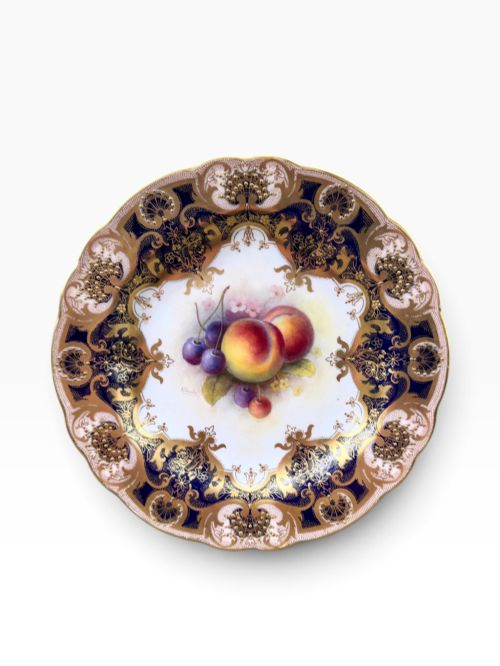
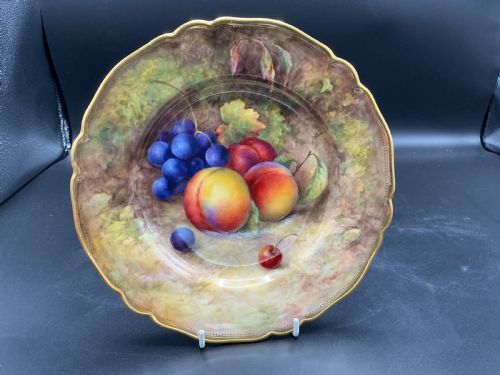
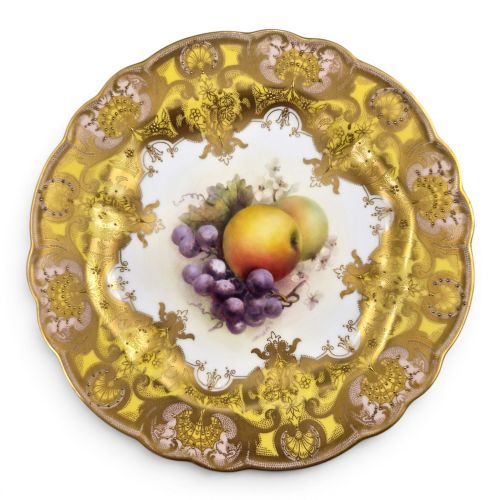
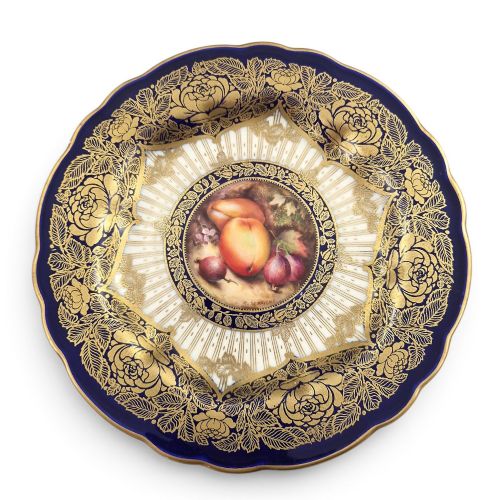
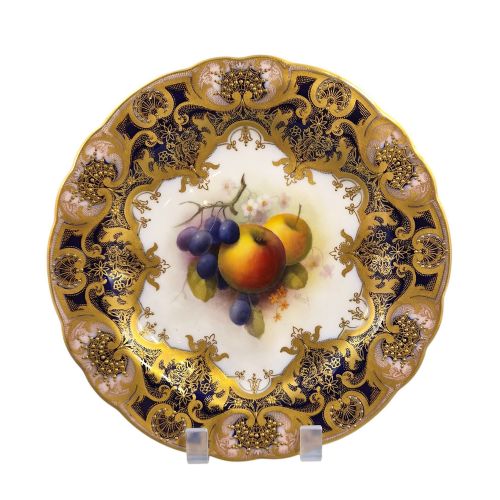
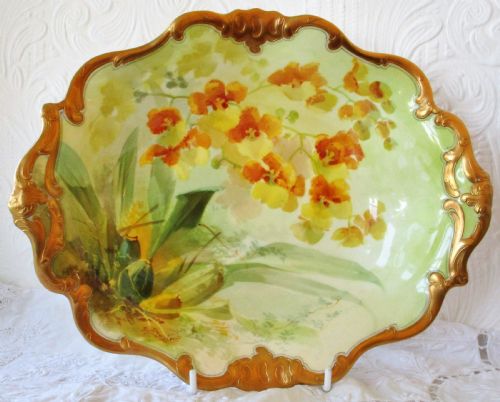
An Edwardian porcelain fruit dish brings hand-painted orchard studies and gilt enrichments to the table or cabinet.
Edwardian Porcelain Fruit Dish
When buyers search for an Edwardian porcelain fruit dish, they are looking at finely painted ceramic serving pieces, cabinet plates, and deep bowls designed for display or dessert service.
The versions most commonly met here originate from British manufactories like Royal Worcester, alongside continental centrepieces and Japanese Imari imports spanning the early twentieth century.
Forms range from boat-shaped bowls and rope-edge plates to handled comports and large centrepieces decorated with hand-painted fruit, flowers, and metallic lustres.
Materials and manufacture
Pieces in this selection are shaped from fine bone china, porcelain, and ceramic bodies, fired to form smooth white surfaces suitable for detailed brushwork.
Makers applied enamel paints, often depicting naturalistic studies of fruit, alongside gold leaf, gilt, and gilding to accentuate rims, handles, and moulded motifs.
Some works incorporate applied sculptural elements, such as putti and roses, or employ specialised lustre glazes to achieve mottled orange and iridescent finishes.
Listings feature porcelain, bone china, and ceramic forms decorated with enamel paints, gold leaf, and lustre glazes.
Distinctions in quality
The standard of painting sets individual pieces apart, particularly signed botanical or fruit studies by notable artists working within the factories.
Complexity of form and ornamentation, from simple rope-edge plates to elaborate centrepieces featuring applied figures and heavy gilding, dictates the ambition of the piece.
Royal Worcester·Royal Doulton·Schierholz·Wedgwood
The Edwardian Porcelain Fruit Dish Glossary
- Cabinet plate
- A decorative ceramic plate intended for display rather than utility. These items often feature elaborate hand-painted scenes.
- Comport
- A raised dish or bowl on a pedestal, used traditionally for serving fruit or sweets at the table.
- Gilding
- The application of gold leaf or gold paint to ceramic surfaces. This technique highlights rims, handles, and raised relief work.
- Lustre
- A type of ceramic glaze containing metallic oxides that produce an iridescent or glossy sheen when fired.
- Putti
- Depictions of plump, winged infant figures, often used as decorative supports or applied ornaments on centrepieces.
Edwardian Porcelain Fruit Dish: Frequently Asked Questions
What were Edwardian porcelain fruit dishes used for?
These pieces served as functional tableware for presenting fresh fruit or desserts at formal dining tables, often forming part of larger matching services.
Over time, many finer examples shifted from the dining room to the drawing room, where they were displayed upright on plate stands or kept within glass-fronted cabinets.
How do I identify an Edwardian period piece?
Identification relies on examining the factory backstamps, decorator signatures, and stylistic traits associated with the early decades of the twentieth century.
Records show production dates ranging from the Edwardian era through the subsequent decades, reflecting continuity in painting styles and ceramic formulas.
Are these dishes safe for serving food?
While originally designed for culinary use, many painted and gilded surfaces require careful handling to preserve delicate enamel work and metallic leaf.
Hand washing in lukewarm water is standard practice, as chemical detergents and modern dishwashers can degrade historical glazes and gilding over time.
What is the difference between a bowl and a comport?
A bowl sits directly on a flat surface on its own base, whereas a comport is elevated on a distinct foot or pedestal.
Comports were specifically proportioned to lift fruit and sweetmeats above the level of other tableware for better visibility and access.