
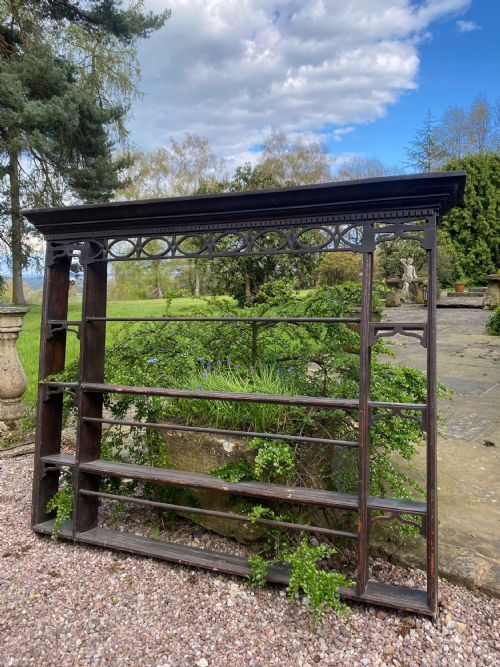


Edwardian Plate Rack
An edwardian plate rack organises household pottery with straightforward timber framing, offering wall-mounted utility alongside period charm.
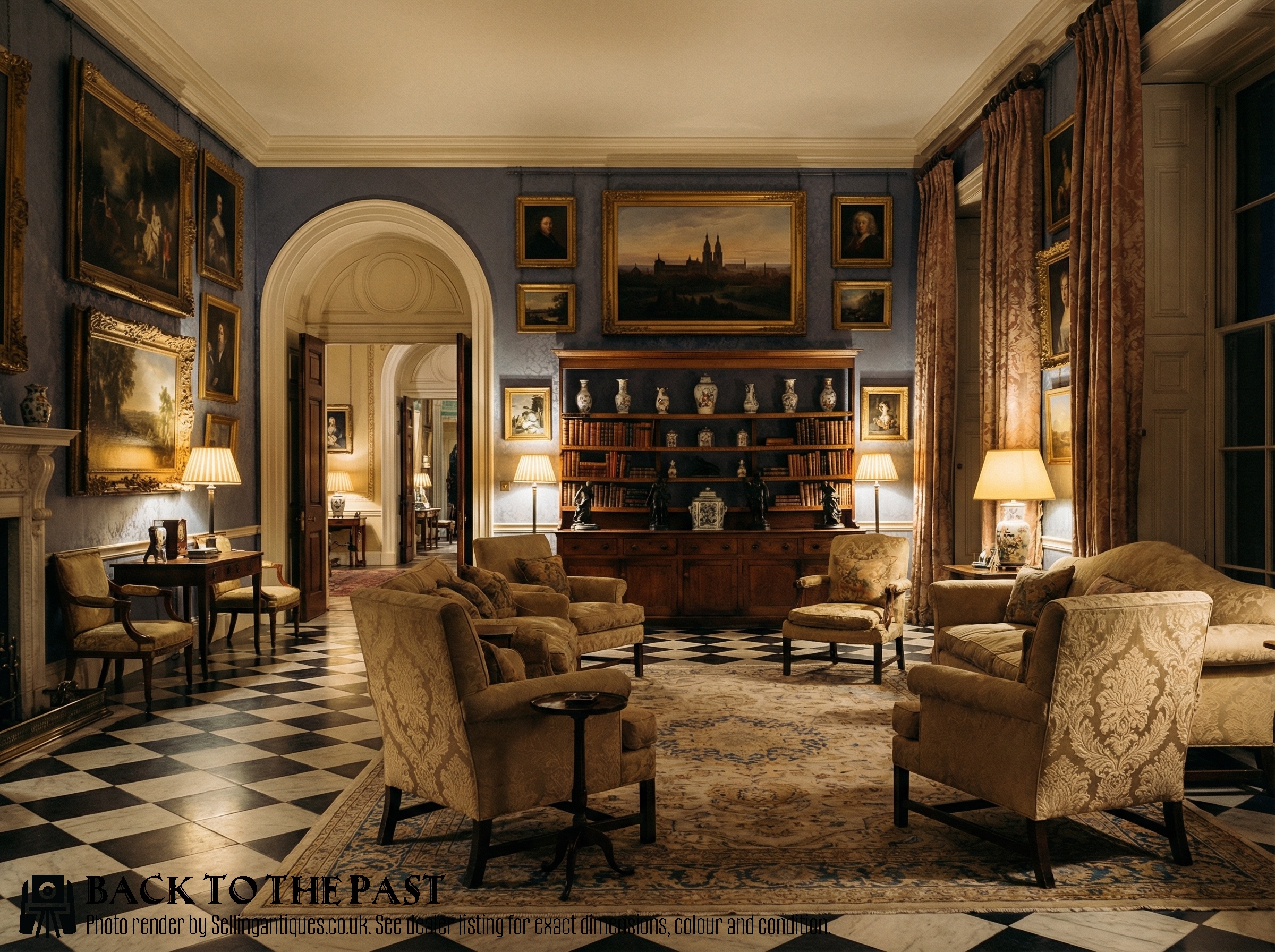
Edwardian Plate Rack
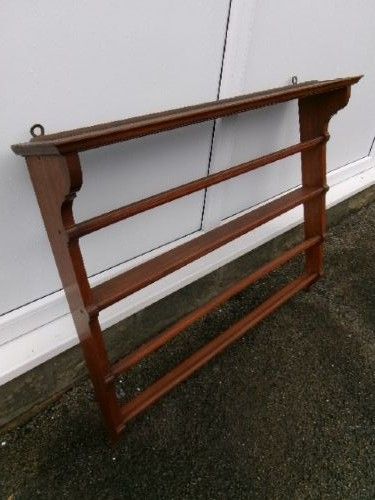
An edwardian plate rack appears most often as part of a larger kitchen dresser or as a standalone wall hanging shelf. These pieces organise ceramic tableware for display and daily use, drawing on English country and Arts and Crafts traditions.
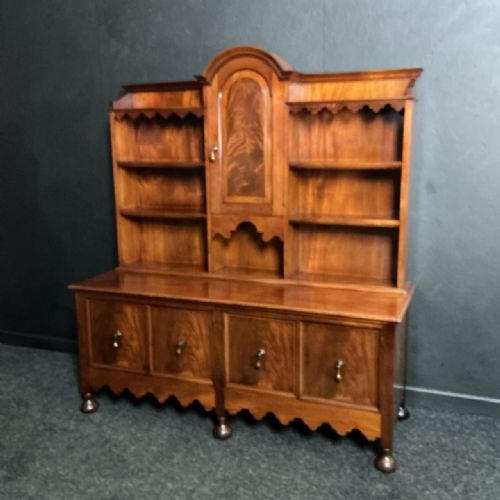
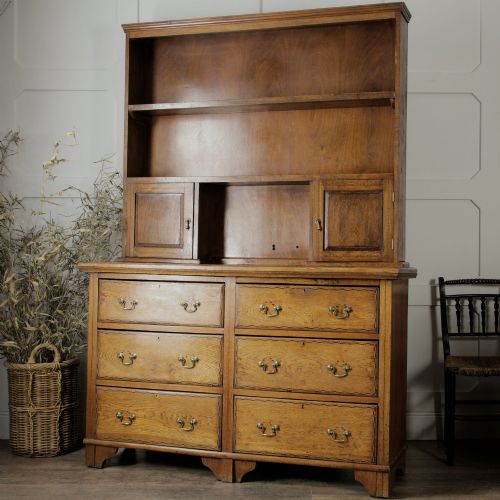
The form relies on slatted timber tiers and vertical wooden spindles designed to hold dinner plates upright. Simpler iterations mount directly to the wall, while larger examples sit atop pot board dressers.
How They Were Made
Carpenters constructed these pieces primarily from solid oak and mahogany, often utilising simple peg joinery and rebated shelving to support the weight of heavy ceramics.
Surfaces were finished with traditional wax or left as plain timber, though surviving examples also show painted pine finishes in period muted colours.
Golf club toast racks prove that early twentieth-century breakfast tables celebrated sporting hobbies with surprising culinary enthusiasm.
What Varies in Quality
The standard of timber selection and joinery marks the difference between utilitarian workshop items and finer cabinet work. Heavier gauge framing timbers and precise spindle turning indicate superior regional craft.
Original backing boards, intact cornice mouldings, and sound structural integrity distinguish better-preserved examples from heavily restored or later altered pieces.
Benetfink And Co·Walker And Hall·Hukin And Heath·Mappin And Webb
The Edwardian Plate Rack Glossary
- Pot board
- A lower open shelf on a dresser traditionally used for storing earthenware pots. It forms the heavy base beneath the upper plate rack.
- Dresser
- A combination of storage cupboards, drawers, and upper shelving racks. They serve as both display units and kitchen storage.
- Arts and Crafts
- A design movement prioritising visible construction and honest materials. It rejects heavy factory ornamentation in favour of simplified domestic utility.
- Cornice
- The decorative moulding running along the top edge of a wall rack or dresser. It provides a finished architectural cap to the hanging shelves.
Edwardian Plate Rack: Frequently Asked Questions
How do I mount a wall plate rack?
Wall-mounted racks require fixing directly into structural timber studs or masonry using appropriate wall anchors. The weight of stacked ceramics places significant strain on the upper mounting points.
Ensure the hanging brackets or screw holes on the back frame are secured firmly before loading any heavy plates or dishes.
Can these racks hold modern plates?
Most period racks accommodate standard dinner plates, but modern oversized or exceptionally thick pottery might not fit the historical spacing of the wooden spindles. Check the depth between the retaining rails and the back board.
Smaller side plates and shallow bowls generally sit securely without sliding forward.
How do I clean antique oak wood?
Dust the timber regularly with a dry, soft cloth to prevent grime accumulation in the carved details and joints. Avoid modern silicone sprays or harsh chemical detergents that strip the dry wax finish.
Apply a traditional beeswax polish sparingly once or twice a year to maintain the natural lustre of the oak.
Are these racks suitable for kitchens?
These pieces originate from domestic utility and suit contemporary kitchen installations for organising everyday tableware. Position them away from direct water splashes and excessive heat sources.
Allow adequate ventilation around the timber to prevent warping caused by sudden humidity changes.