
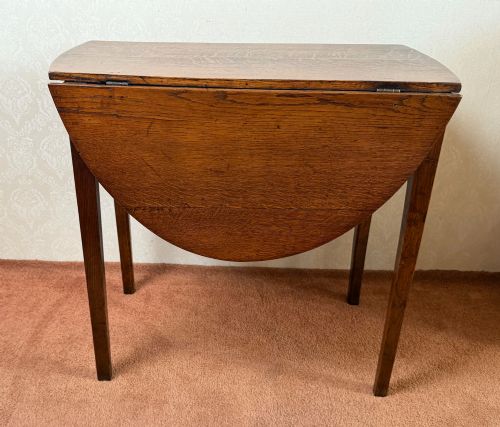
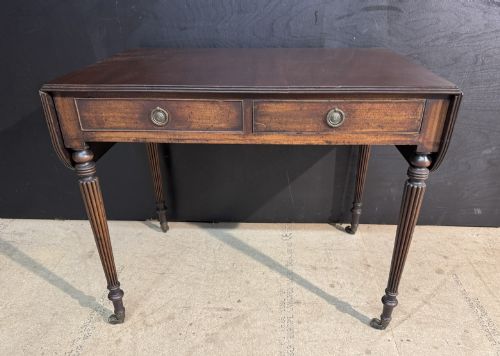
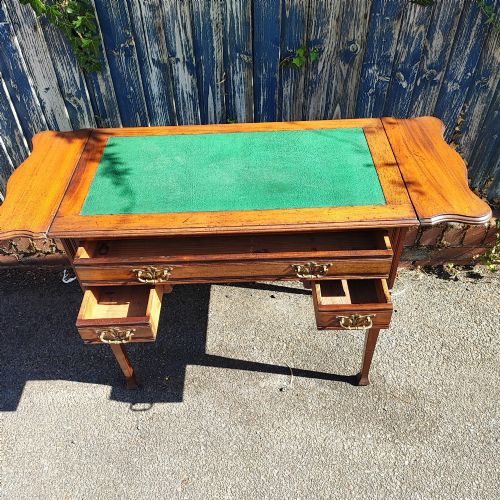
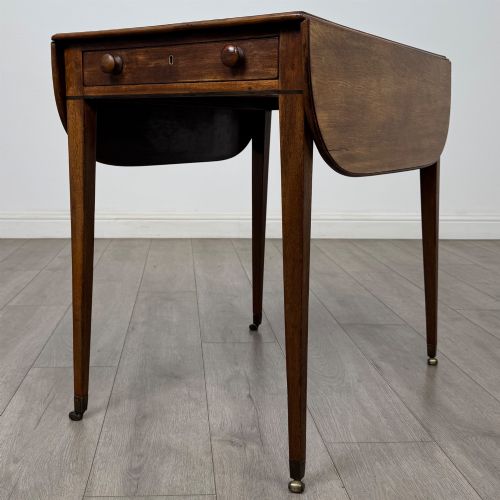
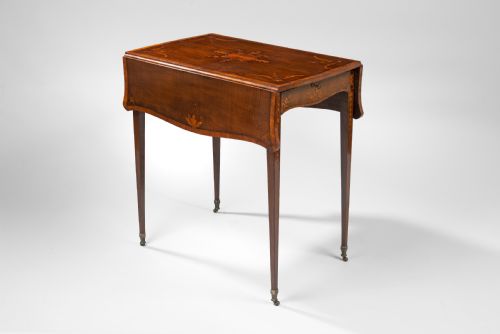
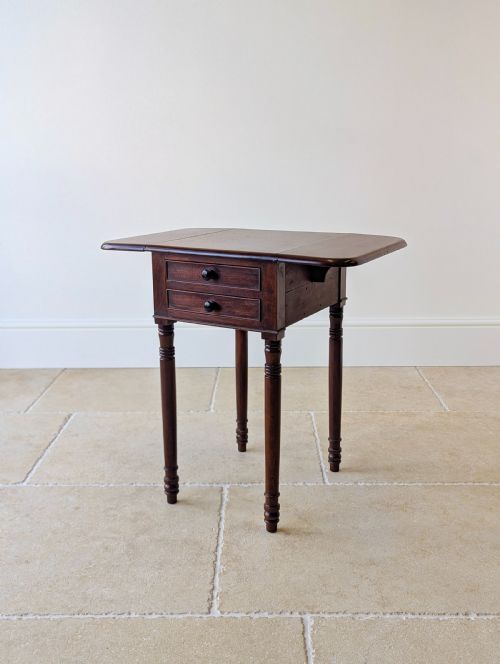

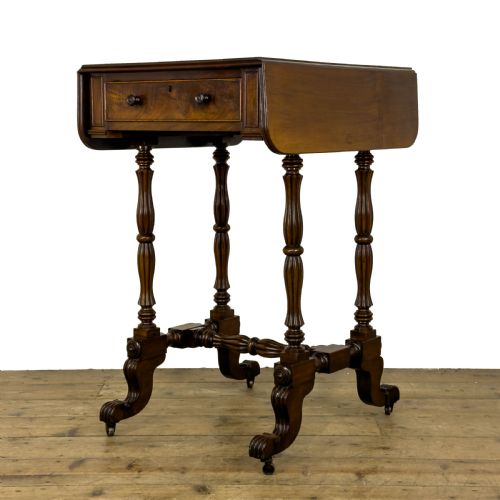


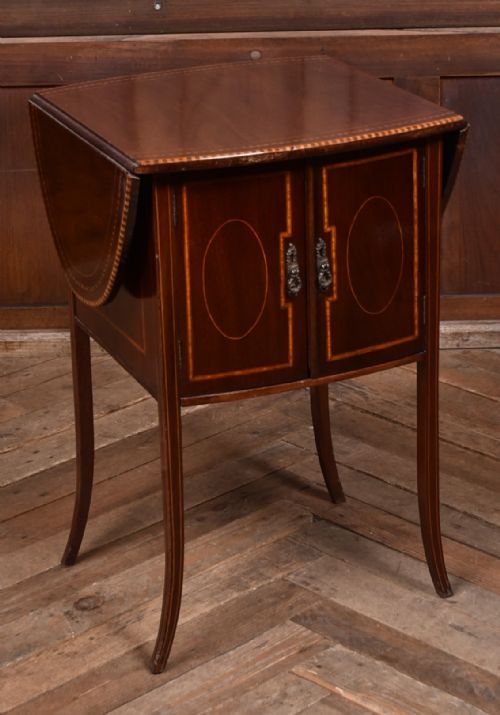

Edwardian Pembroke Side Table
An Edwardian pembroke side table brings drop leaves and folding flaps into compact rooms, offering versatile surfaces that expand when needed.
Edwardian Pembroke Side Table
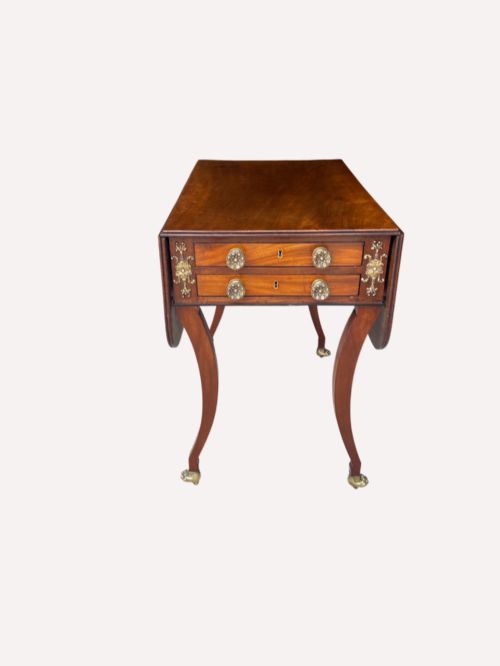
When you search for an edwardian pembroke side table, you encounter drop-leaf tables designed with hinged side flaps that raise to enlarge the surface area. These pieces frequently appear in Edwardian forms, alongside related iterations from Victorian, Regency, and Georgian periods.
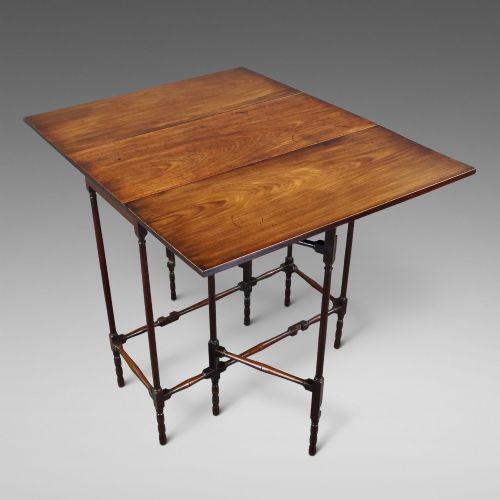
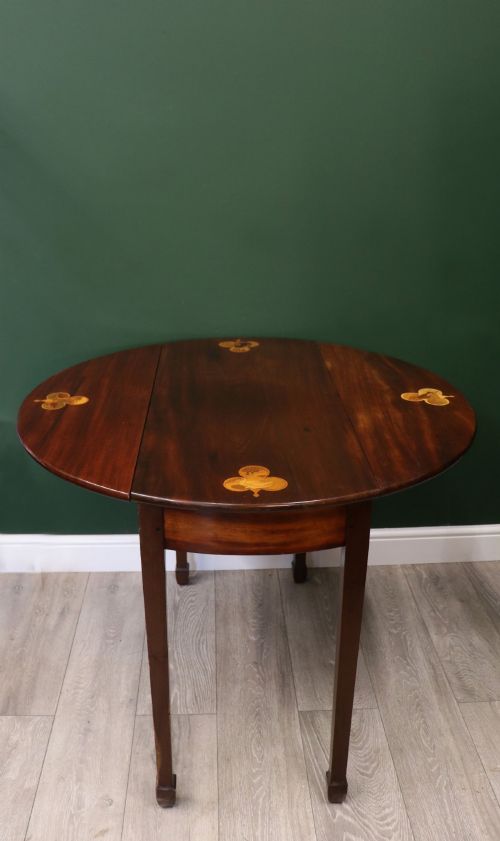
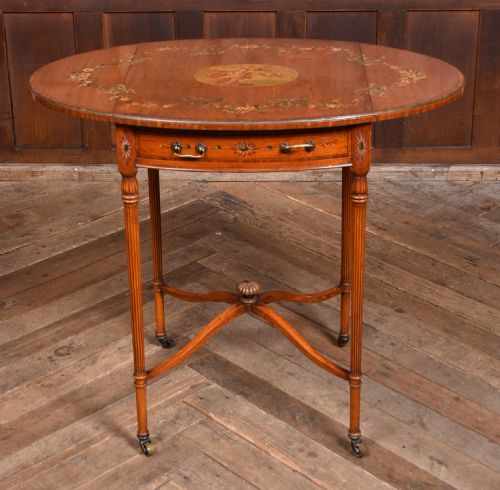
The selection ranges from oval occasional tables to spider-leg pembroke tables, writing desks, and small lamp tables with drawers. Many examples incorporate inlaid decoration or painted surfaces upon mahogany, satinwood, and pine structures.
How they were made
Cabinet makers constructed these drop-leaf tables primarily from solid timber and veneers, utilising mahogany, satinwood, burr walnut, and harewood. Surfaces often received delicate boxwood inlay, marquetry, or painted ornamentation to create contrast along the edges and table tops.
Brass fittings such as castors, hinges, and drawer pulls appeared on mobile forms, while hinged flap supports utilised wooden brackets or swing legs. Joinery methods joined the drop leaves securely to the central fixed top to bear weight when extended.
Table forms on this page include occasional pieces, coffee tables, sewing work tables, and dedicated drop-leaf side variations.
What varies in quality
The standard of timber selection separates finer examples from standard production, particularly in the figuring of mahogany, satinwood, and burr oak. Superior items display crisp, tightly executed boxwood inlay and well-matched grain across the folding leaves.
Construction rigidity in the drop-leaf hinge mechanism and drawer action determines the durability of the piece. Tables with balanced proportions and finely turned or tapered legs demonstrate superior craftsmanship.
Andrew Thomson and Sons·Gillows
The Edwardian Pembroke Side Table Glossary
- Pembroke table
- A small rectangular or oval table with hinged drop leaves on two opposite sides. It typically includes one or two small drawers.
- Drop leaf
- A hinged flap of wood attached to the main table top that can be raised and supported to extend the surface. It folds down vertically when not in use.
- Satinwood
- A yellowish-brown timber with a lustrous sheen, often used as a fine veneer or for inlay work on formal tables. It provides a bright contrast to darker woods like mahogany.
- Marquetry
- Decorative patterns formed by fitting together small pieces of veneer into wooden panels. It frequently depicts floral or geometric designs on table tops.
- Spider leg
- A style of very slender, delicate turned legs connected by thin stretchers, common on light occasional tables.
Edwardian Pembroke Side Table: Frequently Asked Questions
What is an edwardian pembroke side table used for?
These tables served primarily as versatile surface furniture in drawing rooms and parlours, holding lamps, books, or sewing materials.
The drop leaves allowed the furniture to sit flat against a wall when space was limited, expanding quickly for tea or writing.
How do I tell an Edwardian piece from a Georgian one?
Edwardian versions often feature lighter construction, machine-cut inlay, and brighter satinwood highlights characteristic of the revival styles popular around 1900.
Georgian examples typically rely on heavier solid mahogany timbers, hand-cut joinery, and simpler structural proportions without Edwardian decorative veneer flourishes.
Can these tables be used as desks?
Many examples incorporate small drawers beneath the top, specifically designed for writing paraphernalia and correspondence.
The folding flaps provide adequate arm support and writing space when raised, making them suitable for light desk work.
How do the drop leaves stay up?
Hinged wooden brackets, known as fly brackets, swing out from beneath the central frame to catch and support each leaf.
Some lighter spider-leg variants utilise pivoting gateleg actions to hold the flaps steady under load.