


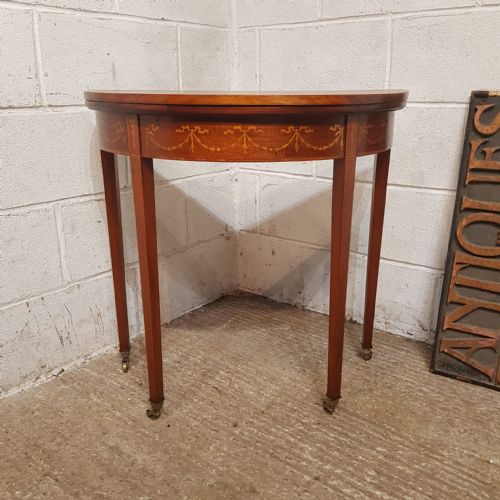
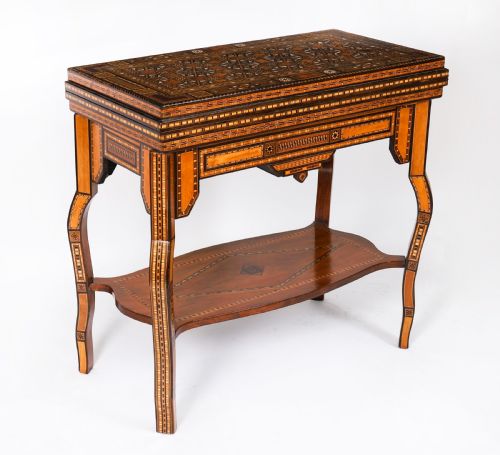
Inlaid Wood Folding Table
An inlaid wood folding table provides a versatile surface with decorative marquetry or metal details that fold away neatly when not in use.
Inlaid Wood Folding Table
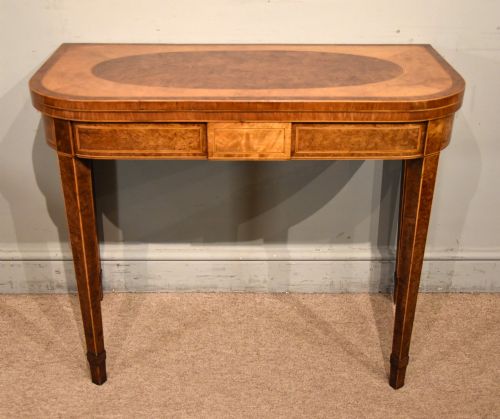
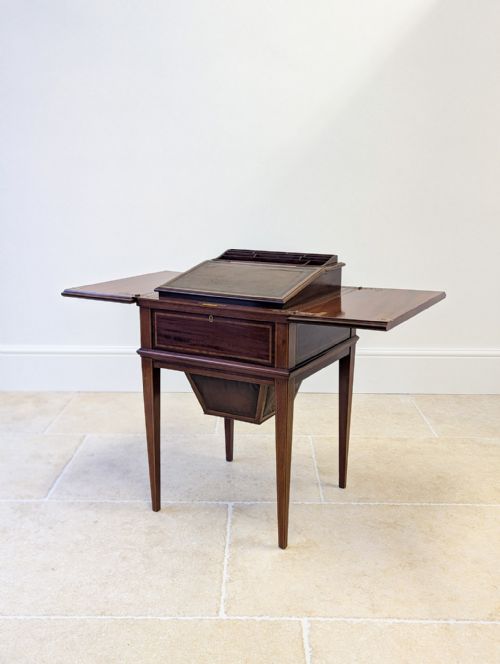
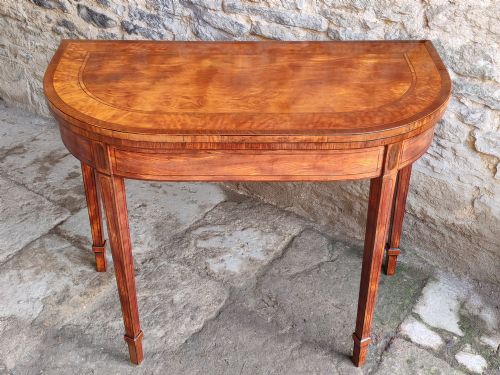
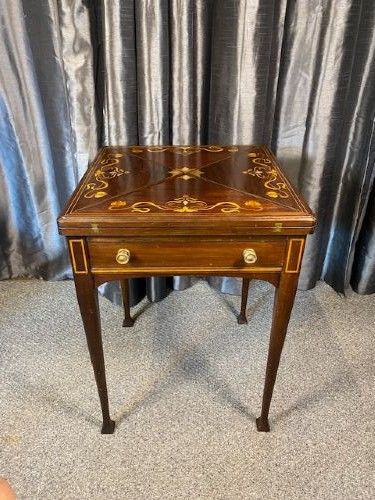
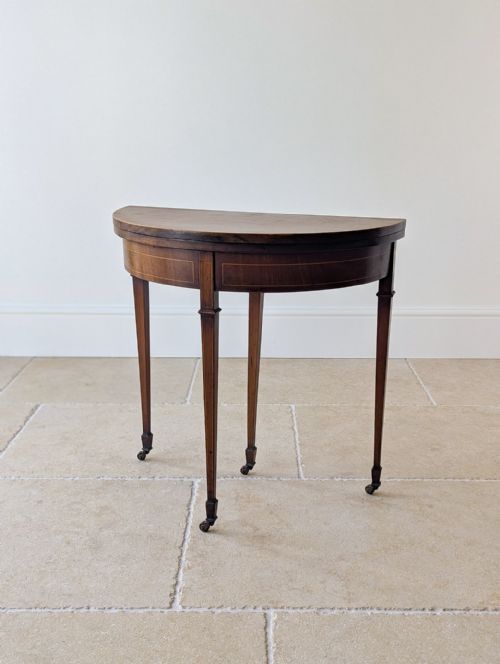
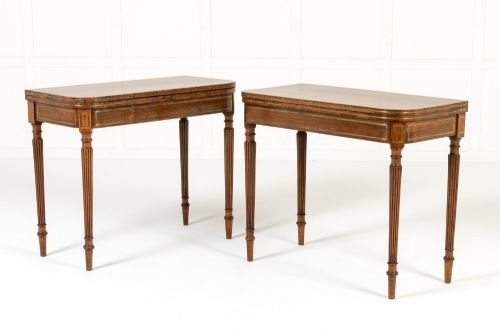
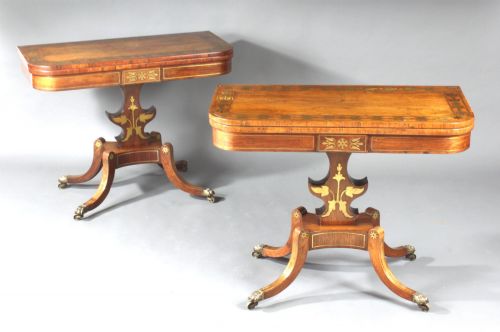
An inlaid wood folding table serves multiple functions as a card, games, tea, side, or writing table across diverse periods including the 18th century, Georgian, Regency, Edwardian, and the early 20th century. These pieces combine practical folding mechanisms with ornamental surfaces designed for entertaining or writing.
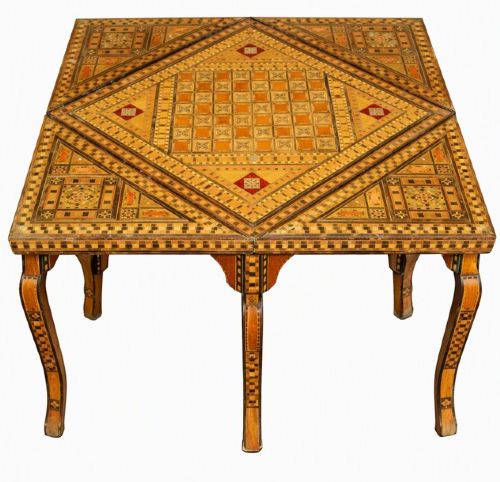
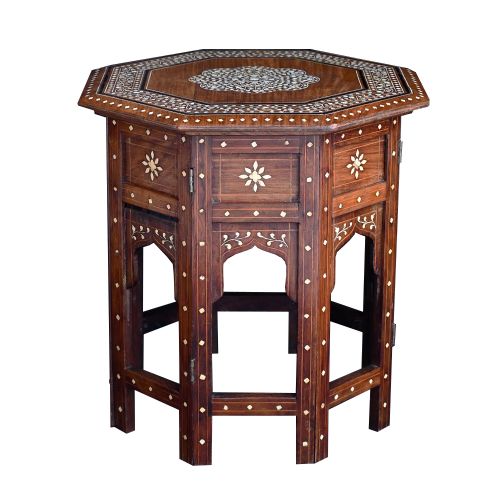
The selections span English workshops and international traditions, encompassing Anglo-Indian, Syrian Ottoman, and Hoshiarpur productions alongside standard European forms. Buyers encounter demilune, envelope, and octagonal shapes intended to adapt to domestic spaces of varying dimensions.
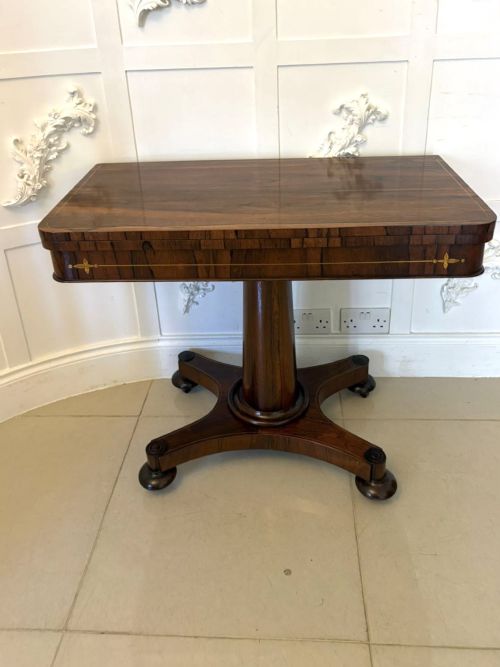
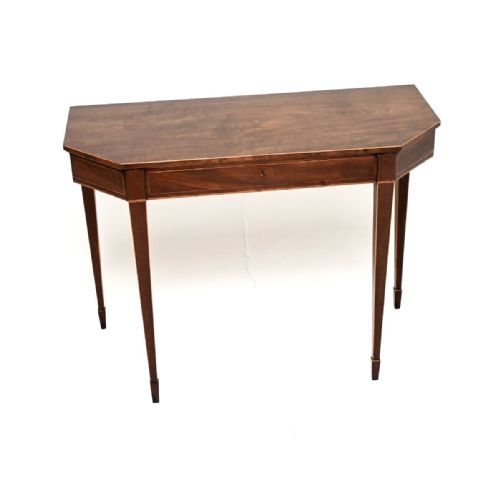
Most examples rely on a fold-over top, drop leaves, or hinged bases that allow the furniture to flatten or contract. The surface decoration remains visible whether the table stands open for use or closed against a wall.
Materials and construction
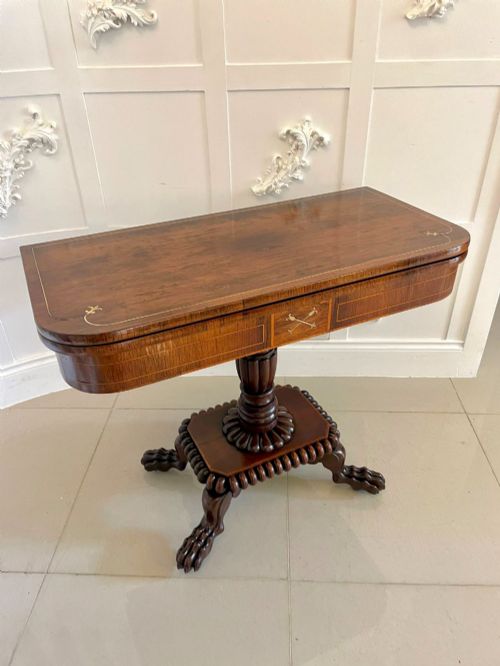
Cabinetmakers utilised primary timbers such as mahogany, rosewood, satinwood, walnut, teak, padauk, and shisham, applying contrasting veneers and solid sections. Inlays incorporate brass, boxwood, bone, ivory, and additional decorative woods to form geometric patterns, foliage, or pictorial motifs.
Folding actions depend on hinged leaves, swivel tops, or collapsible wooden and brass bases that require precise joinery to maintain stability when open. Surfaces receive polish or oil finishes that highlight the natural grain of the timber and the clarity of the metal or bone inlay.
Forms span card tables, games tables, tea tables, envelope tables, Pembroke tables, and octagonal folding examples.
Factors determining quality
The precision and complexity of the inlay work distinguish standard production from superior pieces, particularly where multiple contrasting materials meet within intricate designs. Artisanal skill appears in the crispness of the cutting and the tight integration of the inlay into the surrounding timber ground.
The integrity of the folding mechanism and the stability of the hinges dictate the structural standard of the table. Superior examples maintain a flush surface when open and align correctly along the edges when closed, without sagging or loose joints.
George Bullock
The Inlaid Wood Folding Table Glossary
- Demilune
- Half-moon shape, commonly applied to tables designed to stand flat against a wall with a leaf that folds out to form a full circle.
- Envelope table
- A square card table with four triangular flaps that swivel and fold over one another to open the centre.
- Metamorphic table
- Furniture engineered to transform from one form or function, such as a writing desk, into another.
- Marquetry
- The art of applying pieces of veneer to a structure to form decorative patterns and pictures.
- Hoshiarpur
- A region in India known for producing wooden furniture featuring intricate brass, bone, or ivory inlay.
Inlaid Wood Folding Table: Frequently Asked Questions
What were inlaid wood folding tables used for?
These tables served primarily for social activities such as playing cards, chess, or backgammon, as well as for serving tea or providing a writing surface. Their folding tops allowed households to save space when the rooms were not in use for entertainment.
The inclusion of specialised compartments, baize-lined playing surfaces, and pivoting leaves demonstrates how domestic spaces adapted to hospitality during the Georgian, Regency, and Edwardian eras. Owners deployed them in parlours, drawing rooms, and libraries depending on the specific form.
How do I date an inlaid wood folding table?
Dating relies upon examining the timber species, the style of the legs, the construction of the folding mechanism, and the motifs used in the inlay. Georgian and Regency pieces often feature mahogany or rosewood with brass stringing, whereas Edwardian and early 20th-century examples may display lighter satinwood or distinct regional carving.
Secondary woods inside the frame and the type of fixings also offer chronological clues. Comparing the overall silhouette against known stylistic periods helps narrow down the decade of manufacture.
How do I care for an inlaid wood folding table?
Maintenance involves keeping the wooden surfaces away from direct sunlight and extreme temperature fluctuations to prevent the veneers and inlays from lifting or shrinking. Dusting with a soft, dry cloth preserves the finish without introducing moisture into the joints.
Applying occasional wax appropriate for antique timber helps nourish the grain and protects the contrasting materials. Care must be taken when operating the folding leaves to avoid straining the original hinges.
How do I distinguish regional styles?
Regional variations appear in the choice of materials and the character of the ornamentation, such as the dense botanical carving and bone inlay found in Anglo-Indian and Hoshiarpur pieces from the 19th and early 20th centuries. Syrian Damascus examples utilise distinct geometric patterns composed of varied woods and metals.
English pieces from the Georgian and Regency periods generally prioritize classical architectural proportions, mahogany or rosewood grounds, and restrained brass stringing or marquetry.