


Victorian Pembroke Table Drawer
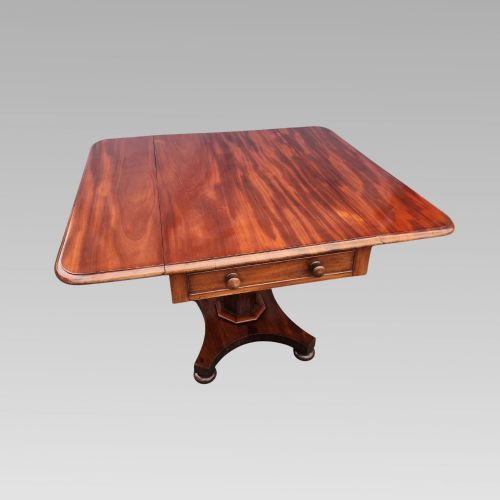
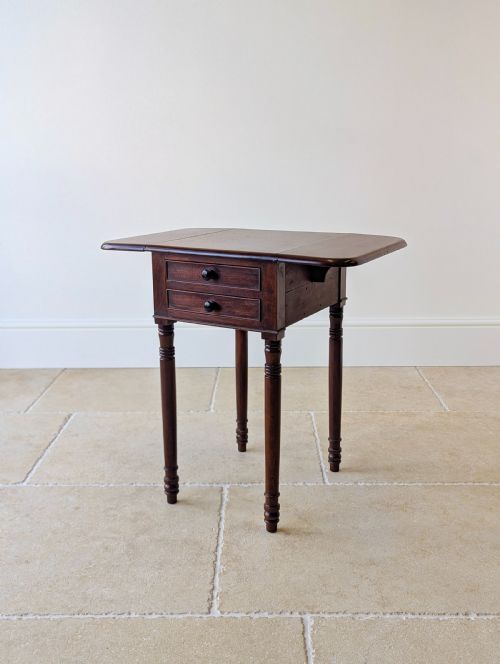
These victorian pembroke table drawer pieces are clever drop-leaf furniture with concealed storage, designed to expand for dining or writing.
Victorian Pembroke Table Drawer
A victorian pembroke table drawer is a versatile drop-leaf table featuring hinged flaps on either side and one or more integrated storage compartments. The form adapts easily to smaller rooms, providing a compact surface that extends quickly when guests arrive.
Most examples found here date from the nineteenth century, spanning Victorian and Regency eras with occasional Edwardian or Sheraton Revival interpretations. They appear primarily as work tables or occasional furniture designed for domestic sitting rooms and libraries.
Materials and Construction
Makers built these tables predominantly using solid mahogany and rosewood, sometimes accented with lighter satinwood or pine internals. Timber selection focused on rich grain figures and durable framing to support the pivoting drop flaps.
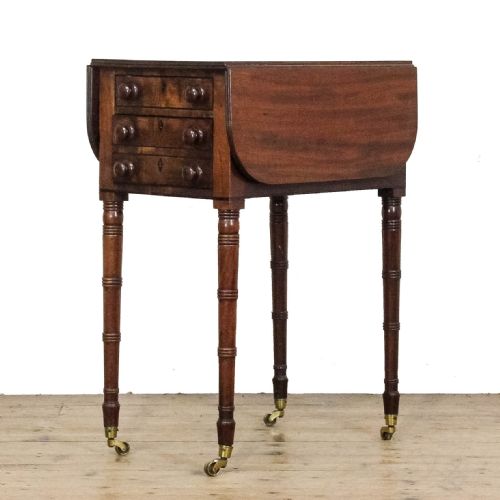
Brass castors and ceramic fittings frequently appear on the feet and drawer pulls, allowing these heavy timber pieces to move smoothly across floor coverings. Joinery relied on traditional hand-cut joints designed to withstand the daily lifting of the leaves.
Some Victorian examples feature disguised end drawers that blend seamlessly into the frieze to fool curious guests.
Judging Quality and Craftsmanship
Superior quality shows in the matching of timber grains across the top and drop leaves, ensuring a continuous pattern when extended. Finely made examples also feature secondary timbers of equal grade inside the drawer boxes and smooth sliding mechanisms.
The sophistication of the leg turning and the integration of disguised end drawers or bobbin legs differentiate standard utility pieces from finer parlour work tables. Hardware originality, such as period brass drop handles, adds considerably to the integrity of the piece.
The Victorian Pembroke Table Drawer Glossary
- Pembroke table
- A small drop-leaf table with hinged flaps on two opposing sides and a drawer beneath the top. This form became popular during the eighteenth century and remained a staple of Victorian interior furnishing.
- Drop leaf
- A hinged section of a table top that folds down to save space or lifts up to expand the surface area. Supporting brackets or swing legs hold the flap stable when raised.
- Sofa table
- A long, narrow table traditionally placed in front of a sofa, featuring drop leaves and end drawers. These share many construction traits with Pembroke tables.
- Work table
- A specialised domestic table equipped with drawers or fabric bags for sewing and needlework. These often feature compartments tailored for small implements.
- Bobbin leg
- A style of turned furniture leg resembling a string of wooden bobbins or spools. This decorative turning technique appears on several nineteenth-century tables.
Victorian Pembroke Table Drawer: Frequently Asked Questions
What is a pembroke table drawer used for?
These tables served primarily in sitting rooms and parlours for writing, needlework, or casual dining. The drop leaves allowed households to adjust the surface size depending on the activity.
The integrated drawer provided convenient storage for stationery, sewing supplies, or small household items, keeping surfaces clear when the leaves were dropped.
How do you tell a Victorian table from a Regency one?
Regency tables generally date from the early nineteenth century and often display lighter, cleaner architectural lines influenced by neoclassical design. Victorian pieces tend to be heavier in proportion with darker finishes.
Material choices also offer clues, as Regency examples frequently utilise figured mahogany or rosewood with brass inlay, while Victorian items often showcase robust turned legs and simpler structural forms.
Are all drop leaf tables Pembroke tables?
Not all drop-leaf tables qualify as Pembroke tables, as the defining characteristic of a Pembroke is the presence of a drawer alongside the folding flaps. Standard drop-leaf dining tables lack this storage compartment.
Pembroke tables are also typically smaller and designed as occasional or work tables rather than primary dining furniture, though large examples do exist.
How do you care for a mahogany Pembroke table?
Polishing timber surfaces with traditional beeswax helps maintain the natural moisture and sheen of Victorian mahogany and rosewood without building up heavy synthetic residues. Avoiding direct sunlight prevents the timber from fading unevenly.
Protecting the drop leaves from excessive moisture and extreme temperature fluctuations ensures the hinged joints and wood panels remain stable over time.