


Edwardian Parquetry Table
An edwardian parquetry table brings geometric timber work into everyday rooms, offering a sturdy surface framed by precise wood veneers.
Edwardian Parquetry Table
An edwardian parquetry table appears primarily in occasional, side, and lamp forms alongside nesting sets and low tea tables. These pieces date principally from the Edwardian era and the early twentieth century, with occasional Victorian precedents.
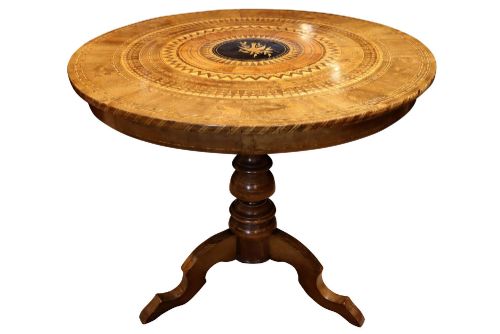
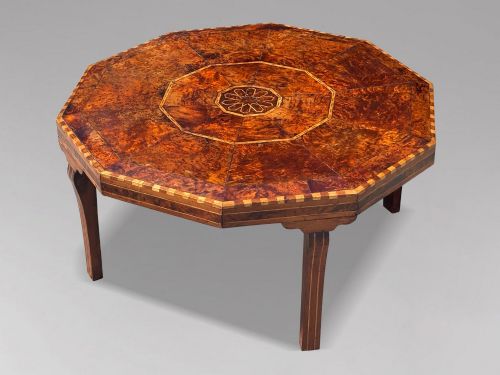
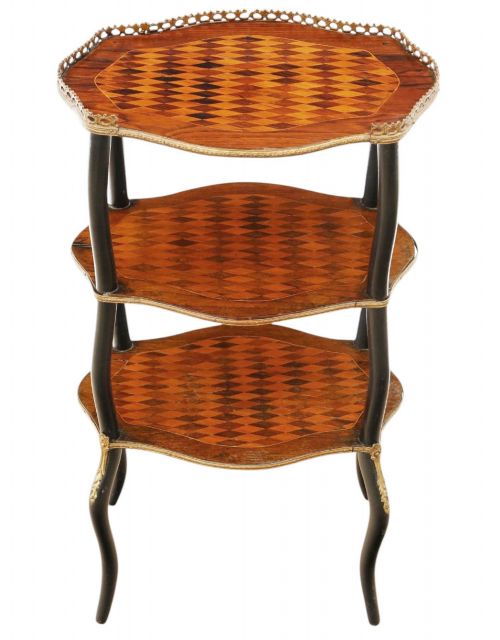
The surface geometry defines the type, featuring cube patterns, chequerstrung borders, and geometric tile layouts across the top. Buyers encounter compact side tables and square or octagonal formats designed for domestic placement.
Materials and Technique
Cabinetmakers constructed these surfaces using walnut, satinwood, and rosewood veneers, often laid over firmer foundation timbers like oak or mahogany. The geometric patterns rely on precise cutting of multiple wood species to form interlocking tiles.
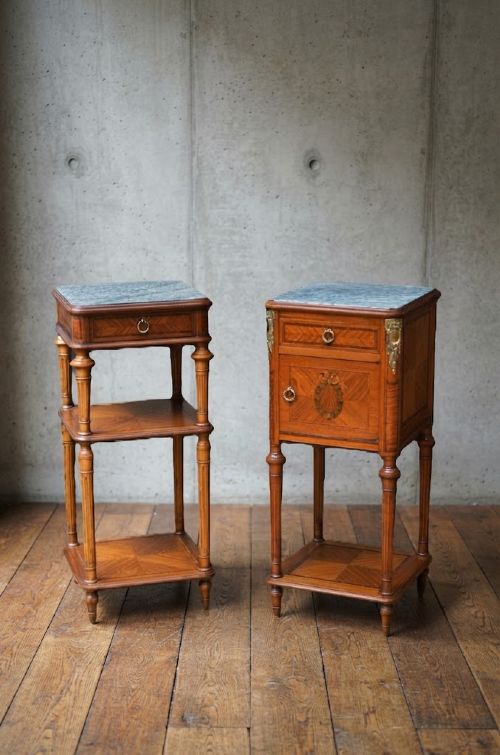
Makers integrated brass fittings, glass inserts, and marble tops on related cabinet forms, while the parquetry panels themselves depend on careful veneering techniques developed through nineteenth-century revival styles.
Materials recorded across these tables range from walnut, rosewood, and satinwood to oak, mahogany, and marble tops.
Standards of Craft
Quality rests in the tightness of the veneer joints and the selection of timber species used to create contrast within the geometric pattern. Subtle variations in grain alignment separate standard production pieces from exhibition grade work.
The stability of the subframe and the preservation of the original polish dictate the structural integrity of the surface. Finer examples retain crisp edges and intact banding without lifting veneer or excessive dryness in the timber.
Collingson And Lock·Maples·Howard And Sons
The Edwardian Parquetry Table Glossary
- Parquetry
- A geometric mosaic of wood veneers arranged in regular patterns like cubes or triangles to ornament a flat surface. It differs from marquetry by sticking to geometric lines rather than pictorial scenes.
- Chequerstrung
- A narrow inlaid border of alternating light and dark wood squares forming a checkerboard line around a table edge. This detail frames the main parquetry panel.
- Etagere
- An open tiered piece of furniture with multiple display shelves supported by slender uprights. These often incorporate parquetry tops on the main surface.
- Sutherland table
- A small drop-leaf table with narrow flaps supported by swinging gate legs. Edwardian examples occasionally feature parquetry and marquetry decoration on the leaves.
- Quartetto
- A nested set of four tables graduated in size so each slides beneath the one above. These frequently carry parquetry top surfaces in walnut.
Edwardian Parquetry Table: Frequently Asked Questions
What is an edwardian parquetry table?
An edwardian parquetry table is a small domestic surface decorated with geometric wood veneers arranged in patterns such as cubes and chequers. These pieces date from the early twentieth century and Victorian transition periods.
They serve as occasional, side, and lamp tables, combining decorative timber work with practical daily utility in a sitting room.
How do I tell parquetry from marquetry?
Parquetry uses geometric shapes like squares, triangles, and diamonds to build repeating patterns across a wooden surface. The effect relies entirely on architectural angles and timber contrast.
Marquetry, by contrast, forms pictorial or curvilinear motifs such as flowers, ribbons, or urns using various shaded woods and veneers.
What woods were used for these tables?
Cabinetmakers utilised walnut, satinwood, and rosewood alongside oak and mahogany for the underlying structure and contrasting tiles. Different timber species provided the natural colour variation needed for the geometric designs.
Borders often incorporated chequerstringing using light and dark woods to frame the central parquetry field.
How do I clean and maintain the surface?
Maintain the timber by keeping the table away from direct heat sources and strong sunlight that can dry out old veneers. Dust gently with a dry cloth and apply occasional specialist wax.
Avoid liquid polishes containing silicone, which can penetrate old finishes and damage the delicate veneer joints over time.