



Edwardian Parlour Seating
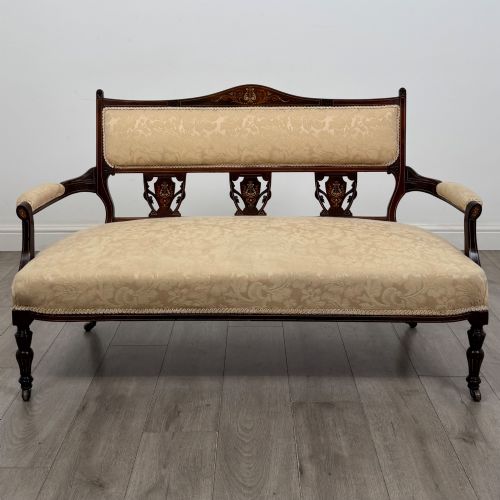
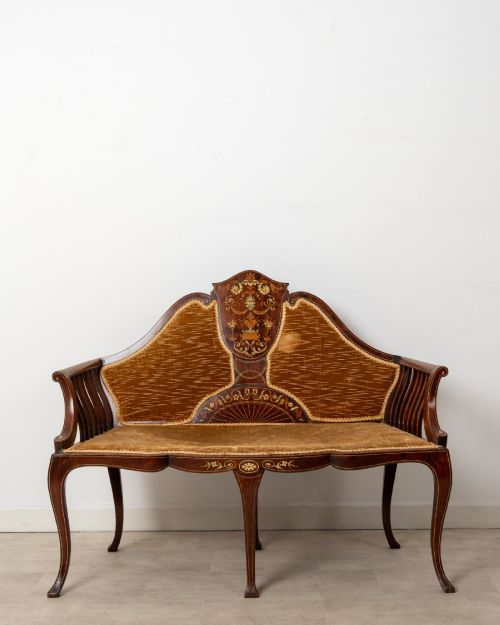
Edwardian parlour seating brings together polished mahogany, delicate satinwood inlay, and plush velvet upholstery to shape the refined social spaces of the early twentieth century.
Edwardian Parlour Seating
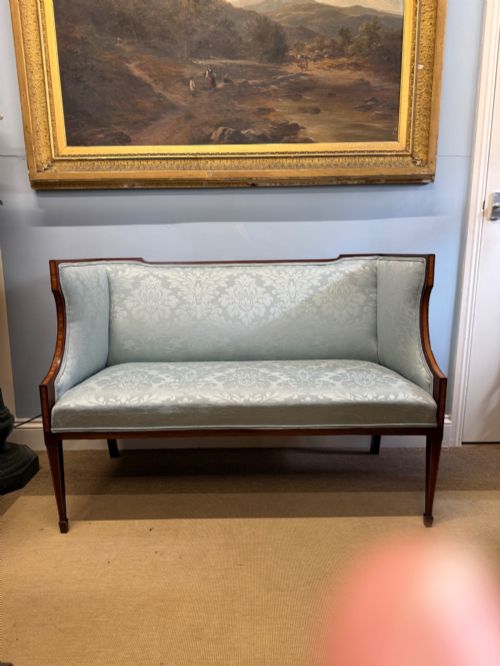
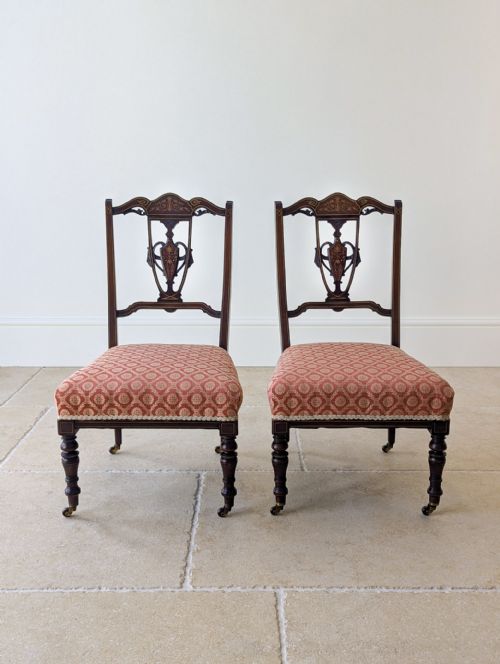
The selection ranges from transitional late Victorian pieces and substantial Arts and Crafts oak designs to light Sheraton Revival forms rooted in the 1880s and 1890s. Walnut and rosewood frames appear alongside standard mahogany, often accompanied by satinwood inlay and bone details.
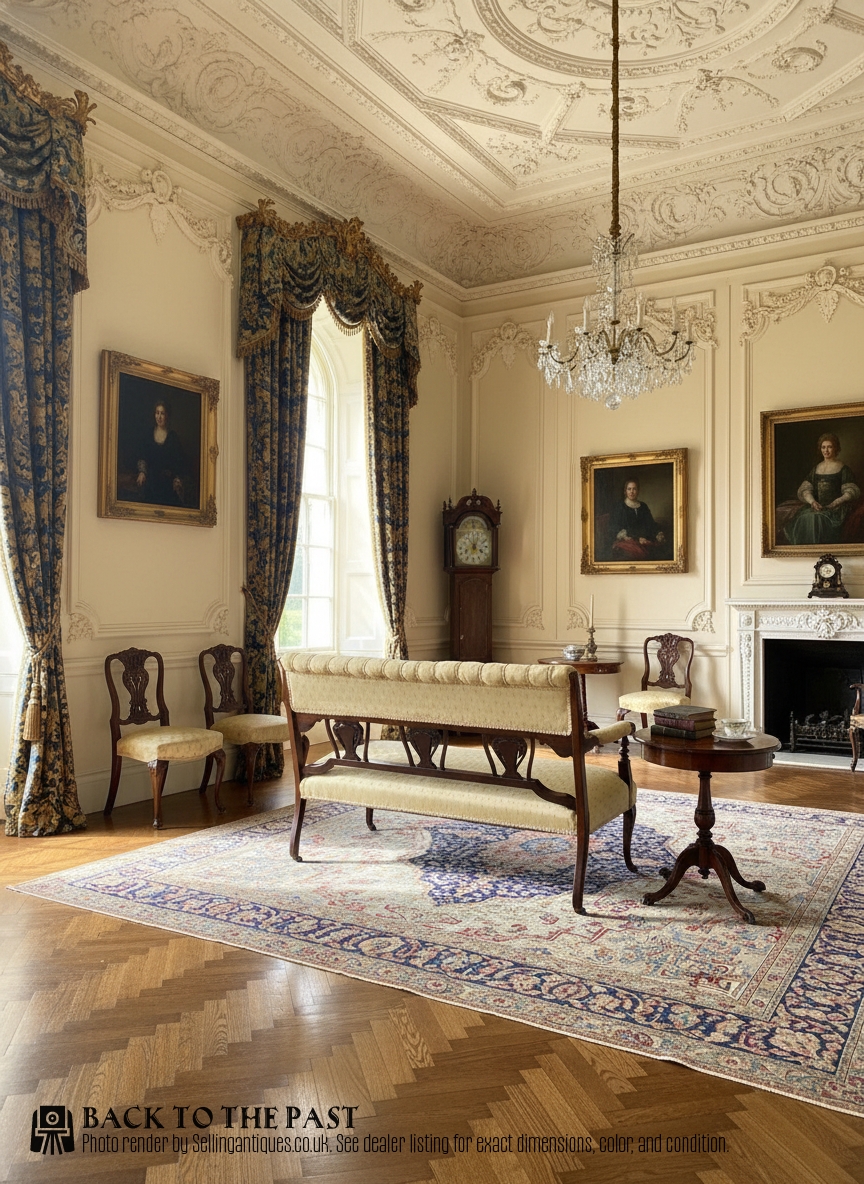
Most items on this page lean heavily towards Edwardian aesthetics, though preceding Victorian examples bridge the design gap between 1870 and the start of the 1900s. These seating arrangements served both decorative and social functions in formal domestic interiors.
Materials and construction
Makers relied predominantly on solid hardwoods like mahogany, rosewood, walnut, and oak to construct the underlying frames of these chairs and settees. Turning, carving, and joinery techniques shaped the structural supports and legs.
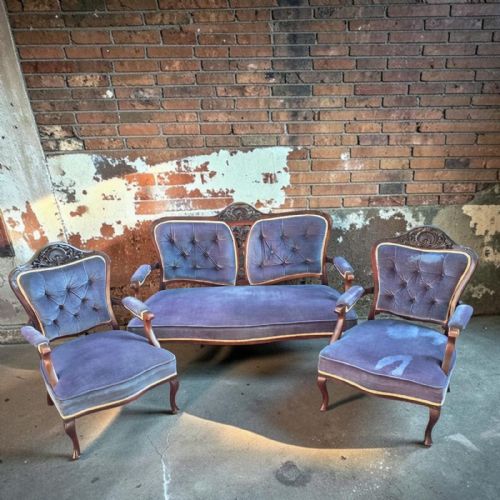
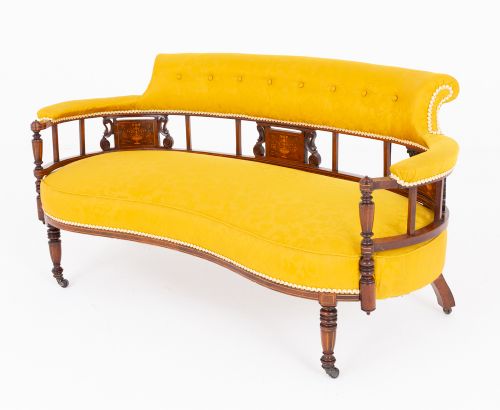
Decorative surface ornamentation frequently involved intricate satinwood inlay, marquetry, and occasional bone detailing set flush into the primary wood. Upholstery techniques utilised traditional fabric and velvet coverings, sometimes featuring button-backed padding or open sprung seats.
Brass fittings and mounts appeared on select pieces to accent the woodwork, completing the durable construction typical of late nineteenth and early twentieth-century cabinet making.
Musician's chairs from 1870 appear among the seating, built specifically to accommodate nineteenth-century performers with adjustable swivel seats.
Distinctions in craftsmanship
Quality diverges notably in the precision of the woodwork and the crispness of the carved or turned elements across different pieces. Superior examples display tightly fitted joinery and harmonious proportions rather than clumsy alterations.
The complexity and execution of the satinwood inlay and marquetry separate standard production from finer parlour furniture. Sharp detailing in inlaid motifs indicates skilled handwork by period artisans.
The integrity of the frame and the retention of original timber species dictate the enduring value of each settee or armchair. Chairs with intact, stable rosewood or mahogany structures hold a distinct advantage over heavily repaired pieces.
The Edwardian Parlour Seating Glossary
- Settee
- A small upholstered sofa designed for two or more people, commonly found in formal reception rooms. These pieces feature padded backs and armrests.
- Salon suite
- A matching set of seating furniture, typically comprising a sofa and several complementary armchairs or side chairs. Such suites provided a unified aesthetic for entertaining guests.
- Sheraton Revival
- A late nineteenth and early twentieth-century design style inspired by late eighteenth-century neoclassical furniture. It utilises light mahogany, satinwood inlay, and tapered legs.
- Marquetry
- Decorative woodwork where pieces of contrasting veneer are applied to a structural panel to form a geometric or pictorial pattern. This technique enhances the visual appeal of table tops and chair backs.
- Button back
- An upholstery style where buttons are pulled deep into the padding at regular intervals, creating a tufted diamond pattern. This method provides firm support and distinctive visual texture.
Edwardian Parlour Seating: Frequently Asked Questions
What is an Edwardian salon suite?
An Edwardian salon suite is a matching set of parlour furniture, usually consisting of a settee paired with several armchairs or side chairs. These matched groupings were created to furnish formal drawing rooms with a unified decorative scheme.
Such suites often feature matching mahogany frames, satinwood inlay, and identical upholstery fabrics. They reflect the coordinated interior design preferences of homes around 1900.
How do I care for antique velvet upholstery?
Antique velvet upholstery requires gentle maintenance to preserve the pile of the fabric and prevent crushing. Regular light brushing with a soft-bristled brush removes surface dust without damaging the delicate fibres.
Keep these pieces out of direct sunlight to prevent fading of the rich colours. Professional cleaning is recommended for deep stains to avoid moisture damage to the internal padding and wooden frame.
What is the difference between a settee and a sofa?
In historical furniture terms, a settee generally refers to a lighter, two-seat wooden framed piece with exposed woodwork and tailored upholstery. A sofa traditionally denotes a larger, more deeply padded seating option designed for lounging.
Many Edwardian pieces blur these definitions, utilising the terms interchangeably in period descriptions. Both served as central seating elements in formal parlours and reception rooms.
How do I identify Sheraton Revival furniture?
Sheraton Revival pieces are identified by their light construction, straight tapered legs, and extensive use of contrasting satinwood inlay. The style draws inspiration from neoclassical motifs popular in the late eighteenth century.
Mahogany and rosewood serve as the primary woods for these graceful chairs and settees. They emphasise symmetry, delicate proportions, and refined floral or geometric marquetry rather than heavy carved ornamentation.
Can these chairs be used daily?
These antique chairs and settees can handle regular daily use provided the underlying frame remains sturdy and structurally sound. Assessing the stability of the joinery ensures the furniture supports normal sitting without strain.
Pieces requiring re-upholstery should be reinforced by a professional restorer before active use. Careful placement away from heavy traffic areas helps preserve the historic woodwork and delicate inlay.