
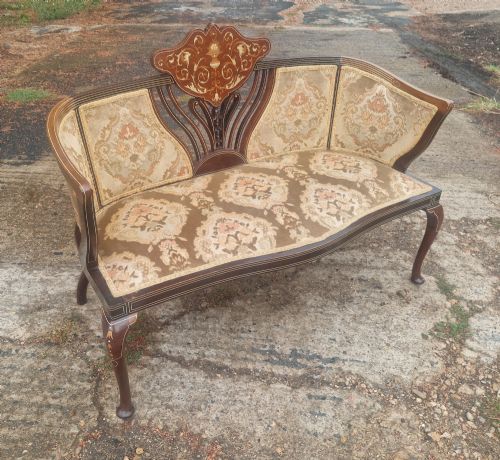

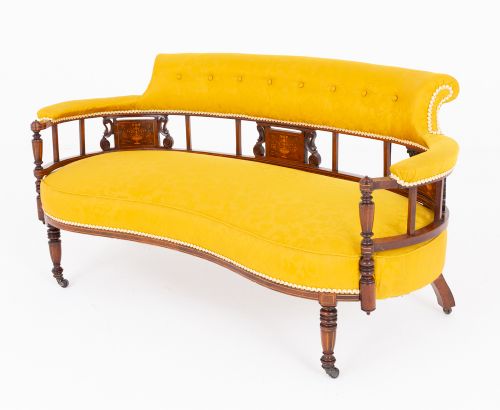


Edwardian Inlaid Love Seat
These edwardian inlaid love seat pieces offer compact two-seater seating with delicate woodwork, bringing period charm to smaller rooms.
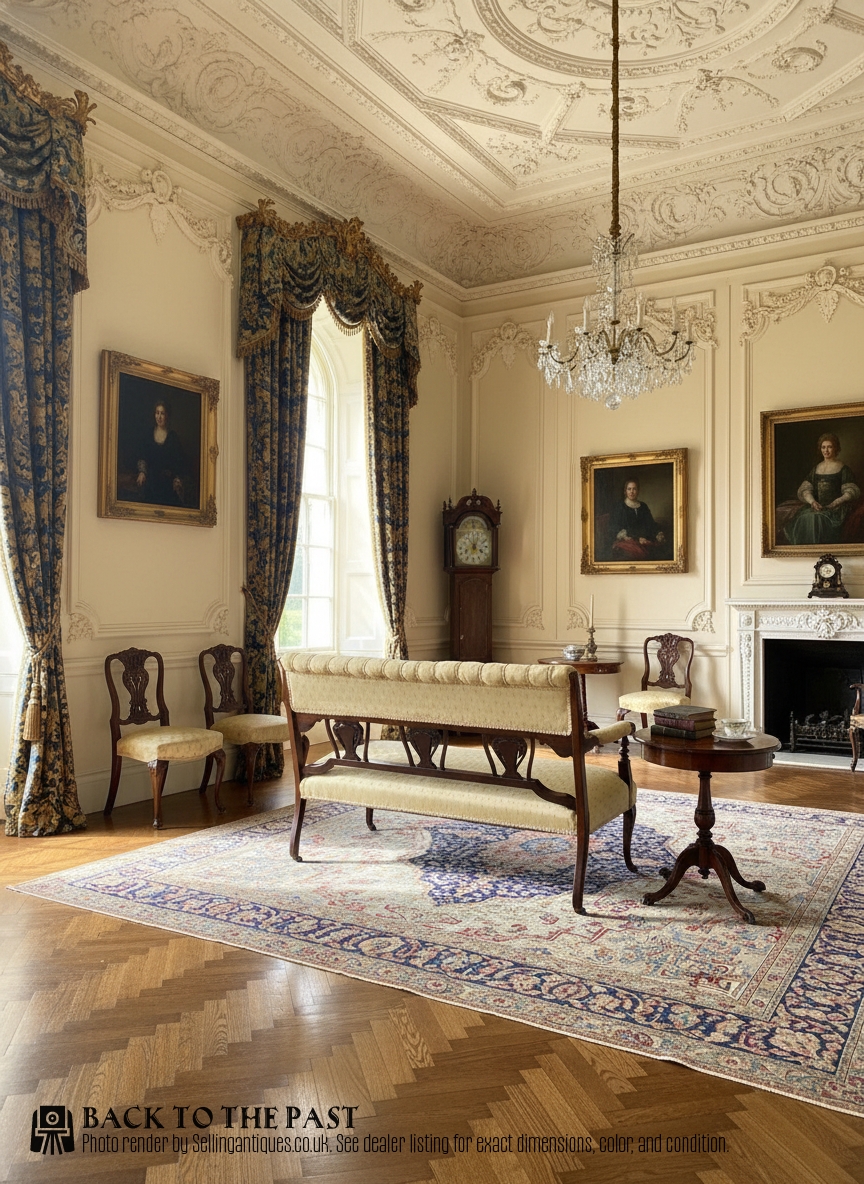
Edwardian Inlaid Love Seat
When you search for an edwardian inlaid love seat, you are looking at small double settees and salon sofas built primarily around the turn of the twentieth century. These pieces include specific items described as love seats, alongside two-seater settees and salon sofas from the Edwardian and Victorian periods.
The most common version you will meet on this page is the Edwardian mahogany two-seater settee featuring decorative woodwork on the frame. These compact seats serve as functional furniture designed for smaller spaces without sacrificing period character.
Origins and date markers span the years around nineteen hundred, with related examples stretching back to eighteen eighty. The forms range from traditional salon settees to specialised end-of-bed sofas.
How They Were Made
Makers built these frames predominantly from mahogany, often applying contrasting satinwood and boxwood inlay to create delicate decorative patterns across the wood. This marquetry work defines the visual surface of the furniture.
Upholstery forms the other half of the construction, utilising fabric and velvet stretched over the two-seater frames. Brass elements occasionally appear on the fittings or castors supporting the structure.
The inventory records pieces spanning the Victorian and Edwardian eras, utilising mahogany, satinwood inlay, boxwood inlay, fabric upholstery, and velvet.
What Varies in Quality
The refinement of the inlay work separates the standard pieces from the finer examples, particularly where contrasting satinwood and boxwood meet the mahogany background. Crisp lines in the botanical or geometric marquetry indicate skilled handiwork.
The choice of primary timber and secondary framing materials dictates the overall heft and longevity of the settee. Dense mahogany frames retain their structural integrity far better than lighter alternatives over decades of use.
The Edwardian Inlaid Love Seat Glossary
- Edwardian
- Pertaining to the reign of King Edward VII, spanning from nineteen hundred to nineteen ten. Pieces from this era often feature lighter proportions than their heavy Victorian predecessors.
- Inlay
- A technique where contrasting materials like satinwood or boxwood are inserted into recesses in the mahogany base wood. This creates a flush, decorative surface pattern.
- Settee
- An upholstered bench or small sofa with a back and arms. These double seats are designed to accommodate two people comfortably.
- Salon
- A formal entertaining room in a large house. Furniture designated for this space typically displays finer decorative detailing than everyday household items.
Edwardian Inlaid Love Seat: Frequently Asked Questions
Where should I place a love seat?
These compact two-seater settees fit well in smaller reception rooms, hallways, or at the foot of a master bed where a full-sized sofa would overwhelm the floor plan.
Their narrow profile also allows them to sit comfortably beneath large windows or alongside fireplaces without blocking walkways.
How do I care for the inlaid wood?
Keep the mahogany frames away from direct sunlight and strong heat sources to prevent the delicate satinwood and boxwood inlay from drying out and lifting.
Apply a gentle furniture wax occasionally to nourish the timber and maintain a soft sheen across the surface.
Can I use these for everyday seating?
While sturdy enough for regular use, these antique frames benefit from mindful placement and gentle daily sitting rather than heavy family lounging.
Their lightweight construction reflects the polite entertaining habits of the period rather than modern robust wear.
How do I distinguish Edwardian from Victorian pieces?
Edwardian frames generally display lighter proportions and brighter mahogany tones with delicate satinwood inlay, whereas Victorian predecessors tend to be heavier and darker.
Design motifs also shift from the ornate and solid forms of the eighteen eighties toward the airier aesthetic of nineteen hundred.