


Edwardian Painted Commode
An edwardian painted commode brings lightness and classical detail to a room through delicate brushwork and fine timber.
Edwardian Painted Commode
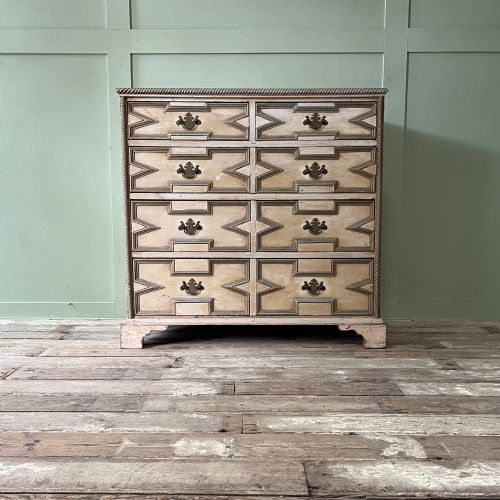
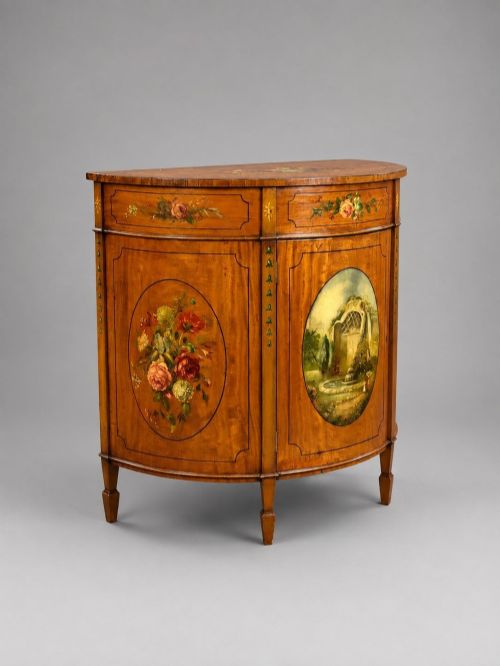
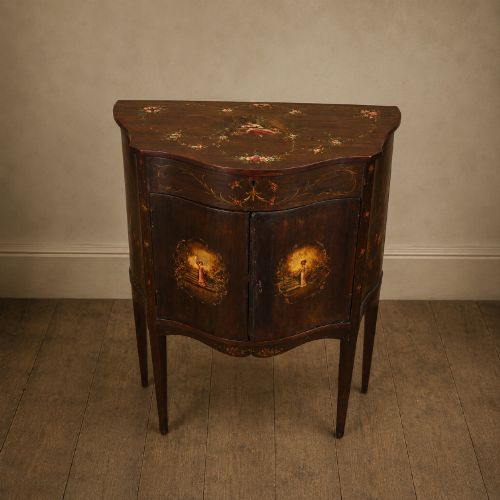
An edwardian painted commode encompasses decorative cabinets, side cabinets, and chests of drawers produced across the Edwardian era and surrounding revival periods. These forms frequently adopt serpentine or demi-lune shapes designed to sit flat against a wall while offering discreet storage. Makers often drew upon Sheraton revival, Adam revival, and Chinoiserie styles to decorate the timber frames.
The pieces appearing on this page span the late nineteenth century through to the nineteen-twenties, incorporating English, French, and Swedish examples. Alongside satinwood and mahogany, makers utilised pine and timber as a base for intricate hand-painted motifs and lacquer finishes. These items function as versatile side pieces in reception rooms and bedrooms alike, combining practical storage with ornamental surface design.
How they were made
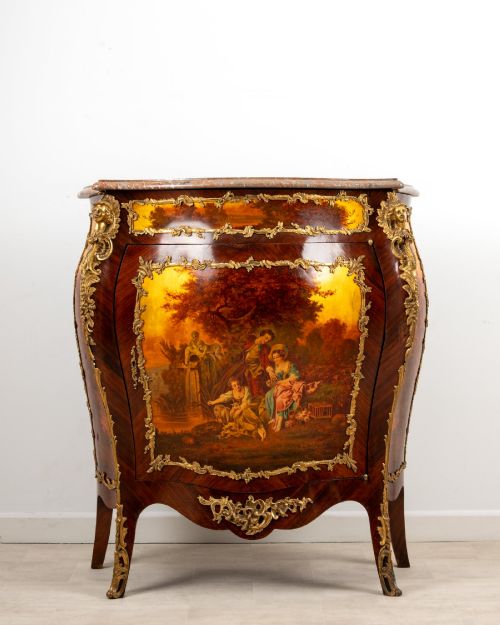
Craftsmen built the carcases using solid timbers such as mahogany and pine, often applying smooth satinwood veneers to the exterior surfaces. These foundations were then prepared to receive detailed hand-painted decoration, classical panels, or oriental lacquer work. Brass hardware and ormolu mounts were added to doors and drawers, while certain French and Italian examples received shaped marble tops.
Surface finishes varied from fine polychrome painting and scumble glazes to pale cream japanning and vernis martin techniques. Cabinetmakers shaped wood into curved demi-lune fronts and serpentine profiles using traditional joinery methods suited to the demands of revival design. The resulting pieces combined structural timber carcases with delicate artistic embellishment.
Materials recorded across the inventory include brass, satinwood, paint, mahogany, wood, lacquer, pine, and timber.
What varies in quality
Quality rests upon the crispness of the hand-painted detail and the selection of the underlying wood veneers. Pieces finished with finely rendered classical panels or intricate Chinoiserie decoration demonstrate a higher grade of craftsmanship than simpler painted surfaces. The choice of timber also distinguishes the range, particularly where figured satinwood or heavy marble tops are employed.
Construction methods determine durability, visible in the tightness of the joinery on curved demi-lune and serpentine fronts. The refinement of subsidiary materials, such as chased ormolu mounts and cast brass handles, further separates standard production from exceptional examples. Balance in proportion and harmony in the painted motifs complete the distinction.
Sir Clough Williams-Ellis
The Edwardian Painted Commode Glossary
- Demi-lune
- A half-moon shape used for the footprint and top of cabinets and commodes. This curved profile allows the furniture to sit snugly against a wall while maintaining a decorative silhouette.
- Serpentine
- A gently undulating front edge that curves outward in the centre and inward at the sides. It requires precise woodworking to achieve a smooth, flowing line across drawers or doors.
- Satinwood
- A lustrous hardwood native to the tropics, prized for its golden colour and satiny sheen. It served as a favoured veneer for refined cabinetmaking during revival periods.
- Japanning
- A European technique imitating East Asian lacquering, involving layered varnishes and painted motifs. It produced glossy surfaces decorated with figures, landscapes, or floral designs in pale colours.
- Ormolu
- Gilded bronze mounts applied as decorative ornaments to furniture corners, feet, and keyholes. The technique adds metallic contrast to wood and marble surfaces.
Edwardian Painted Commode: Frequently Asked Questions
Where should I place a painted commode?
These cabinets suit drawing rooms, hallways, and bedrooms where their decorative surfaces can be fully appreciated.
Because many examples feature curved demi-lune or serpentine fronts, they fit neatly against walls without protruding too far into walking spaces.
How do I care for painted wood surfaces?
Keep painted and lacquered furniture out of direct sunlight to prevent colours from fading over time.
Dust gently with a dry, soft cloth and avoid chemical polishes that might damage the delicate historical finish.
What is the difference between a commode and a chest of drawers?
A commode typically refers to a low, decorative cabinet or chest fitted with drawers or doors, often featuring shaped fronts.
A chest of drawers is a simpler storage form focused primarily on stacked drawer compartments.
How can I identify Sheraton revival pieces?
Sheraton revival items draw inspiration from eighteenth-century neoclassical designs, featuring symmetrical proportions and tapered legs.
They frequently incorporate satinwood veneers, painted classical panels, and subtle floral garlands.