
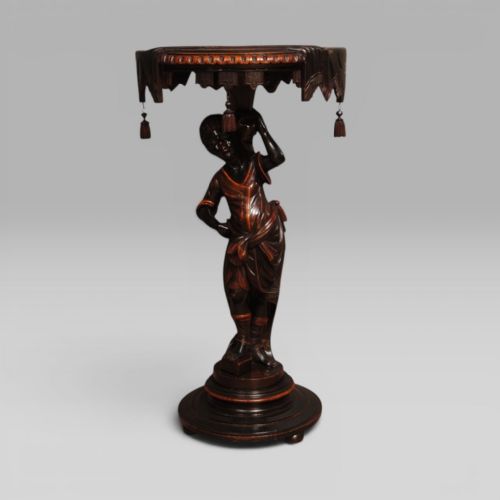


Antique Venetian Furniture
Antique venetian furniture brings theatrical Italian flair into a room, spanning carved polychrome figures and grand painted commodes.
Antique Venetian Furniture
Antique venetian furniture encompasses a lavish mix of functional forms and decorative showpieces, from 18th century travelling bureaux to painted side tables and ornate seating. Buyers seeking these items encounter diverse expressions like Venetian Rococo and Baroque revivals, alongside mid-19th century carved walnut benches.
Pieces span eras from the early 1700s through to the 1930s, offering both restrained walnut bureau bookcases and flamboyant grotto stools. The common thread is a distinct theatricality that separates these items from standard English or French country brown wood antiques.
Materials and Construction
Cabinet makers utilised solid woods like walnut and mahogany as foundational structures for commodes, chests, and side cabinets. Carved wood details frequently received surface treatments including gold leaf, polychrome paint, and giltwood accents to achieve the signature opulent sheen.
Master carvers shaped dense timber into intricate figurative supports, serpentine fronts, and grotto motifs. Surface decoration relied on skilled painting techniques depicting scenic views directly onto the wood, complemented by inset marble tops on specific commodes.
Listings feature periods spanning from the eighteenth century to the 1930s, dominated by walnut, carved wood, and polychrome paint.
Assessing Quality and Execution
The distinction between ordinary and exceptional pieces rests upon the crispness of the wood carving and the nuance of the hand-painted decoration. Master carvers imparted distinct anatomical precision and fluidity to figurative stands and seating, whereas lesser examples exhibit stiffer, repetitive detailing.
Originality of surface finish dictates the standing of case pieces and tables, where intact polychrome and untouched giltwood command greater appreciation. The integration of structural joinery with elaborate decorative elements reveals the maker's discipline beneath the theatrical exterior.
Pauly et Cie
The Antique Venetian Furniture Glossary
- Polychrome
- Decorated in multiple colours. This technique defines many of the painted commodes, chairs, and decorative figures originating from Venetian workshops.
- Giltwood
- Wood carved and coated with gold leaf or gold paint. It provides the brilliant reflective surfaces seen on baroque revival frames and tables.
- Commode
- A low chest of drawers or cabinet. In Venetian pieces, these often feature serpentine fronts and detailed painted scenes.
- Torchere
- A tall stand or pedestal designed to hold a light source. Venetian examples frequently take the form of carved figures supporting a platform.
- Bureau
- A desk with a sloping lid covering compartments. Travelling variations from the early eighteenth century offer compact writing solutions.
Antique Venetian Furniture: Frequently Asked Questions
How do I clean painted Venetian surfaces?
Dust surfaces gently with a soft, dry cloth to prevent abrasion of the delicate paint layers. Avoid modern chemical polishes which can strip historic finishes.
Keep pieces away from direct sunlight and excessive humidity to protect both the wood substrate and the polychrome decoration.
Are blackamoor tables authentic antiques?
Blackamoor stands and tables frequently date from the nineteenth century, drawing inspiration from earlier Venetian artistic traditions. They serve as dramatic figural supports utilising carved wood and polychrome decoration.
Examine the carving depth and the patina of the paintwork to understand the age and origin of the piece.
Where did Venetian commodes sit in a home?
Grand commodes and side cabinets occupied principal reception rooms and halls, showcasing wealth and artistic taste to visitors. Their decorative marble tops and painted scenes were designed for prominent display.
Today, they function effectively as focal points in living spaces or large hallways.
How do I date an 18th century bureau?
Inspect the internal construction of the drawers, dovetail joints, and the configuration of the writing compartment. Eighteenth-century pieces typically show hand-cut joinery and native timbers suited to the period.
Compare the hardware and overall proportions against documented examples from Venetian workshops of the same decade.