

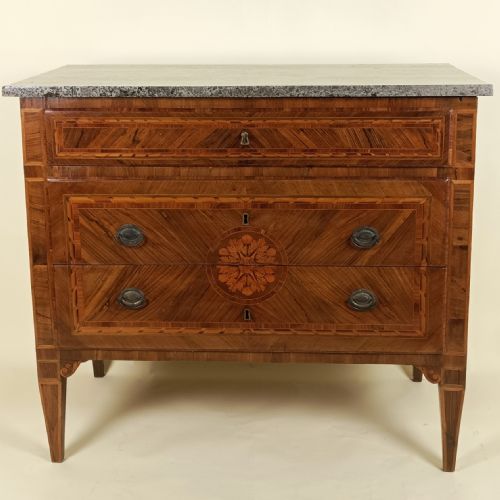


19th Century Italian Chest
A 19th century Italian chest brings continental architectural presence and intricate marquetry directly into a room.
19th Century Italian Chest
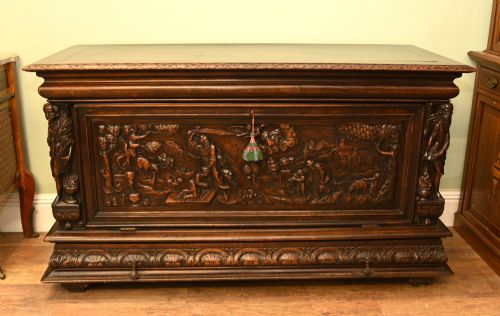
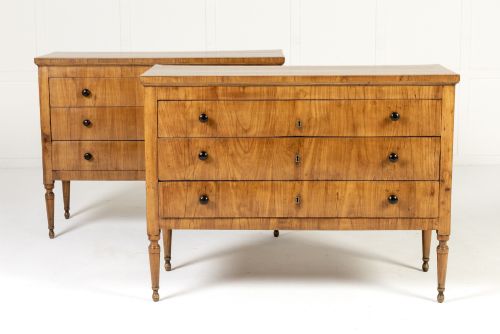
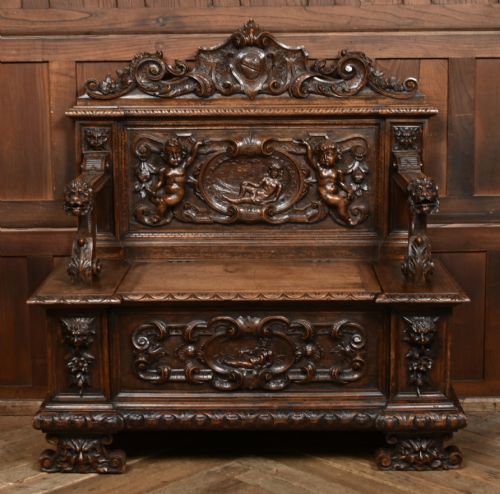
A 19th century Italian chest encompasses grand commodes, inlaid dressing chests, carved cassapanca benches, and small table caskets. These pieces emerge across periods from Georgian through to the late eighteen-nineties in distinct regional styles.
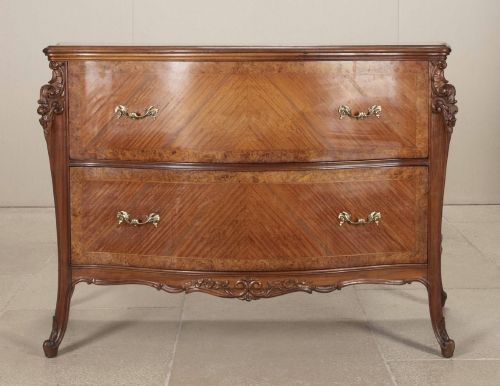
Commodes form the core of the available selection, often presenting serpentine or bombe profiles alongside flat fronts. Buyers encounter both utilitarian drawer arrangements and elaborate decorative receptacles shaped by cabinetmakers across Italy.
Revival aesthetics heavily influence the form, drawing on Renaissance, Neoclassical, and Rococo idioms. Walnut and fruitwood carcasses carry marquetry, painted Venetian scenes, or carved relief panels characteristic of the era.
Materials and construction methods
Walnut serves as the primary timber, supported by fruitwood, mahogany, kingwood, and satinwood for contrasting details. Burr walnut and olive wood provide distinctive grain patterns on drawer fronts and lids.
Marquetry and inlay utilise fine woods, bone, and ebony to create geometric or figural ornamentation. Polychrome paint and giltwood finish surface details on specific Venetian and revival pieces, while marble slabs top several commodes and washstands.
19th Century Italian Chest Retail Price Guide 2026
Typical asking prices for 19th century italian chest among the pieces listed under this phrase on Sellingantiques today, from the lower quarter to the upper quarter. They describe what is for sale here now, not the wider market.
Listings feature walnut, fruitwood, and satinwood alongside marble tops and polychrome painted finishes across nineteenth-century forms.
Distinctions in craftsmanship and design
The sophistication of the inlay and marquetry sets individual examples apart, moving from simple banded borders to complex pictorial scenes with diverse wood species and bone. Carved elements range from crisp, deep relief work in walnut and beech to simpler moulded surfaces.
Cabinetmaking integrity shows in the fluidity of bombe curves, the precision of drawer construction, and the integration of contrasting timbers like satinwood and ebony. Original marble tops and surviving polychrome paint finishes elevate the standing of a piece.
The 19th Century Italian Chest Glossary
- Cassapanca
- An Italian bench with a built-in chest base and a high back. It combines seating with secure storage space.
- Bombe
- A swollen or bulging convex shape used on the front and sides of furniture. This contour requires advanced woodworking skill.
- Marquetry
- The art of applying veneer pieces in wood, bone, and other materials to form decorative patterns. It creates pictorial or geometric surfaces on the carcass.
- Sorrento ware
- Decorative woodwork originating from the town of Sorrento, featuring intricate inlaid mosaic patterns. It frequently appears on smaller boxes and caskets.
19th Century Italian Chest: Frequently Asked Questions
How do I clean a walnut commode?
Dust regularly with a soft, dry cloth to prevent dirt accumulation on the polished wood surface. Avoid commercial sprays and moisture, applying a quality beeswax sparingly when the timber appears dry.
Keep the chest away from direct heat sources and sunlight to protect the walnut grain and marquetry from fading or splitting.
Where should I place a cassapanca bench?
A cassapanca bench works effectively in a generous hallway or entrance area, providing both a seat and deep storage for linens or seasonal items. Its high carved back creates a strong visual anchor against a bare wall.
Ensure the room has stable humidity levels to protect the substantial structural timbers from movement.
Can I use a marble top chest daily?
A marble top chest handles everyday use well, offering a durable surface for lamps, decorative objects, or dressing items. Wipe spills promptly with a damp cloth to prevent staining, particularly on porous stones.
Treat the underlying wood frame with care by avoiding excessive weight or harsh impacts against the carcass.
How do I identify Renaissance revival styles?
Renaissance revival pieces feature heavy carved motifs, dark walnut tones, and architectural mouldings inspired by earlier centuries. Look for details like figurative panels, paw feet, and applied bone or ebony accents.
Examine the construction joints and interior timber to confirm nineteenth-century manufacturing methods beneath the revival styling.