



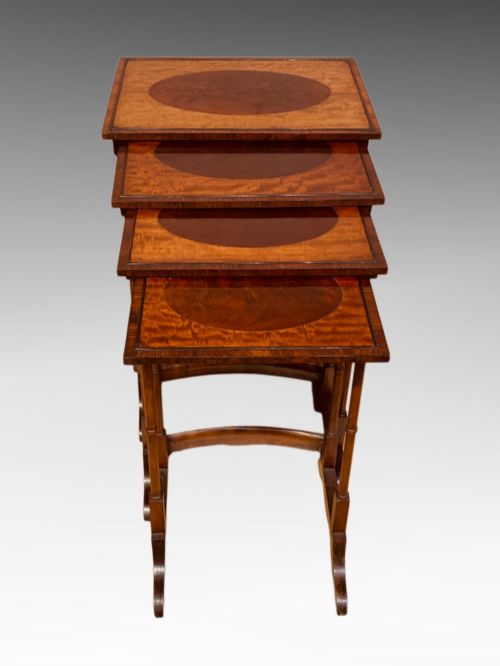
Edwardian Oval Occasional Table
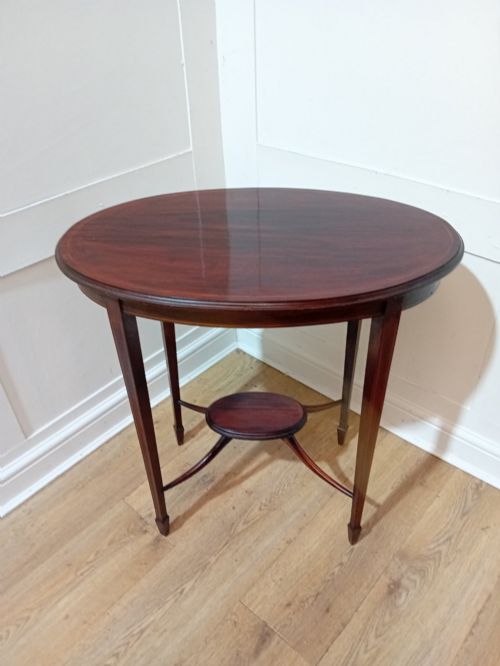
When an edwardian oval occasional table enters a room, it brings the light touch of turn-of-the-century craftsmanship into daily use.
Edwardian Oval Occasional Table
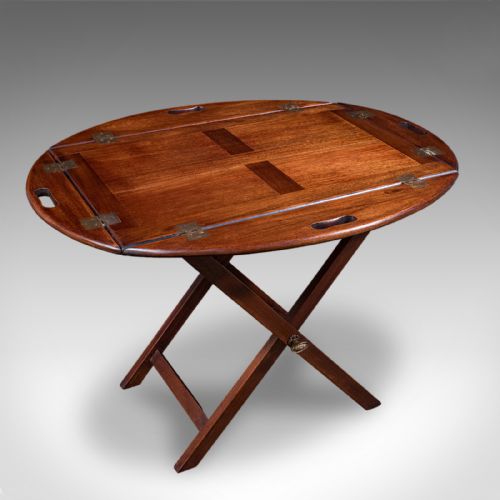
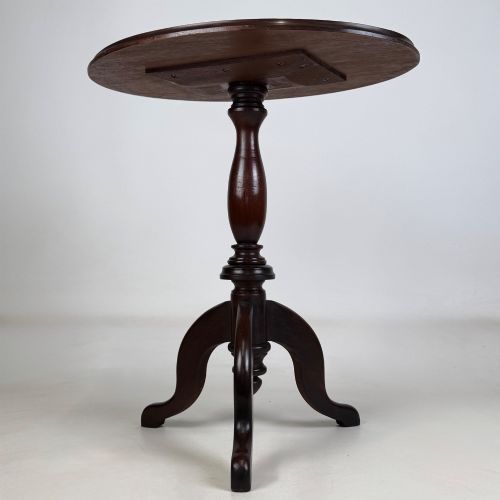
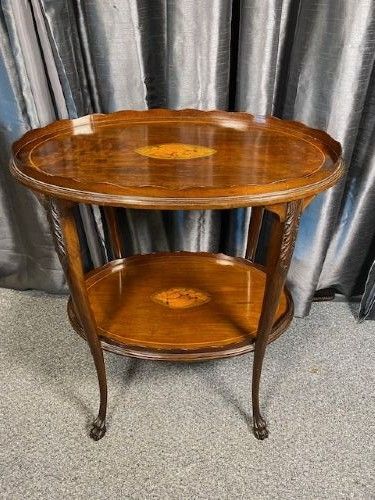
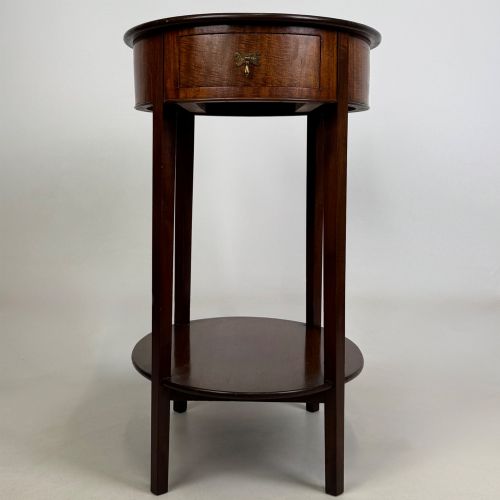
An edwardian oval occasional table typically takes the form of a small, movable stand designed for lamps, books, or afternoon tea. These pieces emerge predominantly from the Edwardian period and the late nineteenth century, spanning various revival styles such as Sheraton and Georgian.
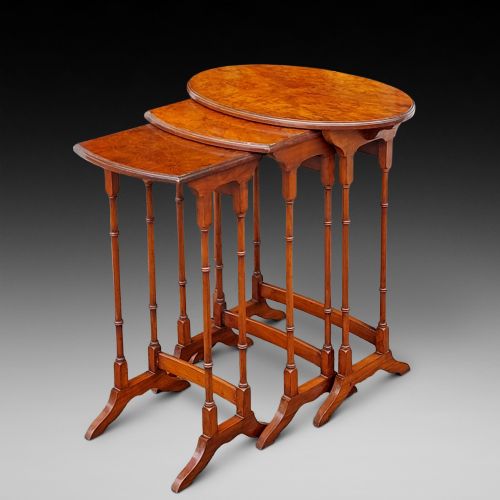
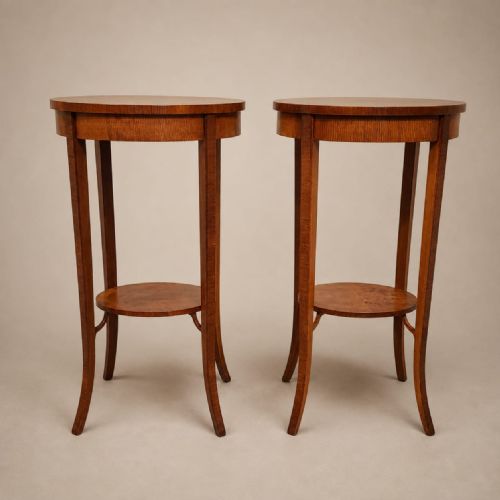
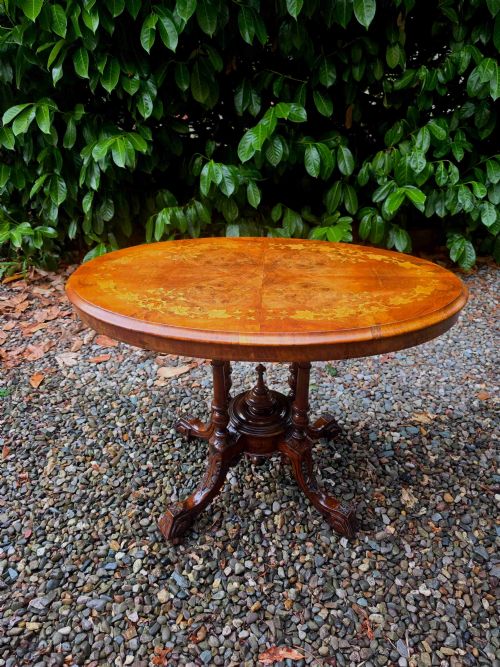
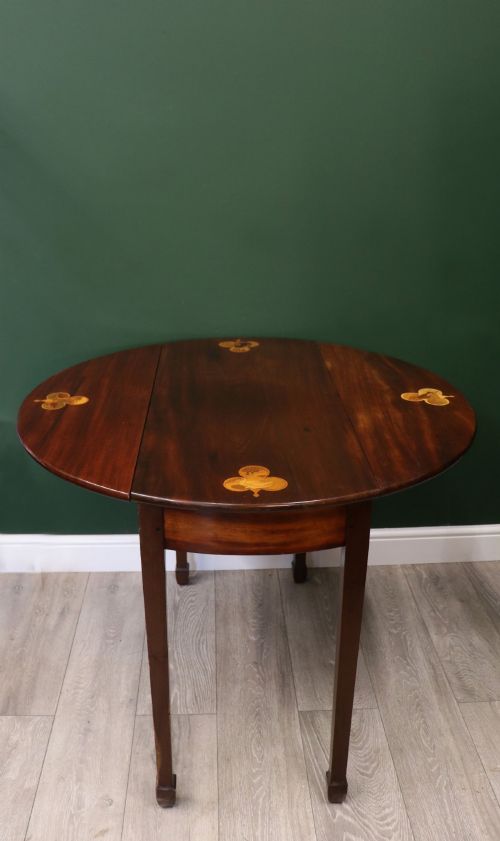
The selections on this page appear as single lamp stands, drop-leaf Pembroke tables, or tiered etageres. Mahogany forms the backbone of these listings, accompanied by lighter satinwood and rich burr walnut.
Materials and Techniques
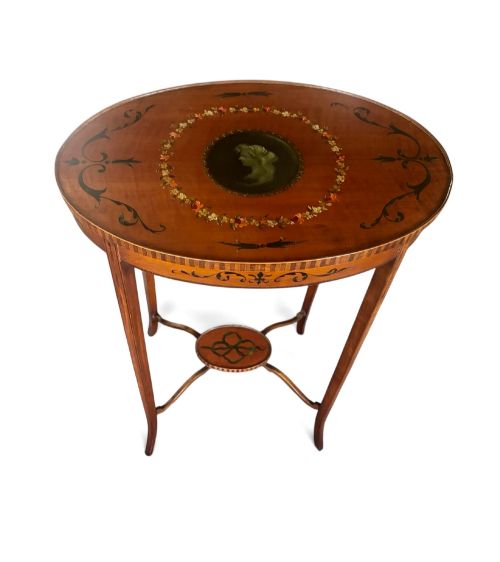
Cabinet makers constructed these tables using solid timbers and veneered carcases of mahogany, walnut, and satinwood. Many surfaces display delicate boxwood stringing and contrasting crossbanding along the curved perimeter.
Painted floral decoration and marquetry appear across satinwood panels, while lower tiers provide structural stability and extra display space. Turned or tapered legs frequently terminate in small brass castors.
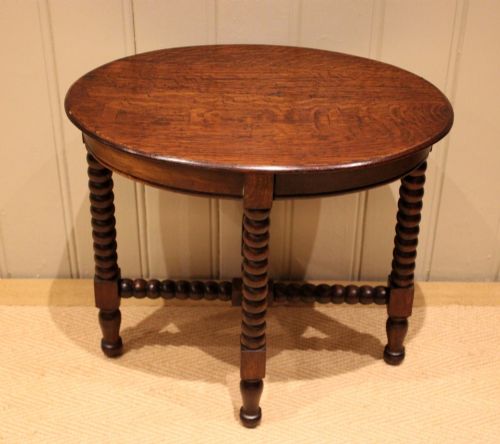
Several examples incorporate barley twist legs and multi-tiered nesting configurations.
Judging Quality
The distinction between standard production and superior execution rests on the crispness of the inlay and the selection of timber figures. Rich burr walnut and figured mahogany with fine grain patterns denote a higher tier of manufacture.
Hand-painted floral motifs and precise marquetry indicate skilled workshop output rather than simple factory output. Construction integrity, such as tight joints and well-fitted drawers, separates enduring examples from lesser items.
The Edwardian Oval Occasional Table Glossary
- Crossbanding
- A narrow strip of veneer applied to the edge of a table top with the grain running perpendicular to the surface. This technique creates a distinct visual border around the oval shape.
- Marquetry
- Pieces of different coloured woods assembled to form a decorative picture or pattern set into the timber surface. Artisans use this method to embellish table tops with floral or classical motifs.
- Stringing
- A thin line of contrasting wood inlaid into grooves on table legs or tops. It defines the structural outlines of the piece.
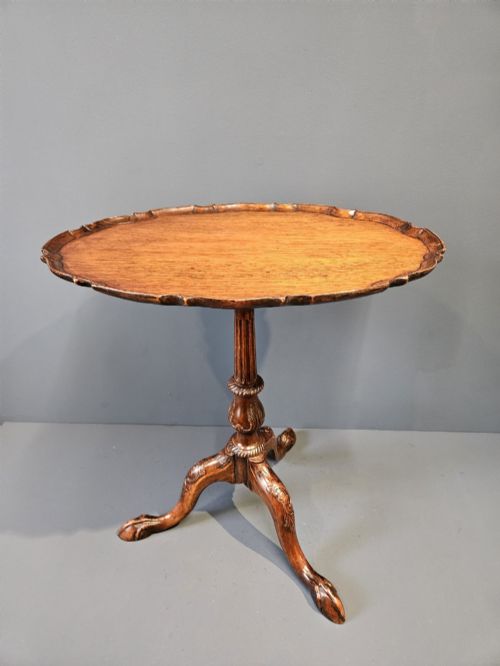
- Pie Crust
- A carved, raised edge resembling pastry work found on circular or oval table tops. This ornamental detail prevents items from sliding off the surface.
Edwardian Oval Occasional Table: Frequently Asked Questions
What is an edwardian oval occasional table used for?
These versatile stands served as moveable surfaces for holding lamps, decorative ceramics, or tea service during the early twentieth century. Today, they function well beside armchairs or sofas to hold reading material and lighting.
Their compact proportions allow them to fit easily into smaller residential spaces without overwhelming the room layout.
How do I identify a sheraton revival piece?
Sheraton revival tables draw inspiration from eighteenth-century neoclassical designs, featuring light satinwood veneers, painted floral ornamentation, and tapered legs. They prioritize elegance and symmetry over heavy ornamentation.
Makers working in this style often incorporated delicate stringing and marquetry into the table tops.
Are these tables sturdy enough for daily use?
Most examples utilise solid framing beneath mahogany or walnut veneers, providing adequate stability for domestic placement. Tables equipped with lower tiers or cross-stretchers offer additional rigidity.
Care should be taken to avoid placing excessive weight on drop-leaf flaps or delicate satinwood surfaces.
How should I care for satinwood and mahogany?
Maintain the polished timber surfaces by dusting gently with a dry, soft cloth and avoiding silicone-based polishes. Keep the furniture away from direct heat sources and strong sunlight to prevent veneer cracking or fading.
Applying a traditional beeswax occasionally preserves the lustre of the antique finish.