
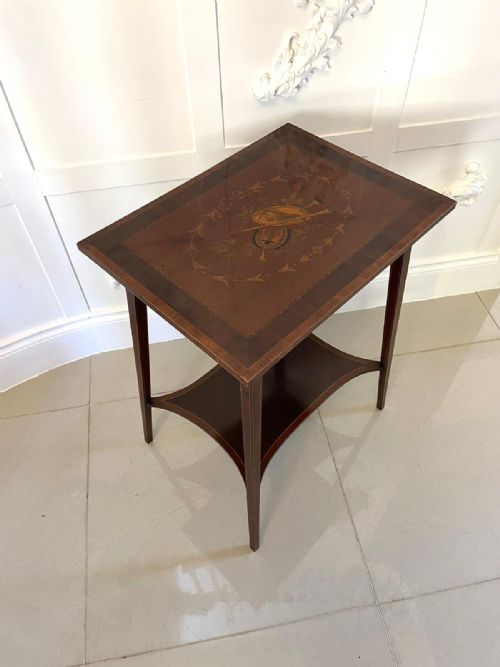
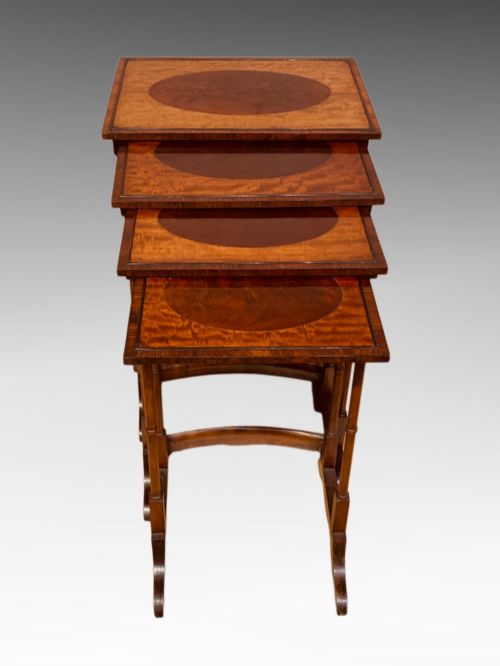


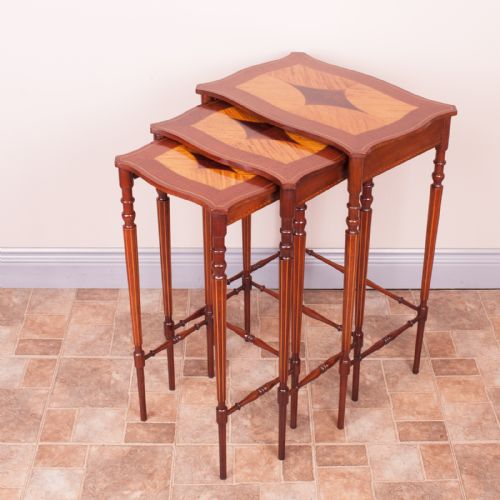


Vintage Satinwood End Table
A vintage satinwood end table brings light timber tones and refined neoclassical design into a room.
Vintage Satinwood End Table
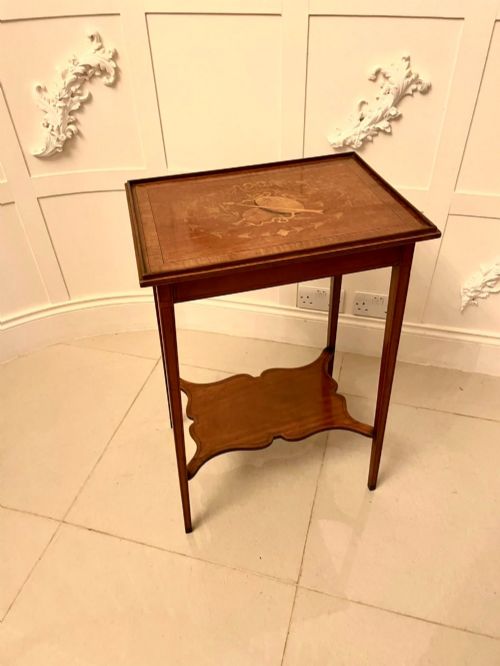
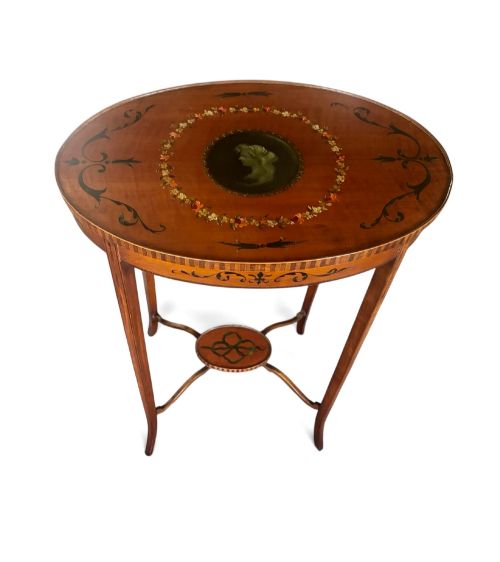
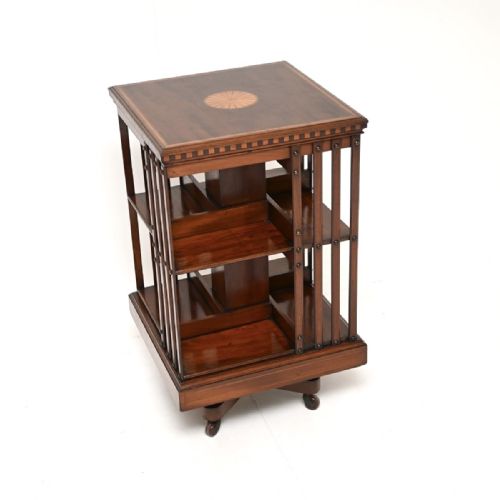
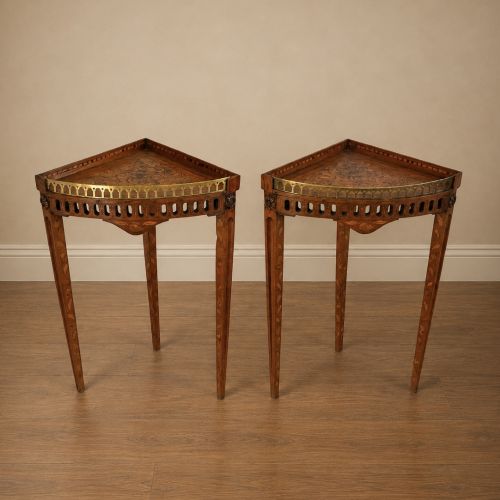
A vintage satinwood end table encompasses small occasional furniture, lamp tables, side tables, and nests of tables produced across the nineteenth and early twentieth centuries. These pieces appear in forms such as circular, oval, octagonal, and corner tables, alongside functional variations like revolving bookcases and storage trunks.
The Edwardian period and the Sheraton Revival style strongly shape the selection, bringing lighter woods and classical proportions to domestic spaces. Buyers seeking a vintage satinwood end table will frequently encounter Edwardian and late nineteenth-century examples featuring delicate proportions designed for sitting rooms and drawing rooms.
How they were made
Cabinetmakers utilised satinwood alongside mahogany, rosewood, and walnut, often employing solid timbers and veneers over secondary woods. Construction frequently incorporates contrasting stringing and banding.
Decorative surface techniques include boxwood inlay, ebony detailing, painted floral decoration, parquetry, and marquetry. Brass galleries and hardware also appear on selected pieces to accent the woodwork.
Materials documented across the pieces include satinwood, mahogany, rosewood, walnut, boxwood inlay, and brass galleries.
What varies in quality
The refinement of the timber selection and the crispness of the inlay separate standard examples from finer works. Finely figured grain patterns and intricate boxwood or ebony stringing indicate greater workshop care.
The complexity of the form and decorative additions such as hand-painted floral motifs or cast brass galleries elevate the piece. Structural integrity in smaller joints, such as those on nests of tables or revolving book stands, determines durability.
The Vintage Satinwood End Table Glossary
- Satinwood
- A dense, lustrous timber native to tropical regions, prized for its golden sheen and smooth texture. It serves as a primary veneer or solid wood in refined cabinetmaking.
- Sheraton Revival
- A late nineteenth and early twentieth-century design movement inspired by the neoclassical work of eighteenth-century designer Thomas Sheraton. It relies on slender legs, satinwood veneers, and classical inlay.
- Marquetry
- The art of applying pieces of veneer to a structure to form decorative patterns and pictorial designs. Craftsmen use various coloured woods to achieve tonal contrast.
- Stringing
- Thin inlay lines of contrasting timber embedded into the surface of furniture. It typically outlines table edges and drawer fronts.
- Parquetry
- A geometric mosaic of wood pieces used for decorative surfaces on table tops. It creates repeating patterns through the arrangement of contrasting grain directions.
Vintage Satinwood End Table: Frequently Asked Questions
Where should I place a satinwood end table?
These tables suit sitting rooms, studies, and bedrooms as lamp tables or occasional surfaces next to seating.
Their lighter timber tones work well beside upholstered furniture and darker antique pieces to brighten a room.
How do I clean satinwood furniture?
Dust surfaces regularly with a soft, dry cloth to prevent accumulation in carved or inlaid details.
Avoid silicone polishes and excessive moisture, using traditional wax sparingly to nourish the timber.
What is a Sheraton Revival end table?
Sheraton Revival pieces date from the late nineteenth and early twentieth centuries, mimicking eighteenth-century neoclassical designs.
They feature light satinwood veneers, tapered legs, and delicate floral or geometric inlays.
Can I use an antique table for daily use?
Most occasional and lamp tables handle everyday placement of books, lamps, and small objects safely.
Use coasters to protect polished timber and painted decorations from liquid rings and heat.