



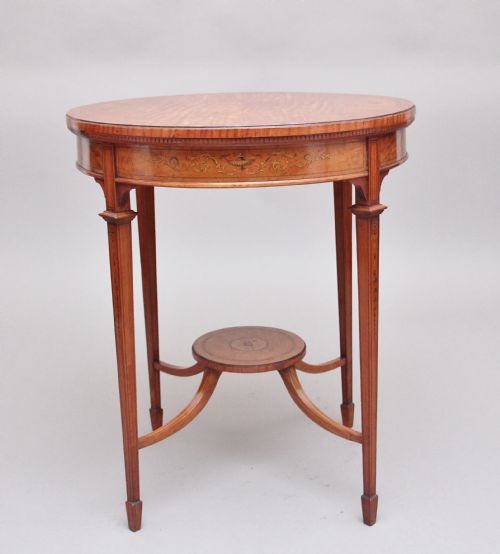
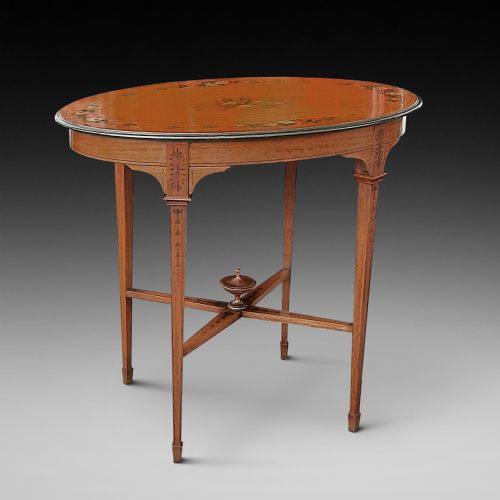
Painted Satinwood Lamp Table
A painted satinwood lamp table brings light, colour, and classical grace to a room, offering a slender surface for illumination.
Painted Satinwood Lamp Table
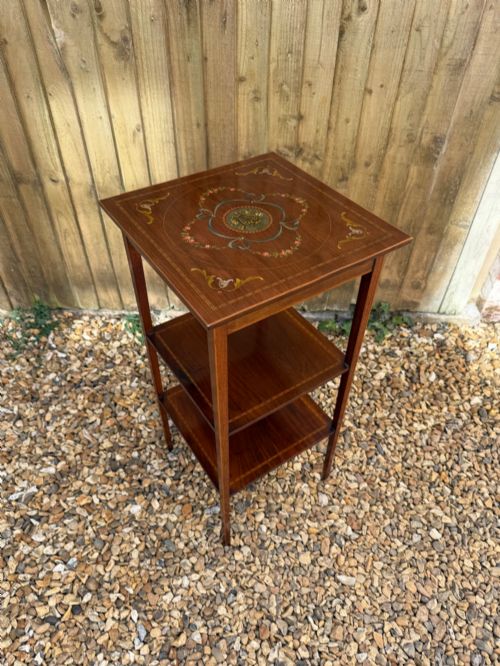
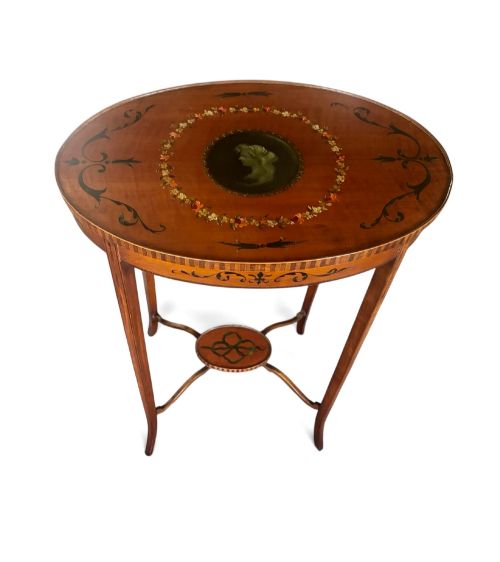
A painted satinwood lamp table is a light occasional or side table designed for domestic placement beside seating or in corners, functioning as a surface for lamps and ornaments. These pieces emerge from periods such as the Edwardian era, 1800, 19th Century, 1910, and 1900, reflecting enduring historical demand for refined domestic furniture.
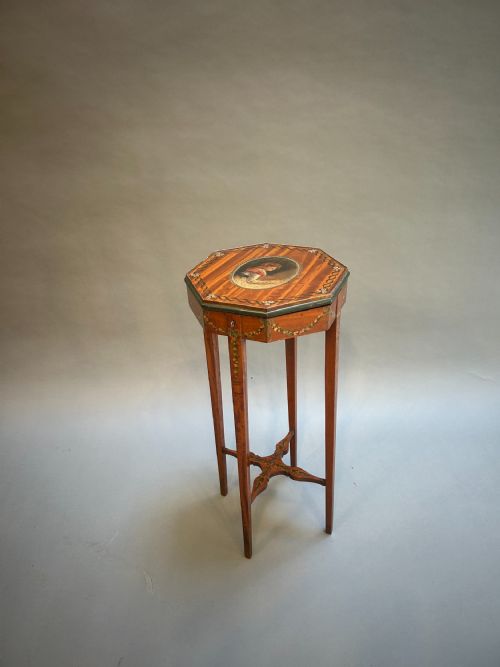
Buyers encounter forms that include octagonal tops, oval surfaces, and square or rectangular occasional tables, alongside etageres and side tables. Stylistic influences draw heavily on Sheraton Revival and Neoclassical manners, showcasing classical symmetry and lightness.
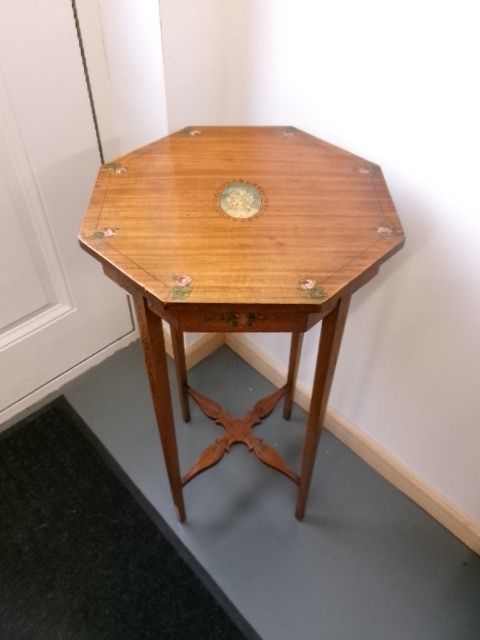
The version most commonly met on this page is the Edwardian or 1900 occasional table, featuring painted floral decoration upon a satinwood ground. These smaller tables balance decorative appeal with practical utility, suiting contemporary interiors just as they suited period drawing rooms.
How they were made
Cabinet makers utilised satinwood as a primary timber or veneer, often complemented by mahogany and accented with boxwood inlay, marquetry, and brass fittings. The timber provides a pale, lustrous yellow ground that accepts fine decorative work.
Decoration relies on hand-painted floral motifs and classical details applied directly to the wood surface, executed within the Sheraton Revival and Neoclassical traditions. Inlay work introduces contrasting dark and light woods to define borders and geometric panels.
Some tables feature octagonal tops designed to fit snugly into nineteenth-century corners where round tables would steal precious knee room.
What varies in quality
Quality rests in the crispness of the hand-painted decoration and the precision of the boxwood inlay. Finer examples display delicate, assured brushwork on the floral motifs rather than hurried or heavy-handed application.
The choice of timber and the stability of the construction also divide grades, with dense satinwood veneers and tight cabinet joints marking out superior workshop output. Tables possessing well-figured grain and harmonious proportions hold greater aesthetic weight.
The Painted Satinwood Lamp Table Glossary
- Satinwood
- A hard, durable tropical timber with a natural golden sheen and smooth texture. It serves as the primary canvas for painted and inlaid decoration.
- Sheraton Revival
- A late nineteenth and early twentieth century design movement inspired by the late eighteenth century work of Thomas Sheraton. It favours light proportions, satinwood, and classical painted motifs.
- Marquetry
- The art of applying small pieces of veneer to a structure to form decorative patterns and pictures. It differs from inlay by assembling the pattern before fixing it to the base.
- Etagere
- A set of tiered open shelves used for displaying small objects or ornaments. These pieces combine utility with decorative display.
- Neoclassical
- A style drawing on the art and culture of ancient Greece and Rome. It emphasises symmetry, straight lines, and classical motifs.
Painted Satinwood Lamp Table: Frequently Asked Questions
Where should I place a painted satinwood lamp table?
These tables find natural placement beside armchairs, sofas, or in entrance halls where a slender surface is useful.
Because of their decorative painted surfaces, they benefit from positioning away from direct, harsh sunlight to protect the pigments.
How do I care for a painted satinwood surface?
Maintenance requires dusting gently with a soft, dry cloth and avoiding all chemical polishes or abrasive cleaners.
Keeping the table in a room with stable humidity prevents the timber and delicate veneers from drying out or splitting.
Are these tables sturdy enough for daily use?
Occasional tables are built for light domestic service, holding lamps, books, or small decorative items rather than heavy loads.
Their slender legs and delicate construction mean they suit gentle handling in domestic spaces.
What distinguishes Sheraton Revival pieces from other styles?
Sheraton Revival furniture references the lighter forms and decorative vocabulary of the late eighteenth century.
These pieces typically feature satinwood, painted floral swags, and classical geometry rather than heavy Victorian mass.