


Mahogany Veneer Table
These mahogany veneer table pieces bring rich timber figures and traditional form into a room, offering both practical surface space and distinct period character.
Mahogany Veneer Table
When searching for a mahogany veneer table, buyers encounter a variety of forms designed for everyday utility and display across several distinct periods. The selection includes occasional tables, centre pieces, console tables, nests of tables, and specialised writing desks.
Most examples originate from the nineteenth century, the Edwardian era, and the early twentieth century, spanning styles from Regency and Sheraton Revival to Art Deco and Biedermeier. Circular occasional tables and centre tables appear most frequently among the current options.
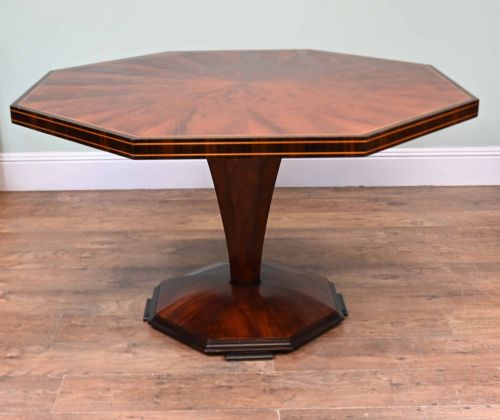
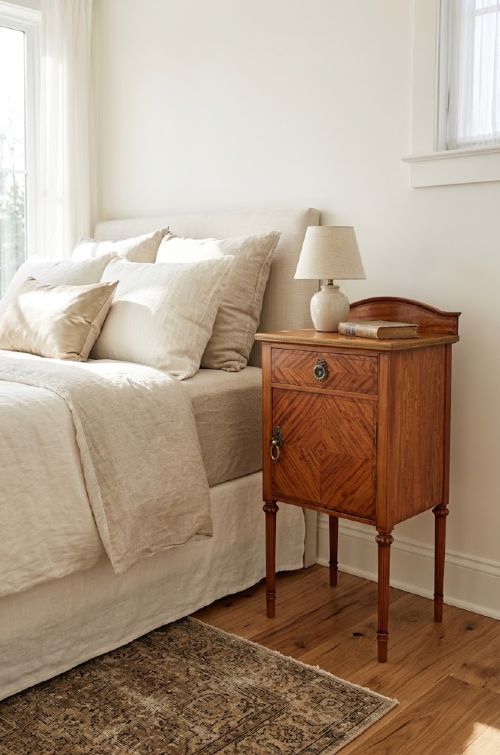
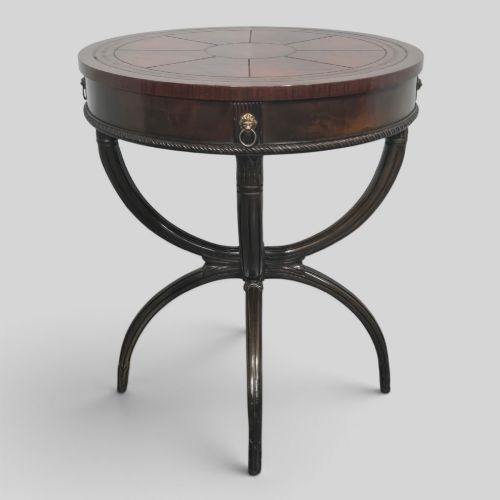
Makers and workshops utilised contrasting timbers alongside primary mahogany to achieve decorative surfaces, incorporating satinwood, yew, ebony, and kingwood veneers. These pieces range from simple bedside nightstands to grand dining and hall tables with radial or segmented top arrangements.
How they were made
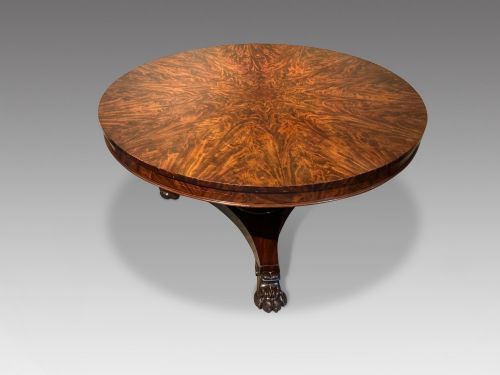
Craftsmen applied thin slices of timber over solid secondary woods, selecting flame mahogany and other figured veneers to create striking grain patterns across table tops. Brass mounts, glass panels, and inlaid specimen wood borders occasionally complemented the primary timber construction.
Makers employed techniques such as quarter-veneering and radial veneer placement to build symmetrical patterns on circular and oval surfaces. Joinery methods adapted to the specific form, from tilt-top mechanisms on centre tables to sturdy frames on nests and console tables.
Some ladies found genuine utility in specialised work-tables fitted with compartments for sewing, turning a simple occasional piece into a tidy Victorian storage box.
What varies in quality
Quality rests upon the selection and matching of the timber veneers, with flame and radial grain arrangements showing higher levels of cabinet-making skill. The preservation of the original surface finish and the precision of any inlay work further separate standard examples from finer pieces.
Structural integrity, stability in tilt-top mechanisms, and the condition of secondary woods like oak or walnut dictate the long-term merit of an individual table. Finer pieces demonstrate careful attention to proportion and harmonious timber selection across both top surfaces and supporting bases.
Bowman Brothers
The Mahogany Veneer Table Glossary
- Flame Mahogany
- A wood figure resembling flickering flames, achieved by cutting across the branch junctions of the tree. It is highly valued for decorative table tops.
- Centre Table
- A freestanding table finished on all sides, designed to sit in the middle of a room rather than against a wall. These often feature circular or oval tops.
- Tilt-Top
- A mechanism allowing the table top to pivot to a vertical position when not in use. This practical design saved space in period interiors.
- Inlay
- Pieces of contrasting wood, brass, or other materials inserted into the primary surface to form decorative patterns. Specimen wood veneers are often used for this purpose.
Mahogany Veneer Table: Frequently Asked Questions
Are these tables suitable for daily use?
Many of these pieces were built for practical domestic purposes, such as serving drinks, holding bedside items, or providing a surface for writing. Their sturdy construction allows them to function reliably in modern rooms.
Care should be taken with delicate antique surfaces, particularly those featuring fine inlays or thin decorative veneers. Placing them out of high-traffic areas helps preserve their condition over time.
How can I tell the period of a table?
Examine the overall style, construction methods, and secondary timbers used in the frame. Characteristics such as Regency pedestal bases, Edwardian inlay work, or Art Deco geometric lines offer strong clues to the date of manufacture.
Look closely at the underside and interior joints for tool marks and construction details characteristic of specific eras. Comparing the hardware, such as brass feet or hinges, also aids in identifying the period.
What is a tilt-top table used for?
A tilt-top table served as a versatile piece that could be pushed against a wall or stored in a corner when floor space was needed. The pivoting mechanism allowed the top to rest vertically.
In period homes, these tables were often brought into the centre of a room for tea, reading, or conversation. Today, they function as display pieces or occasional tables with a historic mechanism.