
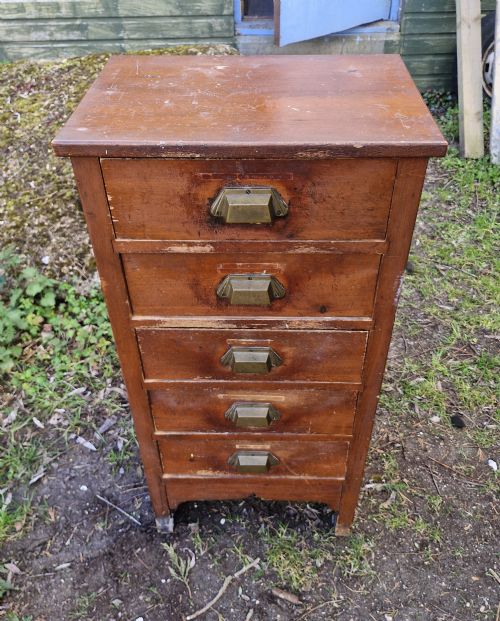


Edwardian Office Chest
These edwardian office chest pieces are practical filing cabinets and banks of drawers designed for daily utility, bringing period character to modern workspaces.
Edwardian Office Chest
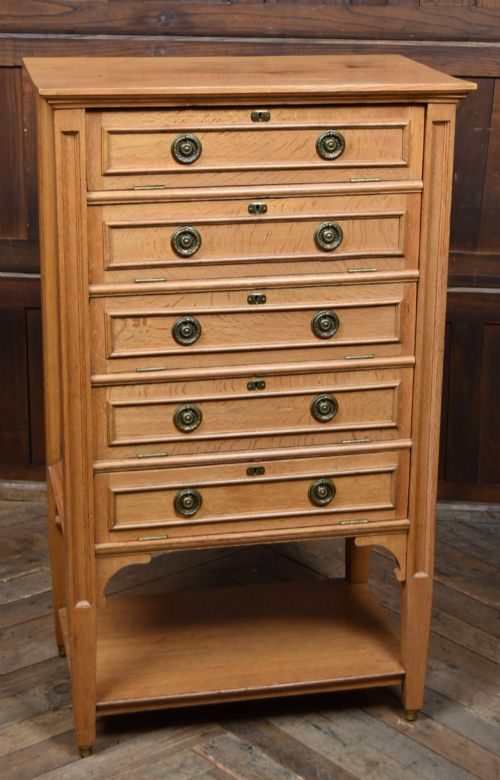
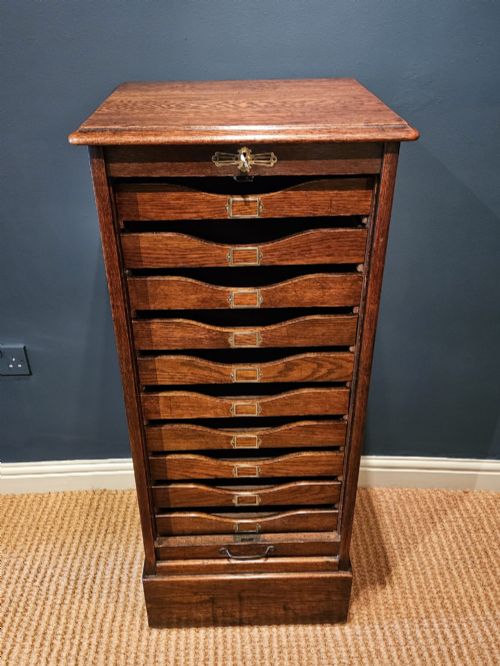
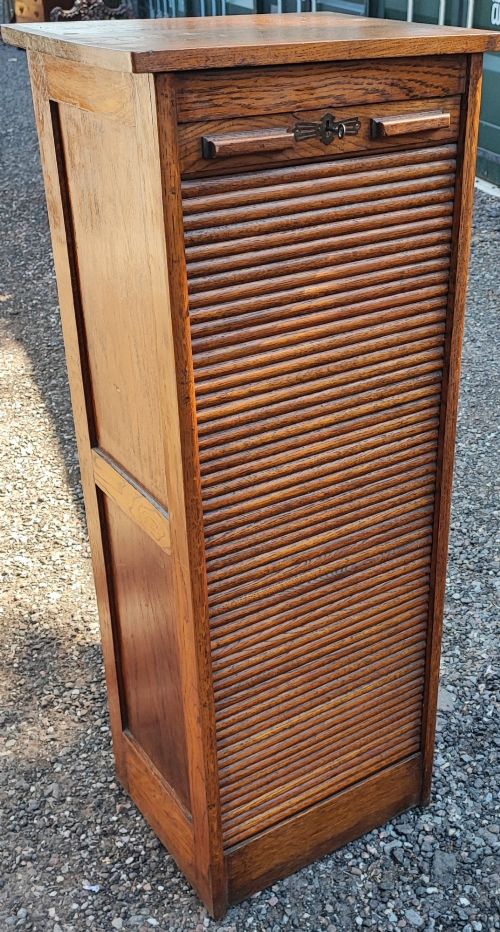
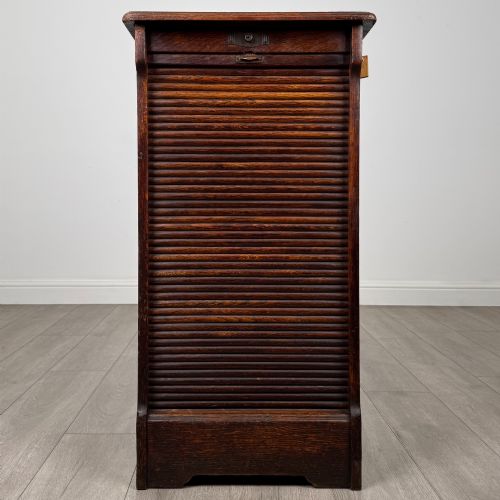
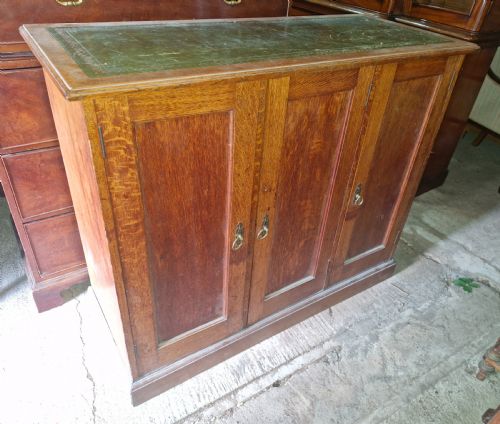
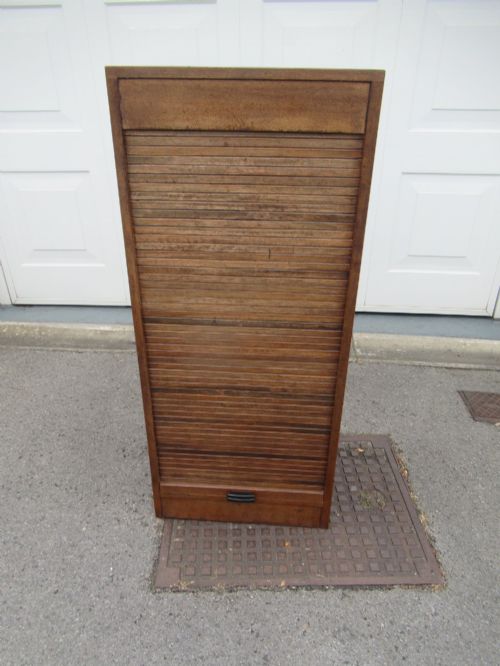
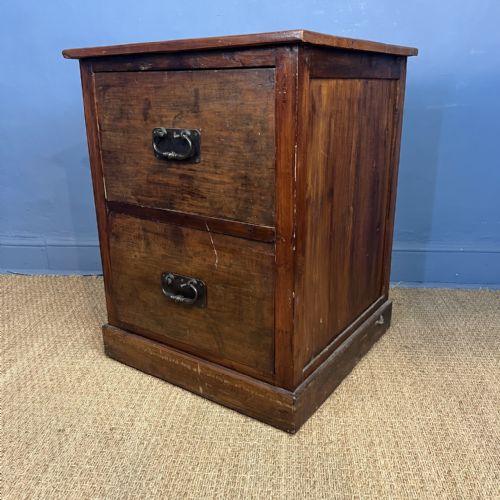
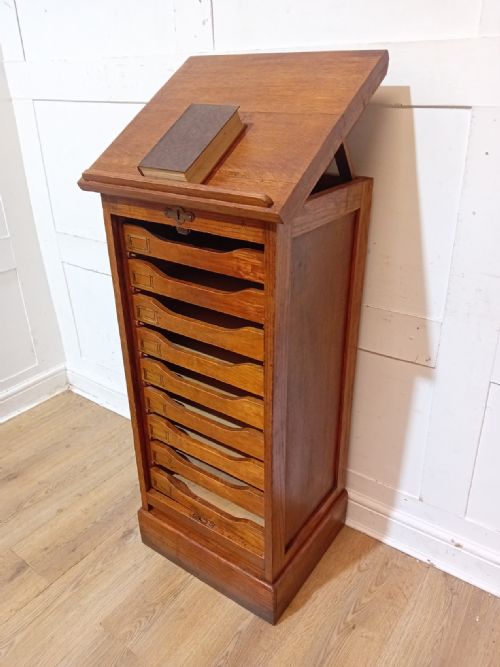
When you search for an edwardian office chest, you are looking at functional storage furniture built to organise correspondence and documents in period workspaces. The version you are most likely to meet on this page is an oak filing cabinet, often featuring a tambour front or multiple stacked drawers. These items originate predominantly from the Edwardian era and the early twentieth century, reflecting the administrative expansion of the period.
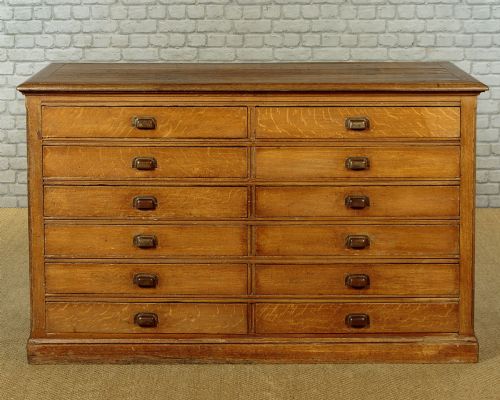
The selection also includes banks of drawers, music cabinets, and writing bureaux executed in mahogany, walnut, and teak. Alongside standard office pieces, variants such as haberdashery cabinets and patent letter files appear within the inventory. Their forms prioritise accessibility and sorting, resulting in sturdy proportions and compartmentalised interiors.
What varies in quality
Quality in these filing pieces rests upon the integrity of the mechanism and the completeness of the original hardware. Cabinets retaining working tambour shutters and matching label holders command higher regard than those altered or stripped of their fittings. The selection of figured timber veneers and the weight of the brass handles further distinguish finer workshops from standard utility production.
Internal engineering marks the difference between basic utility storage and superior cabinet-making. Smoothly running drawer runners, solid dovetail joints, and patent locking systems indicate higher standards of manufacture. Pieces that retain their original patination without excessive surface renewal demonstrate superior historical survival.
Listings for this phrase feature pieces constructed from oak, mahogany, walnut, and pine, spanning periods from the late nineteenth century to the mid-twentieth century.
Amberg·Shannon·Simpoles of Manchester
The Edwardian Office Chest Glossary
- Tambour
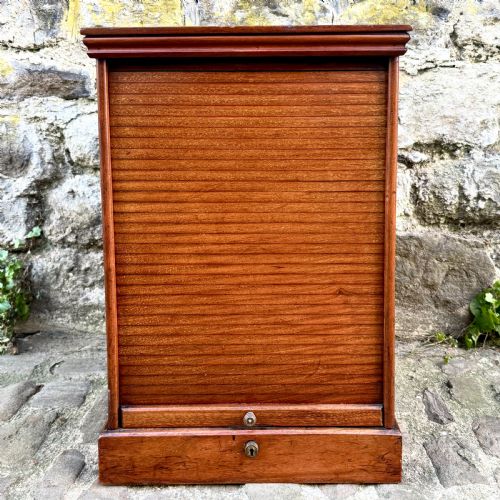
- A flexible shutter door formed of narrow wooden strips glued to a canvas backing. This mechanism slides along tracks to conceal the interior shelves or file slots.
- Bank of drawers
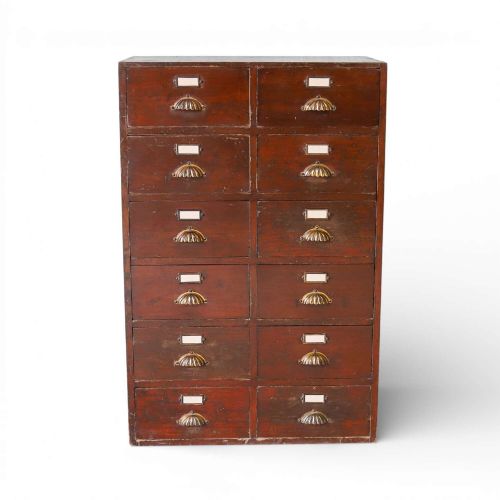
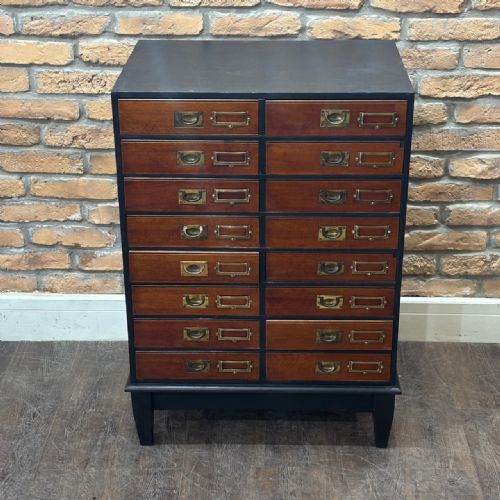
- A multi-tiered chest or cabinet containing numerous shallow drawers arranged vertically or horizontally. Such units served to sort documents, letters, or small objects.
- Label holder
- A small metal frame affixed to a drawer front to hold a paper card identifying the contents. These brass fixtures are characteristic of early filing furniture.
- Bureau
- A desk featuring a sloping hinged flap that drops down to form a writing surface, often concealing small interior drawers and pigeonholes.
- Haberdashery cabinet
- A glass-fronted or multi-drawer storage unit originally designed for retail display and textile organisation. They translate effectively into domestic storage for small items.
Edwardian Office Chest: Frequently Asked Questions
What is a tambour front filing cabinet?
A tambour front filing cabinet utilises a sliding slatted wooden door that rolls around a track to conceal the interior drawers or shelves. This design allowed businesses to secure documents without requiring clearance for swinging cupboard doors in cramped offices.
These mechanisms require careful alignment and clean tracks to operate correctly. They represent a signature innovation of early twentieth-century office furniture design.
How do I distinguish Edwardian from Victorian pieces?
Edwardian office chests generally exhibit lighter timber tones, cleaner lines, and less ornate carving than their nineteenth-century predecessors. They frequently incorporate functional brass label holders and patent filing mechanisms suited to modernising bureaucratic needs.
Victorian examples often lean towards heavier proportions, darker mahogany or rosewood finishes, and more elaborate decorative detailing. Overlapping production dates around the turn of the century mean certain transitional pieces share characteristics of both eras.
How were multi-drawer cabinets used originally?
Multi-drawer cabinets served as central repositories for correspondence, invoices, music sheets, and specimen collections in professional or domestic settings. The addition of small label holders allowed clerks to index large volumes of paperwork efficiently before the widespread adoption of modern vertical filing systems.
In contemporary interiors, these compartmentalised units adapt easily to organising stationery, craft materials, or kitchen accessories. Their shallow drawers prevent clutter from accumulating out of sight.
Can I use an antique filing chest daily?
These pieces were built for heavy commercial use and remain robust enough for contemporary daily storage. Solid oak and mahogany construction ensures the frames and drawer joints withstand regular opening and closing.
Care should be taken not to overload deeper drawers with modern heavy hanging folders unless the runners have been reinforced. Maintaining stable humidity levels prevents the timber from warping and preserves the movement of tambour doors.