


Commercial Oak Drawers
Commercial oak drawers are hard-working mercantile units built to organise paperwork and shop stock, offering immense storage utility for modern homes.
Commercial Oak Drawers
Commercial oak drawers comprise heavy-duty storage furniture built for trade and office environments, including filing cabinets, haberdashery counters, and banks of drawers. These pieces date from the nineteenth century through the interwar decades, spanning the Edwardian period and the nineteen-twenties and thirties.
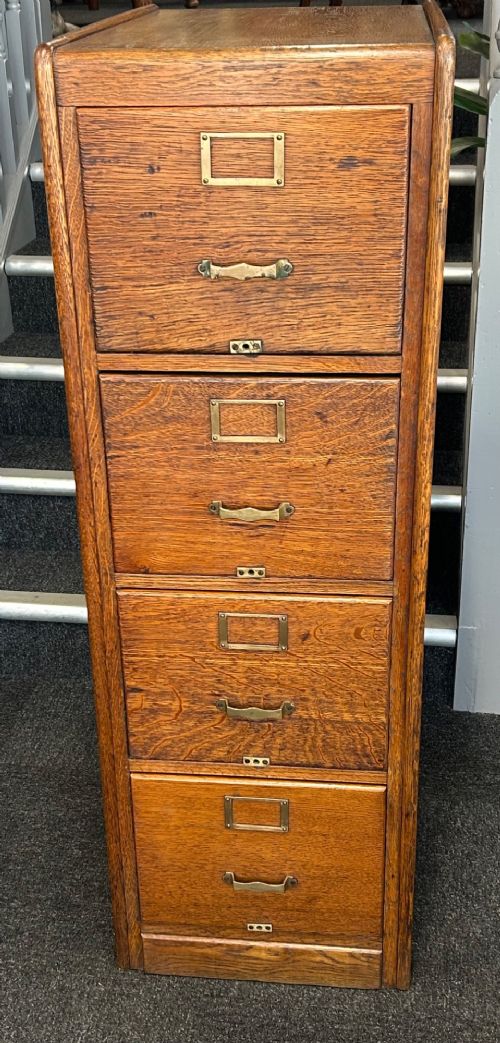
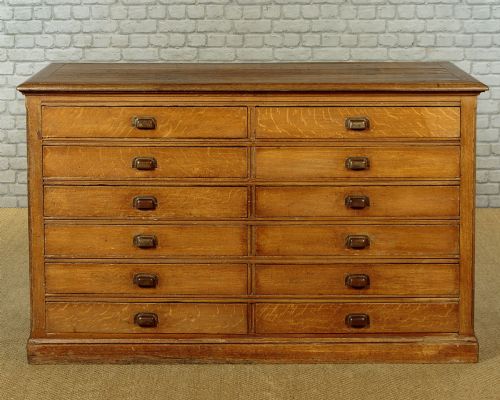
The versions most frequently encountered on this page are utilitarian shop counters and office filing units designed for rigorous daily use. Examples range from countertop needle drawer cabinets to substantial haberdashery units and patent letter files.
Origins include domestic British workshop pieces alongside French provincial pieces such as butchers blocks and specialised mercantile fittings. Each form reflects the specific commercial trade for which it was originally constructed.
Construction and Materials
These pieces are built predominantly from solid oak, paired frequently with secondary timbers such as beech, hornbeam, and iron to reinforce high-stress joints and drawer runners. The heavy timber construction provides the structural integrity required for commercial trade.
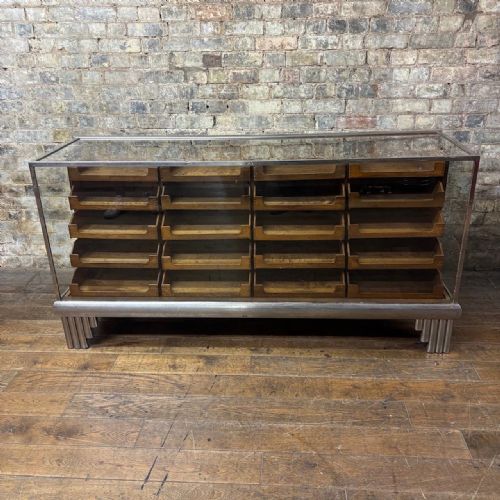
Functional hardware defines the construction, incorporating cast brass drawer pulls, metal handles, and chrome details alongside specialised elements like glass fronts on haberdashery counters. Patent locking mechanisms and letter file hardware appear on office units, showing precise mechanical design.
Listings span multiple decades from eighteen-sixty through the nineteen-thirties, encompassing Edwardian and interwar commercial eras.
Assessing Quality
Quality in these commercial pieces rests upon the integrity of the original hardware and the robustness of the timber joinery. Units retaining their original brass or chrome pulls, patent mechanisms, and intact glass panels demonstrate superior original specification.
The distinction between standard utility items and finer pieces lies in the sophistication of the internal configuration and the honesty of the timber grain. Refined proportions and specialised mercantile origins elevate certain counters and filing systems above standard office furniture.
Dudley & Co·Amberg·Trussant & Cie·Shannon
The Commercial Oak Drawers Glossary
- Haberdashery cabinet
- A mercantile storage unit featuring multiple shallow drawers, often with glass fronts or panels, originally used in shops to display and store small sewing goods and accessories.
- Patent letter file
- An office storage device utilising a mechanical system to organise and secure correspondence. These units often incorporate spring-loaded clips or alphabetical indexing.
- Butchers block
- A heavy freestanding work table constructed from thick blocks of end-grain timber, designed to withstand rigorous food preparation in commercial butcher shops.
- Filing cabinet
- An office furniture form designed to hold vertical files or documents within sliding drawers, usually secured with a central locking bar or panel.
Commercial Oak Drawers: Frequently Asked Questions
What were commercial oak drawers used for?
These pieces served practical roles in shops, offices, and trade premises to store small goods, documents, and merchandise. Retailers used them for haberdashery and counter service, while offices utilised them for systematic filing.
Businesses required robust storage that could withstand constant daily handling by staff and customers alike. This functional origin explains their durable construction and compartmentalised layouts.
Can I use a haberdashery counter at home?
These counters adapt well to modern residential spaces as kitchen islands, sideboards, or hallway storage consoles. The numerous shallow drawers provide practical organisation for everyday household items.
Their heavy timber construction and mercantile character add visual weight and historic interest to domestic interiors. Careful placement ensures the piece functions effectively within a living space.
What is the difference between Edwardian and 1930s pieces?
Edwardian items typically display traditional brass hardware, heavier moulded detailing, and classic proportions rooted in nineteenth-century joinery. They favor straightforward timber construction without modernist ornamentation.
By contrast, nineteen-thirties pieces frequently incorporate modern metals like chrome and innovative glass elements to suit changing retail aesthetics. This shift reflects the transition toward streamlined commercial design.