
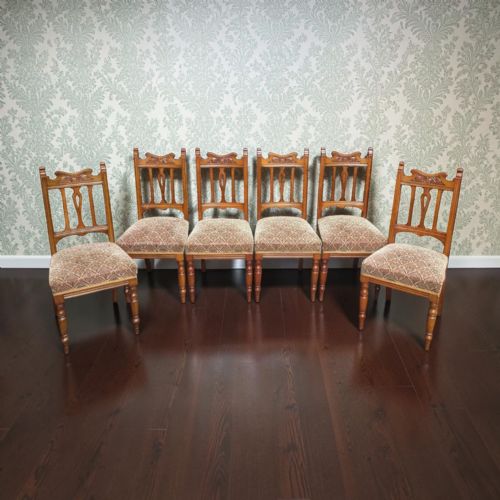
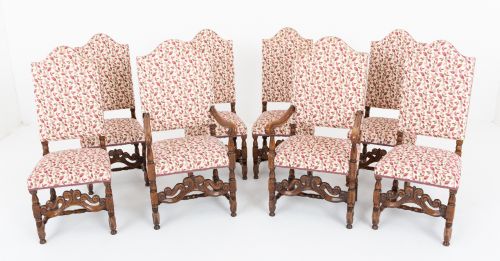
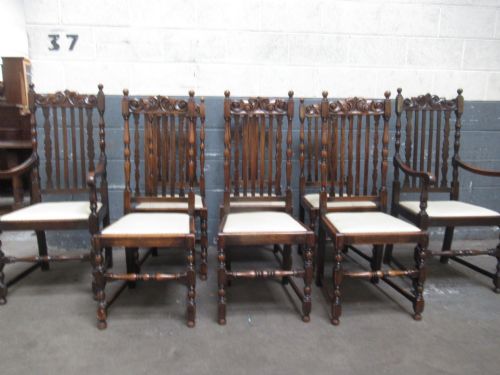
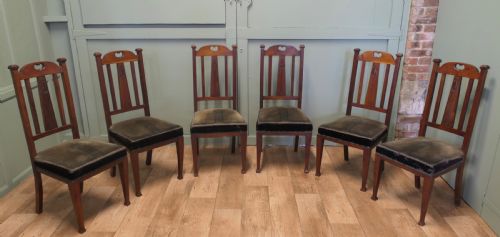
Edwardian Oak Side Chairs
These edwardian oak side chairs bring honest timber and sturdy craft to a room, offering both practical seating and character.
Edwardian Oak Side Chairs
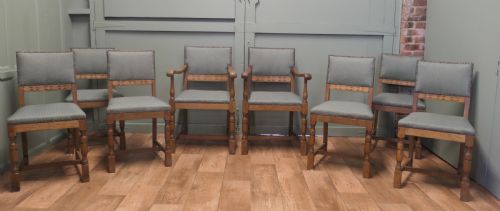
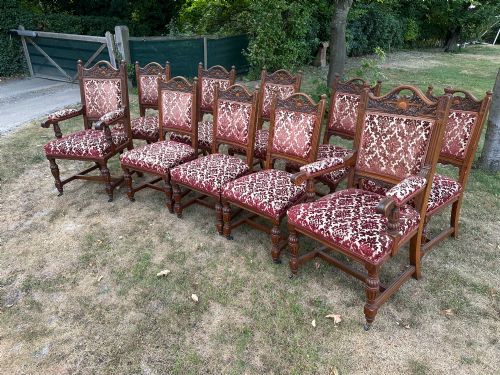
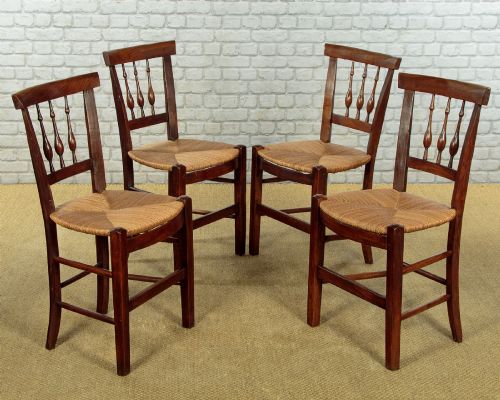
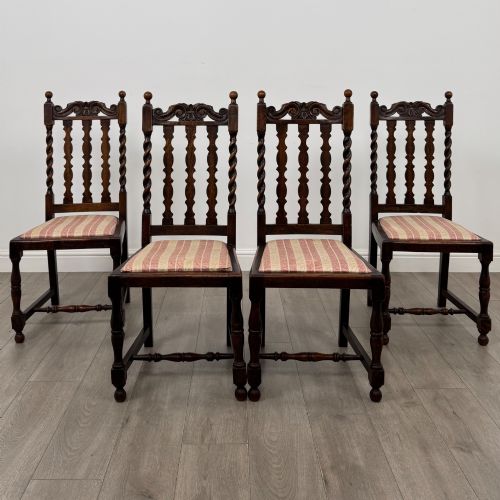
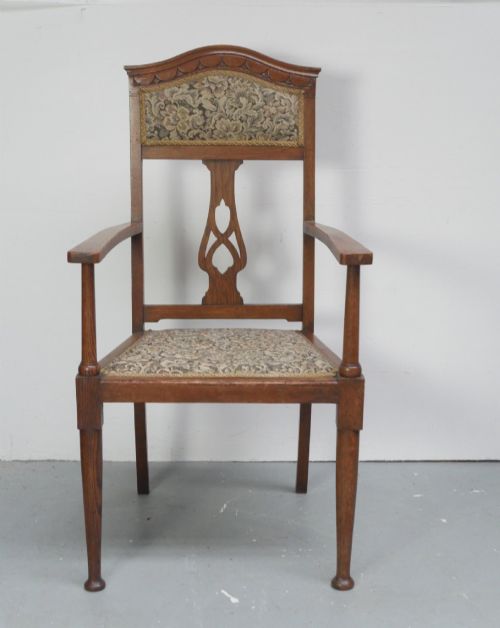
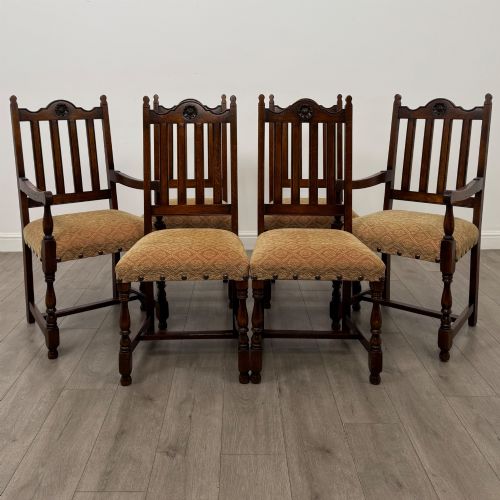
When you search for edwardian oak side chairs, you encounter seating designed for daily household use during the early twentieth century. These pieces reflect the robust domestic tastes of the period, drawing on earlier revival styles as well as contemporary craft movements. The versions you are most likely to meet on this page include single examples, pairs, and larger matching dining sets.
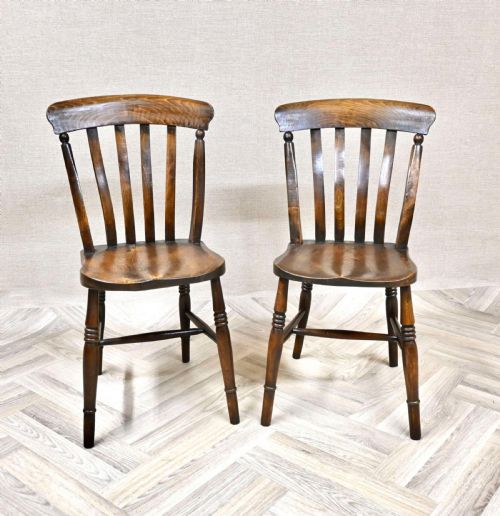
Makers of this era produced chairs intended to withstand heavy wear while maintaining a handsome appearance around the table or in the hall. Alongside formal dining seats, the selection encompasses country variants, rush seat chairs, and twisting leg designs. Many retain their original structural integrity, showing the straightforward joinery typical of the period.
Construction and Materials
Carpenters relied primarily on solid oak for frames, utilising its density and distinct grain to give each chair weight and resilience. Joints were frequently pegged or mortised to endure years of sitting without loosening. Seat pads varied according to purpose, incorporating rush, leather, fabric, or plain timber.
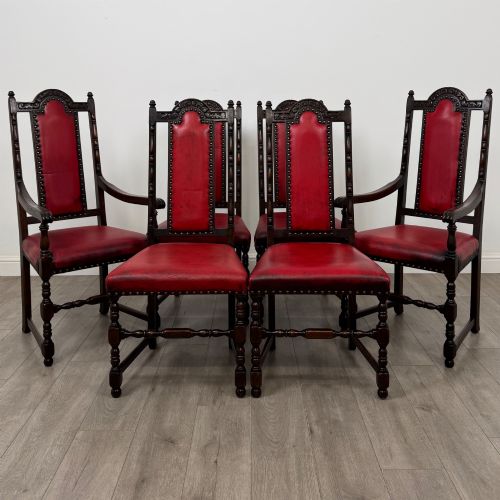
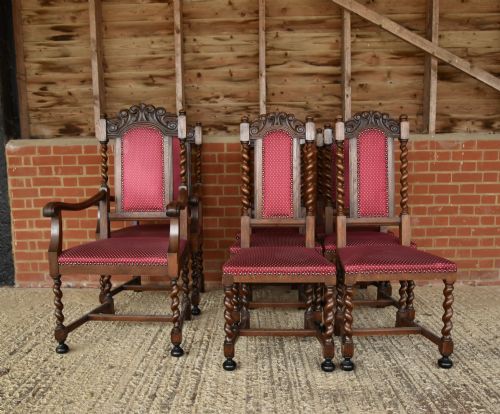
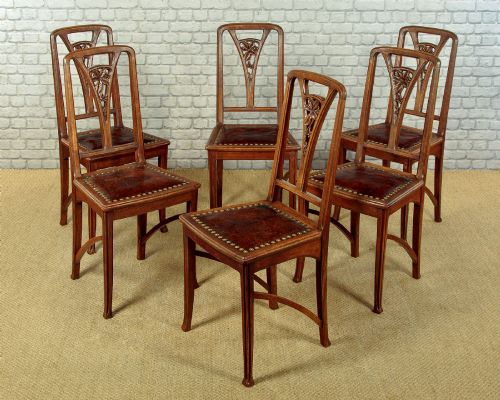
Turning lathes shaped barley twist and spiralled legs on many examples, adding decorative movement to the heavy timber frames. Carved details, trefoil motifs, and ladder backs appeared on select models, drawing inspiration from Gothic and Jacobean traditions. Finish relied on natural waxing to protect the wood while revealing its figure.
The inventory spans dining chairs, armchairs, hall chairs, and occasional chairs from nineteen hundred onwards.
Judging Quality
Quality in these chairs rests upon the selection of timber and the tightness of the original joinery. Better examples display carefully matched grain across sets and robust framing that resists wobble under weight. Finer carving and well-turned legs distinguish higher grade pieces from plain utilitarian seating.
The choice of seating material also marks a difference in finish, with supple leather, woven rush, or heavy textiles showing thoughtful workshop execution. Original surface patination accumulated through decades of use adds depth that replacement finishes lack.
Liberty & Co·Heals of London·Goodyers of London
The Edwardian Oak Side Chairs Glossary
- Barley Twist
- A turned wooden furniture leg resembling the spiral twist of barley sugar. This decorative feature appears frequently on Edwardian and revival furniture.
- Arts and Crafts
- A design movement valuing handcraft, honest materials, and simple construction over mass production. Pieces from this tradition often feature exposed joinery and plain oak surfaces.
- Rush Seat
- A seating surface woven from dried marsh grasses. It provides a flexible, durable platform common on country and vernacular chairs.
- Gothic Revival
- An architectural and decorative style drawing inspiration from medieval forms. Chairs in this manner display pointed arches, trefoils, and sturdy ecclesiastical proportions.
- Jacobean Revival
- A style echoing seventeenth-century English furniture design. These pieces utilise dark oak, heavy turning, and geometric panel carving.
Edwardian Oak Side Chairs: Frequently Asked Questions
How do I spot an Edwardian chair?
Look for construction traits typical of the period, such as golden oak timber, straightforward joinery, and occasional influences from the Arts and Crafts movement. These elements distinguish early twentieth-century production from heavier Victorian or later twentieth-century work.
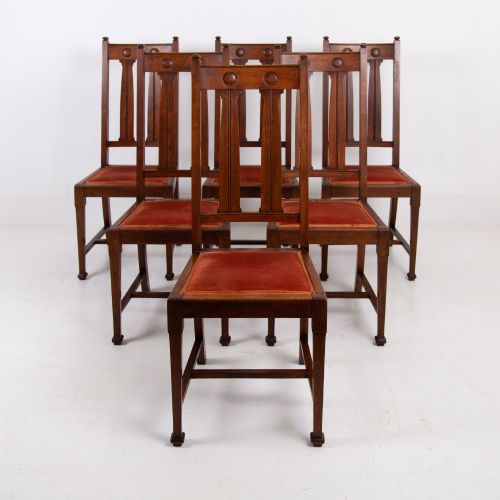
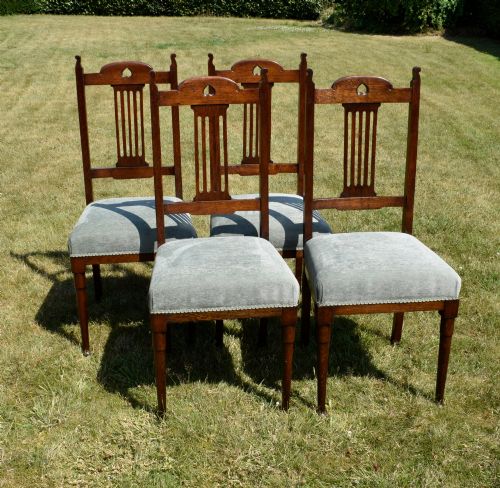
Examine the legs and backrests for characteristic turned barley twist supports or simple ladder backs. Makers at this time often combined traditional country forms with lighter proportions suitable for contemporary homes.
Were these chairs used for dining?
Many examples served around the family dining table, often surviving today in matched sets of four, six, or eight. Their sturdy oak frames were built to handle the daily demands of meals.
Other variations functioned as hall chairs, bedroom seating, or occasional chairs, reflecting the versatile role of sturdy wooden furniture in Edwardian houses.
Can I mix these chairs with modern tables?
The warm tone of oak and the straightforward lines of Edwardian seating allow them to sit comfortably alongside contemporary or mid-century tables. Their neutral timber grain bridges different periods without clashing.
Using side chairs around a modern desk or kitchen table adds texture and practical seating rooted in traditional craft.
How should I care for oak furniture?
Maintain the timber by applying a quality beeswax periodically to nourish the grain and protect the surface from drying out. Avoid placing oak pieces near direct heat sources or strong sunlight.
Clean surfaces with a dry or slightly damp cloth, avoiding harsh chemical polishes that can dull the natural patina built up over decades.