
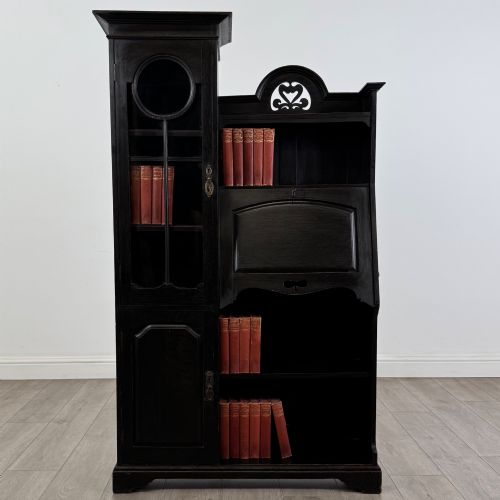
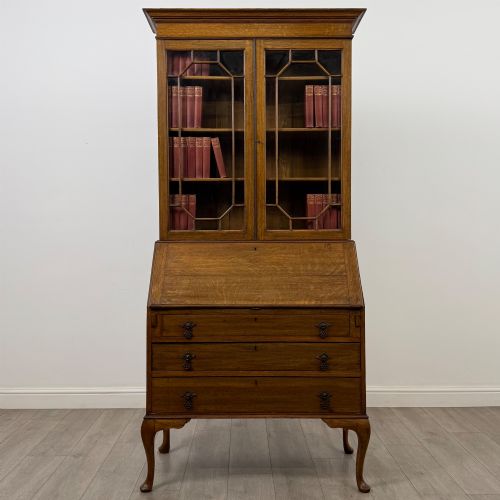
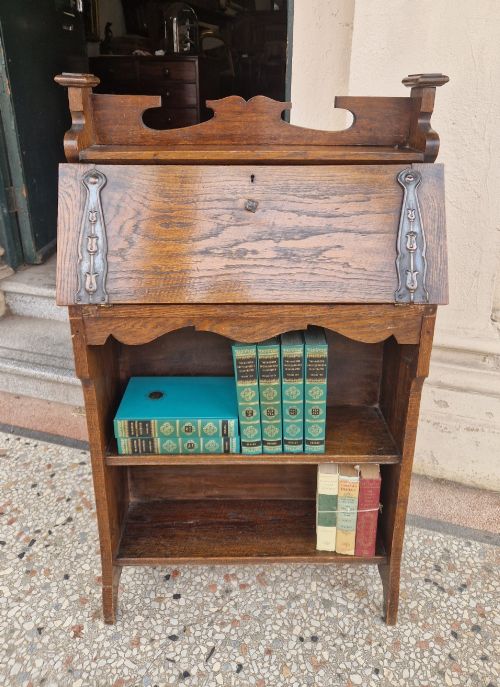
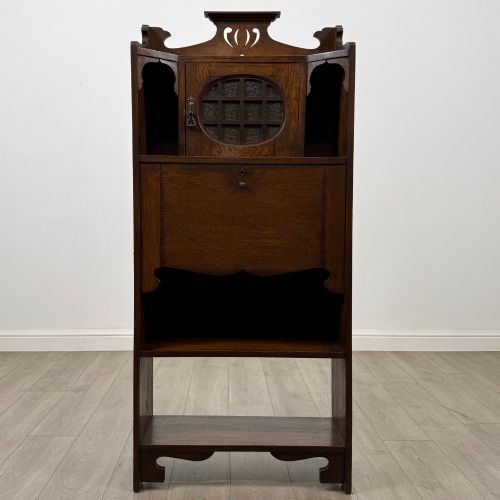


Edwardian Oak Bureau Bookcase
An Edwardian oak bureau bookcase combines a writing desk and display shelving into one substantial piece.
Edwardian Oak Bureau Bookcase
The edwardian oak bureau bookcase brings together upper display shelving and a lower drop-front writing desk in a single integrated form. Buyers searching for an edwardian oak bureau bookcase will find examples spanning the Edwardian period alongside late Victorian and early twentieth-century interpretations.
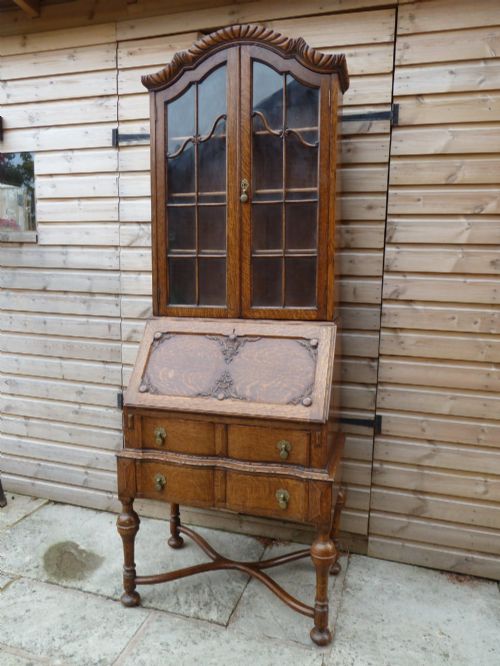
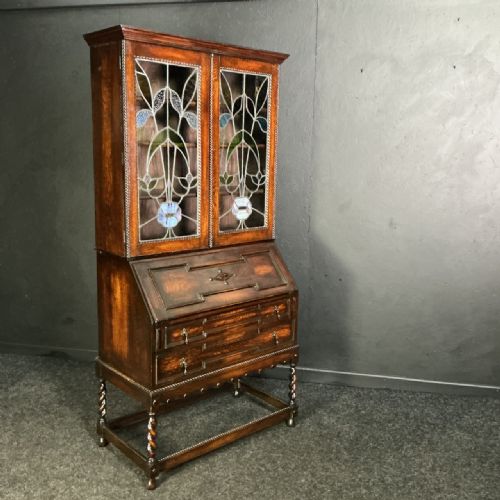
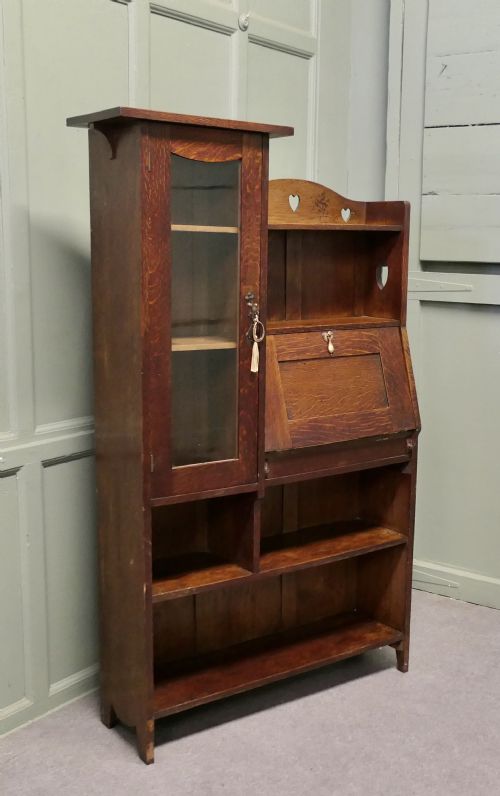
Most pieces seen here follow the classic two-part construction, pairing glazed upper doors with functional internal stationery compartments and drawers below. Variants include roll-top mechanisms, student models, and Arts and Crafts designs with characteristic simpler lines.
Originating from a period of diverse revivalist tastes, these items bridge the gap between heavy Victorian proportions and lighter early modern interiors. Golden oak and burr pollard oak variants frequently appear alongside standard dark or ebonised finishes.
Materials and Construction
Solid oak serves as the primary structural material, often enhanced by specialised timbers such as burr pollard oak and golden oak veneers. Cabinet makers utilised traditional joinery methods to build two-part carcasses capable of supporting heavy rows of books and fitted interiors.
Glazing takes multiple forms, from simple clear glass panes to leaded and copper-framed panels seen in Arts and Crafts and Art Nouveau examples. Iron, brass, and copper hardware, including bun handles and drop-front hinges, complete the functional metalwork.
Listings demonstrate a strong presence of Arts and Crafts influences alongside traditional Edwardian golden oak and late Victorian library formats.
Distinctions in Quality
Quality reveals itself in the selection of timber figures, particularly the grain variation visible in golden oak and burr pollard oak surfaces. Finer items feature more intricate internal stationery fittings and well-executed panel work rather than plain flat boards.
Attribution to notable makers or retail houses elevates a piece above standard workshop production. The precision of the drop-front mechanism and the condition of the original leaded or clear glazing distinguish superior examples.
Harris Lebus·Liberty and Co·Gillows
The Edwardian Oak Bureau Bookcase Glossary
- Bureau
- A desk featuring a sloping hinged flap that opens to reveal a fitted interior of small drawers and pigeonholes. This surface serves as the main writing area when lowered.
- Secretaire
- A cabinet or bookcase incorporating a pull-out or drop-down writing drawer with an internal fitted desk space. It offers closed storage while concealing writing materials.
- Arts and Crafts
- A design movement prioritising traditional craftsmanship, visible construction methods, and simple forms. Pieces in this style often use plain golden oak with minimal ornamentation.
- Leadwork
- The network of lead cames used to hold individual small panes of glass together in cabinet doors. This technique appears frequently on period display sections.
- Bun handle
- A small, rounded wooden drawer pull shaped like a bun. These turned knobs are typical of period vernacular cabinetry.
Edwardian Oak Bureau Bookcase: Frequently Asked Questions
How do I use a bureau bookcase?
Lower the front flap to create a stable writing surface supported by internal arms or brackets. Store writing materials in the pigeonholes and organise books on the upper shelves behind the glass doors.
Keep the lower drawers for heavier paperwork and household storage. Ensure the lockable mechanisms are handled with care when securing the desk.
How do I tell Edwardian pieces apart?
Edwardian examples tend to feature lighter golden oak finishes and simpler proportions than heavier Victorian predecessors. Look for restrained ornamentation influenced by Arts and Crafts or Art Nouveau aesthetics.
Construction details such as machine-sawn timber elements and specific hardware types help distinguish twentieth-century manufacturing from nineteenth-century work.
Will these bookcases fit in modern rooms?
These cabinets arrive in two distinct sections, making transport and placement through standard doorways manageable. Slim and narrow variants exist alongside wider double-door formats to suit different room dimensions.
Measure ceiling heights carefully, as upper bookcase sections add significant vertical presence. Ensure adequate floor space remains for the drop-front flap to open fully.
What is the difference between roll-top and drop-front?
A drop-front relies on a flat wooden flap hinged at the bottom that folds down horizontally to form a desk. A roll-top uses a slatted tambour shutter that slides upward in a curved track to reveal the interior.
Both styles conceal the fitted stationery compartments when closed, keeping the writing area tidy. Roll-top versions offer continuous curved detailing across the upper desk section.