


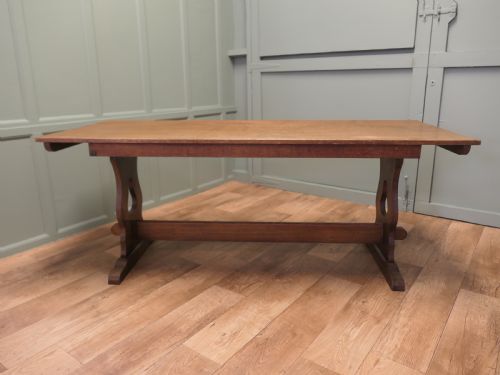
Arts and Crafts Oak Furniture
These arts and crafts oak furniture pieces combine honest joinery with practical utility, offering robust utility and distinct period character.
Arts and Crafts Oak Furniture
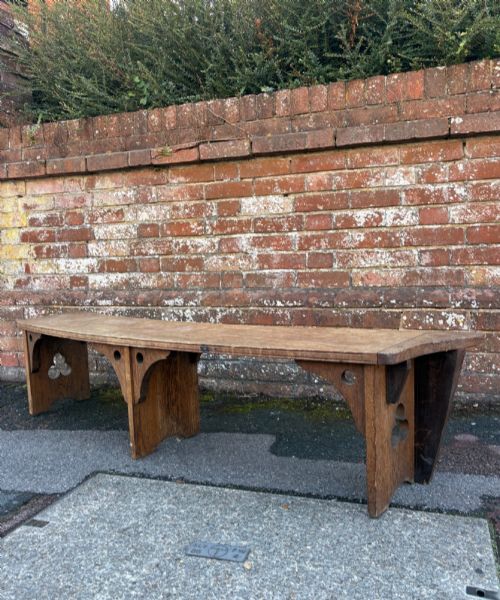
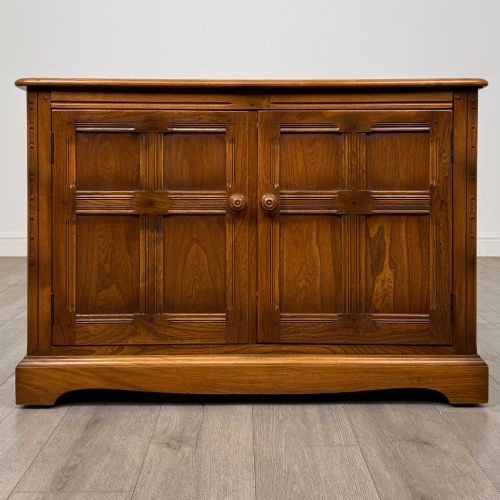
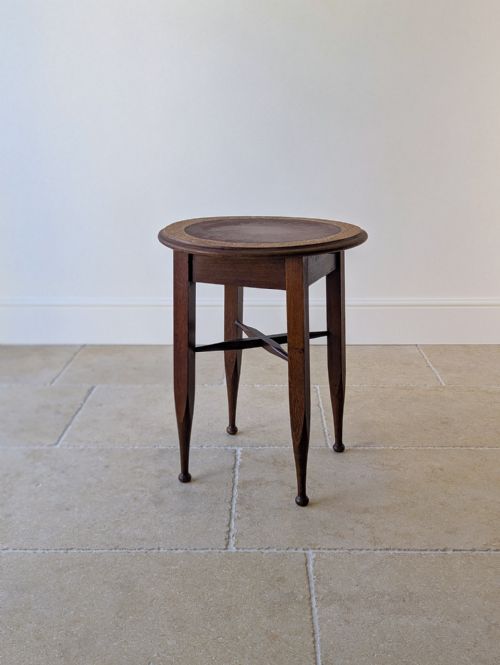
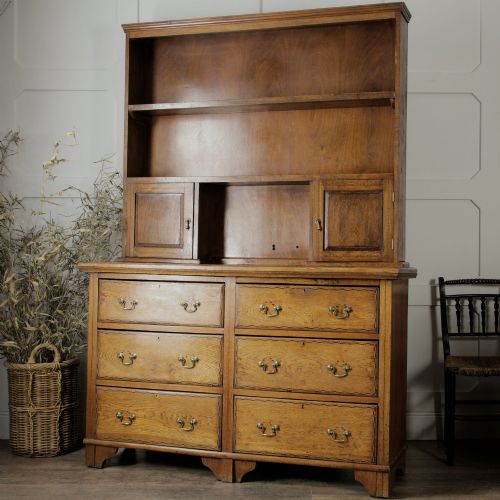
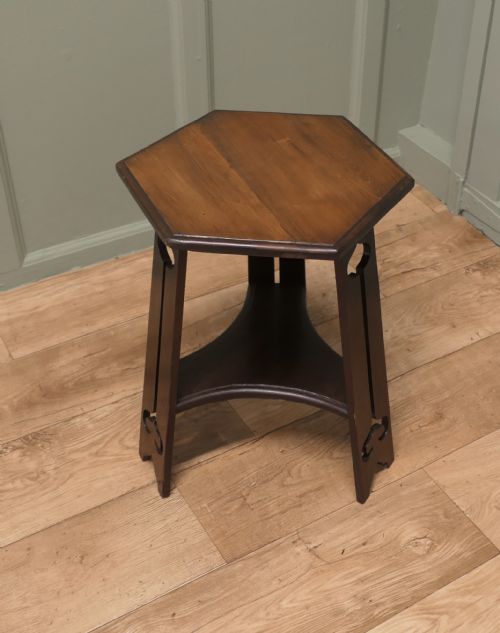
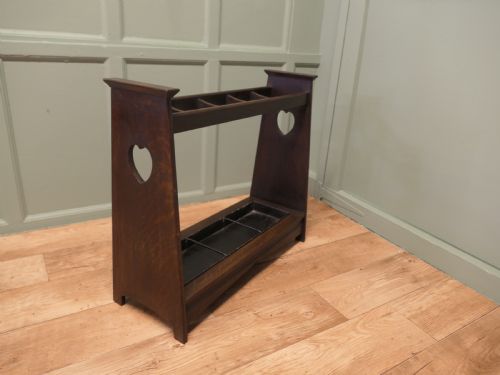
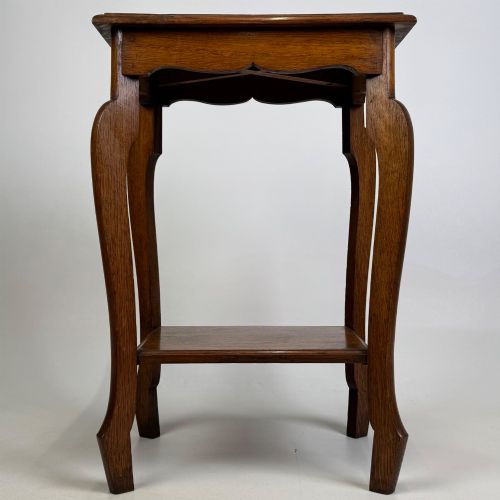
When you search for arts and crafts oak furniture, you encounter sturdy domestic objects produced from the late nineteenth century through the nineteen-thirties. The selection spans utilitarian items like plant stands, umbrella stands, and occasional tables to substantial storage pieces such as dressers, bookcases, and cupboards.
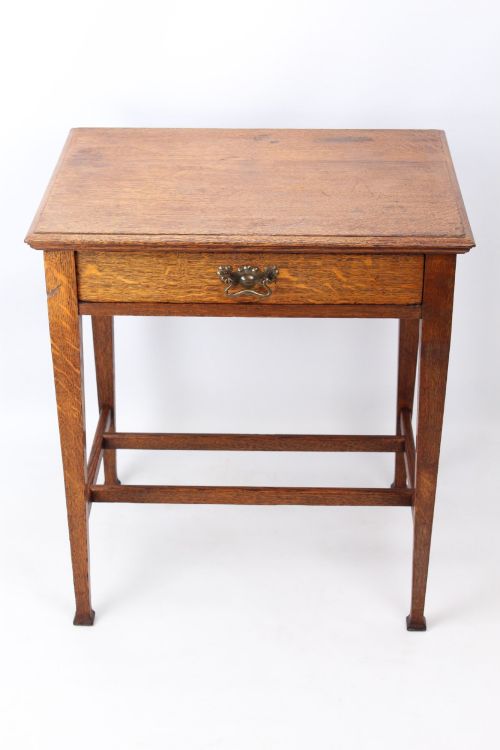
You are most likely to meet pieces originating from the Edwardian era and the nineteen-twenties, frequently exhibiting the plain surfaces and structural honesty associated with the movement. Forms include desks, writing bureaux, side tables, and armchairs designed for everyday domestic use.
The selection also incorporates regional interpretations, including Cotswold School pieces and Scottish cabinet work. These domestic items reflect a shift away from heavily ornamented Victorian factory production toward simpler forms rooted in traditional woodwork.
Materials and construction
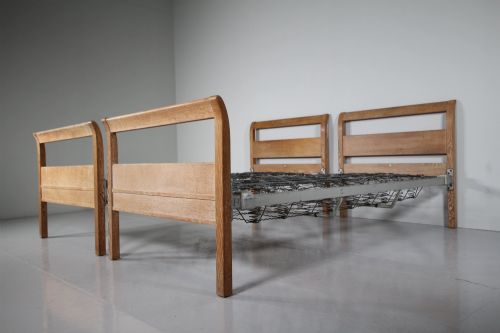
The material foundation is predominantly solid oak, often described in golden or honey tones, complemented by secondary timbers like ash in specific seating. Workshops utilised quarter-sawn timber to reveal distinct medullary rays, enhancing the visual texture of the grain.
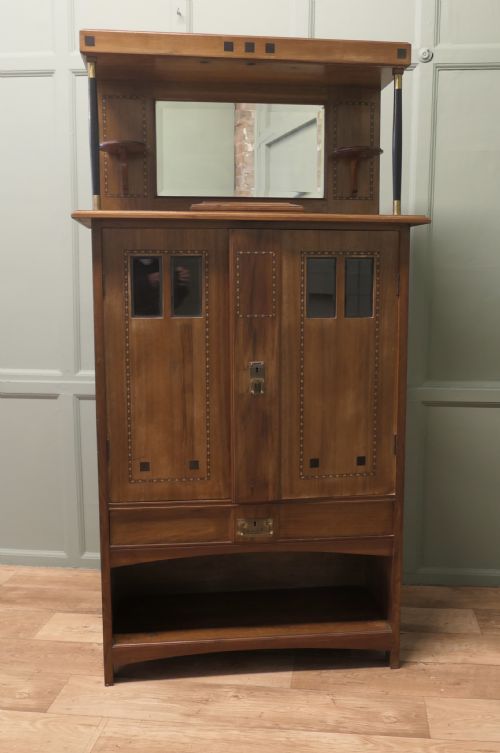
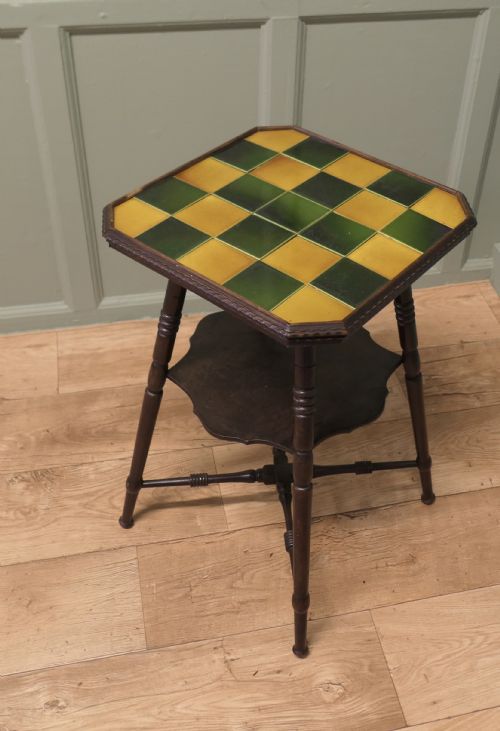
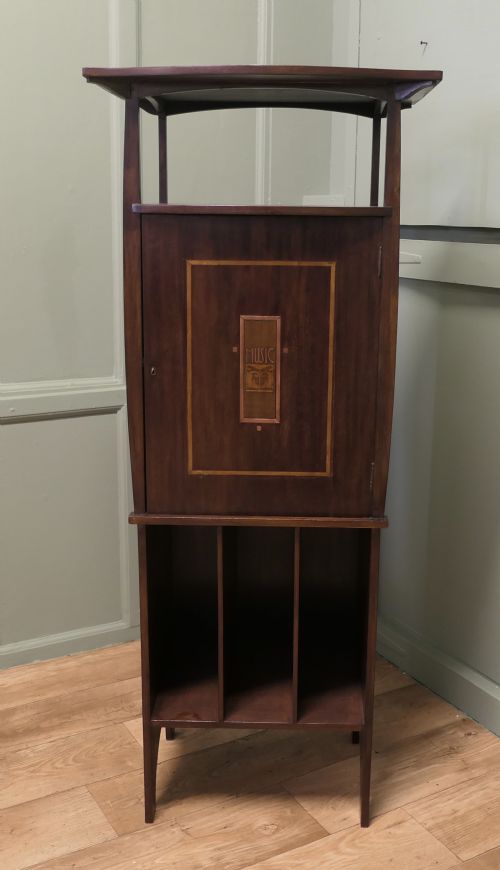
Construction relies on visible joinery, including pegged mortise and tenon joints, chip carving, and occasional wood inlay or chequered details. Metalwork elements such as brass handles, iron hinges, and ceramic tile inserts frequently accent the wooden structures.
Several items double as umbrella stands, proving that even early twentieth-century craftsmen knew the British climate required practical indoor drainage.
Variations in quality
Quality in these pieces rests upon the integrity of the timber selection and the precision of the hand joinery. Pieces originating from known workshops or bearing designer labels exhibit superior proportional balance and thoughtful detailing.
The distinction between standard commercial output and workshop pieces lies in the refinement of the carving, the execution of the joints, and the retention of original hardware. Well-preserved waxed surfaces and untouched patination indicate careful historical upkeep.
Shapland & Petter·GM Elwood for JS Henry·Liberty and Co·Arthur Basil Reynolds·Arthur Simpson of Kendal·Edward Barnsley·Peter Waals
The Arts and Crafts Oak Furniture Glossary
- Quarter-sawn oak
- Timber cut radially from the log, producing a distinct grain pattern with visible medullary rays that signal high quality in period cabinet work.
- Mortise and tenon
- A fundamental joint where a projecting tenon fits tightly into a corresponding mortise hole, frequently secured with visible wooden pegs in this tradition.
- Secessionist
- A stylistic influence derived from European design movements, incorporating geometric lines and stylized motifs into British furniture forms.
- Refectory
- A long dining table form adapted from monastic halls, characterised by sturdy legs connected by low floor stretchers.
Arts and Crafts Oak Furniture: Frequently Asked Questions
How do I identify Cotswold School pieces?
Cotswold School pieces typically display understated forms with an emphasis on hand-tooling and visible construction methods. They often originate from the nineteen-twenties and nineteen-thirties.
Makers working in this tradition prioritized the natural grain of solid oak over applied ornament, resulting in robust and unpretentious domestic furnishings.
Are maker labels common on these pieces?
Original paper labels, stamps, or branded signatures appear on select pieces from prominent retailers and workshops. These marks provide definitive attribution to specific makers.
Many high-quality items remain unlabeled because they were produced by regional craftsmen or independent workshops without formal branding.
What is golden oak furniture?
Golden oak refers to timber finished with warm, honey-toned polishes or waxes that highlight the natural figure of the wood. This finish was widely favored during the Edwardian period.
Over time, exposure to light and traditional waxing deepens the tone of the oak, creating a rich patination unique to older pieces.
How should I care for waxed oak surfaces?
Maintaining waxed oak involves regular dusting with a soft cloth and occasional application of traditional beeswax to nourish the timber. Avoid placing pieces near direct heat sources to prevent the wood from drying out.
Proper maintenance preserves the historical patination and protects the surface from everyday wear without altering the original finish.