


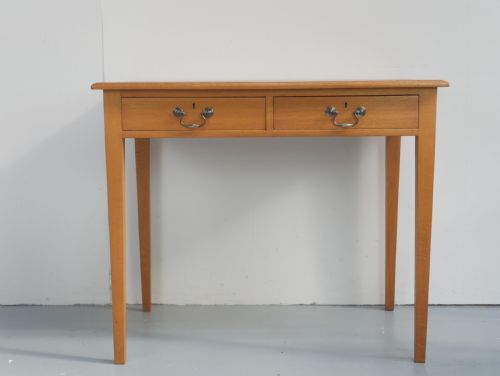

Compact Oak Writing Bureau
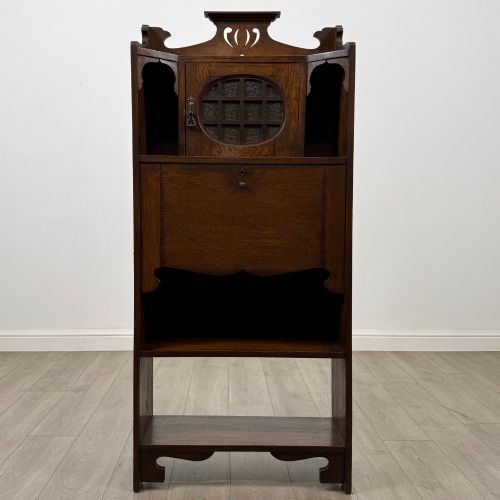
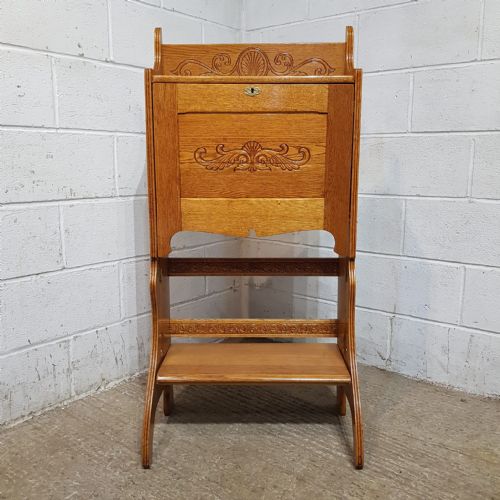
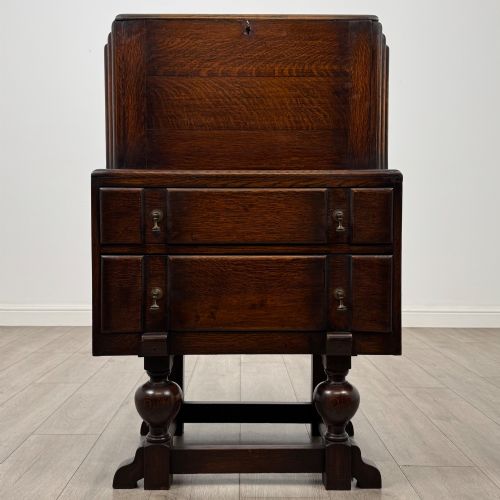
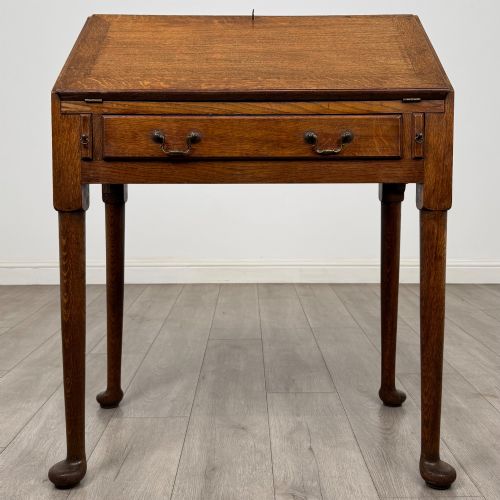
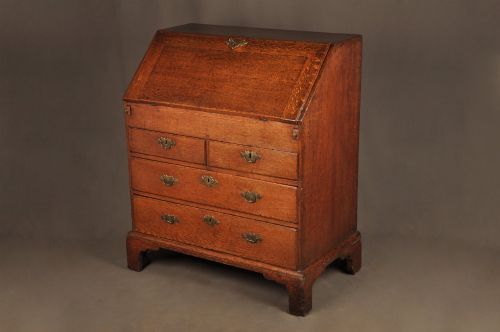
A compact oak writing bureau brings domestic workspace to a small footprint, offering a fitted fall-front desk that conceals correspondence.
Compact Oak Writing Bureau
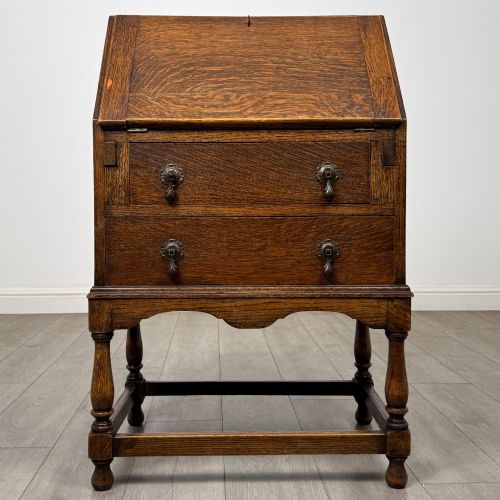
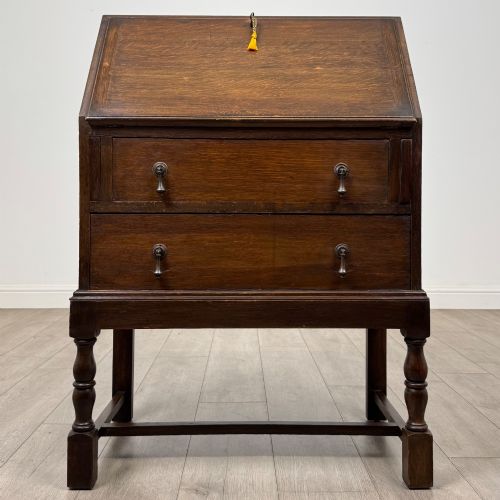
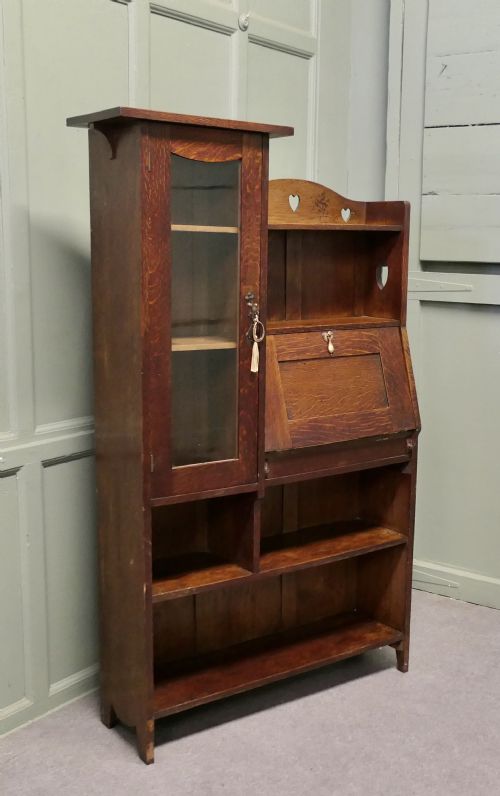
A compact oak writing bureau serves as a functional workspace designed for modest proportions, appearing frequently in Edwardian formats alongside earlier Georgian and 18th-century examples. These pieces combine a sloping writing flap with internal pigeonholes and drawers, sometimes extending upward into a glazed bookcase or remaining low for small rooms.
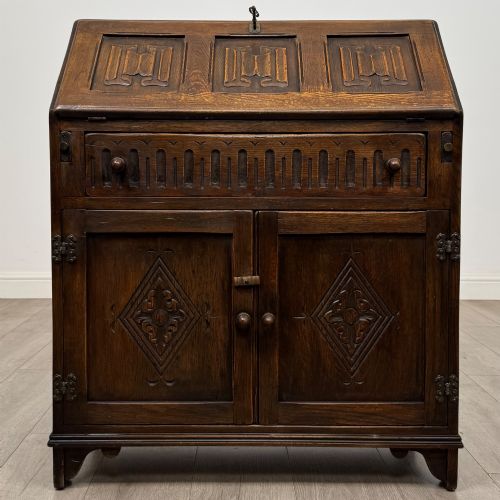
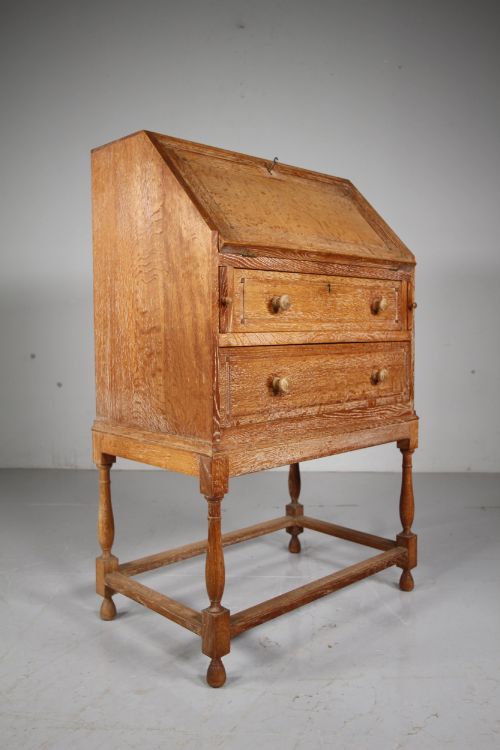
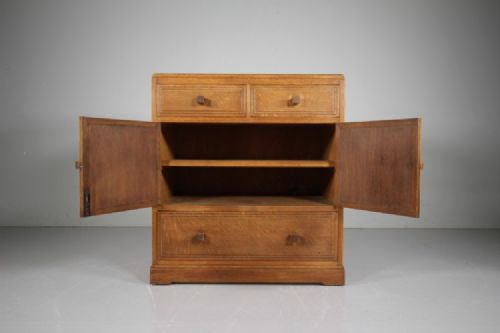
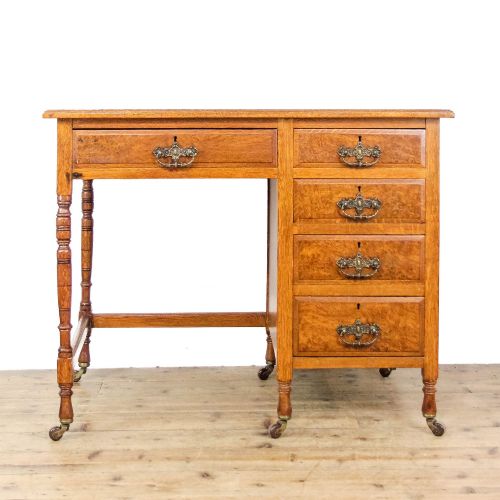
The selection ranges from simple student desks and narrow Edwardian variations to elaborate Arts and Crafts interpretations and 17th-century forms. Buyers encounter golden oak finishes, pollard oak veneers, and carved details such as Green Man motifs or linenfold panels.
Origins span provincial Welsh workshops, London department stores, and specific makers like Heals or Harris Lebus, demonstrating how diverse these writing surfaces remain across different decades.
Judging quality
Quality rests upon the selection of timber, distinguishing plain standard oak from figured pollard oak, burr oak, and golden oak selections. Grain alignment across the fall-front and the subtlety of carved details, such as linenfold panels or Green Man motifs, separate ordinary examples from superior ones.
Makers' marks and labels from firms like Heals or Bryn Mawr elevate a piece, as do original keys, intact leather inserts, and internal secondary woods like burr maple. The precision of the pigeonhole arrangement and the smoothness of the drop-front action determine the level of cabinet-making skill involved.
A grinning Green Man peers out from Victorian carved oak, keeping a watchful eye on your morning correspondence.
Heals of London·Bryn Mawr·Jenners·Harris Lebus
The Compact Oak Writing Bureau Glossary
- Bureau
- A writing desk featuring a sloping hinged lid that drops down to form a writing surface, revealing internal compartments and small drawers.
- Fall-front
- The hinged writing flap of a bureau that folds down to a horizontal position when in use and locks vertically to conceal the desk interior.
- Davenport
- A compact pedestal desk with a sloped writing surface on top, typically housing side drawers and a small upper compartment.
- Linenfold
- A style of wood carving resembling folded vertical strips of linen, seen frequently on Edwardian panels.
- Pollard oak
- Oak timber taken from trees that have been pollarded, producing a richly figured, mottled grain used for decorative veneer.
Compact Oak Writing Bureau: Frequently Asked Questions
What is a compact oak writing bureau?
A compact oak writing bureau is a small desk featuring a sloping front flap that lowers to reveal pigeonholes and small drawers. It provides a dedicated writing space while occupying minimal floor area.
These pieces appear in various historical styles, ranging from plain Edwardian formats to carved Arts and Crafts and 18th-century designs.
How do I date an oak bureau?
Dating relies on observing construction methods, hardware materials, and stylistic details such as linenfold carving, Arts and Crafts influences, or Georgian proportions. Pollard oak veneers and specific turn-top mechanisms also indicate particular periods.
Makers' labels or stamps help confirm the exact decade of manufacture for marked pieces.
Where were these bureaux used?
These bureaux functioned primarily in domestic settings such as bedrooms, studies, and parlours where space was limited but correspondence required a private desk. Smaller student variations suited tighter living quarters.
Department stores like Jenners and Heals retailed them for middle-class homes needing practical writing furniture.
What is a Davenport desk?
A Davenport is a specific form of compact desk featuring a sloped, leather-inset writing surface set above a pedestal of drawers. They often incorporate side drawers and small stationery compartments.
Examples seen include Victorian and Pollard oak variations with carved details.