


Oak Student Writing Desk
These oak student writing desks are compact workspace furniture pieces built for study and letter writing.
Oak Student Writing Desk
An oak student writing desk is a compact item of furniture designed for study, letter writing, and paperwork. The pieces seen on this page span the Victorian and Edwardian eras, reaching into the nineteen-twenties.
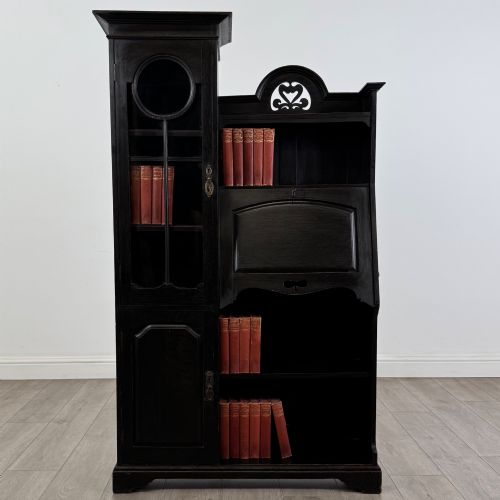
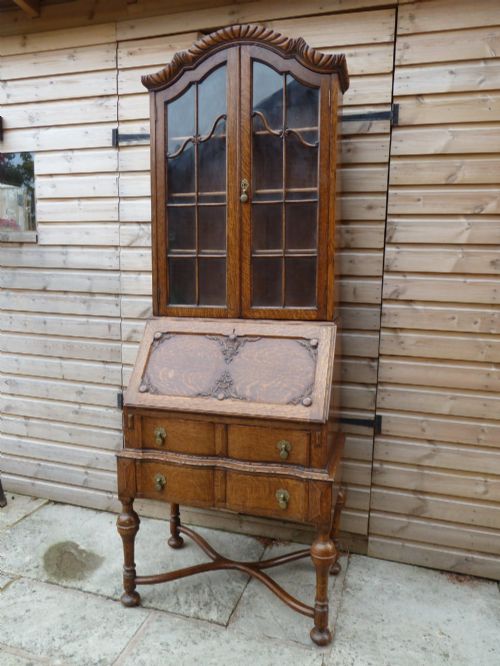
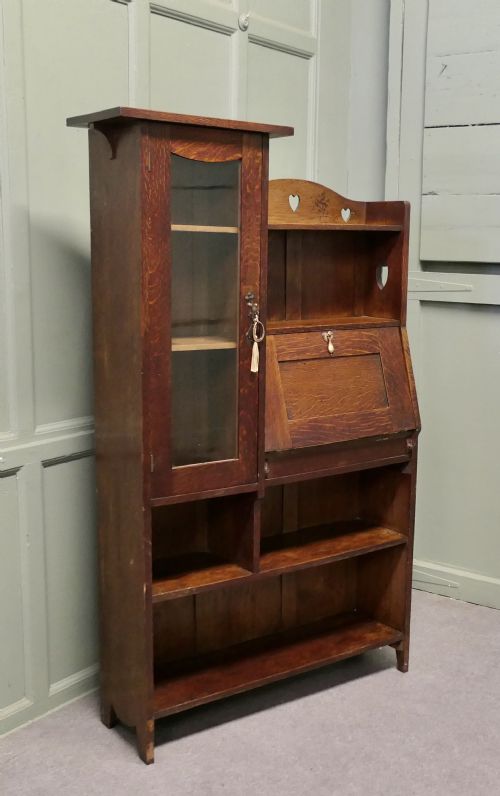
Most examples take the form of writing bureaux or bureau bookcases, combining a sloping fall-front writing surface with internal stationery compartments and lower storage. Narrow proportions suit smaller rooms and study spaces.
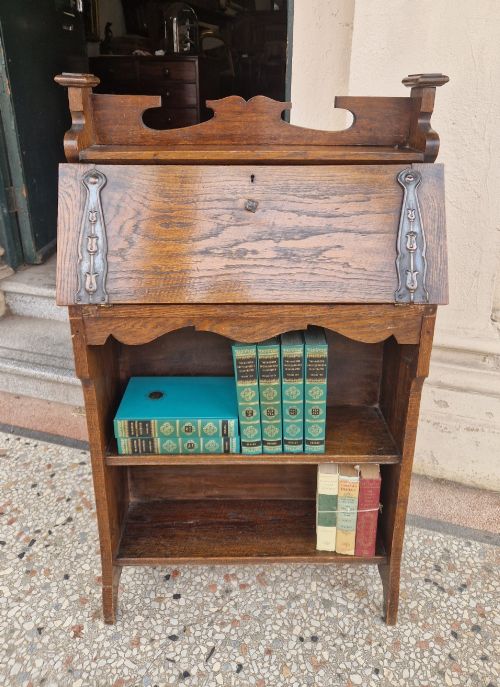
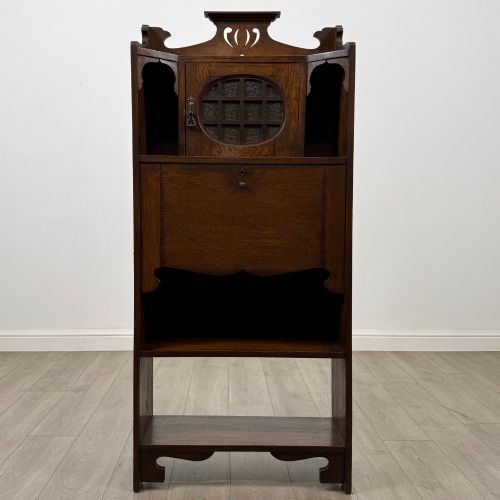
Makers drew upon prevailing design movements of the period, ranging from plain utility to distinct stylistic revivals. Arts and Crafts ideology sits alongside Jacobean and Tudor revival motifs in the surviving corpus.
How they were made
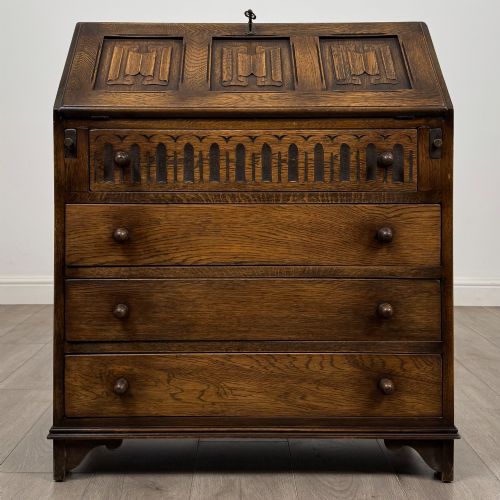
Construction relies primarily on oak, sometimes enhanced through ebonising or selected for decorative figuring such as linenfold carving. Metal hardware in brass, copper, lead, and iron provides hinges, handles, and structural bracing.
Joinery techniques reflect late nineteenth and early twentieth-century cabinetmaking standards, incorporating panelled construction for fall-fronts and doors. Glazed sections in bookcase variants utilise timber framing to secure glass panes.
The furniture corpus ranges from plain utilitarian writing desks to elaborate bureau bookcases with glazed upper sections.
What varies in quality
Quality rests upon the selection of timber and the ambition of the surface decoration, from plain planks to intricate linenfold carving and ebonised finishes. Maker attribution also plays a role, distinguishing standard workshop production from branded retail houses.
The sophistication of the internal stationery arrangement influences the standing of a piece. Fitted pigeonholes, small drawers, and integrated bookcase superstructures elevate the complexity of the design.
Harris Lebus·James Shoolbred & Co
The Oak Student Writing Desk Glossary
- Bureau
- A writing desk featuring a sloping hinged lid that drops forward to create a flat writing surface. It conceals internal compartments for papers and stationery.
- Fall-front
- The hinged panel on a bureau that opens downward to serve as the writing surface. When closed, it conceals the interior pigeonholes and small drawers.
- Linenfold
- A style of carved wooden panelling designed to resemble folded fabric, frequently seen on period furniture. This ornamentation is characteristic of Tudor revival and later revivalist work.
- Ebonised
- Timber treated with a dark finish to imitate ebony wood. This technique appears on specific Edwardian pieces to create strong visual contrast.
Oak Student Writing Desk: Frequently Asked Questions
What is an oak student writing desk?
It is a compact form of antique workspace furniture featuring a sloping fall-front desk. These pieces provide a dedicated writing surface alongside internal compartments for storage.
Most examples date from the Victorian and Edwardian periods, reflecting the domestic study habits of those eras.
How do I date an oak bureau?
Dating relies upon stylistic markers, construction methods, and material treatment. Pieces range from late Victorian examples to Edwardian and nineteen-twenties revival items.
Design influences such as Arts and Crafts simplicity or Jacobean heavy carving help narrow the period of manufacture.
Are these desks suitable for small rooms?
Their narrow proportions and combined storage make them practical for restricted spaces. The fall-front design conceals paperwork when not in use.
Bureau bookcases add vertical shelving while maintaining a modest footprint on the floor.
What styles are common on this page?
The selection is dominated by Arts and Crafts design alongside Jacobean and Tudor revival forms. Finishes vary from natural golden oak to dark or ebonised surfaces.
Carved details such as linenfold panels appear on specific revivalist examples.