
Arts and Crafts Writing Desk
An arts and crafts writing desk brings solid timber construction and honest joinery into a working space, offering practical storage alongside distinctive period character.
Arts and Crafts Writing Desk
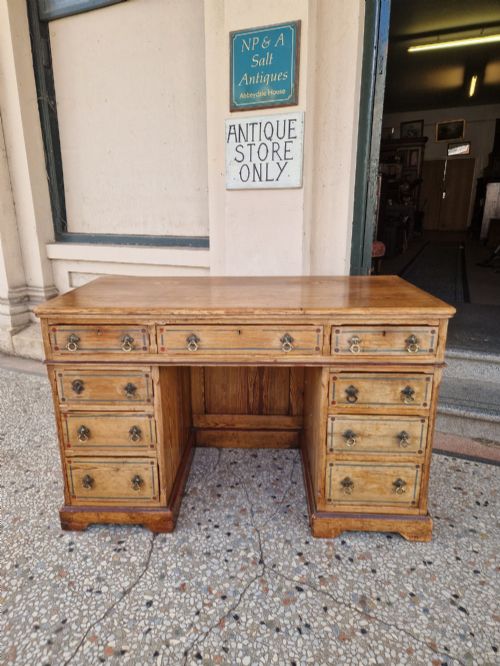
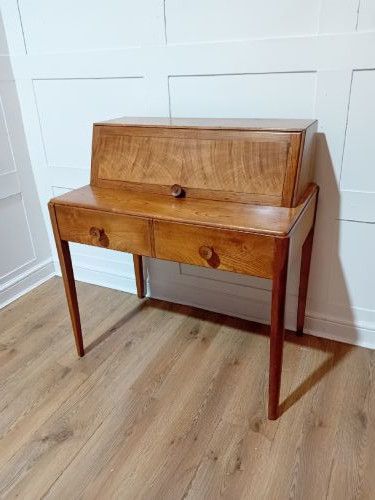
When you search for an arts and crafts writing desk, you encounter substantial oak furniture alongside occasional examples in ash, mahogany, pitch pine, and walnut. These pieces span from the late Victorian period through the Edwardian era into the nineteen-twenties and nineteen-thirties, reflecting both domestic and institutional origins.
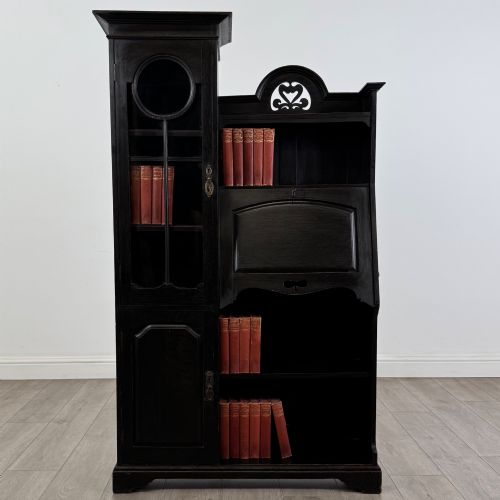
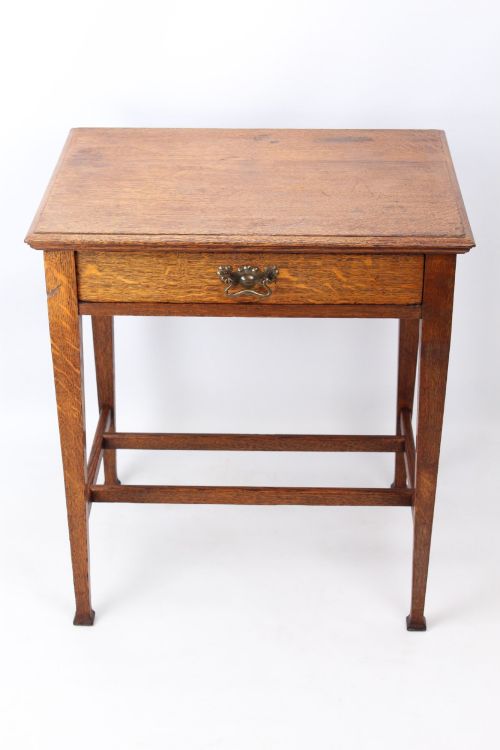
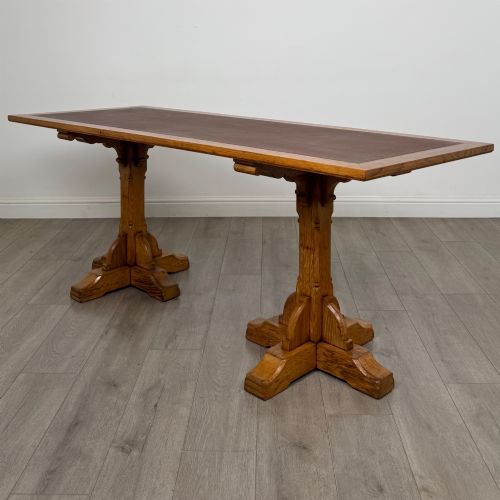
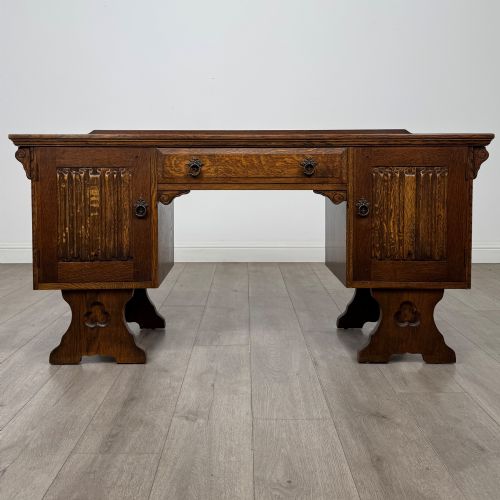
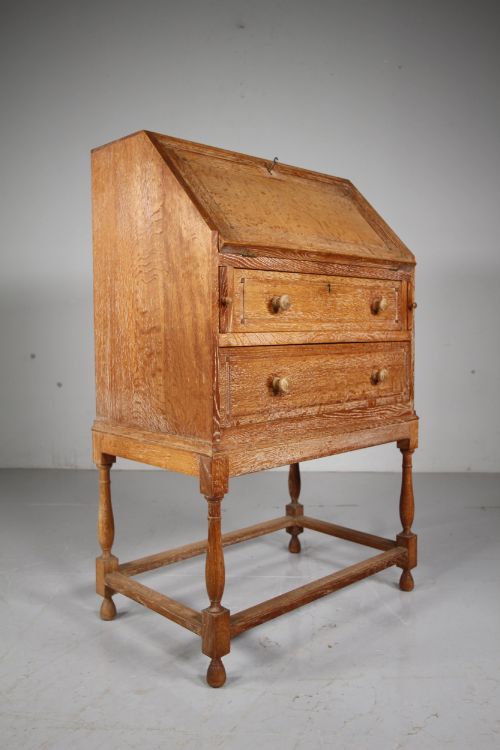
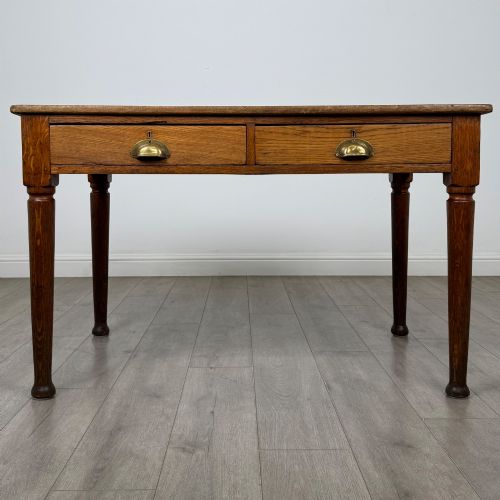
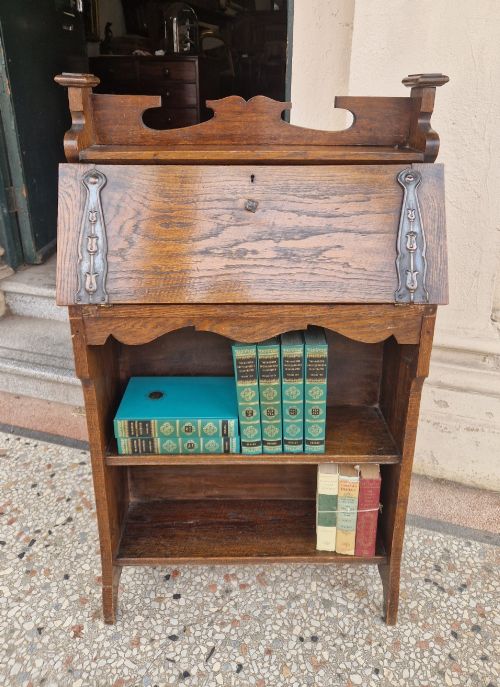
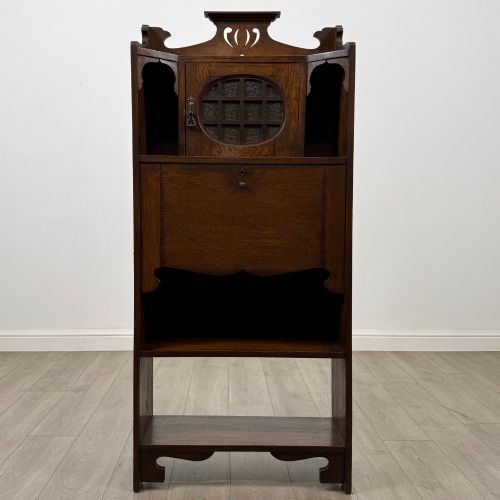
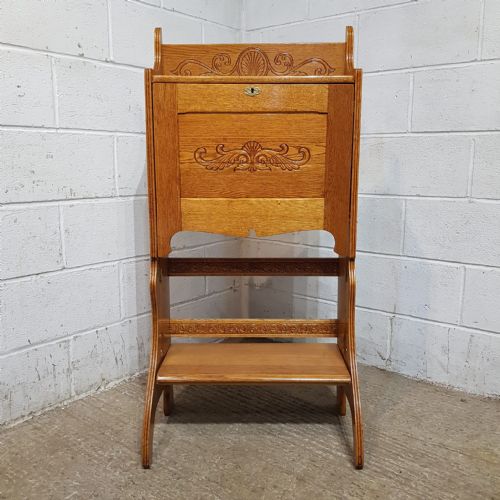
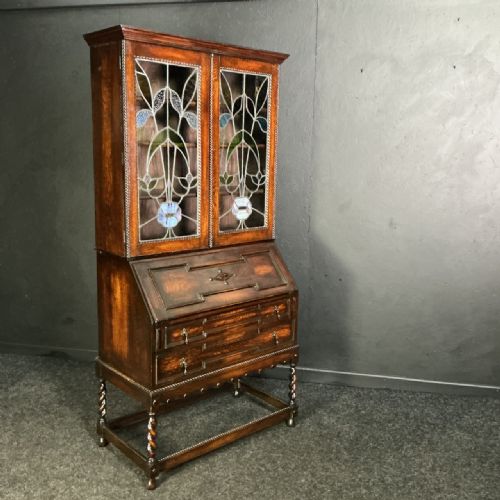
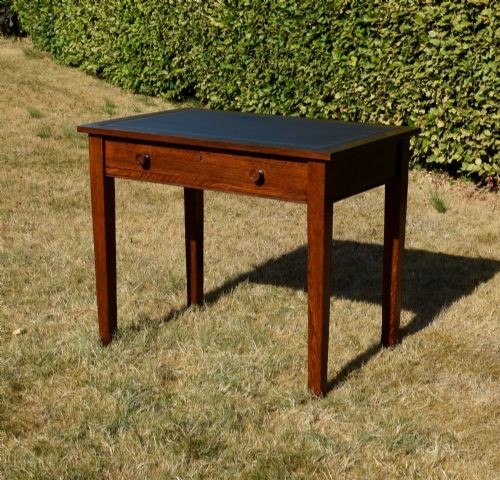
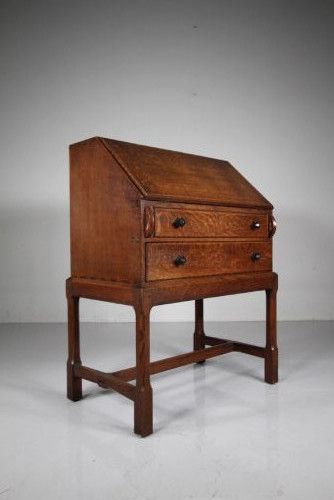
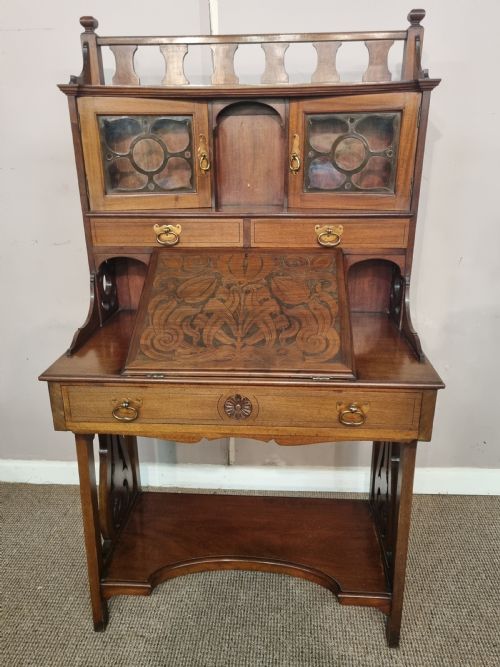
The selection on this page centres heavily on oak bureaux, library tables, and fitted writing desks. Many items combine a drop-front writing surface with internal pigeonholes and drawers, while others present simpler writing tables with brass or copper hardware.
How they were made
Makers relied primarily on solid oak, frequently quartered to display distinct grain figuring, supplemented by secondary timbers such as ash and mahogany. Construction methods emphasise visible dovetail joints, pegged framing, and structural integrity rather than concealed veneers.
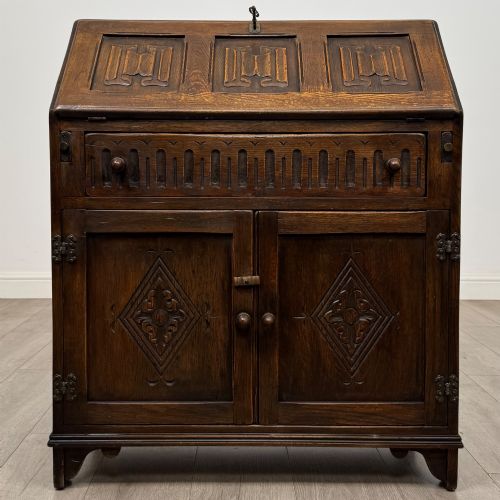
Hardware consists mainly of hammered brass, copper, and iron drop handles or strap hinges, sometimes paired with leather desk inserts or leaded glass cabinet doors. Carved ornamentation is typically restrained, featuring linenfold panels or geometric motifs rather than heavy applied decoration.
A carved oak desk carries the distinct ink stains of a nineteenth-century public school library.
What varies in quality
The distinction between standard commercial output and workshop pieces lies in the selection of timber and the precision of the joinery. Quarter-sawn oak with strong medullary rays indicates superior material selection compared to plain planking.
Maker attribution and original labelling separate workshop productions from anonymous factory pieces. Surviving labels from firms such as Heals, Liberty, or Shapland and Petter elevate a desk above standard vernacular items.
Heals of London·Arthur Basil Reynolds·Stanley Webb Davies·Bryn Mawr·Hubert Simpson·Heal and Sons·Liberty·James Shoolbred·Simpsons of Kendall·Morris and Co·George W Jack·Robert Mouseman Thompson·Harris Lebus·Liberty of London·Shapland and Petter·Robertson and Colman
The Arts and Crafts Writing Desk Glossary
- Bureau
- A desk featuring a hinged sloping flap that drops down to reveal a fitted interior of small drawers and pigeonholes. This form provides a concealed workspace when closed.
- Quarter-sawn oak
- Timber cut radially through the growth rings to produce distinct silver fleck markings across the grain. This method yields stable boards favoured by quality makers.
- Linenfold
- A style of carved wooden panelling that resembles folded fabric, commonly seen on cabinet doors and desk fronts. It forms a traditional decorative element on period pieces.
- Pedestal desk
- A heavy freestanding writing table supported by two columns of drawers beneath the work surface. This layout offers substantial storage capacity on both sides.
- Pigeonhole
- A small open compartment within a desk interior used for sorting letters and papers. These compartments sit above the main writing surface.
Arts and Crafts Writing Desk: Frequently Asked Questions
What is an arts and crafts writing desk?
An arts and crafts writing desk is a functional workspace built during the late nineteenth or early twentieth century, prioritising honest construction, visible timber grain, and minimal machine embellishment.
These pieces range from simple oak writing tables to elaborate bureaux fitted with leather inserts, brass handles, and internal compartments designed for daily correspondence.
Are these desks suitable for daily use?
These desks offer sturdy timber construction and practical surface areas that accommodate modern writing and laptop use without difficulty.
Careful placement away from direct heat sources helps preserve the original polish, leather surfaces, and solid wood joints during everyday work.
How do I date an oak writing desk?
Dating relies on examining construction marks, timber preparation, handle styles, and any maker labels or stamps attached to the frame.
Pieces from the Victorian era often display heavier proportions and darker finishes, whereas Edwardian and later nineteen-thirties examples lean towards lighter quarter-sawn oak and restrained hardware.