

Oak Slanted Writing Desk
An oak slanted writing desk brings solid construction and traditional stationery storage to a room, ranging from early slope boxes to tall bureau bookcases.
Oak Slanted Writing Desk
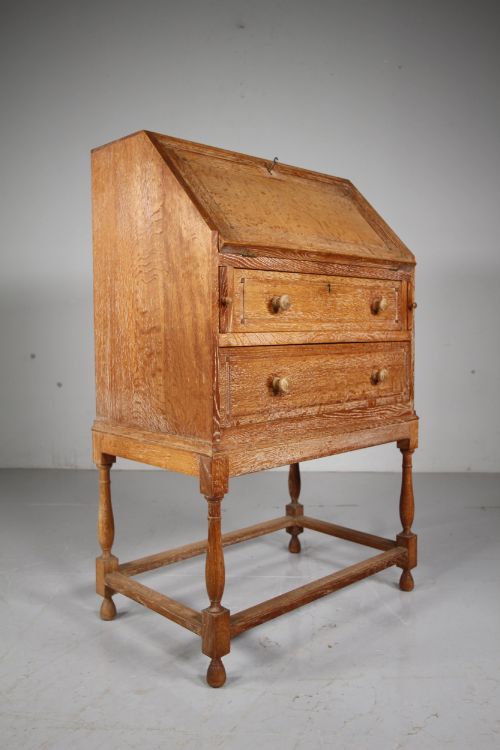
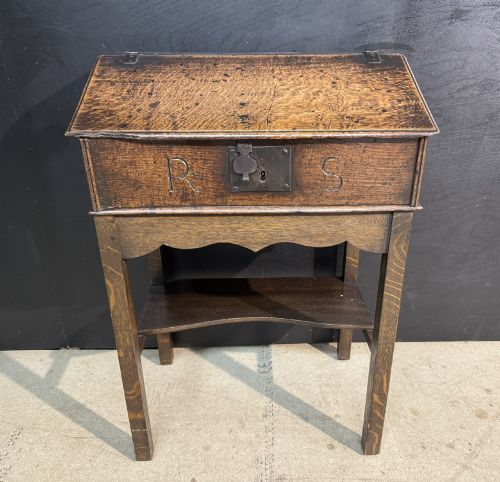
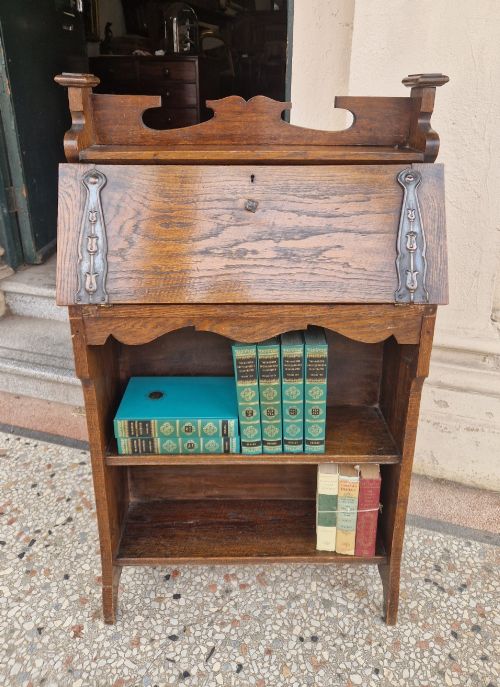
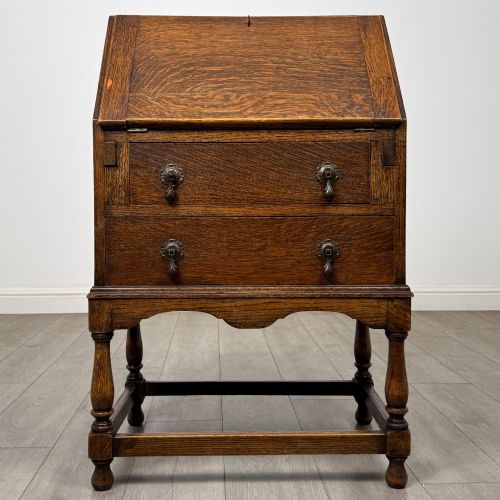
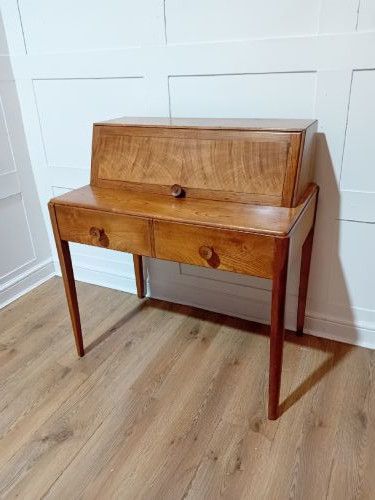
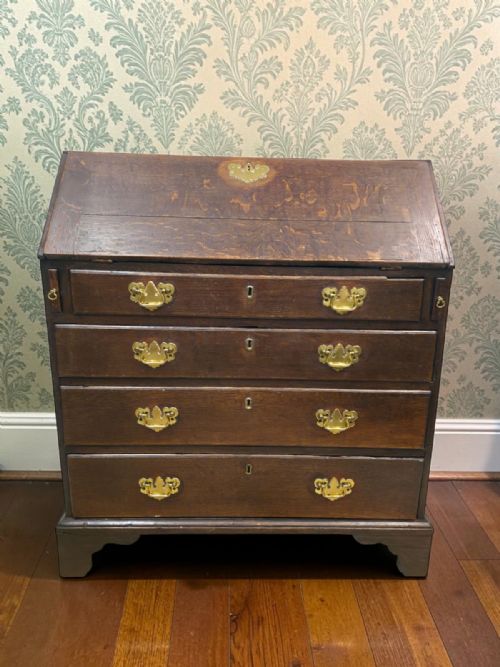
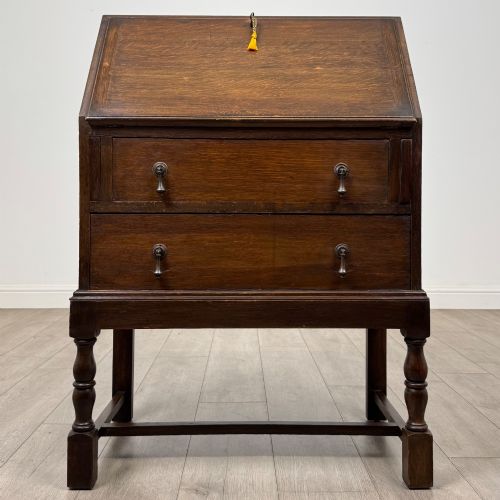
An oak slanted writing desk encompasses functional workspace forms including compact writing slopes, bible boxes, fall-front bureaux, and large bureau bookcases. The pieces span multiple centuries, appearing in periods from the seventeenth century and the Georgian era through to Victorian, Edwardian, and nineteen-twenties production.
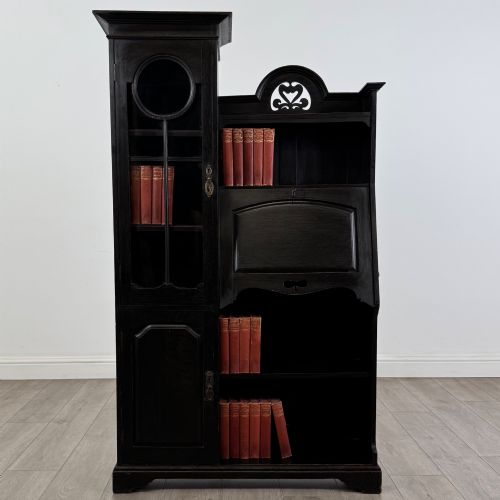
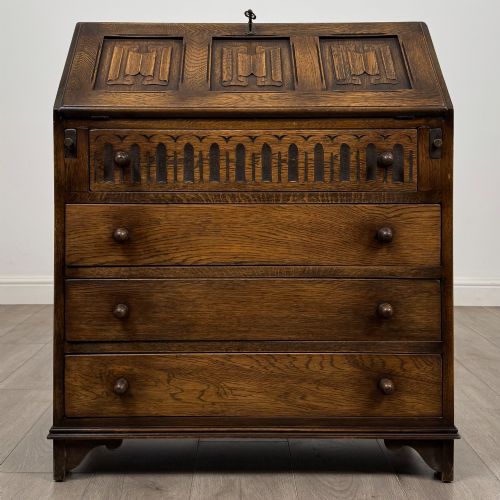
Buyers meet varied regional and stylistic interpretations on this page, shifting from plain early timbers to heavily carved Jacobean revival motifs, Arts and Crafts workshop items, and glazed bookcase combinations. The core design relies on a sloped lid that opens to reveal internal compartments, small drawers, and pigeonholes for letters and ledgers.
Forms adapt to domestic needs over time, moving from portable boxes placed on tables to floor-standing desks with multiple drawers and fitted stepped interiors. Oak serves as the primary structural timber across these centuries, frequently paired with secondary woods and specialised hardware.
What varies in quality
The standard of craftsmanship differentiates simpler utility items from workshop-marked pieces produced by notable cabinetmakers and school designers. Superior examples display carefully selected timber figuring, finely dovetailed drawer linings, and intricate interior configurations with stepped pigeonholes and secret compartments.
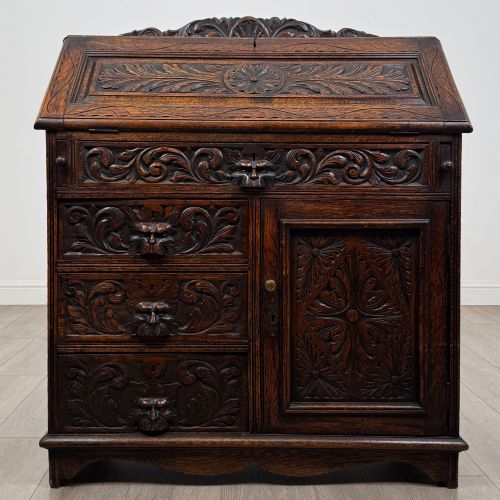
Structural alterations and later adaptations influence the standing of older furniture, as seen in pieces modified for modern domestic use like television housing. The integrity of the original hardware, the crispness of hand-carved linenfold or green man motifs, and the preservation of original finishes set individual items apart.
Listings feature oak slanted writing desks spanning the seventeenth century through to the nineteen-twenties, incorporating brass, iron, leather, and glass elements.
Heals of London·Arthur Basil Reynolds·Stanley Webb Davies·Larkin
The Oak Slanted Writing Desk Glossary
- Bureau
- A desk featuring a sloping fall-front lid that opens to form a writing surface above a set of drawers. This term frequently overlaps with bureau bookcase when fitted with upper shelving.
- Writing Slope
- A portable or table-top box with an angled lid designed to hold paper and provide an inclined writing plane. Early versions date to the seventeenth century and earlier.
- Fall Front
- The hinged sloping panel on a bureau that drops down to create the horizontal desk surface. It conceals the pigeonholes and small drawers of the interior when closed.
- Stepped Interior
- An arrangement of internal drawers and pigeonholes arranged in ascending tiers within a bureau. This tiered formation is characteristic of finer eighteenth-century examples.
- Linenfold
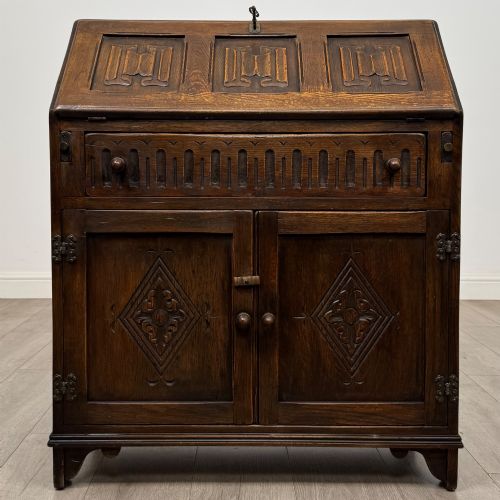
- A style of wood carving that mimics folded fabric, commonly seen on panels of Edwardian and revival oak furniture. It provides texture to the exterior fall front or cabinet doors.
Oak Slanted Writing Desk: Frequently Asked Questions
What is the difference between a bureau and a writing slope?
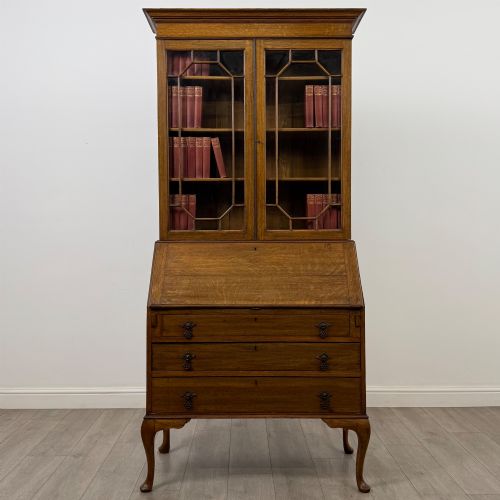
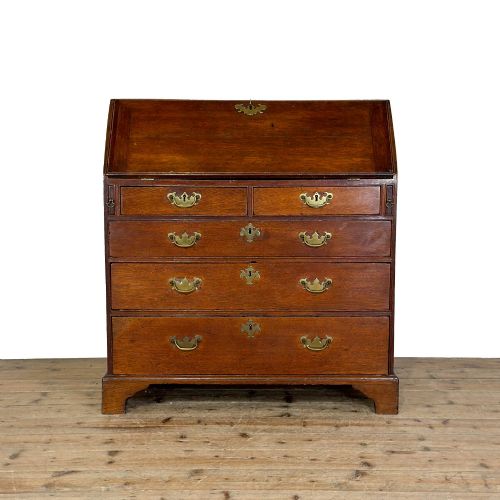
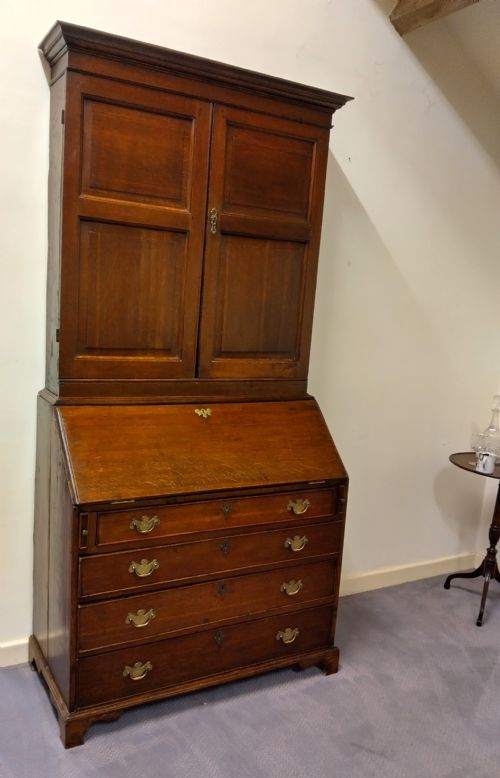
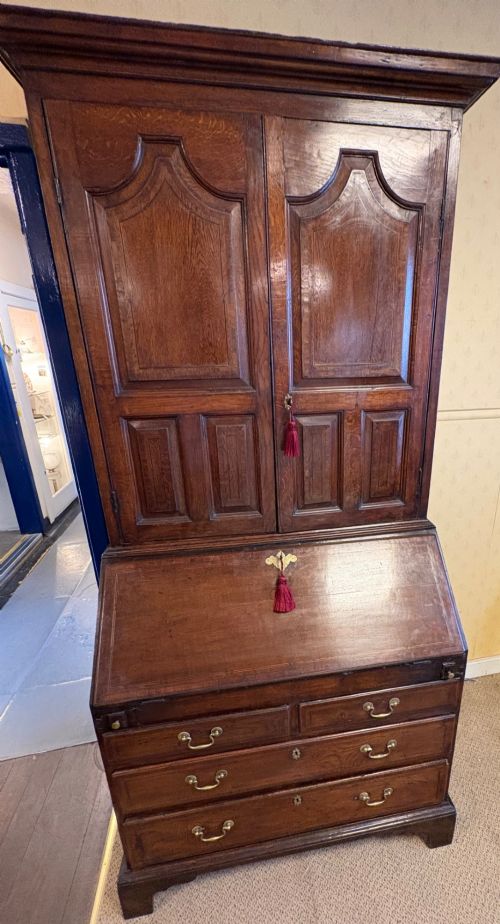
A bureau is a floor-standing piece of furniture featuring a fall-front desk section supported by legs or a chest of drawers. Many include upper bookcase sections or multiple internal compartments.
In contrast, a writing slope is a portable box designed to sit upon a table or desk. The entire slanted lid opens or lifts to store writing materials inside.
How do I identify an eighteenth-century oak bureau?
Eighteenth-century examples generally display hand-cut dovetails, pegged joints, and heavy timber construction with visible grain variations. The interior fittings often feature stepped drawers and secret compartments constructed with period secondary woods.
Later revival pieces from the Victorian and Edwardian eras imitate these earlier forms but utilise machine-cut elements, different interior configurations, and distinct hardware styles.
Were these desks used standing or sitting?
Slanted writing desks and clerk desks were typically used from a seated position, though some tall architectural desks and standing clerk forms accommodated upright working. The height of the fall-front surface dictates whether a low chair or stool suits the piece.
Interior compartments positioned above the writing plane held inkwells, quails, and correspondence close at hand for daily administration.
What does pollard oak mean on a desk?
Pollard oak refers to timber taken from trees that were pollarded, a pruning method that produces dense clusters of branches and highly decorative, swirling grain patterns. Cabinetmakers sliced this figured wood into veneers for drawer fronts and fall-front lids.
This decorative treatment adds visual contrast against the straighter grain of standard quarter-sawn oak framing.