

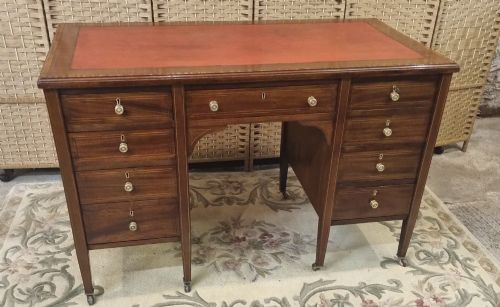
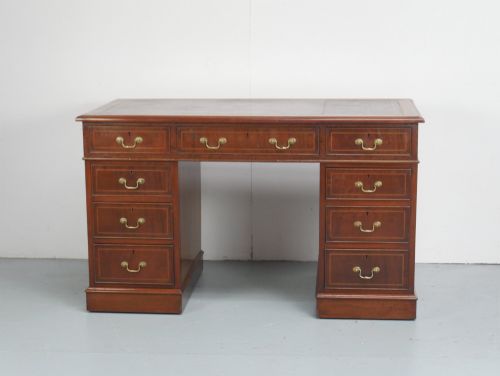
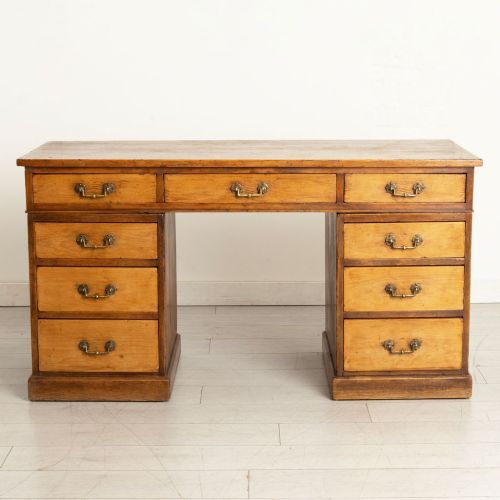
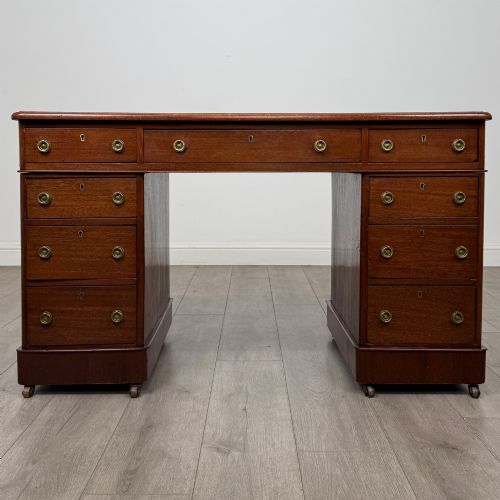



Edwardian Nine Drawer Desk
These edwardian nine drawer desk pieces offer generous workspace and classic proportions, combining practical storage with period elegance for any study.
Edwardian Nine Drawer Desk
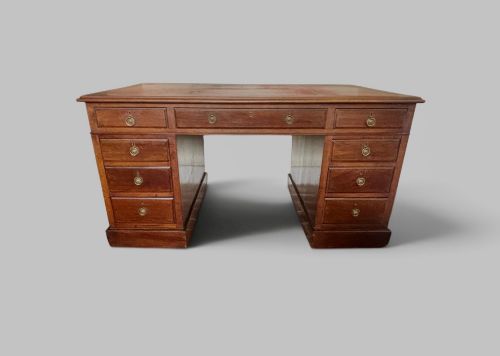
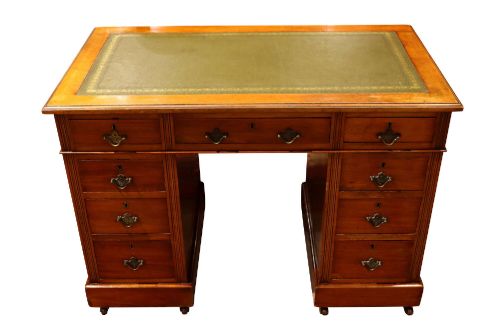
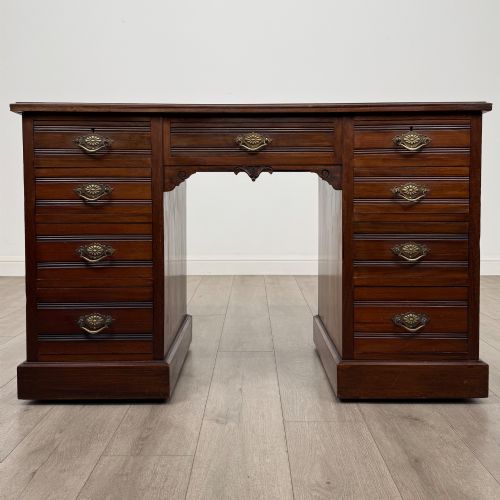
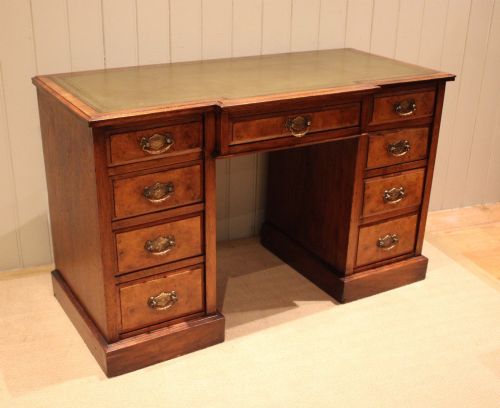
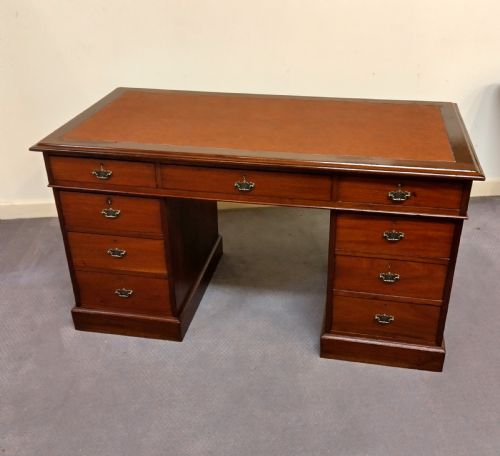
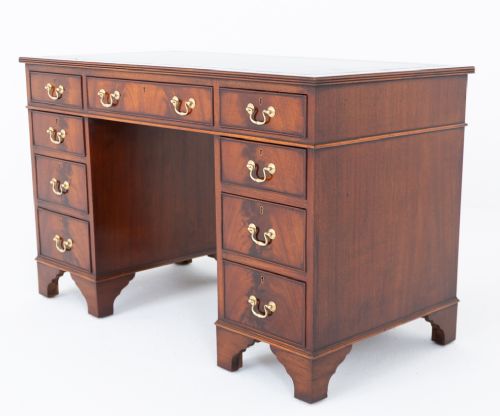
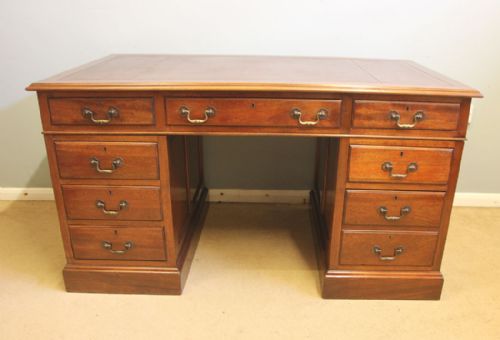
An edwardian nine drawer desk provides a substantial writing surface supported by two pedestals containing banks of drawers, typically arranged with four drawers in each pedestal and a single central drawer above the kneehole. Most examples found here date from the Edwardian period or the late nineteenth and early twentieth centuries, reflecting the enduring popularity of twin pedestal forms.
The dominant material across these pieces is mahogany, often complemented by walnut, burr walnut, ash, and satinwood detailing. Some desks feature inlaid woodwork and leather writing surfaces inset into the top, while others present plain timber surfaces suited for daily use.
The standard configuration follows a pedestal format designed to stand independently in a room or against a wall. Variations range from compact proportions to large breakfront designs, accommodating different room sizes while maintaining the signature nine-drawer layout.
What Varies in Quality
Quality in an edwardian nine drawer desk rests upon the selection of timber figures and the precision of the veneer work, where book-matched grains and fine satinwood inlay distinguish finer examples from plain utilitarian pieces. The retention of original hardware, such as brass handles and working locks with keys, elevates the integrity of a desk.
Structural refinement shows in the smoothness of the drawer action and the condition of the inset leather top, with period leather displaying a desirable patina developed through age. The choice of secondary woods and the neatness of the internal drawer construction further separate standard workshop production from master cabinet work.
Edwardian Nine Drawer Desk Retail Price Guide 2026
Typical asking prices for edwardian nine drawer desk among the pieces listed under this phrase on Sellingantiques today, from the lower quarter to the upper quarter. They describe what is for sale here now, not the wider market.
Original brass handles and fitted leather tops survive on several desks, ready for another century of ink stains and quiet industry.
Edwards & Roberts
The Edwardian Nine Drawer Desk Glossary
- Pedestal desk
- A freestanding writing table supported by two vertical banks of drawers that rest on the floor. These pieces form the structural basis of the nine-drawer format.
- Kneehole
- The central space beneath the desk top between the two pedestals, designed to accommodate the user sitting down. This recess often houses a single shallow drawer above.
- Breakfront
- A piece of furniture where the central section projects forward slightly from the flanking pedestals or cabinets. This architectural arrangement adds visual depth to larger desks.
- Inlay
- A decorative technique where pieces of contrasting wood or other materials are inserted into recessed portions of the base timber. Satinwood is frequently used for this purpose on Edwardian furniture.
- Dovetail joint
- A carpentry joint formed by interlocking wedge-shaped fingers, prized for its tensile strength. It is commonly found securing the corners of the nine drawers.
Edwardian Nine Drawer Desk: Frequently Asked Questions
How do I care for the leather top?
Clean the leather surface gently using a dry or slightly damp cloth, avoiding harsh chemical cleaners that can strip the finish and gold tooling.
Apply a neutral leather balm periodically to keep the material supple and prevent drying or cracking over time.
Are all nine drawers fully functional?
Most desks feature a traditional configuration with eight smaller side drawers and one wide central drawer above the kneehole, all designed for actual storage use.
Some period examples include locking mechanisms operated by a single key that secures the pedestals.
Can these desks stand in the middle of a room?
Many pedestal desks are finished on all four sides, meaning the back panel is polished and panelled to allow freestanding placement in the centre of a study.
Check the rear construction of a specific piece if you plan to float it away from a wall.
How do I distinguish Edwardian from Victorian desks?
Edwardian desks tend to exhibit lighter timber tones, refined inlay work, and influences from Georgian Revival styles, reflecting a shift towards airier domestic interiors.
Victorian counterparts frequently employ heavier proportions, denser mahogany timber, and more robust mouldings without decorative banding.