


Edwardian Music Bench
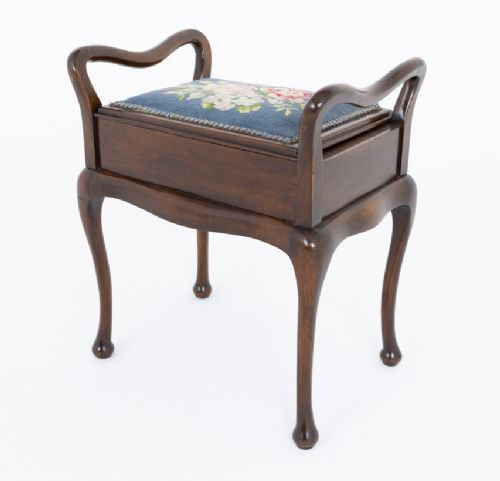
An edwardian music bench is a specialised seat designed for the piano or music room, offering both practical storage and period elegance for the home.
Edwardian Music Bench
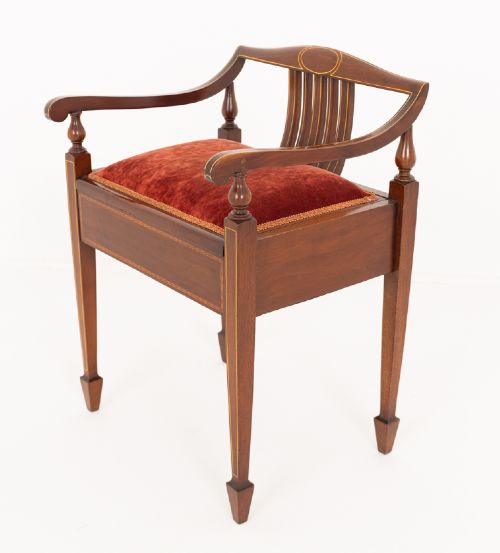
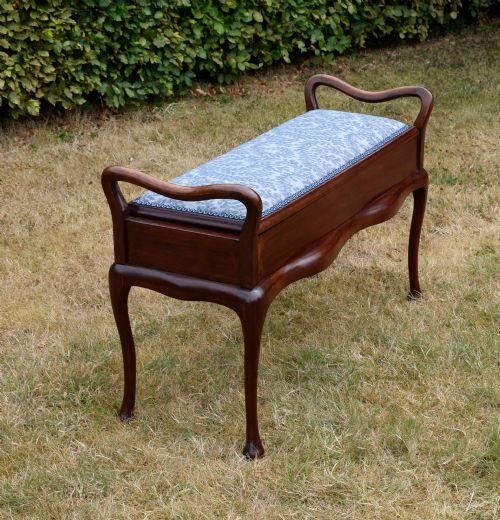
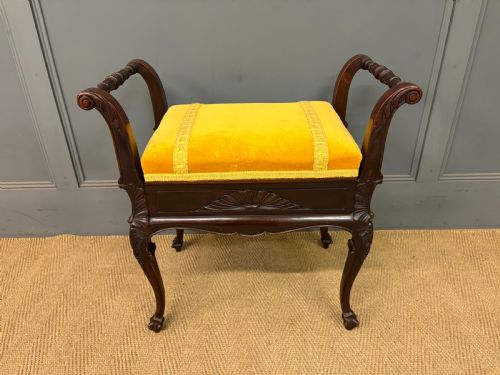
When searching for an edwardian music bench, buyers encounter a variety of piano stools and duet seats spanning the late nineteenth and early twentieth centuries. These pieces were built primarily to accommodate musicians at the keyboard, often incorporating internal compartments for sheet music storage beneath a lift-up or upholstered seat.
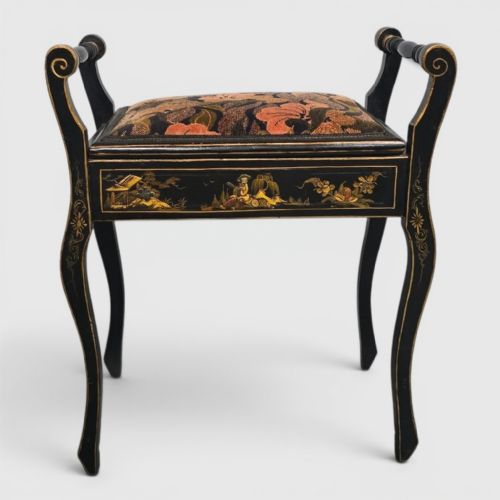
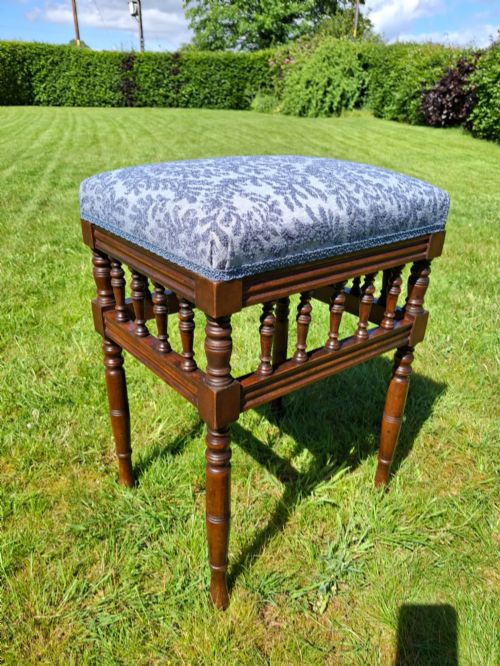
The selections on this page are dominated by Edwardian and Sheraton Revival forms, alongside examples from the Victorian, Arts and Crafts, and Chinoiserie styles. Mahogany is the predominant timber, frequently embellished with satinwood inlay, while upholstery materials range from plain fabric and velvet to tapestry and tan leather.
How they were made
Makers constructed these benches predominantly using solid mahogany and oak, often applying delicate satinwood inlay for decorative contrast on the frame and legs. Joinery methods of the period ensured sturdy daily use, particularly for duet stools and revolving piano seats designed to bear shifting weight.
Upholstery was an integral part of the construction, utilising fabric, velvet, tapestry, or leather stretched over padded seats. Brass fittings and metal mechanisms appeared on specific forms, such as adjustable revolving stools or hinged lift-up music lockers.
Listings demonstrate a strong preference for mahogany timbers, frequently enhanced with satinwood inlay and paired with upholstered lift-up seats.
What varies in quality
The distinction between standard production and finer pieces often rests on the crispness of the cabinetwork and the subtlety of the timber selection. Benches featuring intricate satinwood inlay, well-figured mahogany, and original brass hardware stand apart from simpler, plain-timber counterparts.
The execution of the style plays a major role, with refined Sheraton Revival or Chinoiserie examples demonstrating superior craftsmanship compared to utilitarian workshop pieces. Additionally, the survival of original upholstery materials like tapestry or leather contributes to the integrity of the piece.
Jas Shoolbred
The Edwardian Music Bench Glossary
- Duet stool
- A wider seating bench designed to accommodate two players simultaneously at the piano. These often feature lift-up seats providing generous storage space for larger music folios.
- Sheraton Revival
- A late nineteenth and early twentieth century design movement that reinterpreted eighteenth-century neoclassical furniture forms. It is characterised by slender proportions, straight tapered legs, and delicate satinwood inlay.
- Music locker
- An enclosed compartment built into the bench structure, accessed via a hinged or lift-up seat. It was used specifically to keep sheet music organised and protected.
- Chinoiserie
- A decorative style employing Chinese-inspired motifs and imagery applied to European furniture. Pieces in this style bring an ornate, pictorial element to the music room.
- X-framed
- A structural design where the legs cross in an X shape to support the seat. This form offers both distinct visual geometry and robust load-bearing strength.
Edwardian Music Bench: Frequently Asked Questions
What is an edwardian music bench?
An edwardian music bench is a dedicated seat created for the piano, combining comfortable upholstery with functional storage for sheet music.
These pieces typically date from the late nineteenth to the early twentieth century and appear in styles ranging from plain mahogany to inlaid Sheraton Revival designs.
How were music benches used?
Musicians used these seats at the piano or keyboard for both solo practice and duet performances. The internal compartments kept scores and sheet music close at hand.
Many designs featured lift-up lids or revolving mechanisms to suit the player's preference during long practice sessions.
Where should I place a music bench?
While traditionally paired with a piano, these versatile benches work well as freestanding seating in hallways, bedrooms, or living rooms. Their internal storage makes them practical for hiding clutter in smaller spaces.
Positioning them away from direct sunlight protects the mahogany timber and delicate upholstery fabrics.
How do I identify an Edwardian piece?
Edwardian pieces often feature lighter mahogany timbers, sometimes enhanced with subtle satinwood stringing or neoclassical inlay motifs. The overall proportions tend to be lighter and more refined than earlier Victorian furniture.
Construction details and secondary woods like pine can also help confirm the period of manufacture around the early nineteen hundreds.