
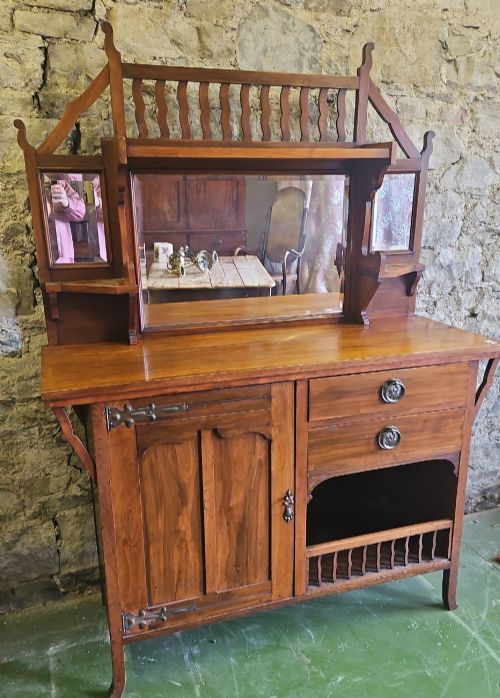
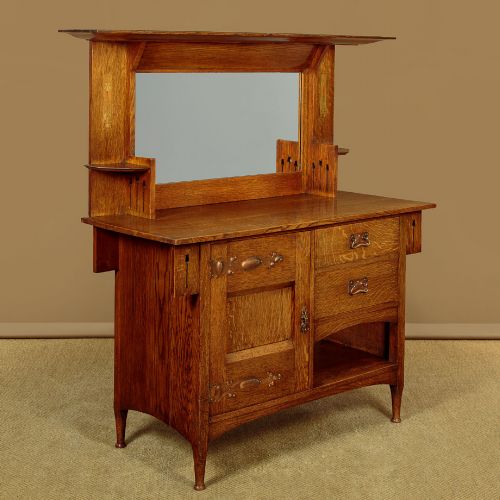


Edwardian Mirrored Oak Dresser
An edwardian mirrored oak dresser brings practical storage and reflected light into a room, combining solid timber with bevelled glass.
Edwardian Mirrored Oak Dresser
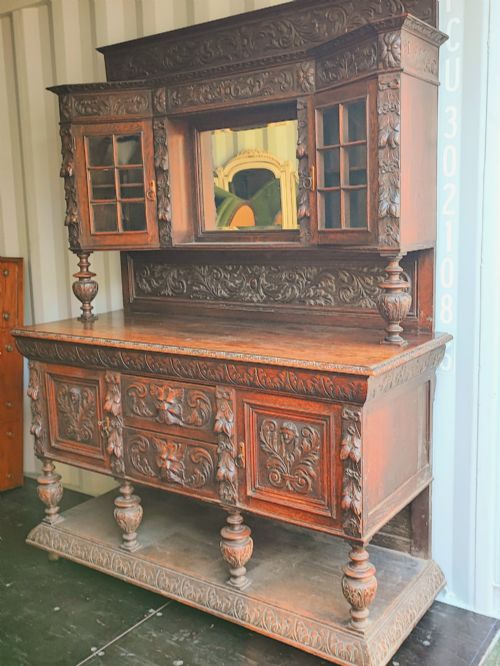
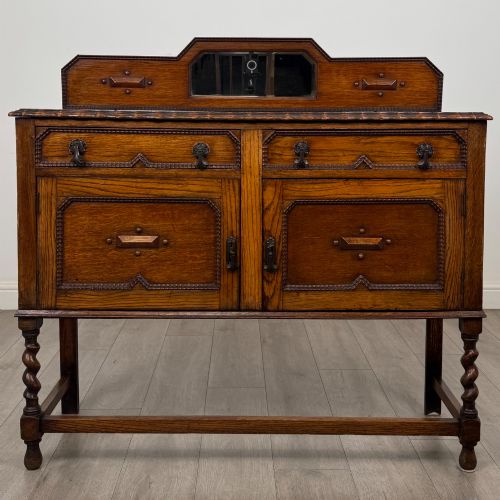
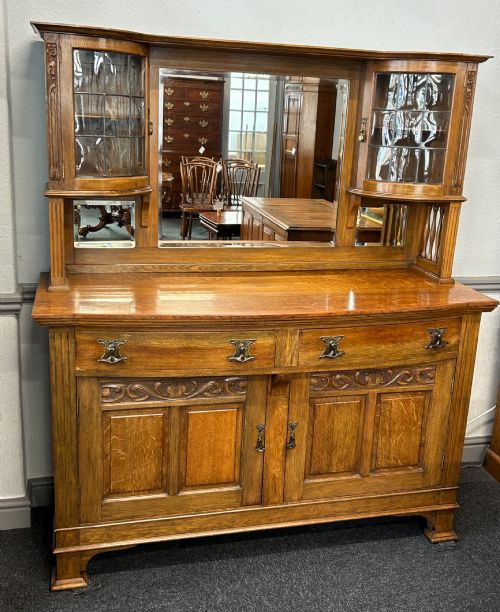
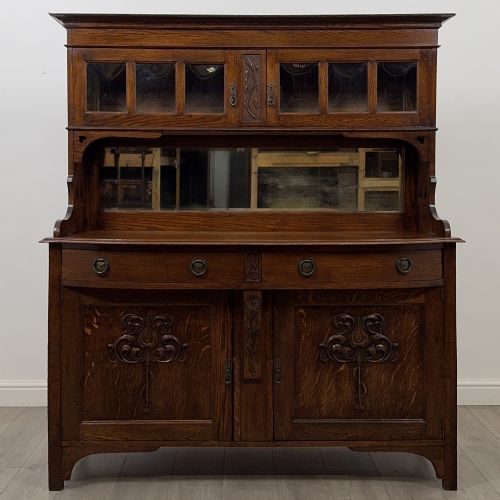
When someone searches for an edwardian mirrored oak dresser, they encounter a heavy timber piece designed for domestic storage and display, often featuring an integrated mirror back. These items serve multiple purposes in dining spaces or hallways, offering both surface area and enclosed shelving behind wooden or glass doors.
The version most commonly met on this page combines solid oak construction with a mirrored backplate, frequently showing stylistic influences from the Arts and Crafts movement or Art Nouveau. Makers utilised golden oak, pollard oak, and standard oak, incorporating brass hardware and occasionally leaded glass panes into the doors.
Materials and construction methods
Carpenters built these pieces using solid oak and occasionally pollard oak for decorative grain patterns, framing them with mortise and tenon joints to ensure stability. Timber surfaces were planed, carved, and polished, displaying natural figuring alongside carved motifs such as Green Man masks or simple geometric strapwork.
Mirrors were set securely into wooden backs, flanked by shelving or small cupboards, while doors relied on brass hinges and iron fittings. Glazed sections utilised standard or leaded glass, held in place with wooden glazing bars to create panelled display areas.
Design styles recorded across the pieces include Arts and Crafts, Art Nouveau, and Jacobean Revival.
Measures of quality and craftsmanship
The standard of carving and the selection of timber dictate where a piece sits in the range, with figured pollard oak and deep hand-carved relief work marking out superior items. Better examples exhibit careful timber matching across drawer fronts and door panels, ensuring grain patterns flow coherently.
Structural integrity depends on the thickness of the oak used for carcass sides and shelves, as well as the quality of the silvering on the original mirror glass. Pieces displaying crisp joinery and robust brass or copper hardware demonstrate a higher grade of workshop production.
T Simpson and Son
The Edwardian Mirrored Oak Dresser Glossary
- Pollard oak
- Oak timber taken from a tree that was pruned above browsing height, producing a dense wood grain with clustered knots. This figured material was utilised for decorative veneer or feature panels.
- Green Man
- A sculptural architectural ornament depicting a human face entwined with foliage, vines, or branches. Carvers often placed this motif centrally on mirror backs and cabinet doors.
- Mirror back
- An upright timber frame holding a glass mirror attached to the rear of a sideboard or dresser. This addition reflects light and displays decorative objects placed on the shelf below.
Edwardian Mirrored Oak Dresser: Frequently Asked Questions
How do I clean an antique oak surface?
Dust the timber regularly with a dry cloth and apply bees-wax sparingly to maintain the finish. Avoid silicone-based sprays that can damage the polish over time.
Work the wax gently into the grain using a soft brush, then buff it to a satin sheen using a clean cotton cloth.
Can I replace a damaged mirror glass?
Original mirror glass often shows foxing and dark spots due to age, which many collectors prefer to retain as evidence of authenticity. Replacing the glass is possible by removing the wooden retaining slips from the back of the frame.
If replacement is necessary, source a mirror with a comparable bevel thickness to maintain the original appearance of the piece.
How do I secure a heavy mirror back?
These sideboards are often heavy and top-heavy due to the mirrored superstructure, so ensure the base sits level on the floor. Use appropriate wall brackets if the manufacturer included fixing points, preventing any risk of tipping.
Check that all internal bolts and screws connecting the upper mirror section to the lower sideboard are fully tightened.
What is the difference between a sideboard and a dresser?
Sideboards generally feature a low profile with cupboards and drawers beneath a flat top, sometimes extended by a mirror back. Dressers traditionally incorporate open plate racks above the main counter for displaying crockery.
In many listings, these terms overlap depending on whether the piece includes upper display shelving or enclosed upper cabinets.