
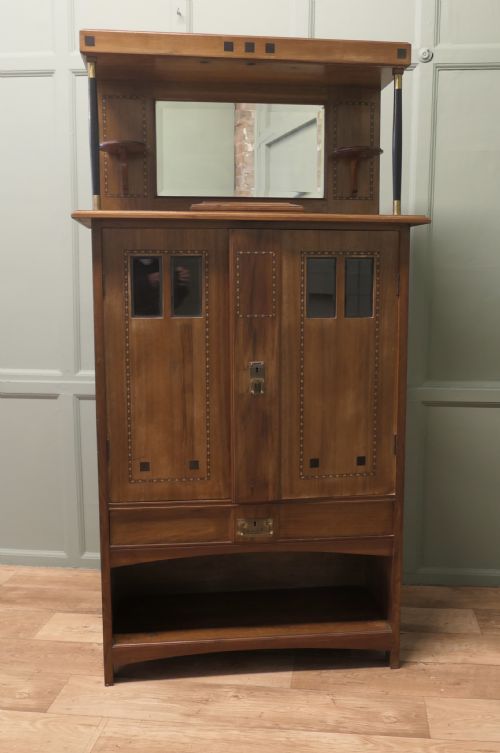
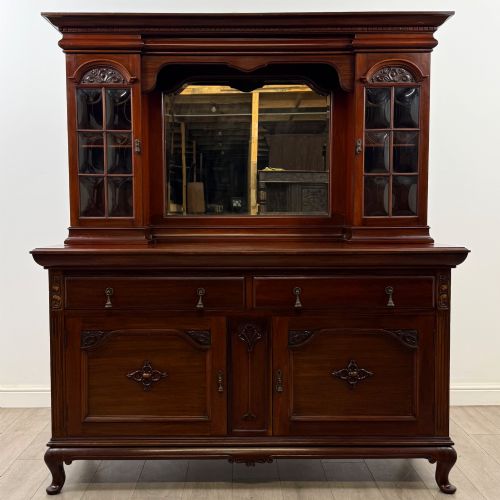
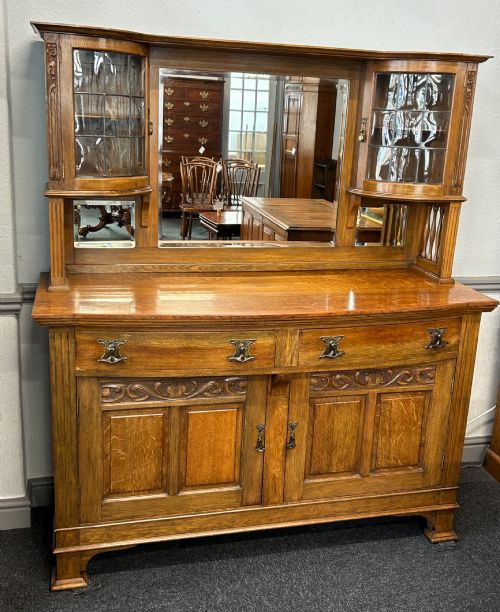
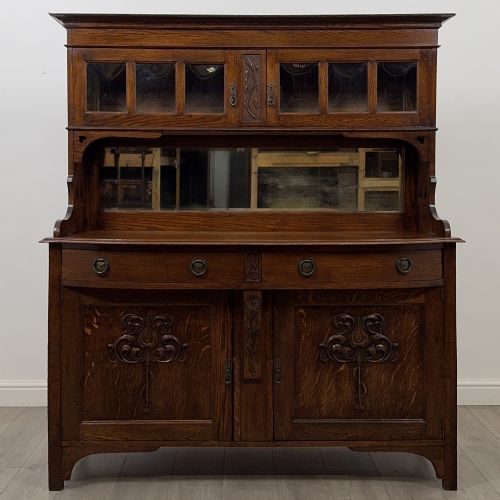


Arts Crafts Mirrored Sideboard
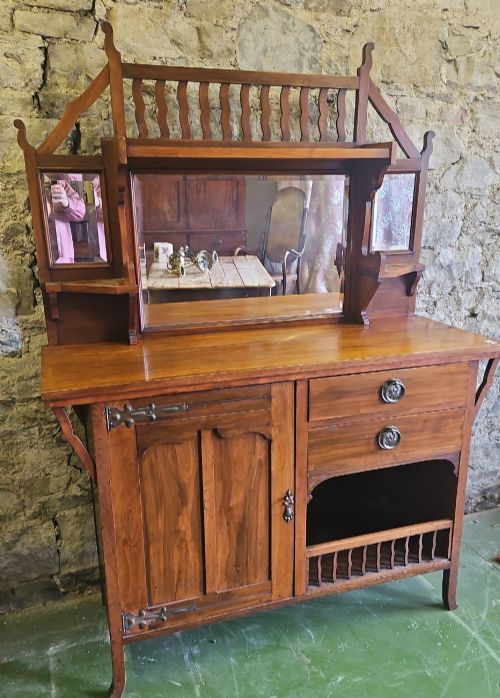
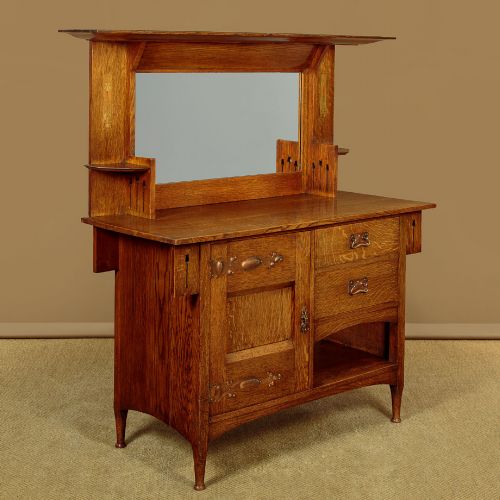
An arts crafts mirrored sideboard brings together sturdy timber and reflective glass to anchor a dining room with genuine period character.
Arts Crafts Mirrored Sideboard
These pieces combine the utility of a traditional dining room base with an integrated mirror back, emerging strongly across the Edwardian era and the turn of the twentieth century. The version you are most likely to encounter on this page is a substantial timber sideboard fashioned in the Arts and Crafts or Edwardian style, featuring a central mirror set above the main serving surface.
Makers of the period favoured forms that emphasised honest construction and utility, often incorporating cupboards and display cabinets alongside the mirror. Examples range from simple oak buffets to elaborate cocktail display cabinets and large mirrorback sideboards carrying distinct Secessionist or Art Nouveau influences.
How they were made
Carpenters relied primarily on solid oak and mahogany to build the robust carcase and frame of each sideboard, frequently complemented by secondary timbers. These substantial wooden structures were then fitted with glass panels, mirror glass, and decorative hardware forged from brass, copper, and iron.
Construction techniques balanced straightforward joinery with thoughtful decorative details, such as leaded glass doors and patinated metal mounts. The integrated mirrors were set securely into wooden frames above the sideboard top, reflecting light and the room around them.
Listings span periods from eighteen eighty through to nineteen twenty, with Edwardian examples forming a significant portion of the available oak and mahogany pieces.
What varies in quality
Quality in these sideboards rests largely on the selection of timber and the depth of workmanship in the carving and metal fittings. Better pieces exhibit careful selection of figured oak or mahogany, alongside hand-beaten copper or brass hardware that shows individual artisan attention.
The integration of the mirror back and the precision of any leaded or bevelled glass further separate standard production from exceptional examples. Finer pieces demonstrate superior structural joinery that maintains stability across large sideboards and dresser combinations.
T Simpson and Son·Shapland & Petter
The Arts Crafts Mirrored Sideboard Glossary
- Secessionist
- A design movement related to Art Nouveau that favoured geometric clarity and restrained ornamentation. It appears in several continental and British pieces from the early twentieth century.
- Mirrorback
- A sideboard style featuring an upright wooden frame holding a mirror attached to the rear of the top surface. This element was designed to reflect light and display decorative objects.
- Leaded glass
- Small panes of glass held together by strips of lead cames to form geometric or floral patterns. This technique is frequently found on cabinet doors within the Arts and Crafts tradition.
- Art Nouveau
- An international style characterised by organic, fluid lines and floral motifs. It heavily influenced furniture design around nineteen hundred.
- Golden oak
- A specific warm, light tone of oak finish popular during the Edwardian period. It highlights the natural grain of the timber.
Arts Crafts Mirrored Sideboard: Frequently Asked Questions
What is an arts crafts mirrored sideboard?
An arts crafts mirrored sideboard is a dining room storage piece featuring a wooden base with cupboards or drawers and an attached mirror at the back. These items date predominantly from the late nineteenth century through to the nineteen twenties.
They were designed to serve both practical storage needs and display functions, reflecting interior light through their incorporated mirrors and glass panels.
How do I date an arts crafts mirrored sideboard?
Dating relies on observing construction methods, timber choices, and stylistic markers such as Art Nouveau curves or strict Arts and Crafts functionalism. Pieces span the Victorian, Edwardian, and early twentieth-century periods.
Makers' marks, brass hardware styles, and the cut of the mirror glass can also help narrow down the decade of manufacture.
Where should I place a mirrored sideboard?
These sideboards suit dining rooms, large hallways, or living spaces where the mirror can bounce natural light around the room. Their substantial wooden frames require adequate wall space and a balanced room layout.
Positioning them away from direct, harsh sunlight helps protect the polished timber finish and the backing of the mirror glass.
What woods were used for these sideboards?
Oak is the predominant timber found in these listings, appearing in finishes from light oak to rich golden tones. Mahogany is also represented among the pieces from this era.
Secondary woods were occasionally used for internal drawer linings and cabinet backs while the primary surfaces showcased the main timber.
How do I care for the mirror glass?
Caring for the mirror involves gentle cleaning with a soft cloth and a mild glass cleaner sprayed onto the cloth rather than directly onto the glass. This prevents moisture from seeping behind the silvered backing.
Checking the wooden frame holding the mirror ensures the glass remains securely seated without putting pressure on the corners.