
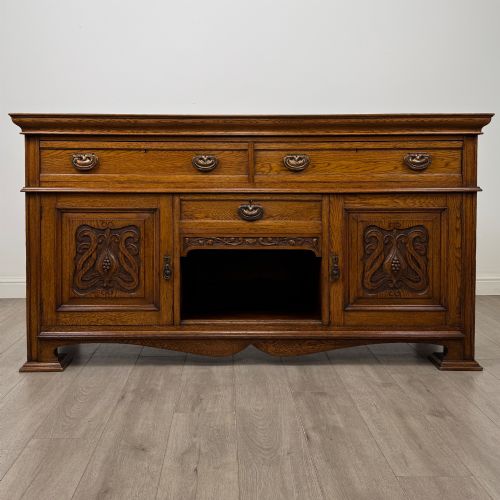
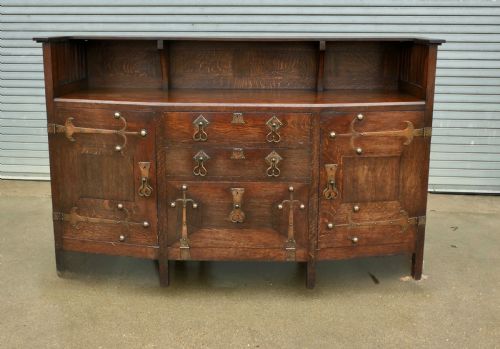
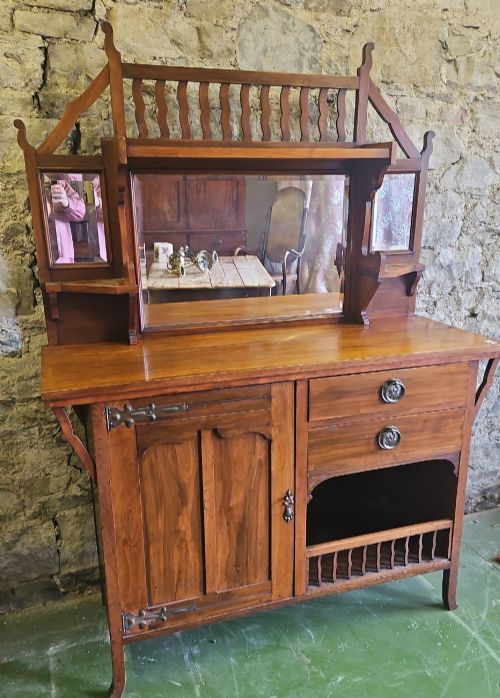
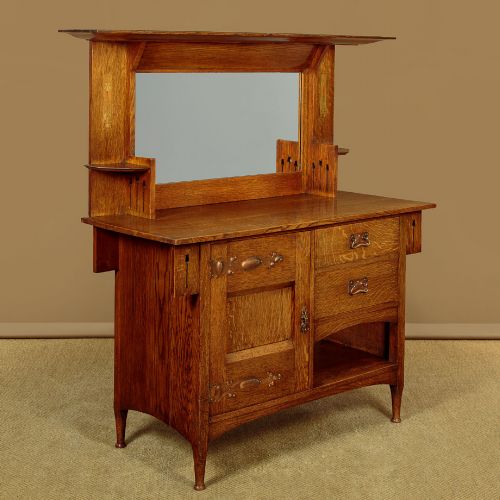


Liberty Oak Buffet
A liberty oak buffet brings the honest construction and functional design of the Arts and Crafts movement straight into a dining room.
Liberty Oak Buffet
When buyers search for a liberty oak buffet, they are looking at large dining room storage furniture built in the Arts and Crafts and Edwardian styles. These pieces function as sideboards, dressers, or sideboards and dressers depending on whether they include upper display shelving or enclosed cupboards. You will most frequently meet sideboards on this page, often bearing the distinct design hand of Liberty and Co. or Leonard Wyburd.
The objects span from the 1880s through the Edwardian period up to 1910, reflecting a golden age of British cabinet making. They showcase solid timber construction and thoughtful proportions suited to contemporary dining spaces as much as period homes. The forms range from straightforward golden oak sideboards to specific named designs like the Lochleven model.
Makers such as Shapland and Petter appear alongside Liberty and Co. productions, showing how commercial workshops and retailers shaped the aesthetic. Whether described as a sideboard or a dresser, each piece relies on utility and sturdy framing. Buyers choose them to anchor a room with functional historic design.
How they were made
These pieces rely primarily on solid oak, chosen for its strong grain and durability in large dining furniture. Workshops enhanced the timber using wood inlay, marquetry inlay, and contrasting metalwork fixtures in copper, brass, and iron. Glass panels frequently appear in upper cabinet doors or display sections.
Cabinet makers utilised traditional joinery methods to build lasting carcases for sideboards and dressers. The decorative elements, such as hammered copper hinges and ceramic details, were integrated directly into the functional structure of the furniture.
Listings feature oak as the primary material, accented with copper, brass, iron, glass, and ceramic elements across multiple decades.
What varies in quality
Quality in these oak pieces rests upon the precision of the joinery and the selection of the timber. Finer examples display carefully figured golden oak and integrated marquetry inlay that complements rather than overpowers the natural grain.
The distinction between standard production items and top tier works lies in the hardware and secondary materials. Original copper and brass fittings, alongside well executed wood inlay, separate ordinary storage from distinguished examples.
Liberty and Co.·Leonard Wyburd·Shapland and Petter
The Liberty Oak Buffet Glossary
- Arts and Crafts
- A design movement valuing handcraft, natural materials, and simple forms over industrial excess. It heavily influenced British furniture production at the turn of the twentieth century.
- Edwardian
- Pertaining to the reign of King Edward VII, spanning the early years of the twentieth century. Furniture from this era often retains substantial Arts and Crafts influence.
- Marquetry Inlay
- The art of applying pieces of veneer to a structure to form decorative patterns. It adds visual texture to flat drawer fronts and cupboard doors.
- Dresser
- A storage piece incorporating a lower sideboard base and an upper plate rack or shelving unit. It provides both concealed and open display space.
Liberty Oak Buffet: Frequently Asked Questions
What is a liberty oak buffet?
A liberty oak buffet is a large dining room storage piece, typically classified as a sideboard or dresser, dating from the late nineteenth or early twentieth century. These items reflect the Arts and Crafts aesthetic associated with Liberty and Co.
They combine sturdy oak construction with practical storage, featuring cupboards, drawers, and sometimes display shelving for dining wares.
How do I date these pieces?
Dating relies on stylistic clues, construction methods, and maker attribution. Pieces span from the 1880s through the Edwardian era to 1910.
Earlier examples often display heavier proportions and simpler lines, while later Edwardian pieces may incorporate more refined inlay work and lighter metal fixtures.
Where should I place one?
These large storage pieces suit dining rooms, large hallways, or spacious living areas where they can function as primary focal points. Ensure you measure wall space and ceiling height carefully before placement.
Their substantial oak presence anchors a room while offering practical surface space and enclosed storage for household items.
Are they sideboards or dressers?
The terms are often used interchangeably in historical listings, but they denote distinct structural forms. Sideboards feature a low profile with top surfaces, drawers, and cupboards.
Dressers include the same lower storage base but add an upper tier of open shelves or cabinets for displaying ceramics and glassware.