
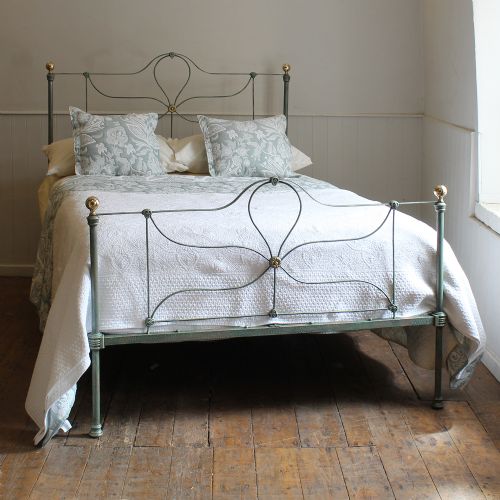
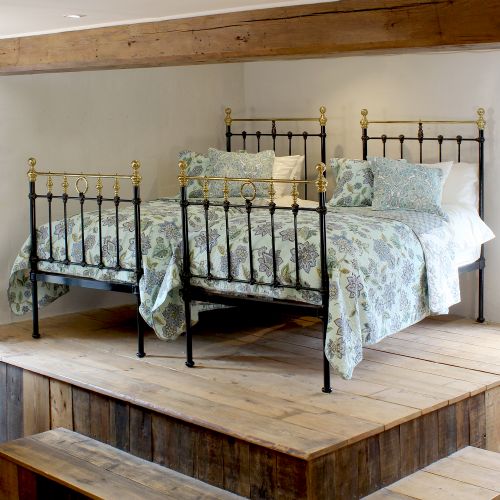
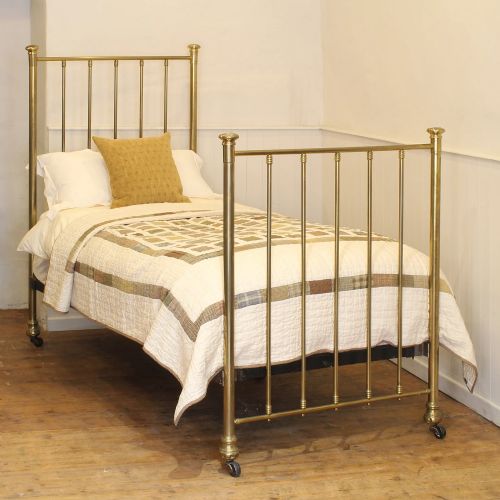
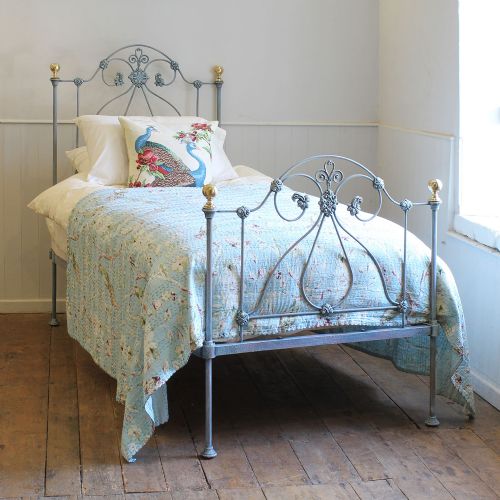
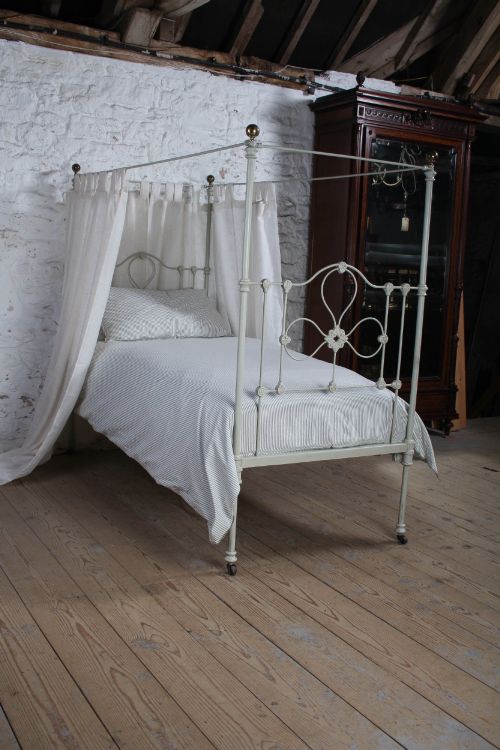
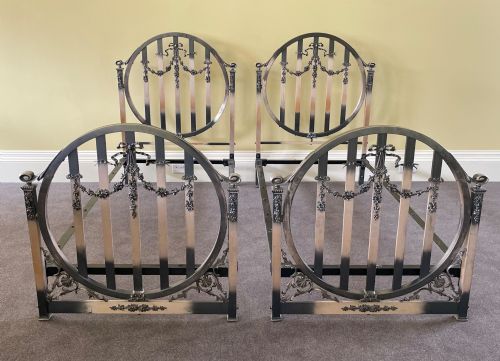
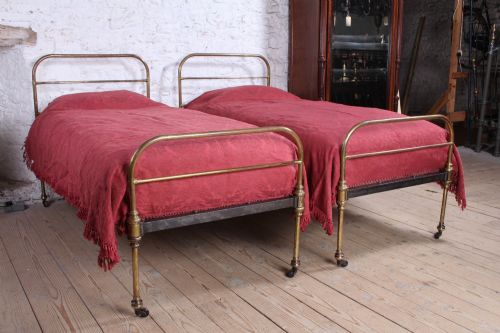
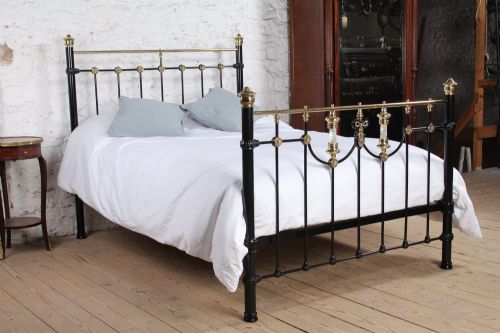

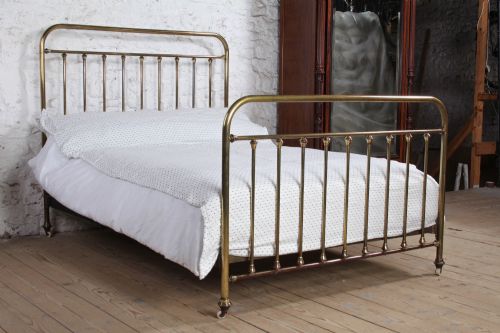
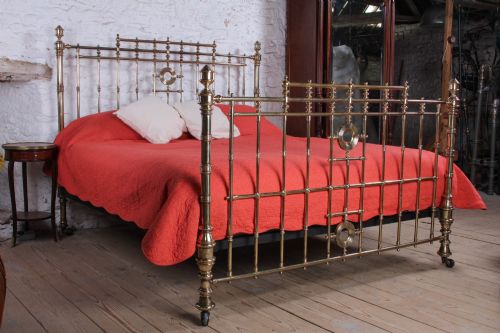
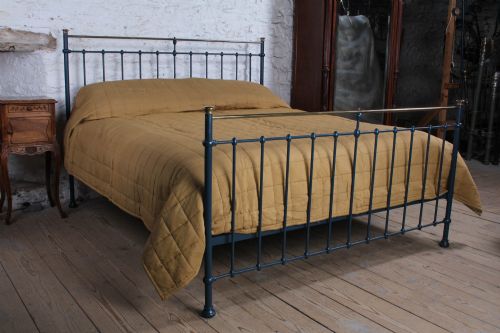
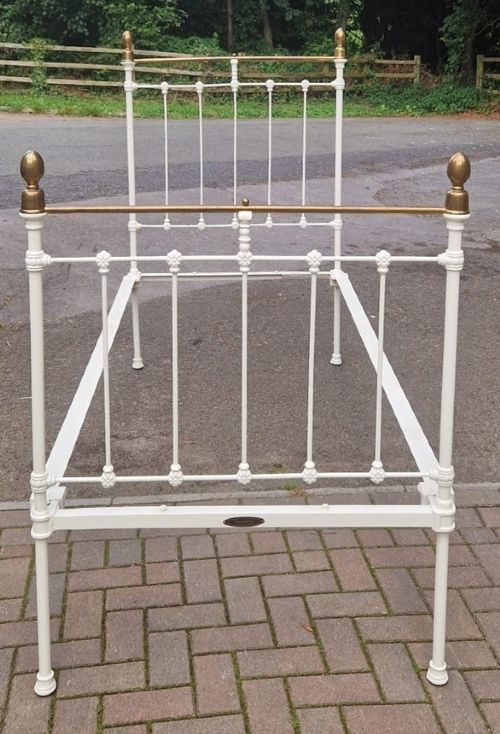

Edwardian Metal Bedstead
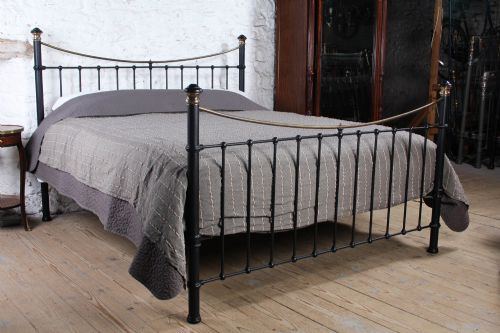
An edwardian metal bedstead brings substantial weight and distinct period character to a bedroom through robust construction and decorative metalwork.
Edwardian Metal Bedstead
When searching for an edwardian metal bedstead, buyers encounter substantial frames designed for domestic sleeping quarters. These pieces combine functional durability with the distinct aesthetic sensibilities characteristic of the early twentieth century.
Origins span the Edwardian era and surrounding periods, utilising traditional metalworking techniques. Buyers frequently find matching pairs or single beds capable of fulfilling specific room layouts.
Materials and construction methods
Makers utilised a combination of cast iron, wrought iron, and brass to build these frames, frequently incorporating nickel plating for a bright finish. Structural integrity relied on robust metal casting and hand-forging techniques.
Decorative elements often included applied brass details, mother of pearl inlays, and specialised tubing. Surface treatments such as japanning provided both protection and a uniform dark colour to the iron elements.
Assessing quality in period metal beds
Quality rests primarily on the integrity of the original joints, the weight of the metal, and the crispness of any cast ornamentation. Heavier gauge iron and substantial brass components indicate superior original manufacture.
The preservation of original surface finishes, whether polished brass or japanned iron, distinguishes higher grade examples from those stripped or refinished without regard for historical method.
Maple and Co·Winfield
The Edwardian Metal Bedstead Glossary
- Dip-rail
- A headboard or footboard rail that curves downward in the centre. This configuration provides a distinct silhouette often seen in Edwardian designs.
- Japanning
- A type of European finish that mimics Asian lacquerware. It involves applying multiple layers of dark varnish and heat-curing them on iron.
- Cast iron
- Iron poured into a mould to create rigid components with decorative detail. It formed the heavy structural base for many period beds.
- Nickel plating
- A thin protective coating of nickel applied to a metal surface. This process provided a bright, corrosion-resistant finish popular during the Edwardian period.
- Winfield
- A notable firm associated with metal bed production. Pieces bearing this name reflect established nineteenth and early twentieth-century manufacturing standards.
Edwardian Metal Bedstead: Frequently Asked Questions
How do I choose the right size?
Bed sizes range from small single cots to super king dimensions across the listings. Measure your room space carefully to ensure adequate clearance for larger frames.
Consider whether you need a standard double or an extended king size depending on daily use requirements.
Can modern mattresses fit these beds?
Many period frames accommodate standard modern mattress dimensions with appropriate modern bed bases or slats. Check the internal width and length measurements of the specific frame before purchasing.
Some listings include the original bed base to assist with mattress placement.
How do I care for brass and iron?
Maintain brass components by dusting regularly and using appropriate metal cleaners sparingly if polishing is desired. Painted or japanned iron surfaces require only gentle cleaning with a dry or slightly damp cloth.
Avoid harsh abrasives that might damage the original protective finishes.
Are these beds easy to assemble?
Most metal bedframes utilise traditional side rail wedge locks or bolt-together mechanisms. These systems allow the headboard, footboard, and rails to separate for transport.
Two people are usually required to assemble the heavier cast iron and brass components safely.