


Victorian Iron Twin Beds
Victorian iron twin beds offer enduring charm and practical pairing, bringing period character and sturdy metal construction straight to guest rooms.
Victorian Iron Twin Beds
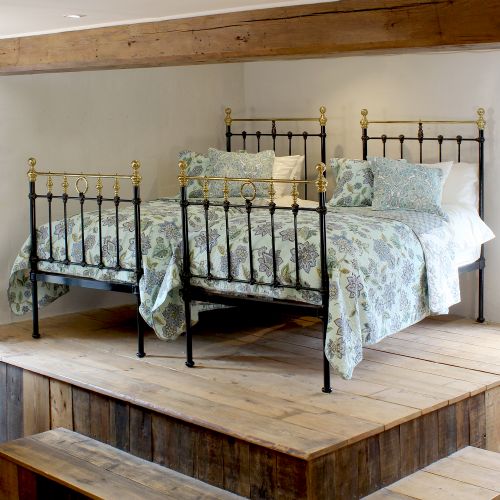
Victorian iron twin beds comprise paired single sleeping frames originating from the nineteenth century, often constructed to stand side by side or join together. Buyers seeking victorian iron twin beds encounter examples featuring cast iron, wrought iron, and brass details.
The selections span various decades of the nineteenth century, including pieces from the 1870s, 1880s, 1890s, and around 1900. Many items appear as matching pairs, finished in black, cream, white, or charcoal paint alongside exposed metal elements.
Design variations include French country styling, platform configurations, no-end constructions, and specific decorative touches like rings or brass ornamentation. Certain variants accommodate joining mechanisms to form wider sleeping arrangements.
Construction and materials
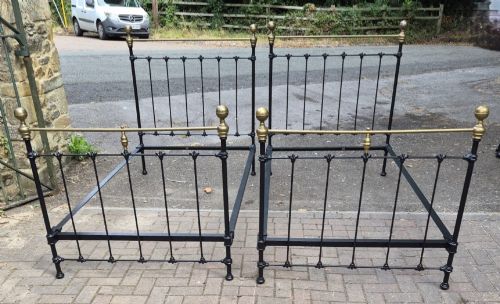
These bedsteads rely primarily on robust cast iron and wrought iron frameworks, often combined with polished brass components or nickel plating. Metal casting techniques allowed workshops to shape ornate structural elements and secure joints.
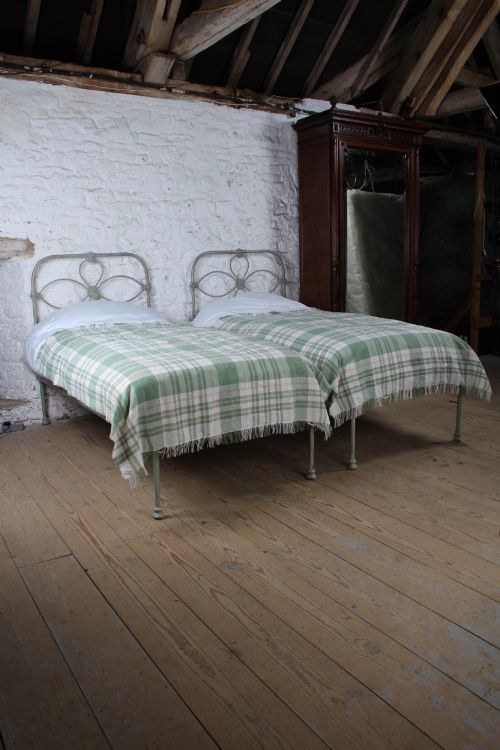
Surfaces received protective and decorative coatings, utilising traditional paint finishes in neutral tones like white, cream, charcoal, and black. Ceramic elements occasionally appear within the material mix alongside the dominant metals.
Several beds feature clever ring attachments, proving that even nineteenth-century ironmongery appreciated a well-placed brass hoop.
Factors of distinction
Quality rests in the intricacy of the metalwork, from simple structural bars to detailed brass decoration and integrated ring motifs. The refinement of the casting and the crispness of the applied paint finishes differentiate standard utilitarian frames from more decorative examples.
The presence of maker attribution, such as works by R W Winfield, elevates a piece through documented provenance. Additionally, the survival of matching pairs with intact joining capabilities marks superior domestic utility.
R W Winfield
The Victorian Iron Twin Beds Glossary
- Cast iron
- A strong, hard iron-carbon alloy produced by pouring molten metal into a mould. This technique allowed nineteenth-century foundries to mass-produce sturdy bed frames with decorative headboards.
- Wrought iron
- Tough, malleable iron worked by hammering rather than casting. It provides structural resilience and flexibility in bedstead construction.
- Bedstead
- The framework of a bed supporting the mattress and base. These nineteenth-century examples often feature distinct head and foot sections.
- Platform bed
- A bed frame featuring a solid or slatted base designed to support a mattress directly. These require no separate box spring.
- Nickel
- A silvery-white metal used for plating iron components. This finish offered corrosion resistance and a bright aesthetic.
Victorian Iron Twin Beds: Frequently Asked Questions
Can these single beds be joined together?
Several listed pairs include specifications noting they can be joined or lined to form a larger sleeping arrangement. This modular design reflects nineteenth-century versatility.
Buyers should examine the joining mechanism details provided in individual listings to understand how the separate bedframes connect.
What colours do these metal beds come in?
The available examples feature various painted surfaces, including classic black, soft cream, crisp white, and charcoal finishes. Many incorporate contrasting brass or nickel details.
Original or later applied paint preserves the iron underneath while matching diverse interior decorating schemes.
How do I date a nineteenth-century iron bed?
Dating relies on stylistic clues, manufacturer marks, and documented production periods spanning the 1870s through to 1900. Specific decorative motifs often align with late Victorian design trends.
Makers such as R W Winfield provide firm historical anchors when stamped or attributed to a specific decade.
What is a no-end bedstead design?
A no-end configuration typically lacks a high footboard, presenting a streamlined profile that eases the transition into the room. This style suits spaces where minimising visual bulk is desirable.
Such designs maintain the structural iron headboard while simplifying the lower end of the frame.