


Edwardian Marquetry Drawers
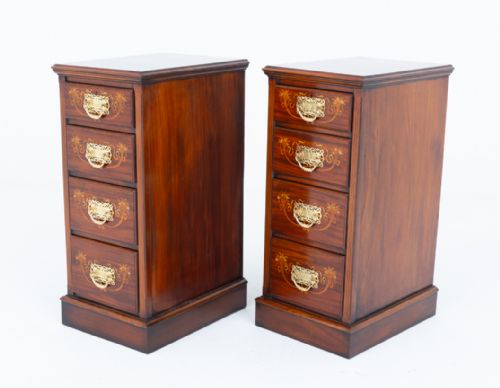
Edwardian marquetry drawers combine precise cabinet-making with delicate floral and geometric wood inlay.
Edwardian Marquetry Drawers
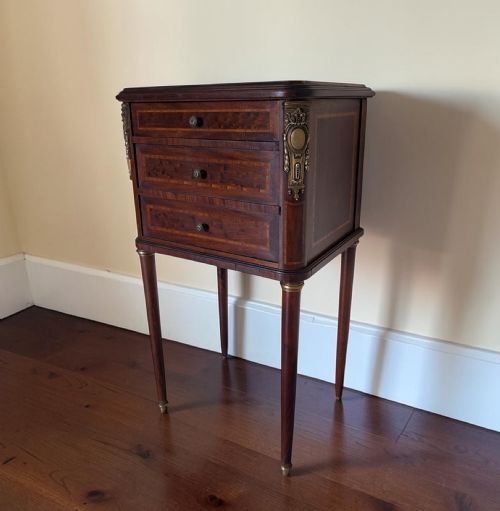
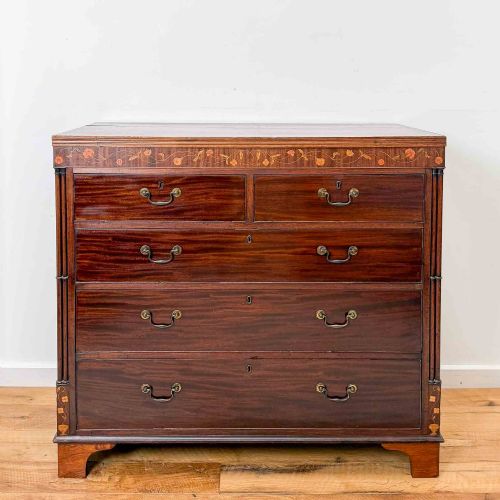
Edwardian marquetry drawers bring together functional storage and decorative surface craft, often appearing as chests of drawers, writing desks, and bedside cabinets. When searching for edwardian marquetry drawers, a buyer encounters pieces originating primarily from the Edwardian period and the late nineteenth century alongside earlier Victorian examples. These items serve everyday household use while displaying ornamental veneer patterns across drawer fronts and table tops.
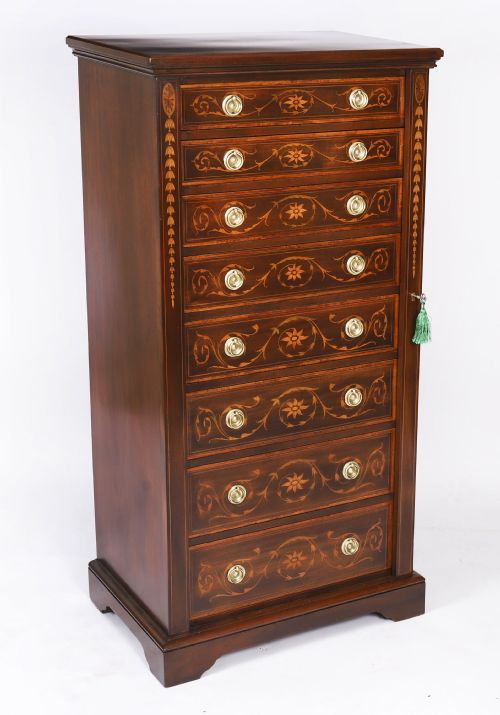
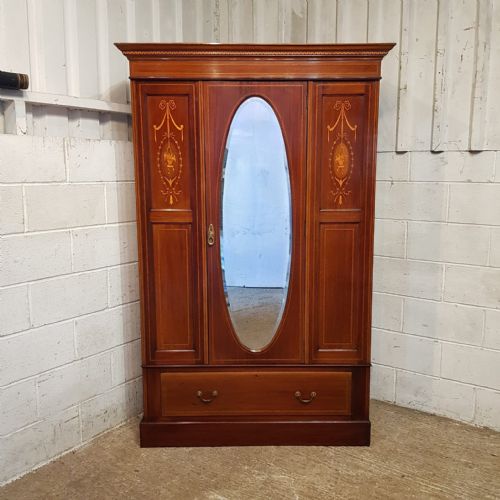
The versions most frequently met on this page combine mahogany or satinwood carcases with contrasting timber inlays. Forms range from compact bedside chests to tall pedestal chests and writing desks fitted with multiple drawers. Makers applied floral details, ribbons, and classical motifs directly onto the drawer fronts to catch the eye in a bedroom or parlour.
Materials and Construction Techniques
Makers utilised dense cabinet timbers such as mahogany, satinwood, and rosewood as the primary foundations for these pieces. Walnut and laburnam also appear, providing darker tones and distinctive grain patterns for drawer carcases and table tops. Brass handles, key escutcheons, and occasional leather writing inserts complete the functional elements of the furniture.
The decorative surfaces rely on wood inlay and marquetry techniques, where thin slices of tinted and contrasting timbers are fitted together to form pictorial or geometric designs. Craftsmen embedded these veneers into the primary wood of the drawer fronts and top panels before polishing the surface to a smooth finish.
Available forms include writing desks, chests of drawers, bedside cabinets, and occasional tables with floral and geometric wood inlay.
Distinctions in Quality
Quality in these pieces rests upon the precision of the veneer work and the crispness of the timber selection. Finer examples display tightly fitted marquetry with minimal filler, where different wood species maintain sharp boundaries and deliberate grain alignment. Lesser pieces show coarser cutting or simplified inlay work that lacks depth.
The construction of the carcase and drawers dictates durability. Superior examples utilise solid secondary timbers for drawer linings and feature hand-cut dovetails, ensuring the drawers run smoothly within the frame. Poorer construction shows in loose joints, warped panels, or replacement handles that disrupt the original period appearance.
J Shoolbred·Edwards and Roberts·Gillows of Lancaster·Ince and Mayhew
The Edwardian Marquetry Drawers Glossary
- Marquetry
- A decorative technique applying fitted pieces of wood veneer to a structure to form designs and pictures. This method differs from simple inlay by covering the entire surface in patterned veneer.
- Satinwood
- A durable hardwood with a lustrous, golden-yellow appearance frequently utilised for fine Edwardian and late nineteenth-century cabinet work. Its bright surface provides a strong contrast for darker inlaid timbers.
- Dovetail
- A traditional wood joint formed by interlocking wedge-shaped fingers, used primarily to secure drawer corners. This construction method offers high tensile strength and longevity.
- Escutcheon
- A protective plate surrounding a keyhole, commonly cast in brass on these pieces. It guards the surrounding wood from wear caused by the insertion of keys.
- Davenport
- A compact writing desk featuring a sloping top above a bank of drawers. These items gained popularity during the nineteenth century for domestic correspondence.
Edwardian Marquetry Drawers: Frequently Asked Questions
Where were these pieces used?
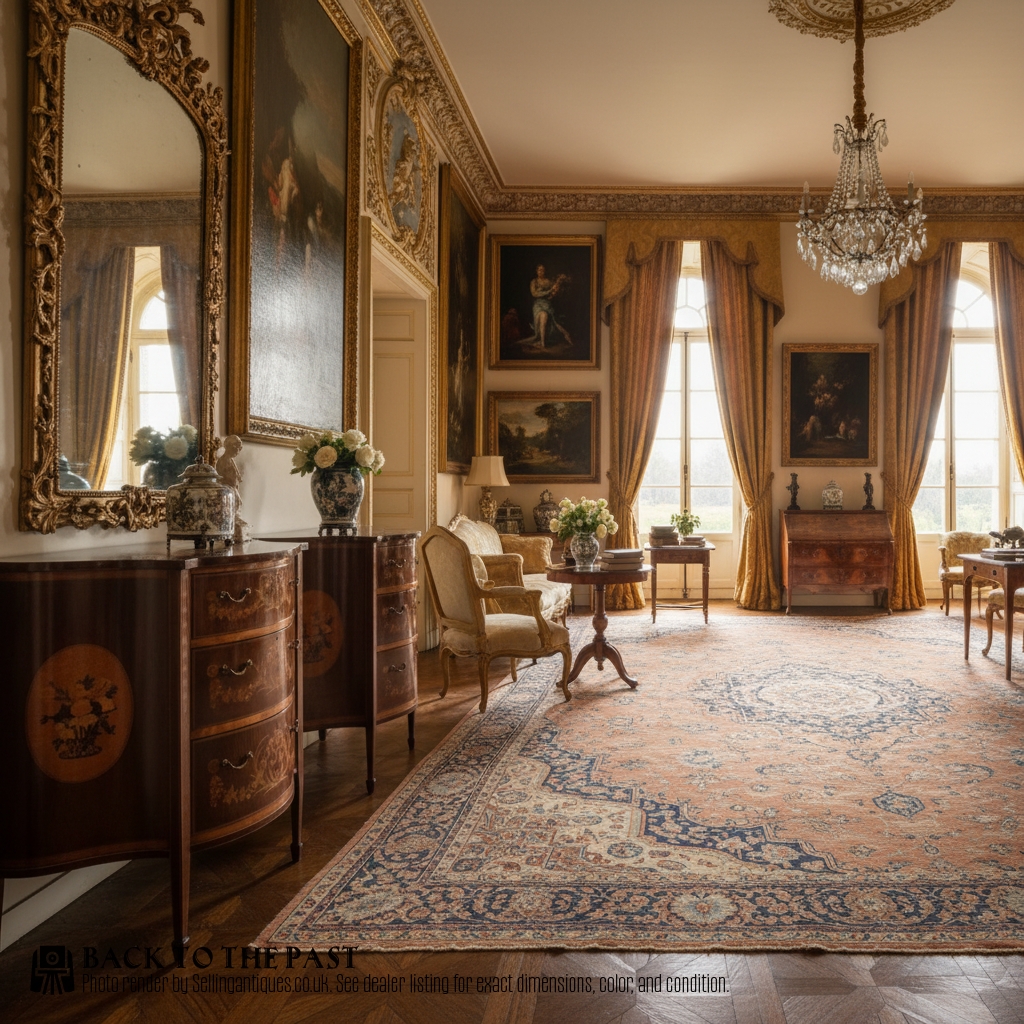
These items served functional roles in bedrooms, drawing rooms, and studies across prosperous Edwardian and Victorian households. Chests provided linen and garment storage, whilst writing desks accommodated daily correspondence.
Compact forms like bedside cabinets and occasional tables suited smaller dressing rooms and parlours. Their decorative inlay allowed them to sit in reception spaces as both furniture and ornament.
How should I care for inlaid wood?
Keep inlaid wooden furniture away from direct sunlight and steady heat sources to prevent the delicate veneers from drying and lifting. Maintain a stable room temperature to protect the antique glues holding the marquetry in place.
Apply a traditional beeswax polish sparingly and buff with a soft cloth to nourish the wood grain. Avoid commercial liquid cleaners containing silicone or harsh solvents which can damage the polish.
Can I use an antique desk daily?
Antique desks and writing tables tolerate regular daily use provided they receive gentle treatment. Many feature leather inserts and sturdy drawer construction designed for actual writing tasks.
Ensure that drawers remain unburdened by excessive weight and pull them evenly from the centre. Protect writing surfaces from moisture and ink spills by using appropriate desk blotters.