
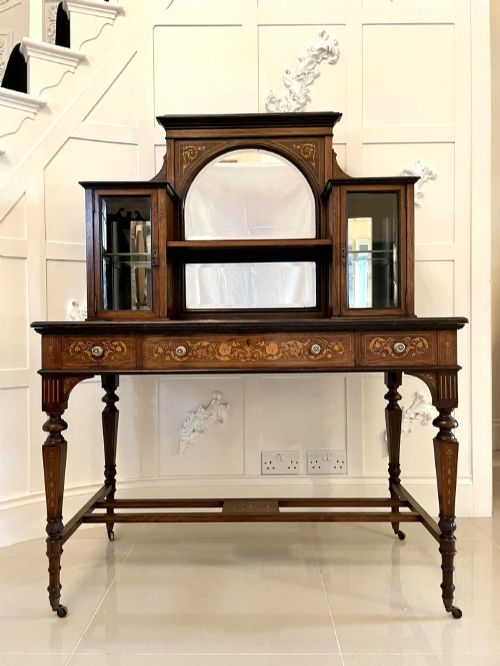
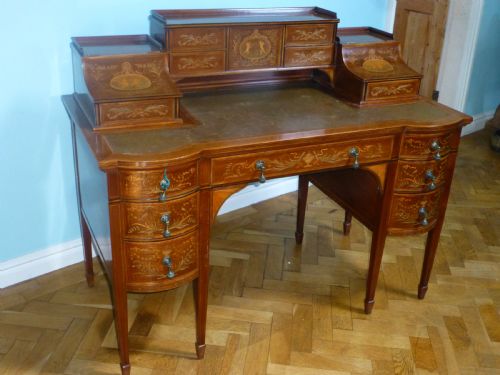
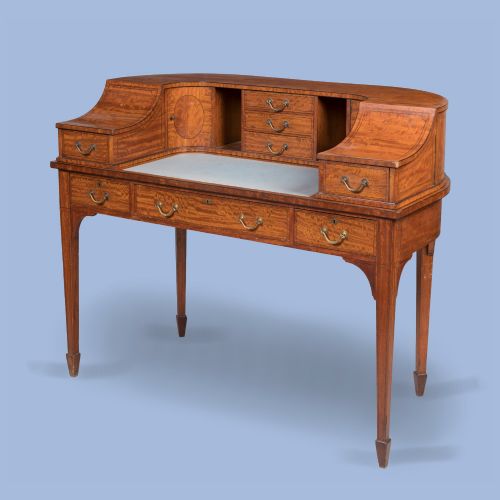


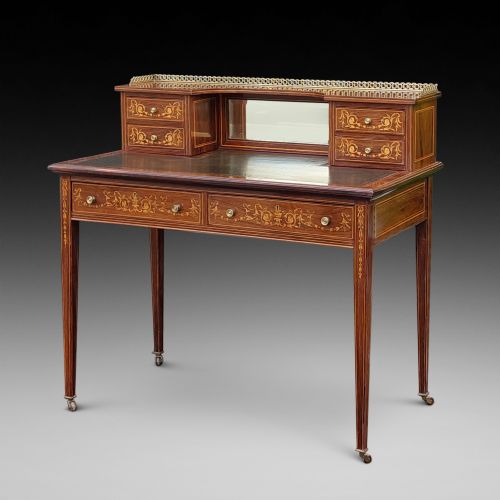


Edwardian Marquetry Bureau
An Edwardian marquetry bureau brings delicate floral inlay and a fitted writing slope together in a compact home writing desk.
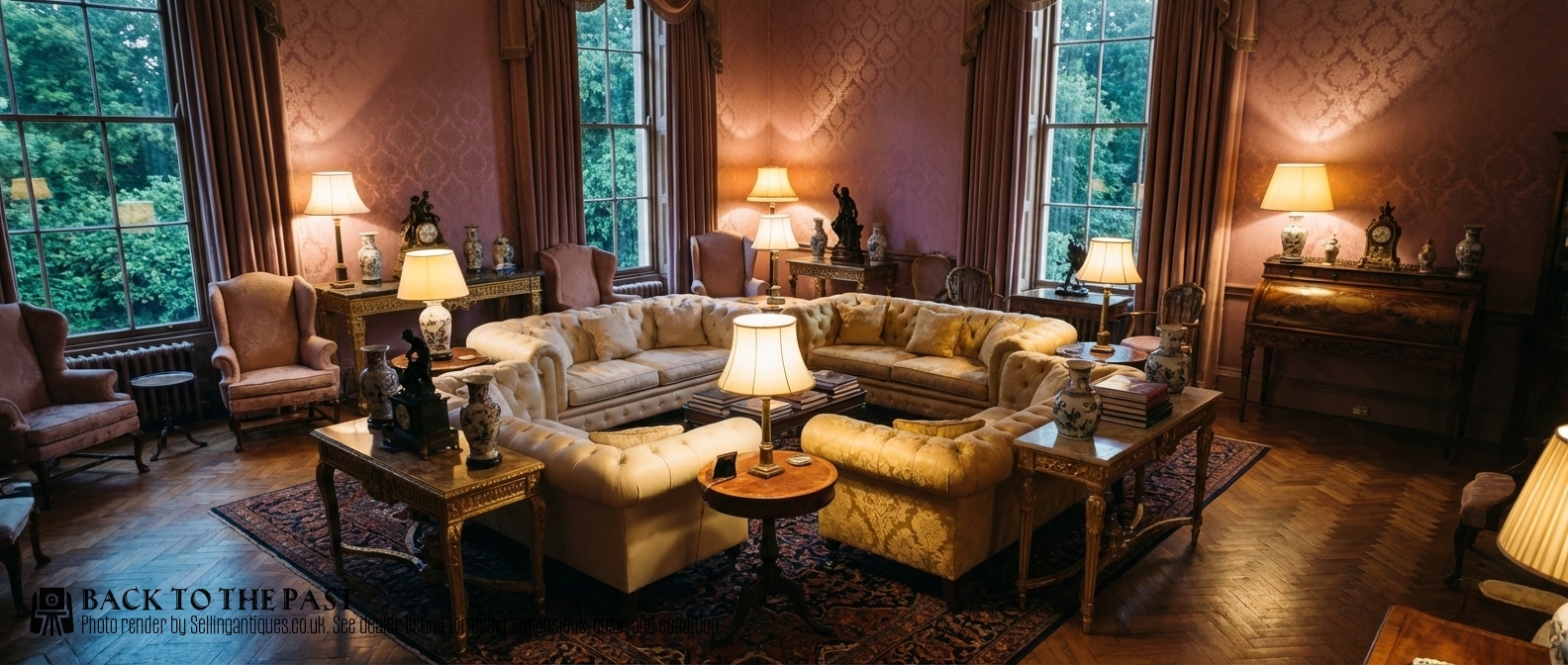
Edwardian Marquetry Bureau
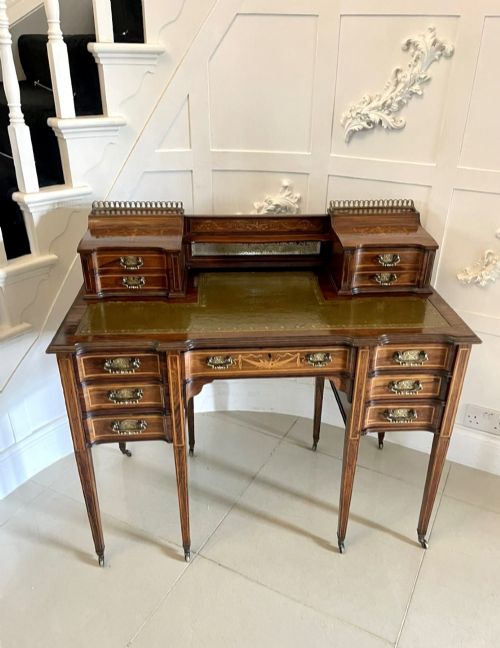
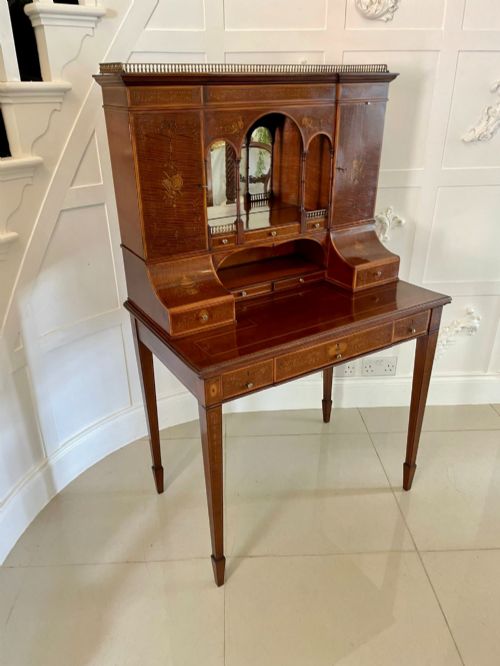
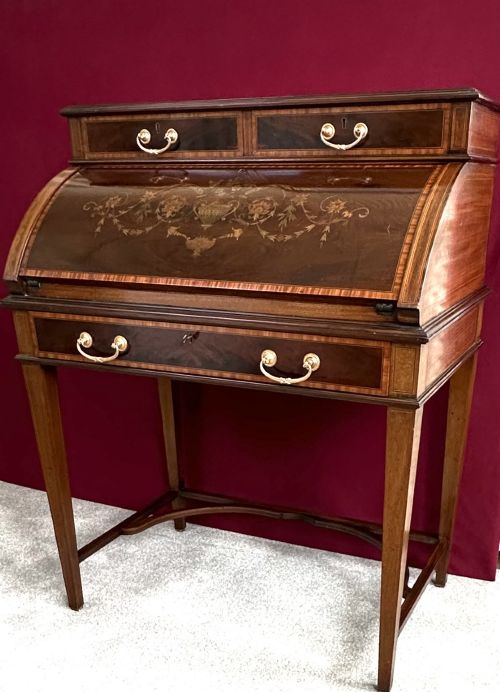
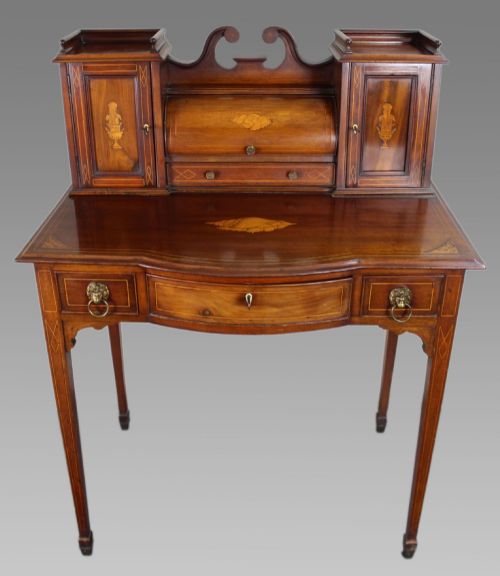
An edwardian marquetry bureau combines a sloping fall-front writing surface with decorative wood inlay, typically dating from the period around nineteen hundred. These writing pieces range from compact fall-front desks to larger bureau bookcases fitted with interior pigeonholes and small drawers.
The versions most commonly met on this page originate from the Edwardian era and the late Victorian Sheraton Revival, often constructed with mahogany or satinwood carcasses. Makers also produced variations such as the cylinder desk, the Davenport, and the delicate bonheur du jour.
Buyers select these items for their combination of practical workspace and decorative floral or geometric marquetry panels. The internal compartments provide dedicated storage for correspondence while the exterior presents fine cabinet work.
Materials and Construction
Cabinet makers utilised a foundation of solid mahogany, walnut, or satinwood, applying contrasting veneers to the exterior surfaces. Marquetry panels were created by cutting finely shaded pieces of various woods together to form floral, urn, or scroll motifs.
Brass fittings, leather writing inserts, and occasionally glass doors or mounts completed the construction of these desks. The fall-front mechanism relied on wooden hinges or supporting side arms to bear the weight of the writing surface.
Several models incorporate miniature display cabinets and secret compartments designed to hide love letters from curious household staff.
Judgements of Quality
The distinction between standard commercial pieces and top-tier workshop productions lies in the crispness of the marquetry cutting and the choice of cabinet timbers. Superior examples exhibit intricate shading within the inlaid veneers and balanced proportions across the entire piece.
Internal joinery and secondary woods reveal the standard of construction, with finer desks employing solid mahogany drawer linings rather than cheaper conifers. The precision of the fall-front fit and the quality of the brass hardware further separate workshop grades.
Maple and Co·Edwards and Roberts·James Shoolbred
The Edwardian Marquetry Bureau Glossary
- Marquetry
- Decorative wood inlay assembled from veneer pieces to form pictorial or geometric patterns on furniture surfaces. This technique creates the floral and ribbon motifs seen on many bureau fronts.
- Fall-front
- A hinged writing flap that drops forward to serve as a horizontal desk surface. When closed, it conceals the internal pigeonholes and small drawers.
- Sheraton Revival
- A late nineteenth and early twentieth century style inspired by eighteenth-century designer Thomas Sheraton. It relies on satinwood, fine banding, and symmetrical marquetry.
- Bonheur du Jour
- A light ladies writing table featuring a small cabinet or superstructure with shelves and drawers above the main writing surface. These pieces often display detailed inlay work.
- Davenport
- A compact desk featuring a sloped writing surface above a pedestal of side drawers. The writing top frequently lifts to reveal a stationery compartment.
Edwardian Marquetry Bureau: Frequently Asked Questions
How do I use a bureau?
Lower the hinged fall-front panel to reveal the fitted interior of pigeonholes and small drawers, providing a dedicated writing surface. When correspondence is finished, lift the panel back into place to conceal papers and maintain a tidy room.
Items of this scale suit corners or smaller study spaces where a full-sized partner desk would overwhelm the room. The enclosed compartments help organise modern stationery as effectively as they did a century ago.
Are these desks suitable for daily work?
The writing slope accommodates laptops and modern writing materials, though the internal compartments are sized for historical correspondence. Regular use is entirely practical provided the fall-front hinges receive sensible care.
Protect the leather or wood writing surface with a blotter if writing heavily. The structural framework is robust, having survived a century or more of domestic use.
How do I tell Edwardian from Victorian?
Edwardian pieces often feature lighter timbers such as satinwood and satin walnut, accompanied by delicate and sparse marquetry. Victorian examples tend to utilise darker woods like rosewood and burr walnut with denser, heavier decoration.
Construction details also assist, as late Victorian pieces overlap with Sheraton Revival revivals from the eighteen eighties and nineties. Examining the secondary timbers inside the drawers provides further chronological clues.
What is a Carlton House desk?
A Carlton House desk is a distinctive writing table featuring a curved superstructure of small drawers and compartments wrapping around the back and sides of the writing surface. This form offers exceptional compartmentalisation for papers.
The layout provides numerous small storage options above a leather-lined writing bed. Cabinet makers during the Sheraton Revival produced these intricate desks in satinwood and mahogany.