
Edwardian Marquetry Bookcase
An edwardian marquetry bookcase brings together polished timber and delicate floral or classical inlay to hold a library in style.
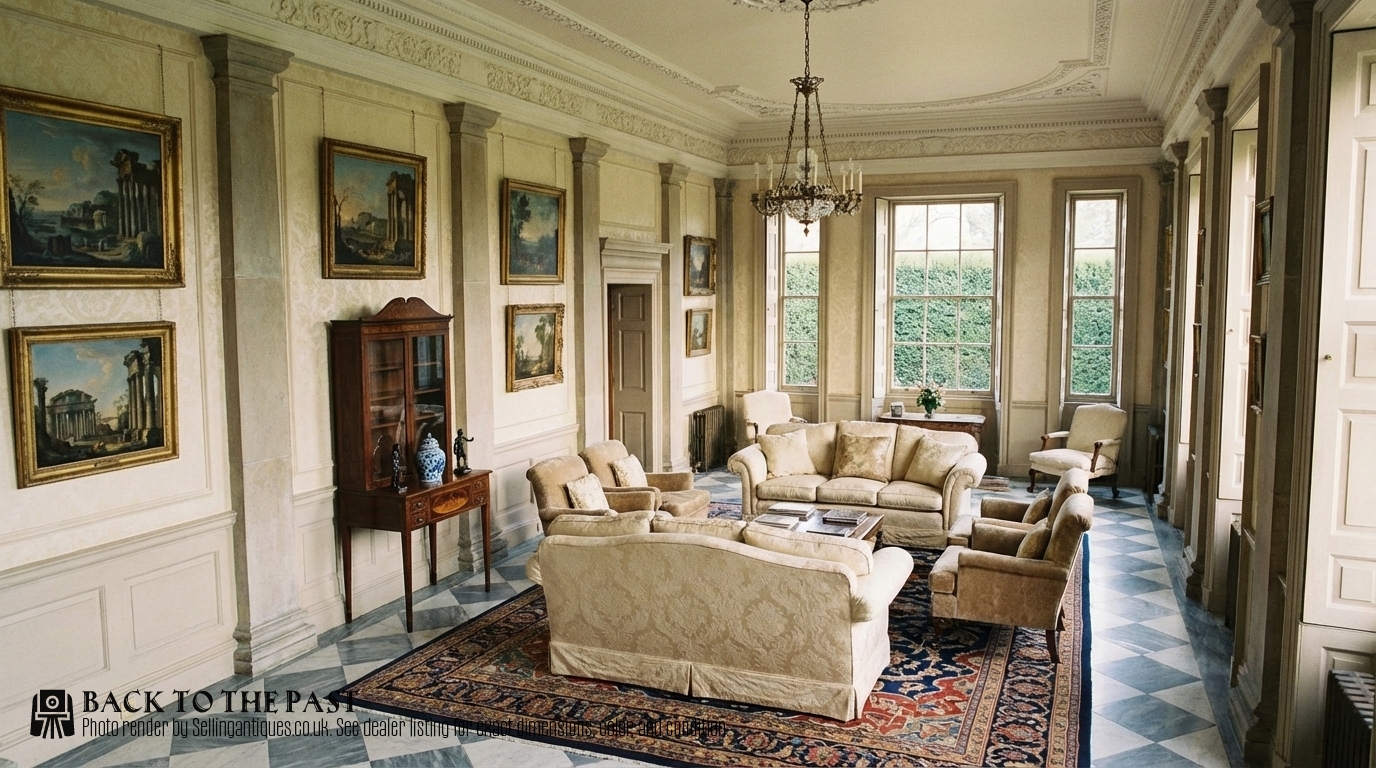
Edwardian Marquetry Bookcase
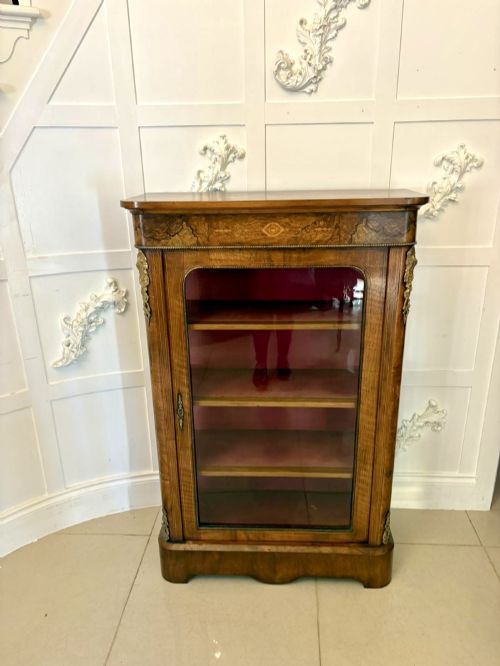
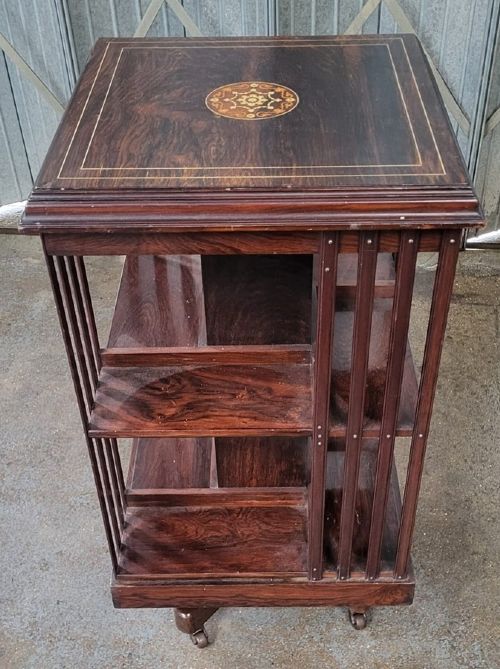
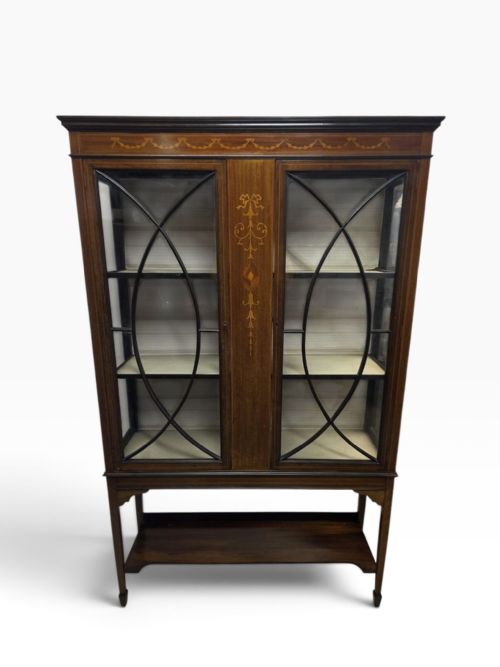
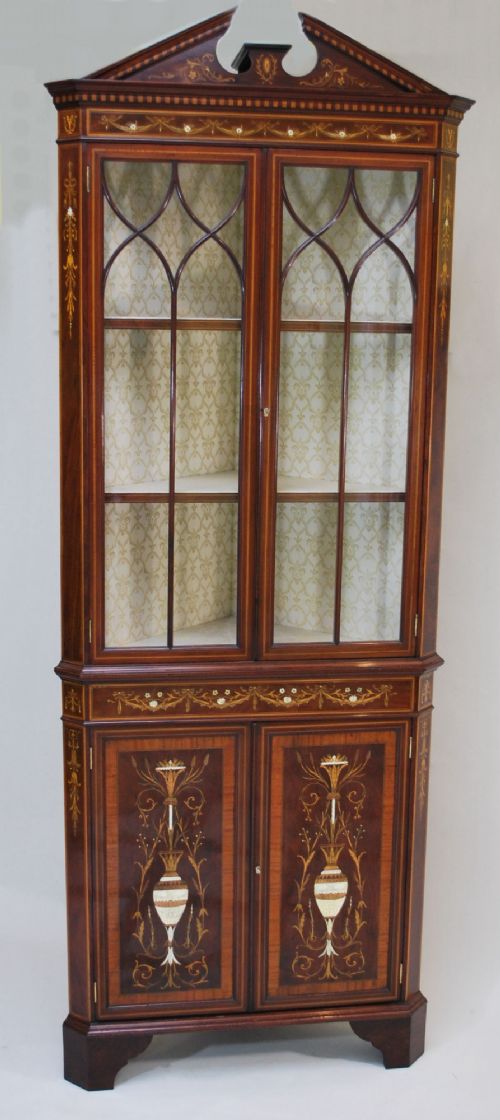
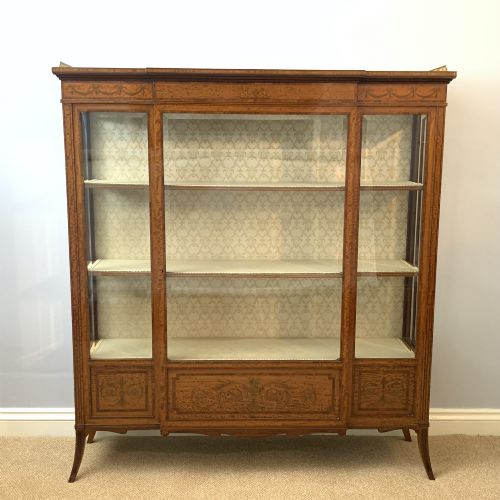
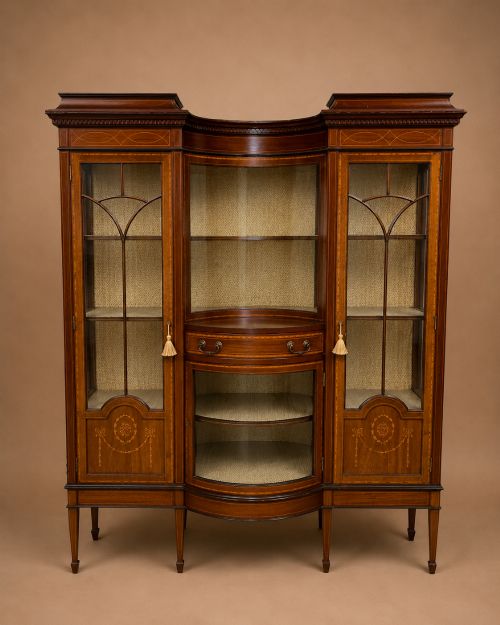
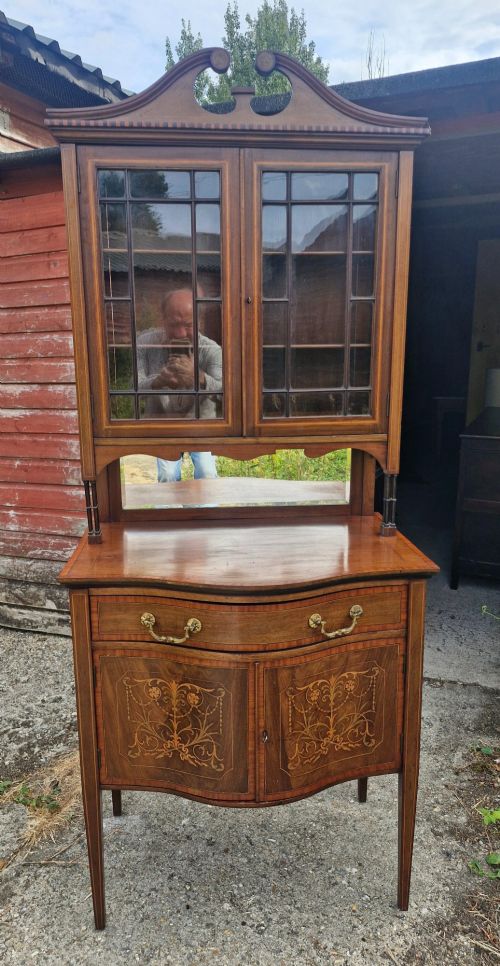
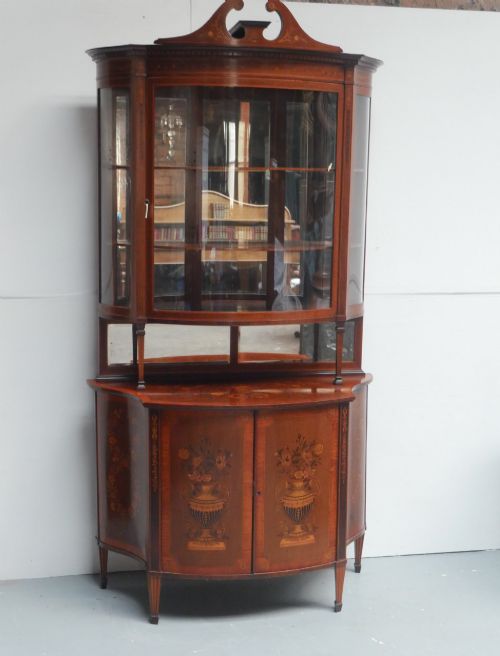
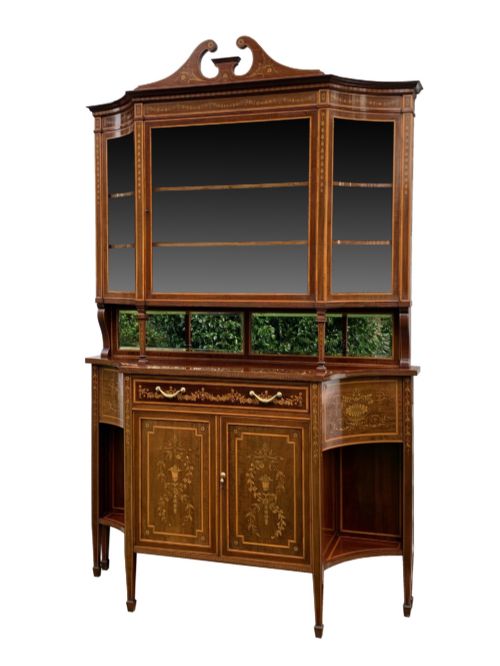
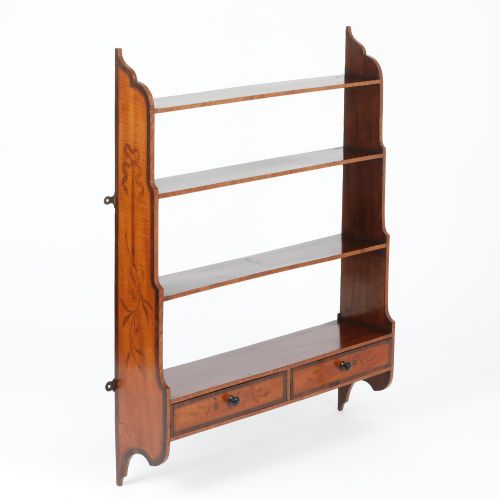
An edwardian marquetry bookcase is defined by the light, elegant cabinetwork typical of the period around nineteen hundred, though similar pieces extend back into Victorian and forward into twentieth-century revivals. Buyers encounter upright display cabinets, two-part sectional units, revolving table models, and open library shelves designed to show off decorative bindings and collected volumes.
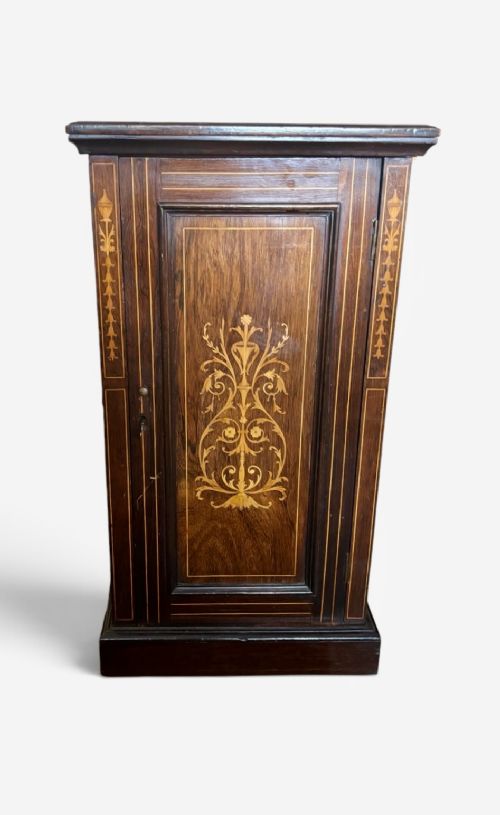
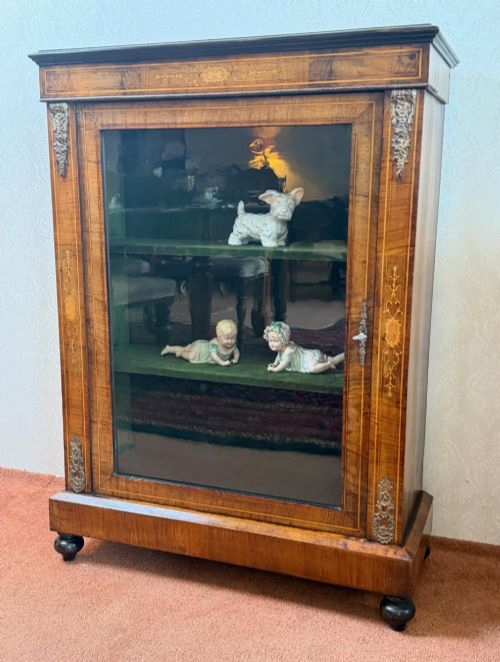
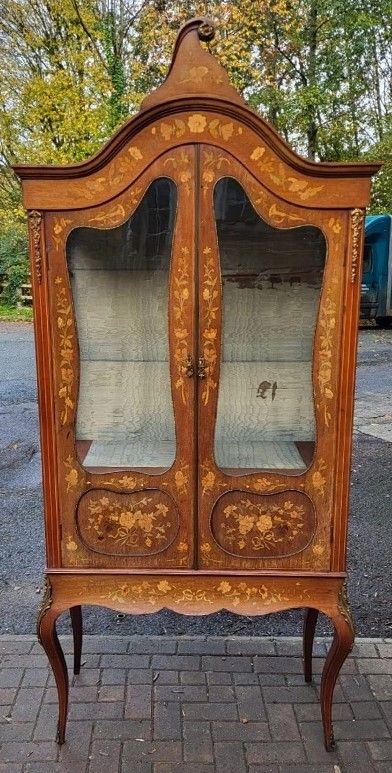
Mahogany and rosewood form the primary carcase timbers for these pieces, often enriched with satinwood banding and intricate floral or urn motifs set into the wood. Makers also utilised walnut and burr walnut, creating varied tones from rich dark browns to golden honey highlights across the door panels and friezes.
Materials and technique
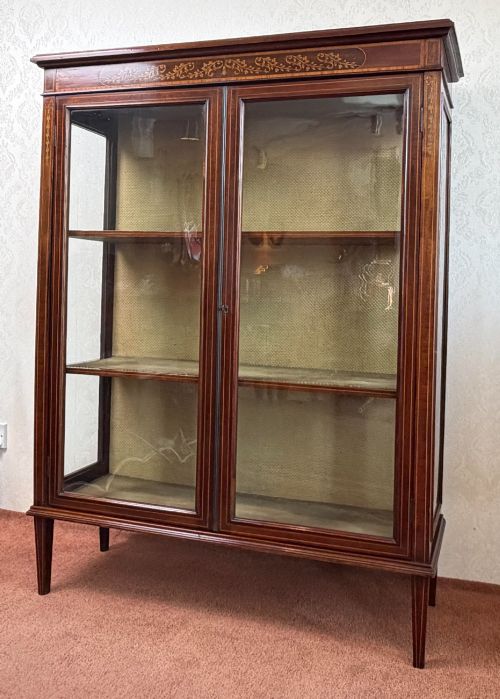
Cabinetmakers constructed these pieces using solid timbers and fine veneers, applying contrasting woods in precise geometric or pictorial patterns to create the characteristic marquetry decoration. Glass panels, frequently held in wooden tracery or brass frames, protect the contents while allowing light to reach the shelved interior.
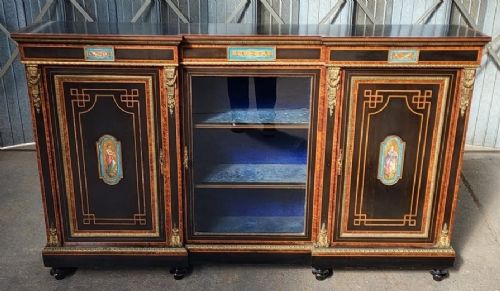
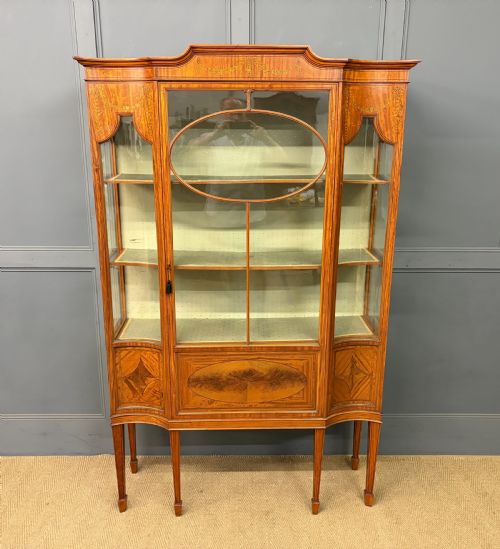
Brass fittings, including hinges, locks, and handles, provide functional contrast to the dark and light woods, occasionally accompanied by ormolu mounts on more ornate cabinets. Satinwood inlay and banding create crisp borders around door panels, drawer fronts, and cornices, defining the Sheraton revival aesthetic.
Revolving bookcases let owners spin their entire library around with a single finger.
Quality and craftsmanship
The precision of the marquetry cutting and the choice of timber figure set the finer examples apart from standard commercial production. Crisp alignment in the inlaid banding and tightly fitted glazed doors indicate superior workshop standards.
Heavier architectural proportions and balanced brass hardware distinguish high-grade cabinetwork, whereas simpler pieces rely solely on printed or minimal veneer patterns without the depth of hand-cut detail.
Edwards & Roberts·Maple & Co.
The Edwardian Marquetry Bookcase Glossary
- Marquetry
- Decorative patterns formed by fitting together small pieces of veneer into a wooden background. This technique allows for complex floral and pictorial designs across cabinet doors.
- Satinwood
- A lustrous yellowish timber native to India and Ceylon, frequently used for contrasting stringing and banding on dark cabinet woods. It brings a bright golden sheen to the piece.
- Ormolu
- Gilt bronze mounts applied to furniture for decorative effect, common on finer nineteenth-century cabinets. The metallic detail highlights corners and friezes.
- Breakfront
- A cabinet design where the central section projects forward from the flanking sides. This creates architectural depth and visual variety in larger bookcases.
Edwardian Marquetry Bookcase: Frequently Asked Questions
How do I care for my bookcase?
Keep the timber away from direct heat sources and strong sunlight to prevent the veneers from drying out or lifting over time. Regular dusting with a soft, dry cloth maintains the polished surface without building up wax residues.
Check that the doors hang evenly and that brass hinges remain lightly oiled if they stiffen with seasonal humidity changes.
Where were these pieces used?
These cabinets belonged in drawing rooms, libraries, and studies of larger homes to store prized volumes and display decorative porcelain. Their polished finishes and glass doors were meant for formal entertaining spaces.
Today they serve similar functions in modern living rooms, offering visible storage that keeps books protected behind glass.
Are revolving bookcases sturdy?
Revolving models rely on a hidden under-table mechanism of ball bearings or wooden pivots to turn smoothly while holding heavy rows of books. They sit firmly on low cross bases designed to prevent tipping during rotation.
Evenly distributing books across all four compartments ensures the revolving action remains balanced and effortless.