

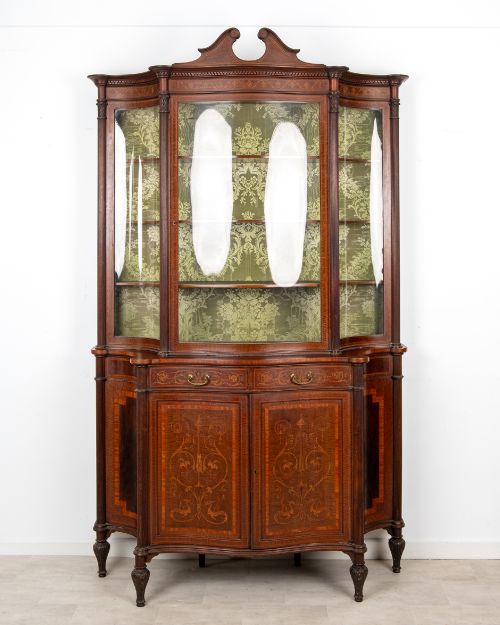
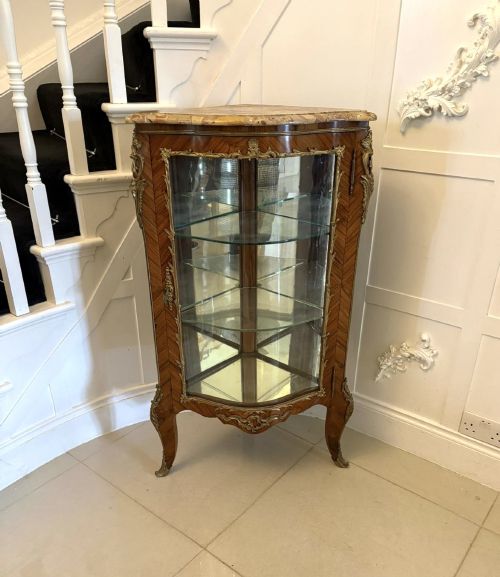
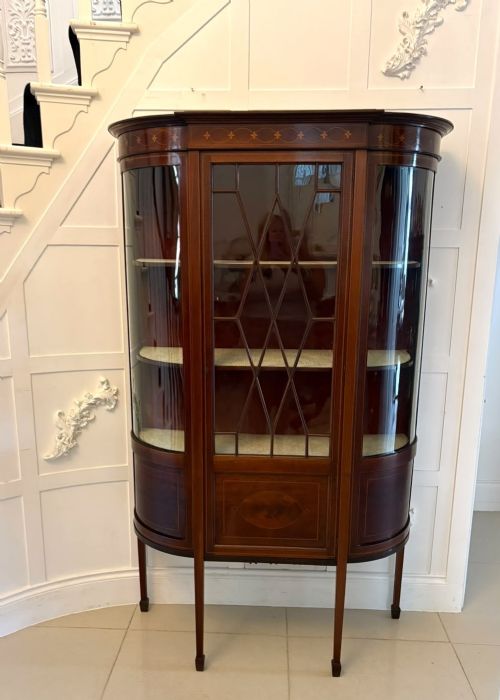
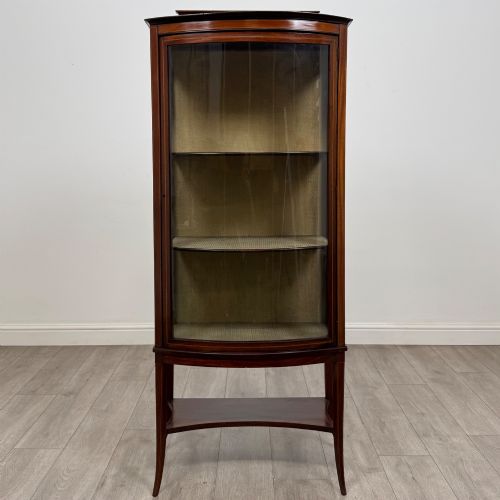
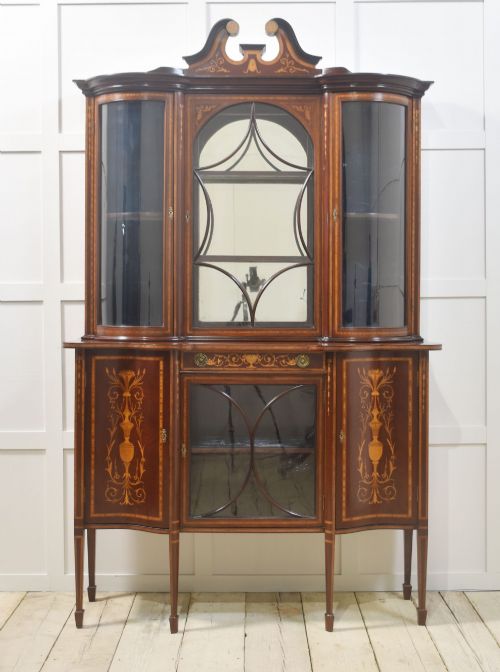
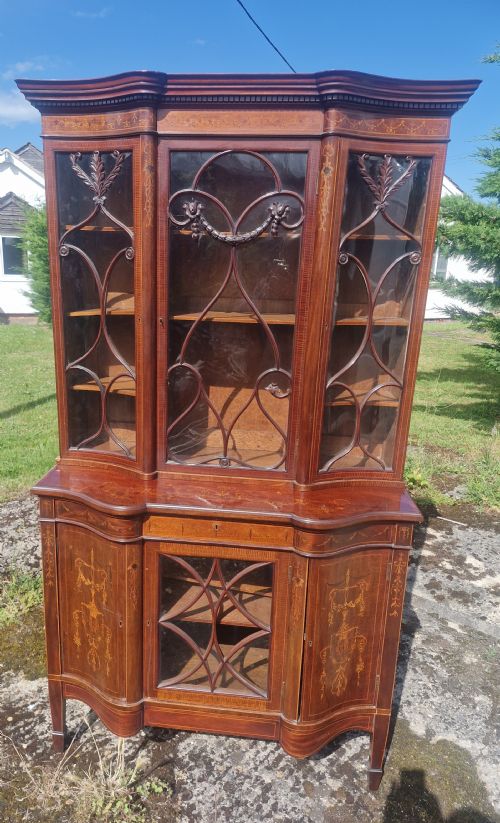
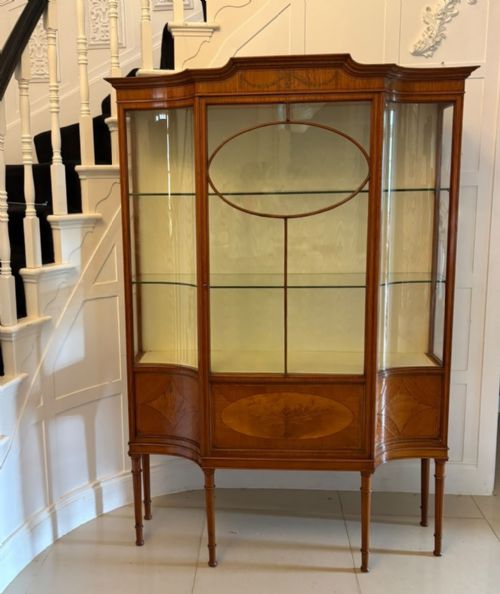
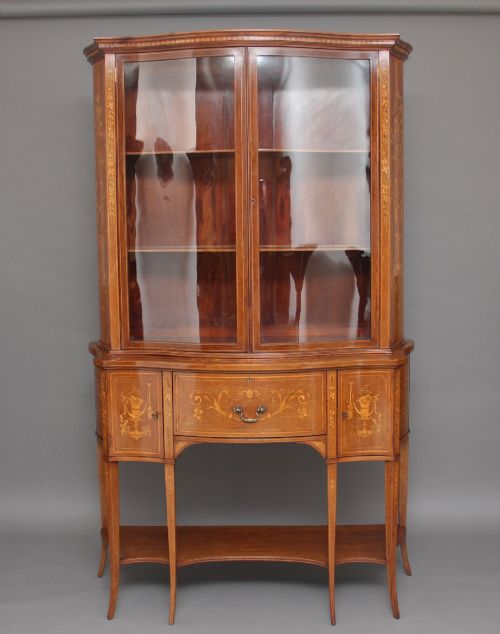
Vintage Marquetry Vitrine
A vintage marquetry vitrine is a glazed display cabinet adorned with detailed wood inlay, bringing elegance and sophistication to any interior.
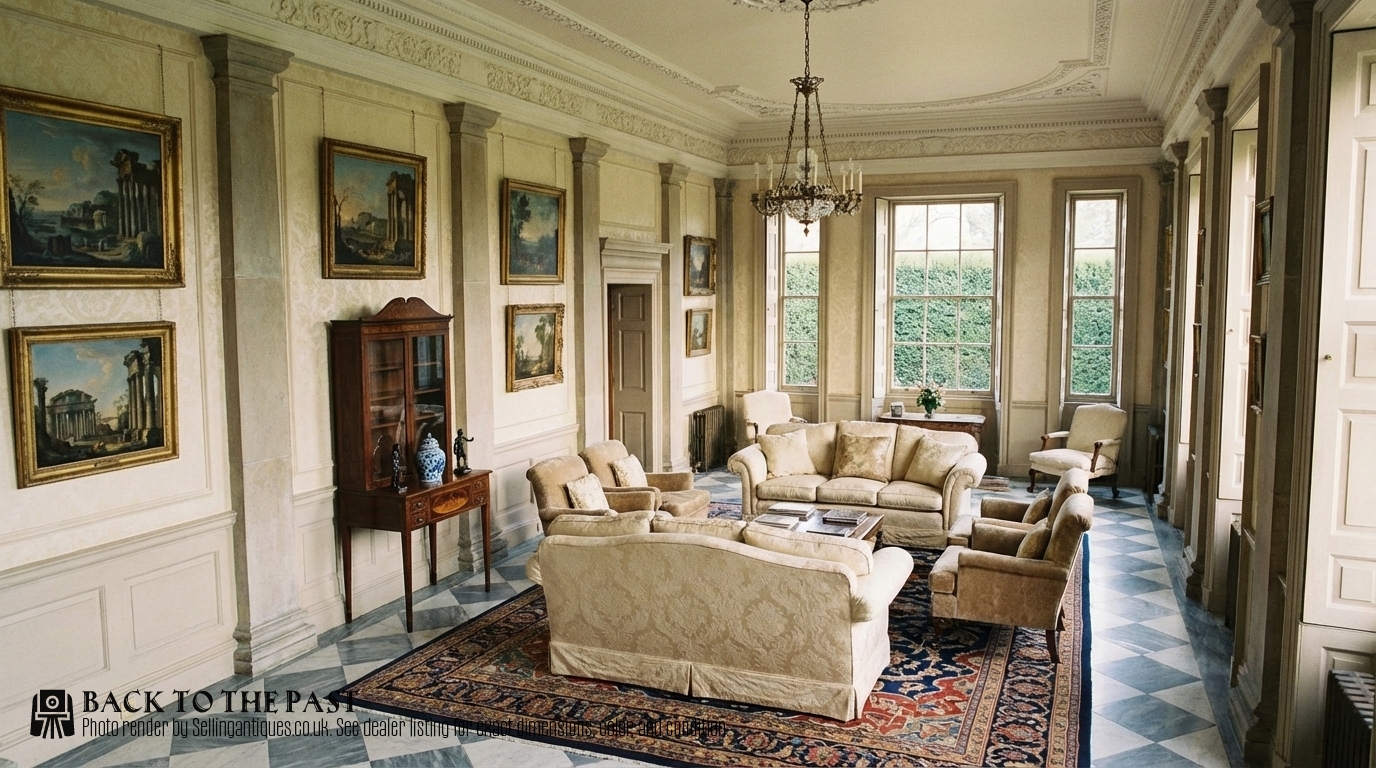
Vintage Marquetry Vitrine
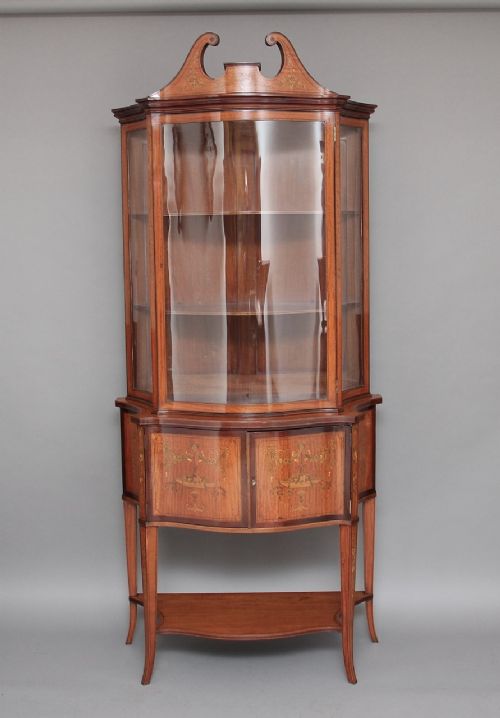
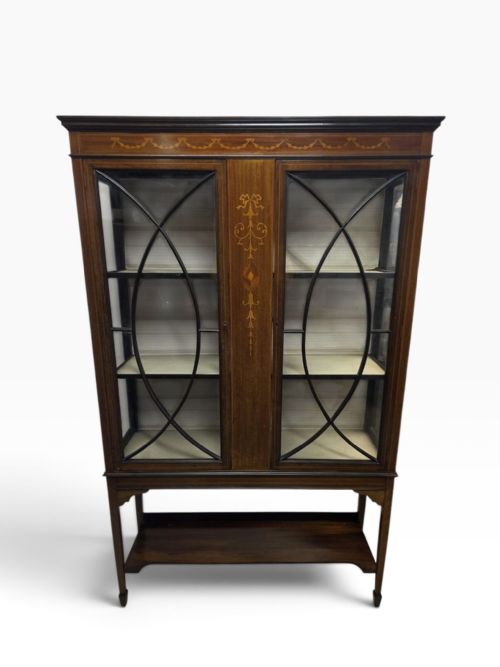
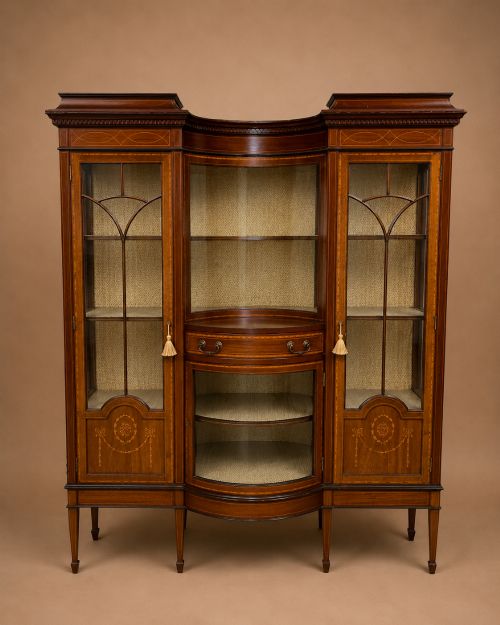
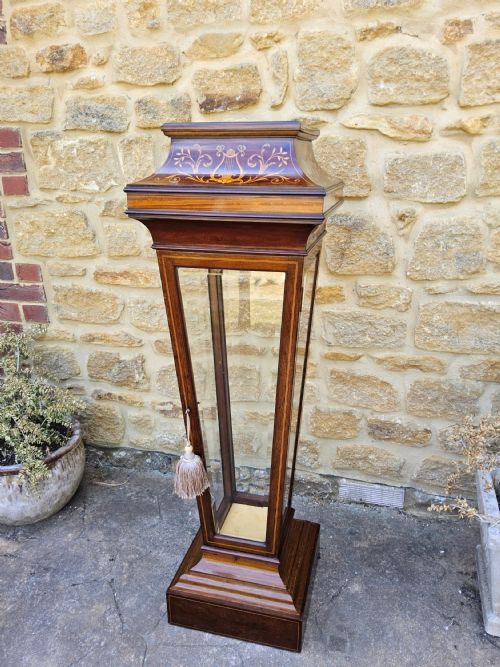
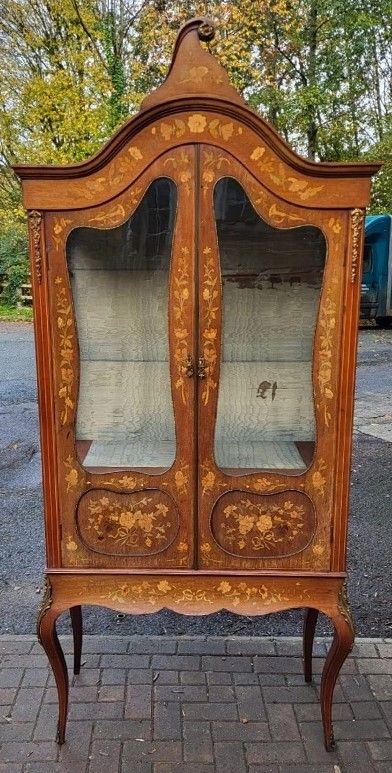
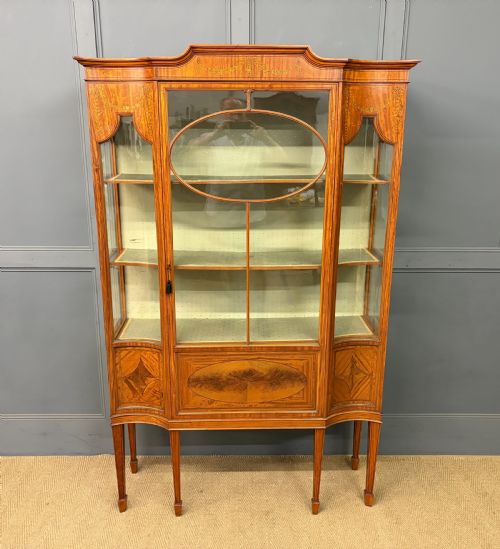
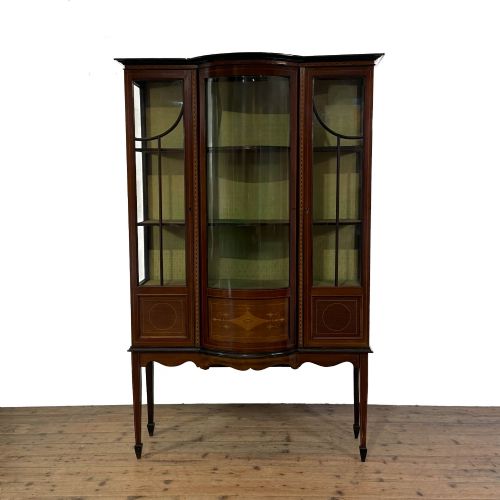
A vintage marquetry vitrine serves primarily to exhibit prized possessions behind glass while introducing decorative wooden patterns into a room. These pieces span the Victorian and Edwardian eras, with many examples originating from the turn of the twentieth century.
Buyers encounter various forms ranging from freestanding bow-front and serpentine cabinets to corner units and wall-hanging display cases. Mahogany and satinwood form the predominant carcases, frequently styled in the Sheraton Revival or French manner.
Assessing craftsmanship
Quality rests significantly on the precision and complexity of the marquetry and inlay work, where finer pieces display seamless integration of diverse timber veneers. The crispness of carved details and the inclusion of premium secondary woods further elevate a piece.
Structural elements such as original curved glass panels, substantial ormolu mounts, and well-fitted doors distinguish standard production items from exceptional cabinet maker output.
Vintage Marquetry Vitrine Retail Price Guide 2026
Typical asking prices for vintage marquetry vitrine among the pieces listed under this phrase on Sellingantiques today, from the lower quarter to the upper quarter. They describe what is for sale here now, not the wider market.
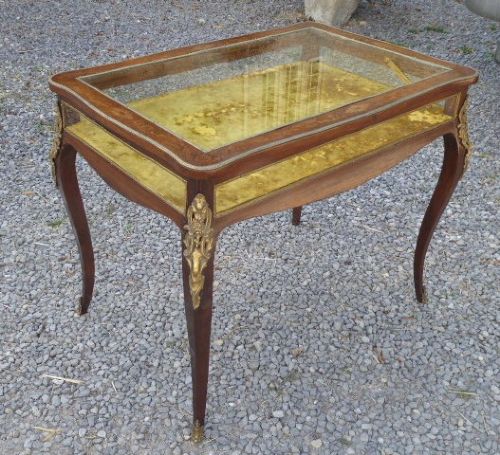
Object types recorded across the inventory include corner cabinets, bijouterie tables, serpentine front vitrines, and wall-hanging display cases.
Maple And Co·Edwards And Roberts
The Vintage Marquetry Vitrine Glossary
- Vitrine
- A glass-fronted cabinet designed specifically for displaying fine porcelain, curiosities, or small objects. These pieces often feature glazed sides to maximise light penetration.
- Marquetry
- The art of applying small pieces of veneer to a structure to form decorative patterns and pictures. Craftsmen cut various coloured woods to fit precisely together.
- Serpentine
- A shape characterised by a wavy outline with a convex centre flanked by concave curves. This contour appears frequently on the front profiles of better cabinets.
- Satinwood
- A durable, lustrous timber originating from tropical regions, valued for its golden yellow colour. It is extensively used for stringing, inlay, and primary veneers.
- Ormolu
- Gilded bronze mounts applied to furniture for decorative effect. These metallic elements add contrast and ornamentation to the wooden carcase.
Vintage Marquetry Vitrine: Frequently Asked Questions
What is a vintage marquetry vitrine used for?
These cabinets serve as refined display spaces for delicate porcelain, glassware, and treasured ornaments. The glass panels protect items from dust while allowing full visibility from multiple angles.
In contemporary interiors, they function as focal points in reception rooms, combining practical storage with decorative presence.
How do I date an Edwardian display cabinet?
Dating relies on examining the timber selection, construction methods, and prevailing design revivals. Pieces from this era frequently draw inspiration from Sheraton styles and utilise mahogany with satinwood inlay.
Maker signatures, lock stamps, and secondary wood types underneath or inside drawers offer further clues for chronological placement.
Where should I place a corner display cabinet?
Corner cabinets make efficient use of unused room angles while breaking up the monotony of flat walls. They fit naturally into dining rooms or drawing rooms to anchor empty corners.
Ensure the chosen spot receives adequate ambient light to illuminate the interior glass shelves effectively.
How do I maintain wood inlay on furniture?
Keep inlaid surfaces away from direct sunlight and steady heat sources to prevent the delicate veneers from drying and lifting. Regular dusting with a soft, dry cloth maintains the finish.
Apply a microcrystalline wax sparingly when the timber appears dry, avoiding silicone-based polishes entirely.