


Edwardian Mahogany Swing Mirror
An Edwardian mahogany swing mirror brings warmth and functional elegance to a dressing surface, offering an adjustable reflection framed in rich timber.
Edwardian Mahogany Swing Mirror
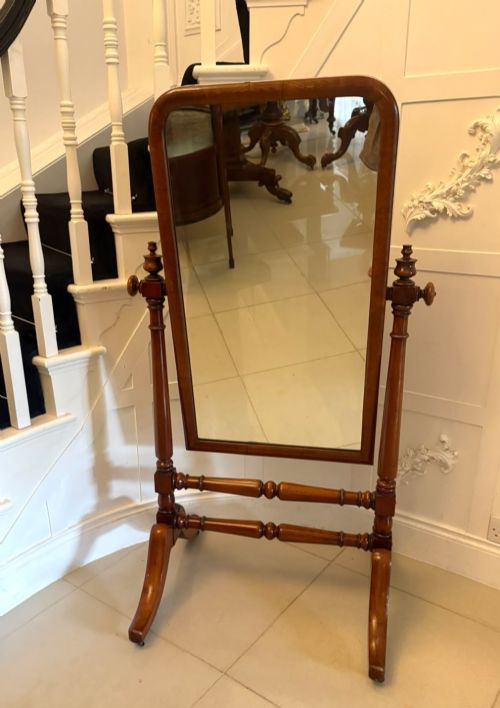
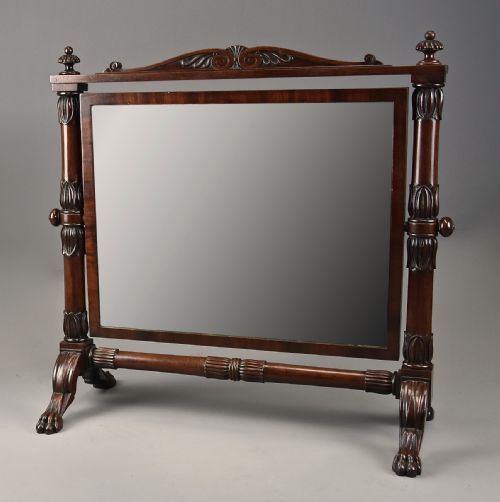
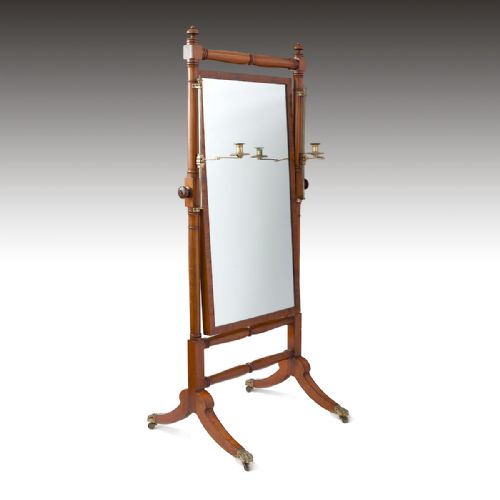
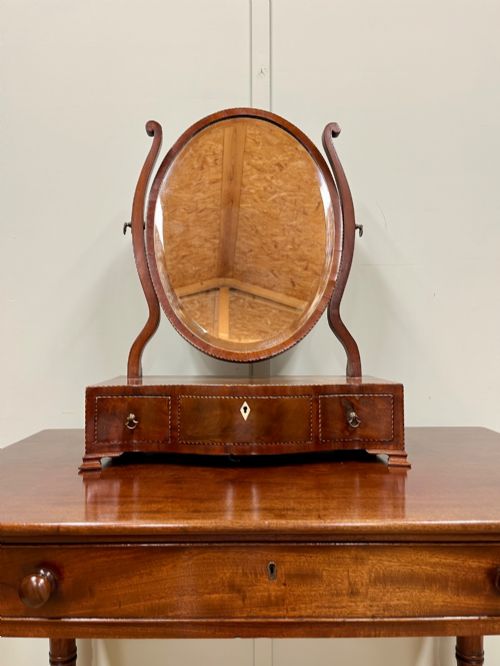
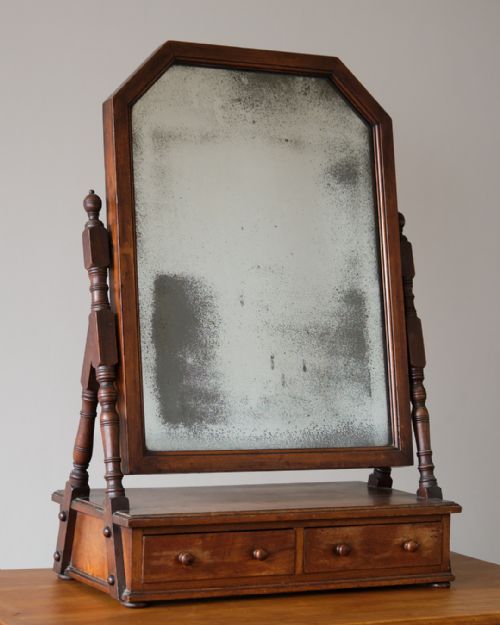
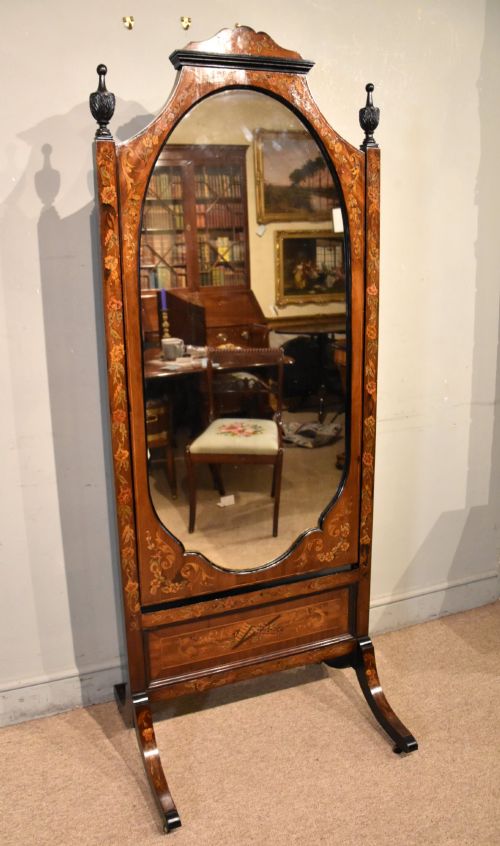
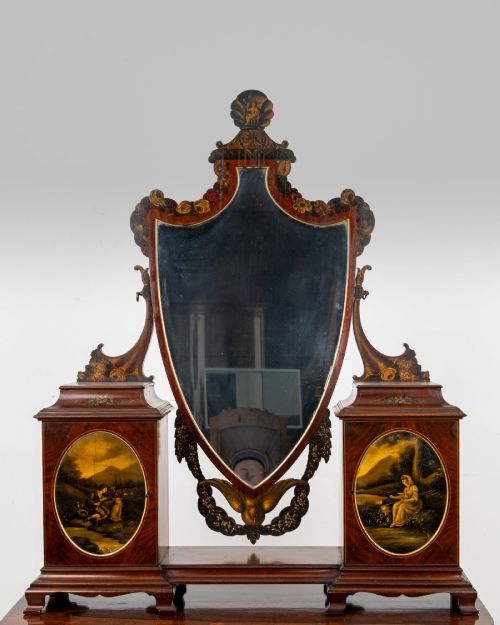
When searching for an edwardian mahogany swing mirror, collectors encounter compact toilet mirrors designed for tabletops alongside larger freestanding cheval designs. The examples found here span the Edwardian period, often accompanied by related Victorian, Regency, and Georgian pieces in the broader record.
Tabletop versions typically feature a pivoting glass plate mounted within upright supports, frequently resting on a small box base fitted with drawers. Freestanding cheval mirrors allow full-length adjustment, standing on sturdy feet or framed by floor-standing structures.
Evaluating craftsmanship and condition
Quality rests on the selection of timber, the crispness of any inlay, and the structural integrity of the pivoting mechanism. Finer pieces demonstrate precise joinery in the drawer boxes and retain their original brass fittings rather than modern replacements.
The condition of the mirror glass influences desirability, with original plates often showing characteristic light oxidation that confirms age. Carved details and the harmony of proportions between the glass frame and the base distinguish standard workshop production from finer examples.
Some tabletop mirrors feature hidden compartments tucked behind the tiny drawers, perfect for concealing secret notes.
P & MA Nicholson·Gillow·Heal & Sons
The Edwardian Mahogany Swing Mirror Glossary
- Cheval mirror
- A freestanding full-length mirror mounted on a frame that allows it to swing entirely between upright posts. These taller pieces rest directly on the floor rather than sitting upon a table.
- Toilet mirror
- A smaller dressing glass designed to sit upon a chest of drawers or a dressing table. They frequently include a small box base with one or more small drawers.
- Cuban mahogany
- A dense, dark timber harvested in the Caribbean and prized for cabinetmaking. Its rich figure and durability mark out superior pieces.
- Marquetry inlay
- Decorative patterns formed by fitting contrasting pieces of wood veneer into a prepared surface. This technique adds geometric or floral ornamentation to the frame or base.
Edwardian Mahogany Swing Mirror: Frequently Asked Questions
What is a swing mirror?
A swing mirror is a pivoting looking glass mounted on vertical pivots within a frame, allowing the user to adjust the angle of reflection.
These pieces were essential bedroom furnishings for grooming and dressing before fixed wall mirrors became standard.
Where should I place a toilet mirror?
Toilet mirrors sit comfortably atop dressing tables, chests of drawers, or sideboards, providing a functional focal point in a bedroom or hallway.
Ensure the surface is stable and capable of supporting the weight of the timber frame and glass.
How do I date an Edwardian mirror?
Dating relies on construction methods, timber choice, and characteristic decorative details such as subtle inlay or specific brass hardware.
Comparing the piece against documented examples from the period helps confirm its approximate era of manufacture.
Are the mirror plates original?
Many older mirrors retain their original glass, which can exhibit subtle foxing or light silver degradation due to age.
Original plates are valued by collectors, though replacement glass is common in pieces that remained in daily use.