



Victorian Table Top Mirror
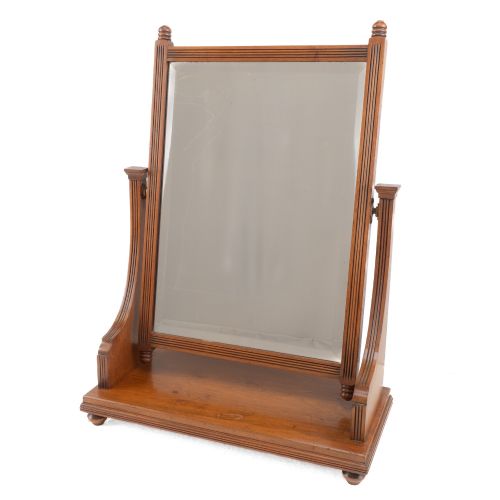
A victorian table top mirror sits firmly on a chest or dresser, offering a rotating or swing glass to catch the morning light.
Victorian Table Top Mirror
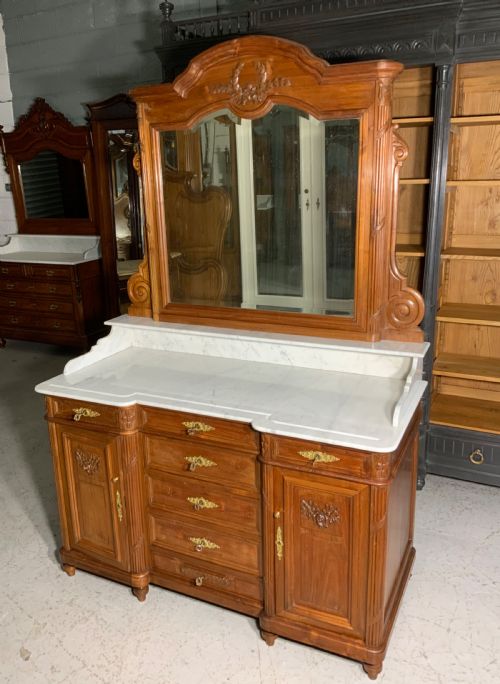
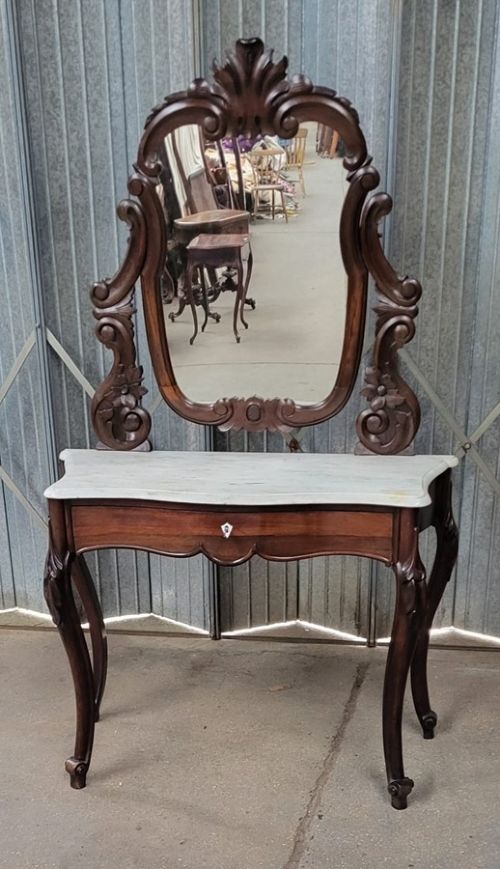
A victorian table top mirror provides a tilting glass plate mounted within upright supports, commonly known as a swing mirror or toilet mirror. These pieces sit directly upon furniture surfaces rather than hanging on walls.
The evidence shows forms originating mostly in the nineteenth century, spanning mahogany, rosewood, and satinwood alongside painted or lacquered finishes. Makers constructed these mirrors to accompany dressing chests and duchess tables.
Many examples include small drawer compartments or jewellery boxes built into the base plinth. The glass plates themselves range from rectangular formats to arched and oval shapes framed in turned wood.
Materials and construction methods
Cabinet makers utilised dense hardwoods such as mahogany and walnut, often selecting flame or burr veneers to cover primary surfaces. Supporting arms and adjustment screws frequently incorporate turned wood or brass components.
Glass plates were silvered and set into rebated frames secured by pins, allowing the glass to pivot freely between vertical uprights. Bases often relied on dovetail joinery for integrated drawer boxes.
Listings feature nineteenth-century woods including mahogany, rosewood, satinwood, and burr walnut alongside brass and marble elements.
Distinctions in standard and execution
Quality rests in the selection of timber veneers and the precision of the turning on the upright supports. Finely figured mahogany or burr walnut displays deeper grain movement than plain secondary timbers.
The engineering of the pivot mechanism dictates longevity, where well-fitted brass screws and balanced swing arms hold the mirror plate steady at any chosen angle without sagging.
Maple & Co·Jas Shoolbred
The Victorian Table Top Mirror Glossary
- Swing mirror
- A glass plate mounted on pivots between two upright posts that allows the angle to be adjusted. This format sits independently on a flat surface.
- Toilet mirror
- A traditional term for a smaller dressing mirror designed to stand on a washstand or table top. These often incorporate small storage drawers beneath the frame.
- Burr walnut
- A specialised wood grain pattern taken from growth excrescences on walnut trees. It yields complex, swirling patterns highly prized in nineteenth-century cabinetry.
- Plinth base
- The heavy horizontal block or box section at the bottom of the mirror frame. It provides stability and frequently contains one or more small compartments.
- Satinwood
- A pale, hard timber with a natural sheen often used for fine inlay work and banding. It offers a contrasting lighter tone against darker carcase woods.
Victorian Table Top Mirror: Frequently Asked Questions
How do I date a victorian table top mirror?
Dating relies upon timber selection, hardware design, and the shaping of the mirror frame. Earlier nineteenth-century examples often display simpler mahogany framing, while later Victorian pieces utilise richer veneers and turned supports.
Examining the backboards and screw types also helps establish age. Hand-cut screws and secondary pine framing point toward earlier periods, whereas standardised fixings suggest late nineteenth-century production.
Can the mirror glass be replaced?
Original mirror glass frequently shows foxing, light oxidation, or silver loss due to age. Many collectors accept these marks as evidence of authenticity and history.
Replacement remains possible if the glass is damaged beyond use, though retaining the original plate preserves the piece's character. Modern mirror glass can be cut to fit older rebates carefully.
Where should I place a table top mirror?
These mirrors function best on top of dressing chests, sideboards, or large tables where the base is fully supported. Placing them near a natural light source enhances their practical utility.
Ensure the surface is level so the weight distributes evenly across the feet or plinth. Avoid humid environments like unventilated bathrooms to protect the wood and silvering.
What is the difference between a swing mirror and a toilet mirror?
The terms are largely interchangeable within nineteenth-century furniture definitions. Both describe a portable mirror designed to sit on a horizontal surface rather than hang on a wall.
Minor variations occur in the base construction, where toilet mirrors more frequently include small drawer boxes for trinkets. Swing mirrors sometimes feature simpler trestle bases without storage.