
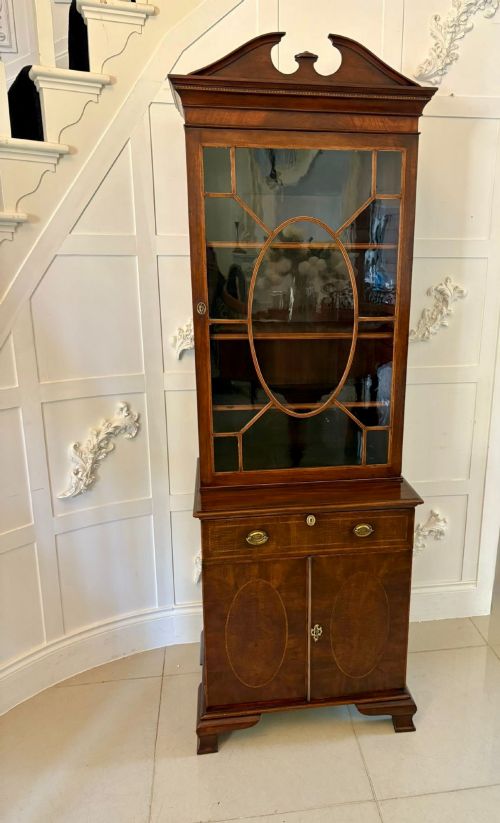
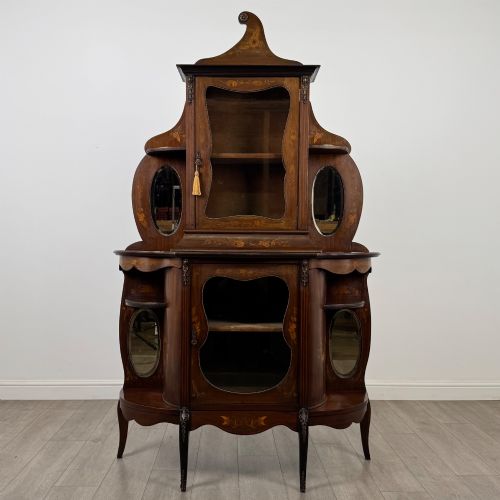
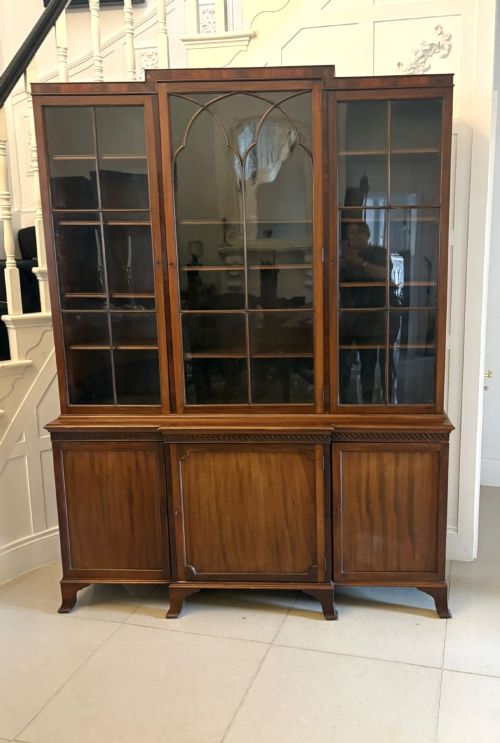
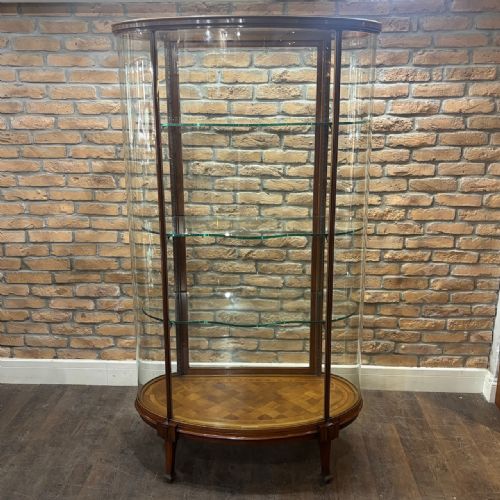

Edwardian Mahogany Glass Cabinet
When you search for edwardian mahogany glass cabinet, you find timber frames framing transparent panes designed to showcase prized possessions.
Edwardian Mahogany Glass Cabinet
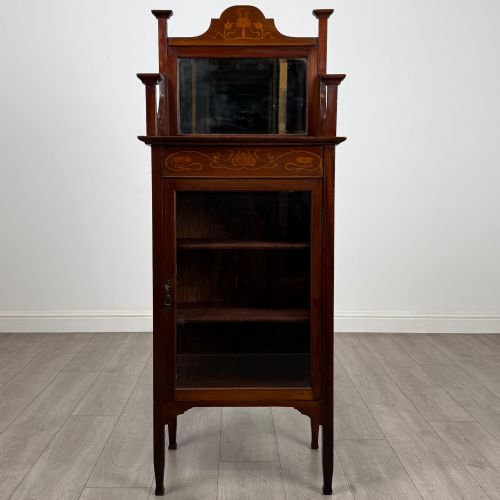
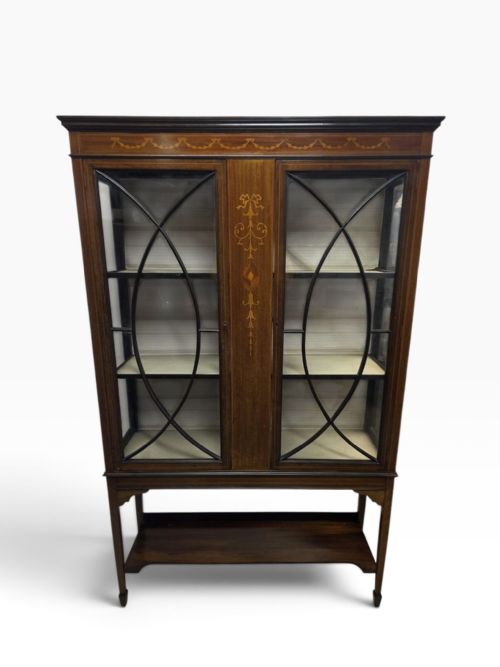
An edwardian mahogany glass cabinet combines rich, dark timber with transparent panels to exhibit books, ceramics, or curiosities within domestic interiors.
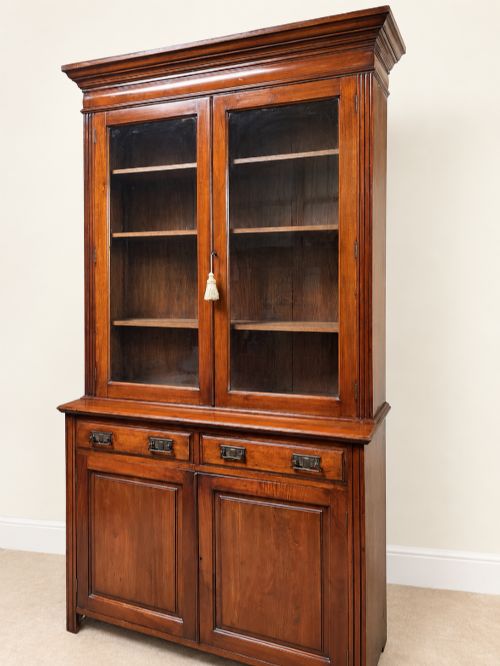
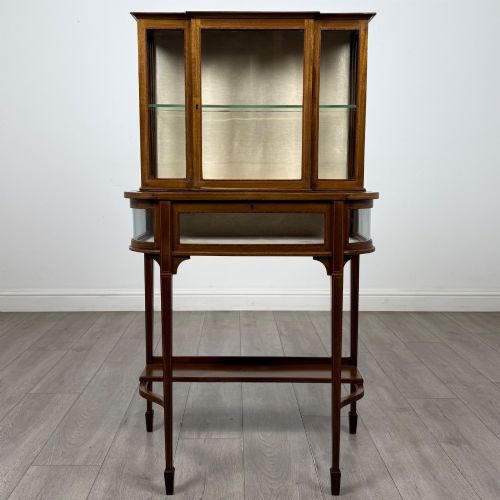
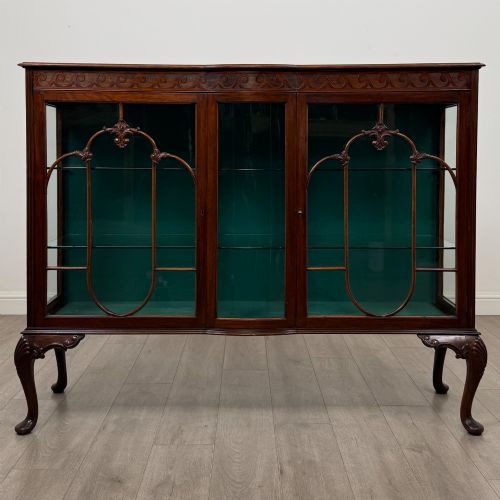
The version you are most likely to meet on this page originates from the Edwardian period or late Victorian era, taking the form of freestanding display cabinets, bookcases, or small pedestal pieces.
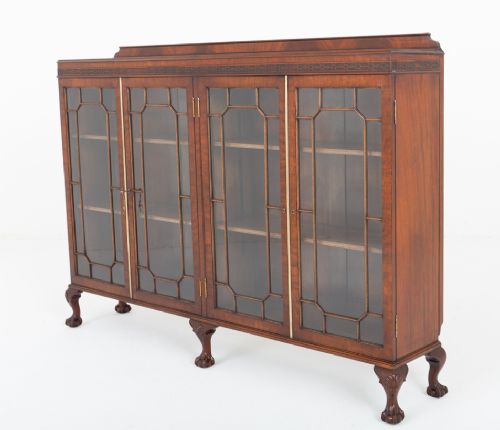
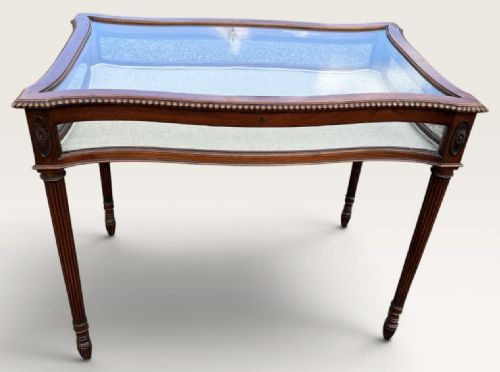
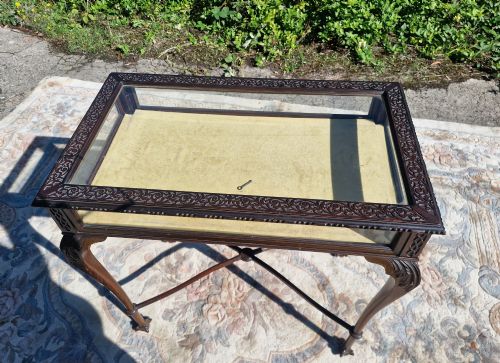
Many examples incorporate glass doors alongside internal shelving, while specialist variants include table-height bijouterie cases meant for horizontal viewing.
How they were made
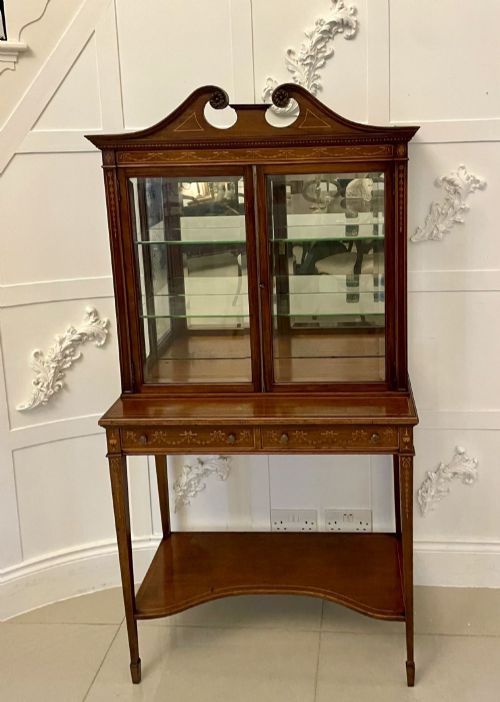
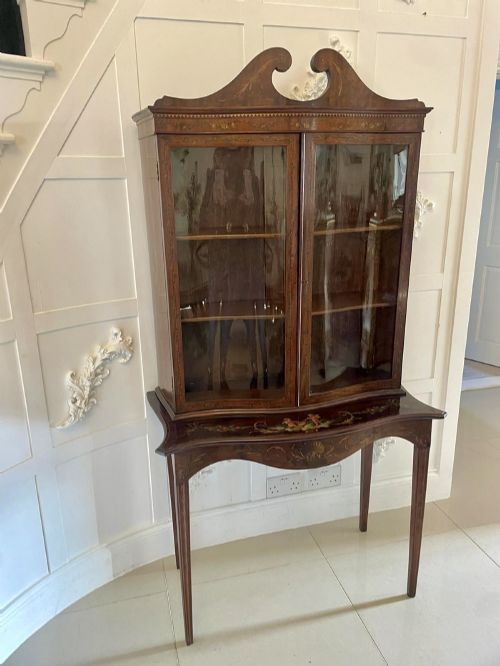
Cabinet makers utilised solid mahogany and mahogany veneers as the primary structural body, often accentuating surfaces with delicate satinwood inlay or marquetry.
Glazing techniques secured transparent panels within timber frames using wooden glazing bars, whilst brass fittings provided hinges, locks, and structural support.
Interiors frequently integrated mirrored backs to reflect light through the enclosed chamber, occasionally accompanied by fabric-lined display bases.
The listings span the Victorian, Edwardian, and Art Nouveau periods, uniting mahogany structures with glass, satinwood inlay, and brass hardware.
What varies in quality
The upper tier of pieces displays superior timber selection and refined craftsmanship, where marquetry motifs and satinwood stringing show precise hand-cutting rather than mass production.
Structural integrity and proportion separate standard furniture from exceptional pieces, particularly in breakfront designs, serpentine curves, or complex bow-ended forms.
Details such as original painted decoration, high-grade brass hardware, and finely finished internal woodwork elevate the execution of the cabinet.
F. Sage and Co·Edwards and Roberts·Maple and Co·Shapland and Petter·James Gardner·D. Hill Carter and Co
The Edwardian Mahogany Glass Cabinet Glossary
- Bijouterie table
- A glass-topped display table specifically constructed for exhibiting small valuables, medals, or jewellery at a comfortable viewing height.
- Breakfront
- A cabinet design where the central section projects forward from the flanking outer sections, creating architectural depth across the frontage.
- Inlay
- A decorative technique where contrasting materials such as satinwood or metal are inserted into hollowed recesses in the mahogany surface.
- Marquetry
- Elaborate veneer patterns arranged to form pictorial or geometric designs across cabinet doors and panels.
- Sheraton Revival
- A late nineteenth and early twentieth century style drawing inspiration from the lighter, classical furniture designs of eighteenth-century designer Thomas Sheraton.
Edwardian Mahogany Glass Cabinet: Frequently Asked Questions
What is an edwardian mahogany glass cabinet?
It is a glazed display piece constructed primarily from mahogany during the early twentieth century.
These items were built to protect and exhibit decorative objects, books, or collections within drawing rooms and libraries.
How were these cabinets used?
Owners used them to display valuable china, silverware, books, and curious items while keeping dust away behind locked glass doors.
Table versions allowed visitors to inspect smaller trinkets laid out flat beneath a transparent glass top.
How do I identify an edwardian piece?
Look for lighter proportions, Sheraton Revival influences, and detailed satinwood inlay work set into the dark mahogany grain.
Construction methods and timber characteristics typically point to the period between eighteen eighty and nineteen twenty.
Where should I place one at home?
Position them in living spaces or hallways where natural light can pass through the glass panes to illuminate the contents inside.
Keep them away from direct sunlight and sudden temperature changes to protect the timber and internal fabric linings.