
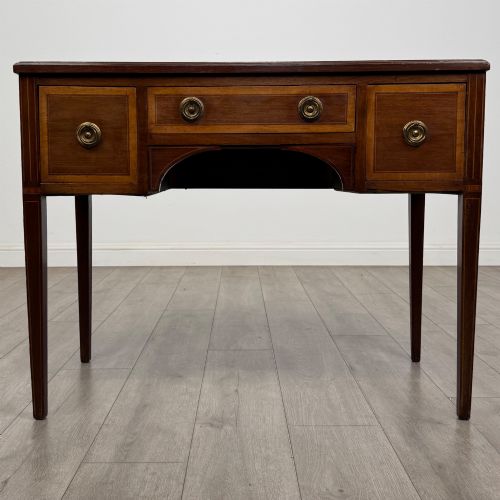
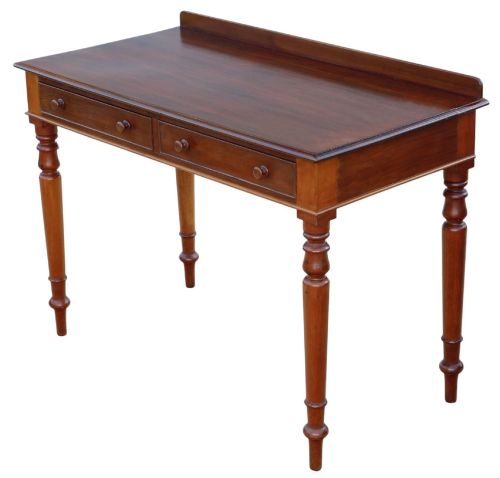
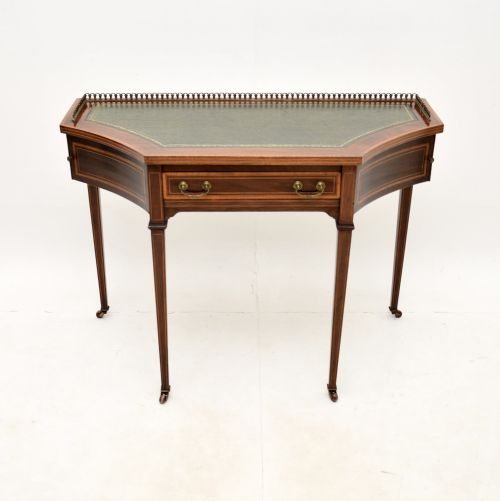
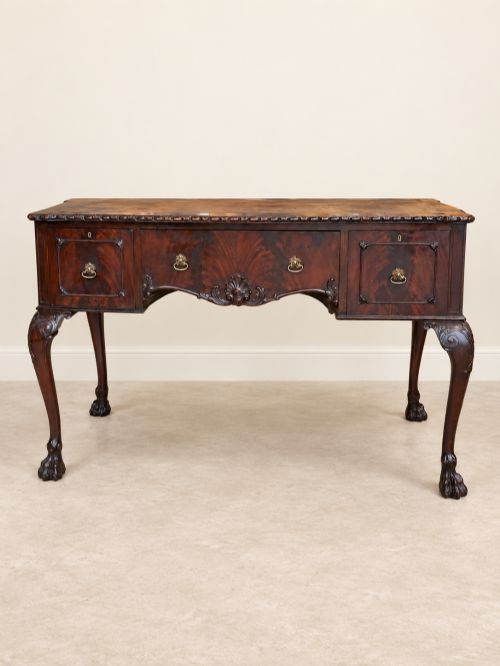
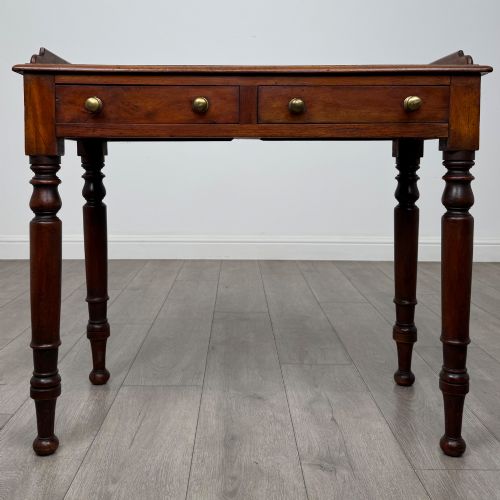
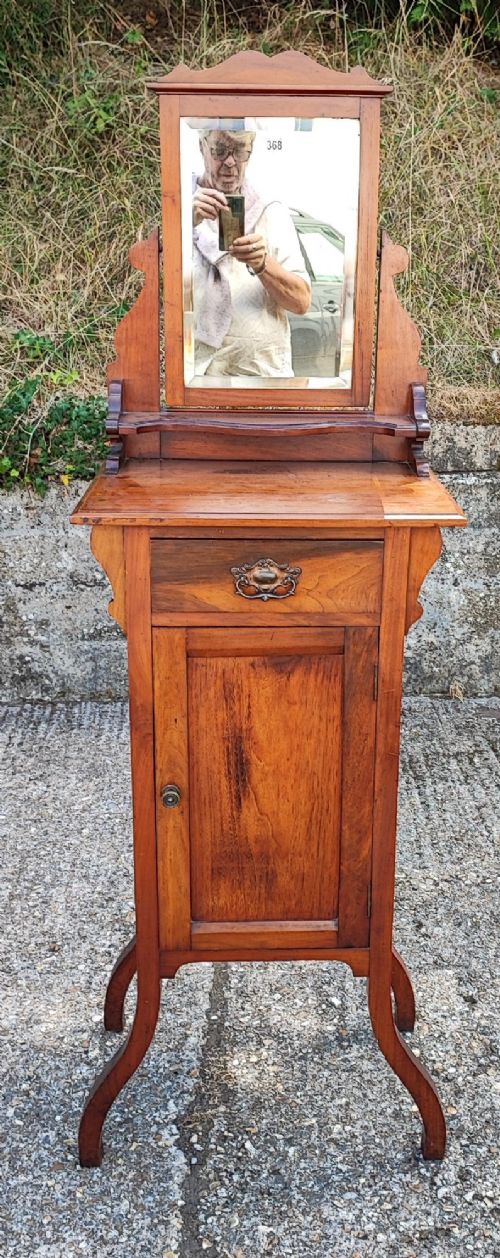
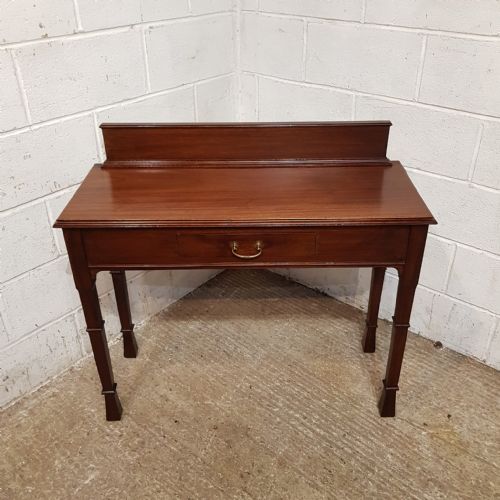

Edwardian Mahogany Dressing Table
An Edwardian mahogany dressing table brings a warm timber grain and practical surface to the bedroom, combining period utility with refined domestic design.
Edwardian Mahogany Dressing Table
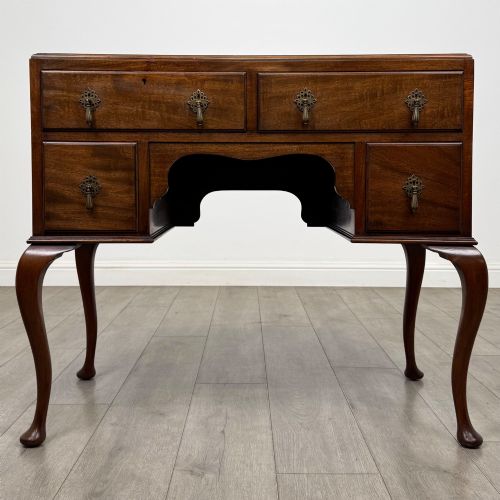
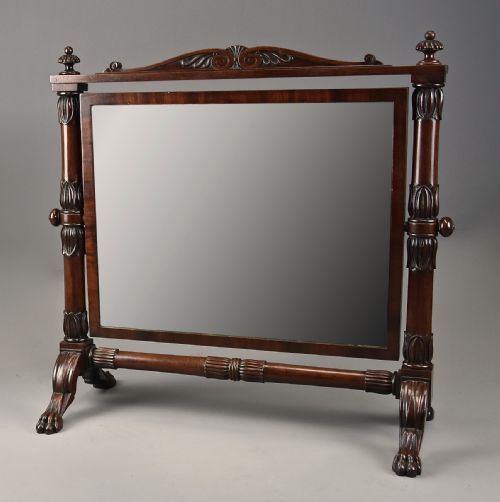
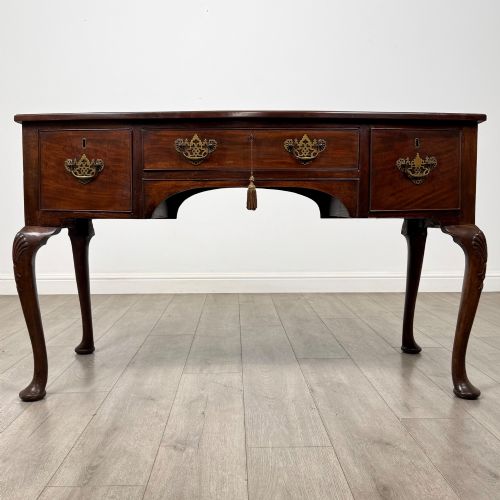
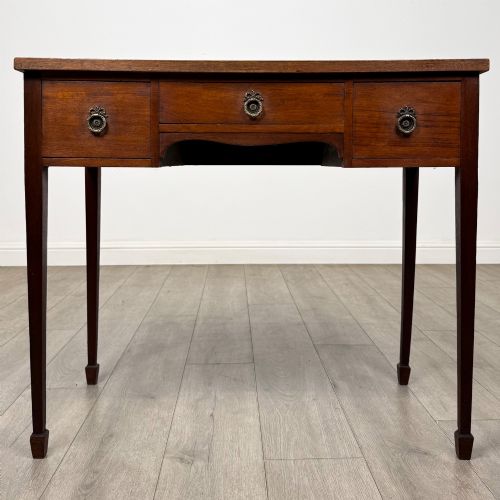
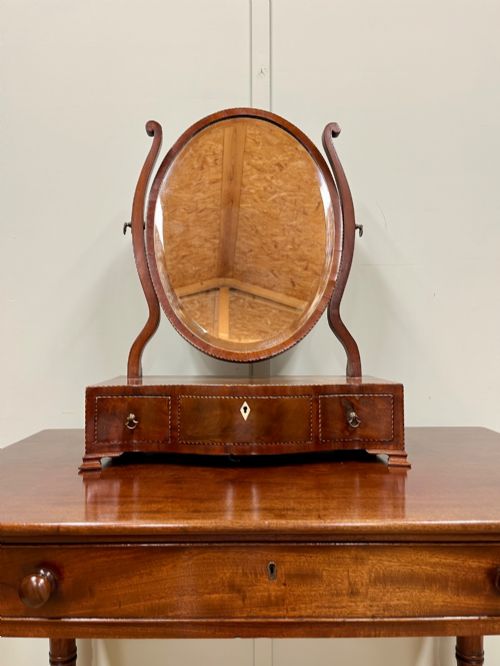
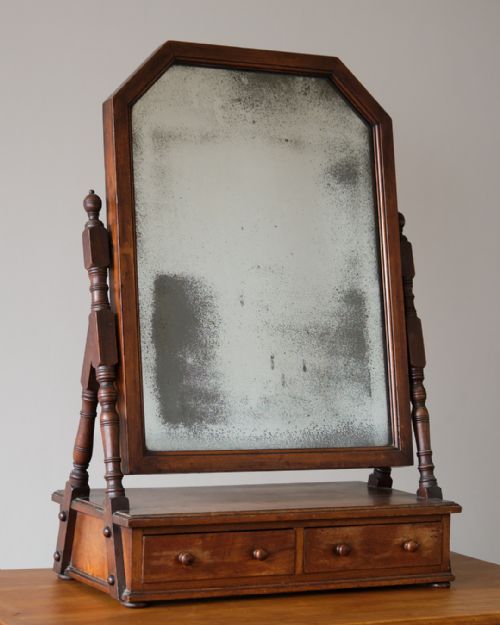
An edwardian mahogany dressing table represents a specific focus on bedroom refinement, frequently turning up as a mirrored dressing chest, a kneehole table, or a compact vanity with adjustable swing glass.
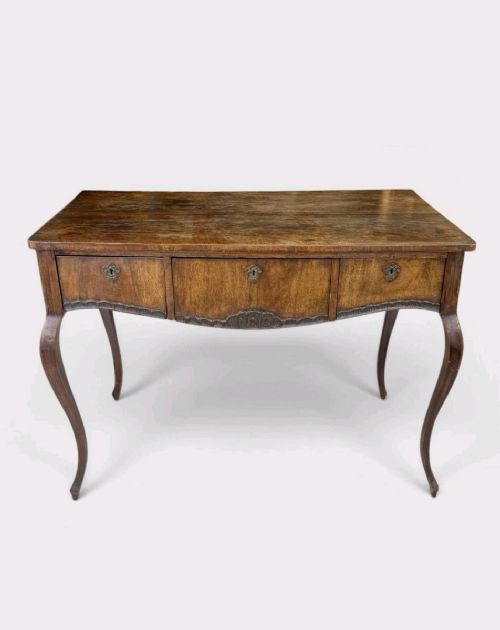
While the dominant period seen here is Edwardian, the search brings together related forms from the Victorian era and the early twentieth century, including kidney-shaped desks, poudreuses, and freestanding cheval mirrors.
Makers often drew upon Georgian or Sheraton design principles, incorporating satinwood inlay and brass hardware into lighter, more graceful frames than their nineteenth-century predecessors.
Materials and Technique
Makers relied primarily on solid mahogany and mahogany veneers, occasionally pairing the rich reddish-brown timber with contrasting satinwood stringing or painted decorative motifs.
Functional details included brass handles, bevelled glass for mirrors, and inset leather writing surfaces, while washstands and select tables integrated marble tops and ceramic components.
Joinery methods of the period supported the production of serpentine fronts, bow fronts, and intricate kidney shapes without sacrificing structural stability.
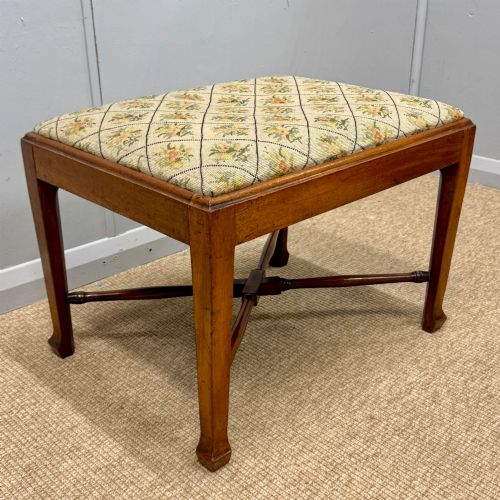
Seating options include cane-seated stools, upholstered dressing table benches, and cross-strained footstools.
Markers of Distinction
The upper tier of pieces displays meticulous hand-inlay, well-figured timber selection, and substantial original brasswork, whereas simpler examples rely solely on straightforward construction.
Proportion and balance set apart the finer pieces, particularly where mirrors, drawers, and supporting frames integrate seamlessly into a cohesive whole.
Heal and Son·Harrods·Druce and Co·James Shoolbred
The Edwardian Mahogany Dressing Table Glossary
- Mahogany
- A durable tropical hardwood prized for its deep reddish-brown colour and stable grain. It serves as the primary structural and visual medium across these pieces.
- Satinwood
- A pale, lustrous timber utilised for contrasting stringing and decorative inlay work. It highlights drawer fronts and borders on finer items.
- Cheval mirror
- A full-length swing glass mounted in a freestanding frame. It allows the user to adjust the angle for viewing.
- Poudreuse
- A specialised dressing table equipped with concealed compartments, folding surfaces, and internal mirrors. It was designed for personal grooming and cosmetics.
- Kneehole table
- A desk or dressing table featuring a central recessed space for the legs, flanked by banks of drawers. This form maximises storage while offering comfortable seating.
Edwardian Mahogany Dressing Table: Frequently Asked Questions
How do I date an edwardian mahogany dressing table?
Look for construction markers typical of the early twentieth century, such as lighter framing, machine-sawn internal drawer linings combined with hand-cut dovetails, and characteristic satinwood inlay.
Compare the hardware, mirror supports, and overall proportions against pieces bearing maker stamps from the same decade to confirm the period.
Are mirrors usually fixed or detachable?
Most mirrors on these dressing tables are detachable swing frames secured to the main tabletop by pivot screws or wooden uprights. This allowed easier transport and independent placement.
Many surviving pieces retain their original bevelled glass and supporting brass brackets, though mirrors were occasionally separated over time.
What is the difference between a writing table and a dressing table?
Writing tables prioritise a clean surface and knee clearance for correspondence, sometimes featuring an inset leather top and shallow drawers. Dressing tables integrate designated spaces for grooming essentials, often incorporating pivoting mirrors, tiered ledges, or jewellery cabinets.
In practice, makers frequently blurred these boundaries, producing multi-functional furniture suited to both bedroom and study use.
How do I care for mahogany surfaces?
Maintain the timber by dusting regularly with a soft, dry cloth and avoiding direct exposure to strong sunlight or sudden temperature shifts. This preserves the natural moisture and finish of the wood.
Apply a traditional beeswax polish sparingly when the surface appears dry, buffing gently to maintain a soft sheen without building up excess residue.