




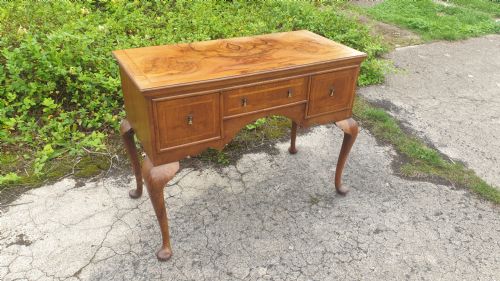

Edwardian Lowboy Table
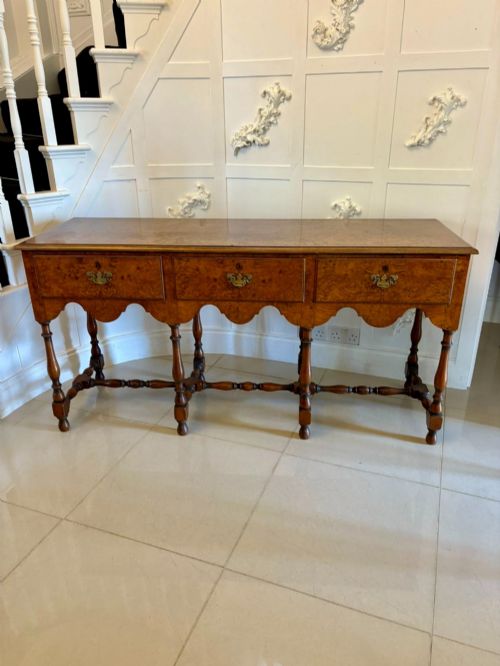
These pieces known as an edwardian lowboy table combine compact proportions with practical drawers, offering a versatile surface for halls and bedrooms alike.
Edwardian Lowboy Table
An edwardian lowboy table brings period character into modern rooms through compact proportions and fitted drawers. Such pieces serve well in hallways, living spaces, or bedrooms where surface space remains at a premium.
The selection here includes examples from the Edwardian era alongside revivals spanning the nineteenth and early twentieth centuries. Makers drew heavily on earlier George II and Queen Anne vocabulary, applying period forms to domestic furniture.
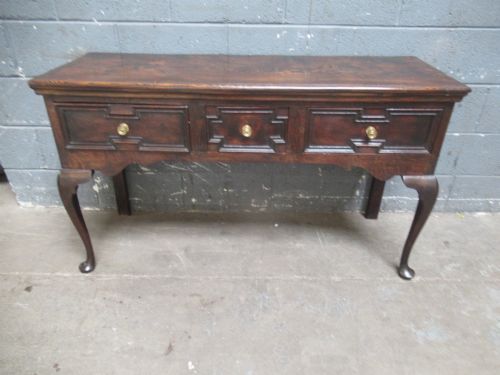
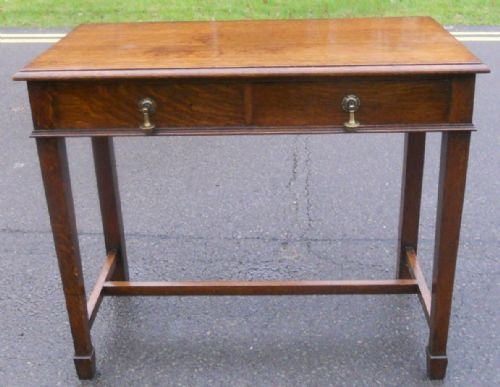
Forms range from traditional three-drawer lowboys to related side tables, dressing tables, and compact writing desks. Walnut and mahogany dominate the selection, often finished with decorative veneers or inlaid details.
How They Were Made
Cabinetmakers relied on solid timber construction using walnut, mahogany, and oak for structural stability and rich natural grain. Burr walnut veneers and feather banding added decorative contrast to drawer fronts and tabletops.
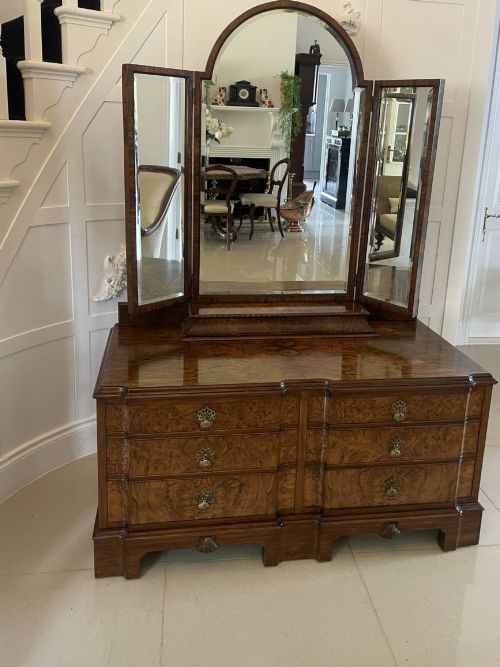
Brass handles and escutcheons provided functional hardware that complemented the darker wood tones. Inlaid detailing and mirror glass featured on related dressing table variants from the period.
Edwardian Lowboy Table Retail Price Guide 2026
Typical asking prices for edwardian lowboy table among the pieces listed under this phrase on Sellingantiques today, from the lower quarter to the upper quarter. They describe what is for sale here now, not the wider market.
Mirror glass appears in several dressing table variants alongside standard drawer configurations.
What Varies in Quality
Quality rests upon the selection of timber veneers and the crispness of executed details such as inlay and drawer construction. Finer examples display carefully matched burr walnut figures and proportioned cabriole legs.
Execution of revival styles distinguishes standard commercial production from workshops producing high-end cabinetwork. The integrity of the timber and the handling of period motifs determine the overall presence of the piece.
Maple's of London·Whytock & Reid
The Edwardian Lowboy Table Glossary
- Lowboy
- A small side table fitted with one or more drawers, originating in the late seventeenth century and frequently revived in later periods. These tables typically stood on slender legs suitable for domestic use.
- Burr Walnut
- Timber taken from the growth excrescences of walnut trees, prized for its swirling, highly figured grain patterns. Cabinetmakers utilised burr walnut as a veneer on prominent surfaces.
- Feather Banding
- A decorative inlay technique using veneer strips arranged to form a herringbone pattern around the borders of drawer fronts. This method enhances the visual framing of the woodwork.
- Cabriole Leg
- A furniture leg that curves outward and then tapers inward, inspired by the shape of an animal's leg. This form appears frequently on pieces influenced by Queen Anne and George II styles.
- Inlay
- The technique of inserting contrasting materials into recesses within a wood surface to form decorative patterns. Common examples include geometric lines and floral motifs set into mahogany or walnut.
Edwardian Lowboy Table: Frequently Asked Questions
What is an edwardian lowboy table used for?
These tables function well as compact writing desks, hallway surfaces, or dressing tables. Their modest footprint allows them to fit easily into narrow spaces.
Drawers provide convenient storage for small household items or writing materials while keeping tabletops clear.
How do I distinguish revival styles from original pieces?
Revival pieces often combine construction methods and hardware characteristic of their actual manufacturing date rather than the era they imitate. Examining timber ageing, internal drawer construction, and secondary woods helps clarify the timeline.
Design proportions and decorative execution also offer clues to whether a piece belongs to the eighteenth century or a later revival.
Which woods were commonly used?
Walnut and mahogany represent the primary timbers seen in these listings, complemented by occasional oak pieces. Burr walnut veneers and inlay work added decorative surface variation.
Brass hardware frequently completed the construction on walnut and mahogany examples.
How do I care for antique walnut furniture?
Keep wooden surfaces away from direct sunlight and significant temperature fluctuations to prevent timber movement or veneer lifting. Regular dusting with a soft, dry cloth maintains the finish.
Occasional applications of appropriate wax help nourish traditional polished surfaces without building up heavy residues.