

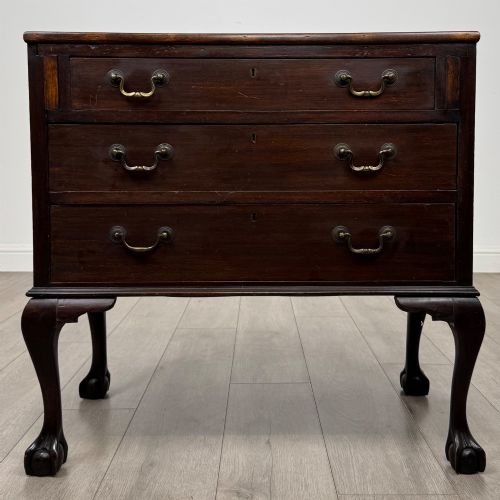
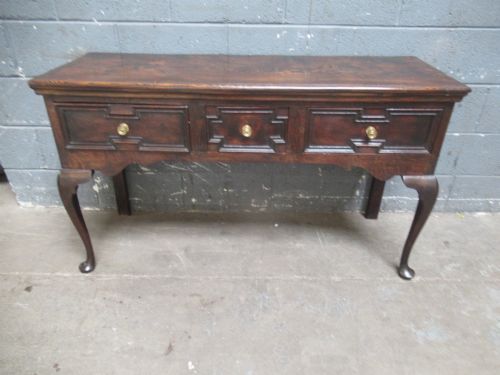


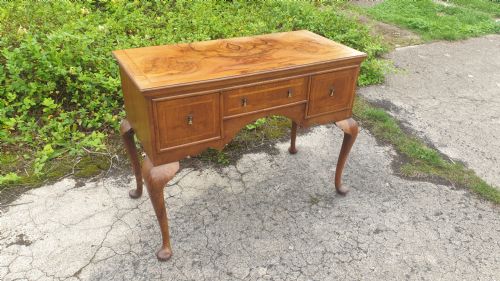

Edwardian Cabriole Leg Lowboy
Edwardian cabriole leg lowboy examples bring compact elegance to a room, offering practical surface space and concealed storage through traditional craftsmanship.
Edwardian Cabriole Leg Lowboy
An edwardian cabriole leg lowboy provides a low table surface with drawers, frequently appearing in revival styles that echo earlier centuries. These pieces function well as side tables or dressing surfaces in smaller spaces.
The selections on this page span the Edwardian period alongside earlier eras and later revivals, reflecting diverse origins from the nineteenth and twentieth centuries. Walnut and mahogany dominate the structural forms alongside oak and satinwood.
Makers and workshops of the time drew heavily upon Queen Anne and Georgian design vocabulary, applying curved legs and fitted drawers to compact side furniture. Buyers encounter variations ranging from plain polished woods to detailed marquetry and inlay.
Materials and construction methods
Cabinet makers utilised solid woods and decorative veneers such as burr walnut and mahogany over structural timbers. Brass handles and drawer pulls provided functional hardware accents.
Construction techniques combined traditional joinery with decorative surface treatments, including feather banding and marquetry inlay. Skilled artisans shaped cabriole legs to achieve the characteristic sweeping line.
Edwardian Cabriole Leg Lowboy Retail Price Guide 2026
Typical asking prices for edwardian cabriole leg lowboy among the pieces listed under this phrase on Sellingantiques today, from the lower quarter to the upper quarter. They describe what is for sale here now, not the wider market.
Listings feature woods including walnut, mahogany, oak, and satinwood, spanning the Edwardian era, the nineteenth century, and the 1920s.
Assessing quality and craftsmanship
Superior examples display balanced proportions in the cabriole leg and precise execution of veneer work, such as matched burr walnut patterns. The integration of drawers within the frame demonstrates fine joinery.
The choice of primary timber and secondary framing woods influences the overall integrity and visual depth of the piece. Subtle details like brass hardware matching the period aesthetic elevate the standard of the work.
Maple's of London·Whytock and Reid
The Edwardian Cabriole Leg Lowboy Glossary
- Lowboy
- A small low table with drawers, typically used as a dressing table or side table in domestic interiors. These versatile pieces usually feature multiple drawers arranged beneath the main surface.
- Cabriole leg
- A furniture leg that curves outward and then tapers inward, finishing in a pad or foot. This form derives from classical furniture design and gained popularity during revival periods.
- Burr walnut
- Wood taken from a walnut tree growth that produces intricate, swirling grain patterns highly prized for decorative veneers. Cabinet makers applied these thin sheets to primary surfaces for visual impact.
- Feather banding
- A delicate decorative inlay technique using contrasting strips of veneer arranged in a herringbone or V-shaped pattern around drawer edges. This ornamentation signals careful attention to surface detail.
- Queen Anne style
- A design aesthetic characterised by curved lines, pad feet, and cabriole legs, originating in the early eighteenth century and frequently revived later. Lowboys from this lineage emphasise grace over heavy ornamentation.
Edwardian Cabriole Leg Lowboy: Frequently Asked Questions
What is a lowboy used for?
A lowboy serves primarily as a compact side table, hall table, or dressing surface with integrated drawer storage. Historically placed in bedrooms or reception rooms, it held personal items or grooming accessories.
Today, these tables fit easily into narrow hallways or living spaces where a full-sized desk or chest might overwhelm the room.
How do I date an Edwardian lowboy?
Dating relies on examining the timber selection, construction methods, and hardware style alongside the overarching design revival period. Edwardian pieces often combine earlier stylistic influences with manufacturing techniques specific to the early twentieth century.
Interior drawer construction and secondary woods provide further clues to the workshop origin and manufacturing decade.
How do I care for walnut veneer?
Walnut veneer requires protection from direct sunlight and excessive moisture to prevent fading and lifting of the thin wood layers. Regular dusting with a soft, dry cloth preserves the polished surface.
A light application of appropriate furniture wax maintains the moisture balance of the timber without building up heavy residues.