
Edwardian Mahogany Chairs Set
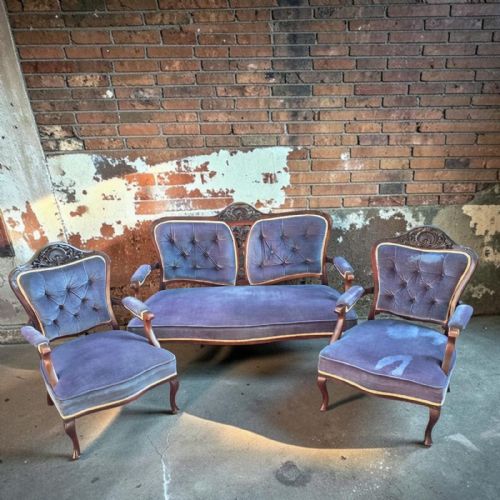
When searching for an edwardian mahogany chairs set, collectors encounter matched groupings of dining, salon, and parlour seating crafted around the turn of the twentieth century.
Edwardian Mahogany Chairs Set
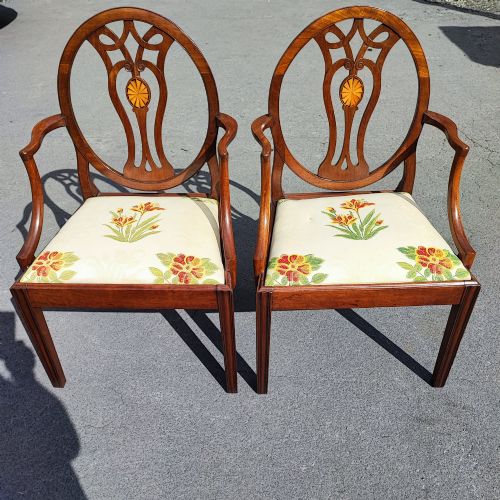
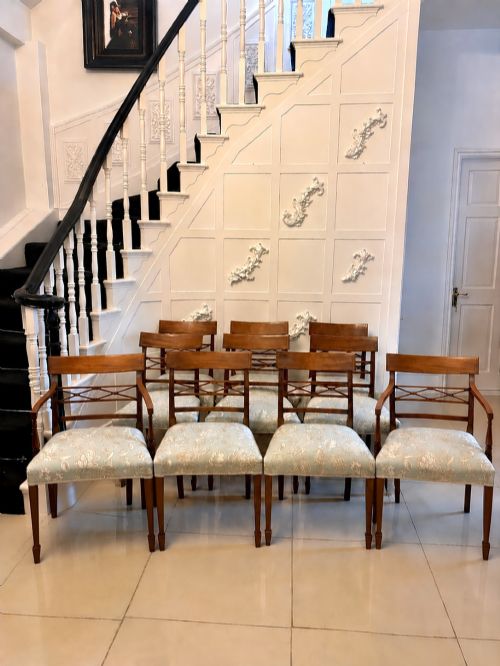
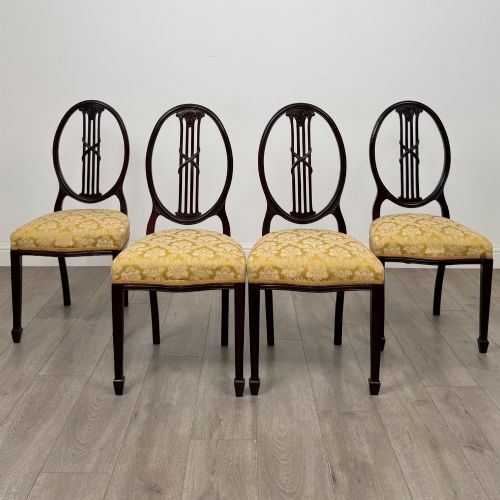
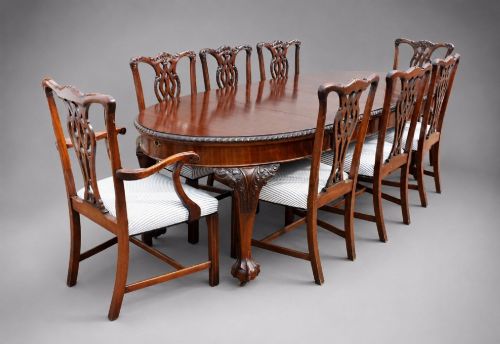
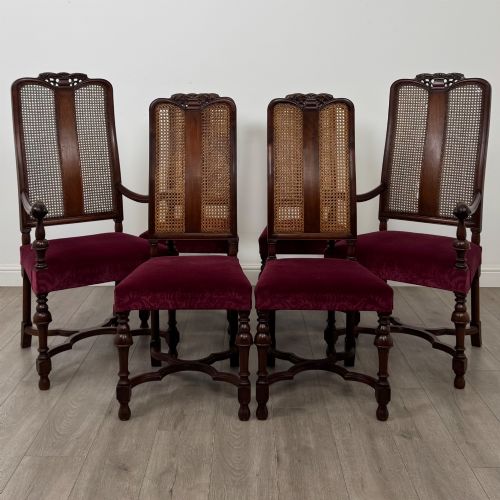
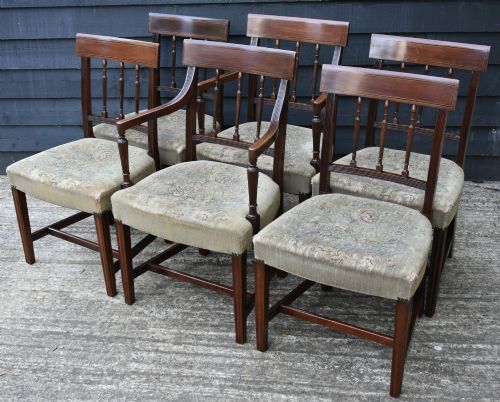
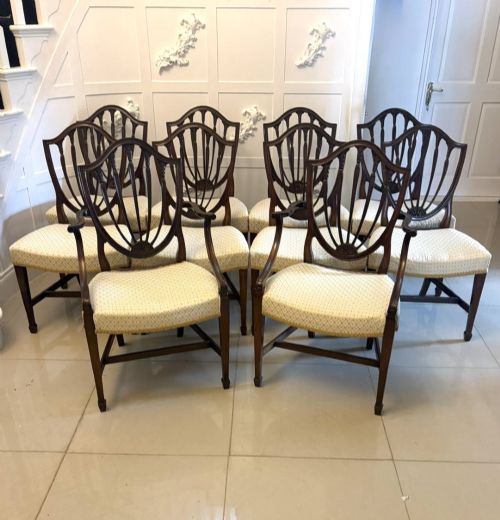
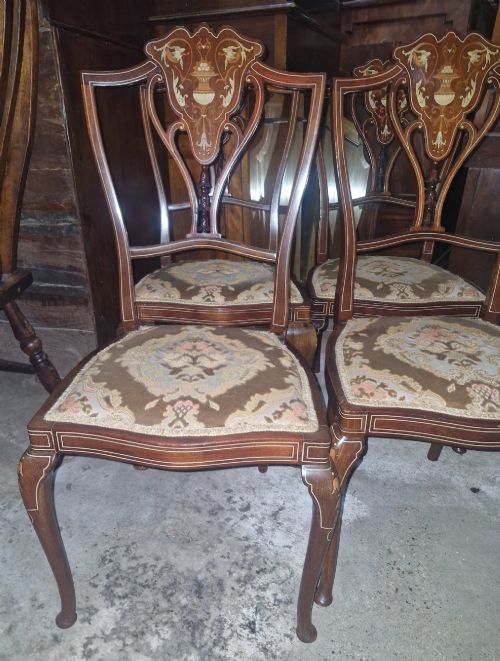
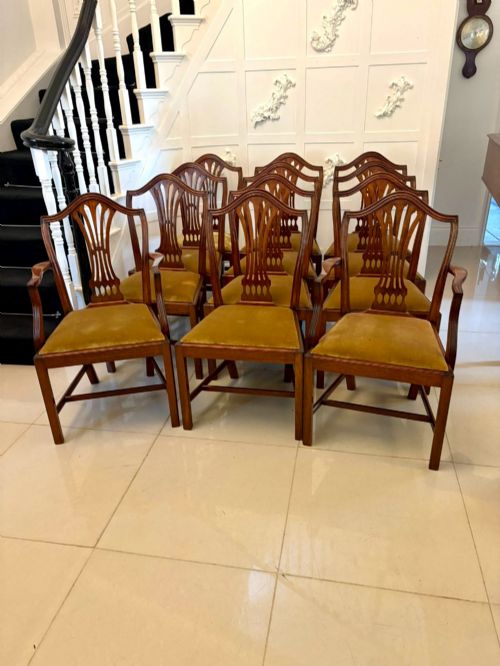
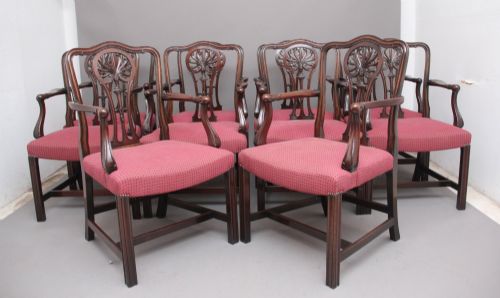
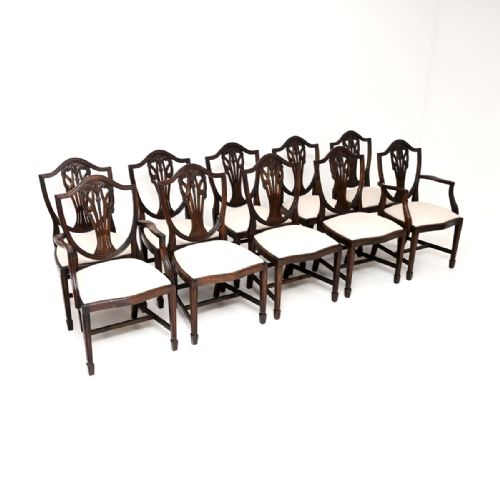
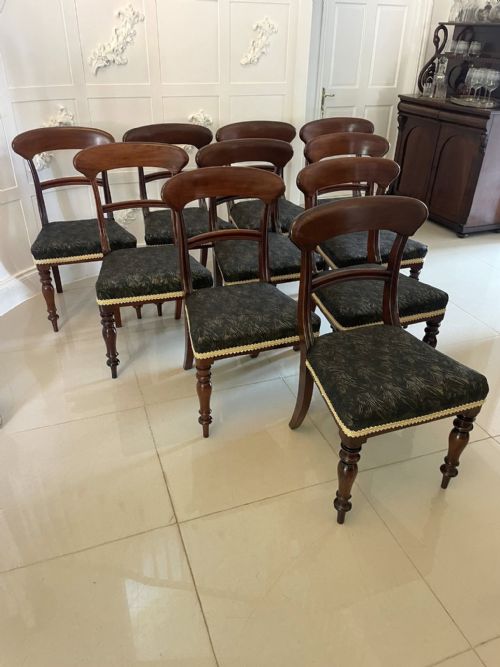
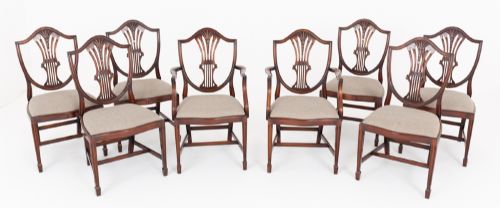
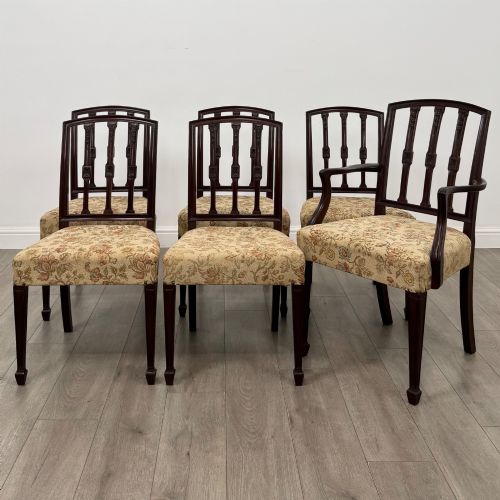
An edwardian mahogany chairs set typically comprises matched seating created in the early twentieth century, spanning large dining groups of ten or twelve down to intimate sets of four salon or bedroom chairs. The groupings frequently include carver armchairs alongside side chairs, reflecting formal domestic dining arrangements of the period.
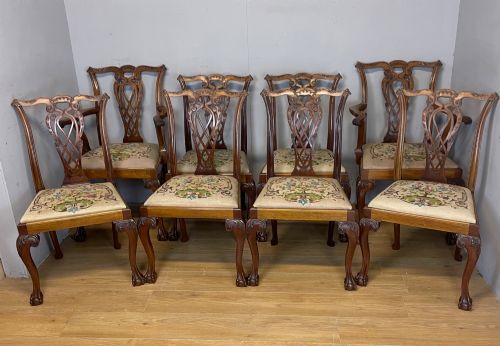
The aesthetic draws heavily on eighteenth-century revivals, meaning many examples incorporate classic Chippendale, Hepplewhite, or Sheraton motifs executed with early twentieth-century precision. Alongside formal dining suites, smaller groupings of occasional, corner, or inlaid parlour chairs appear regularly.
While the majority of pieces date from the Edwardian era and the surrounding decades of 1900 to 1920, related Victorian and later revival pieces also form part of the broader category. The wood remains consistently dense mahogany, often accented with satinwood stringing or marquetry.
Materials and Construction
Makers utilised solid mahogany and mahogany veneers as the primary structural timber, chosen for its stability, rich grain, and suitability for carving. Secondary woods appear on internal frames, while decorative elements rely on contrasting satinwood and delicate marquetry inlay.
Joinery methods combined traditional cabinet-making techniques such as mortise and tenon joints with steam-bent woodwork for curved shield backs and cabriole legs. Upholstered seats incorporated supportive webbing and horsehair stuffing beneath covers of leather, velvet, or woven fabric.
Surface finishing involved hand-applied polishes that enhanced the natural colour and grain of the mahogany without obscuring the timber beneath. Brass fittings and castors occasionally appeared on heavy dining armchairs and carvers.
Materials recorded across the inventory include mahogany, satinwood, leather, velvet, brass, and fabric upholstery.
Markers of Quality
The standard of craftsmanship is visible in the crispness of carved details such as wheatsheaves, ribbon-backs, and ball and claw feet, where sharper definition indicates superior workshop output. The selection and matching of mahogany grain across all chairs in a set reveal the care taken during initial production.
Structural integrity separates everyday utility from finer examples, demonstrated by tight joinery that prevents wobble across a set of ten or twelve chairs. The originality of components, from leather upholstery to inlaid satinwood panels, distinguishes undisturbed suites from heavily restored groupings.
Warings·Maple and Co·Alfred Allen·Waring and Gillow
The Edwardian Mahogany Chairs Set Glossary
- Carver
- An armchair designed with elbow rests, traditionally placed at the head of a dining table or paired alongside matching side chairs.
- Shield Back
- A chair back shaped in the outline of a heraldic shield, popularized by Hepplewhite and revived during the Edwardian period.
- Marquetry
- Decorative inlay work using various coloured woods to create pictorial or geometric patterns on the surface of the mahogany.
- Cabriole Leg
- A furniture leg that curves outward at the knee and tapers inward toward the foot, often finishing in a pad or claw.
- Satinwood
- A pale, lustrous exotic timber utilised for contrasting stringing and inlay details against dark mahogany backgrounds.
Edwardian Mahogany Chairs Set: Frequently Asked Questions
How many chairs typically make up a dining set?
Dining sets commonly range from four to twelve chairs, frequently including two carver armchairs alongside a larger number of side chairs.
Larger suites of ten or twelve pieces were built for formal dining rooms, while smaller sets of four or six suited parlour and salon use.
What is the difference between side chairs and carvers?
Side chairs are built without arms to allow multiple seats to fit compactly around a dining table.
Carvers feature supportive elbow rests and generous proportions, traditionally designated for the host and hostess.
How do revival styles relate to original antique furniture?
Revival pieces replicate the popular eighteenth-century aesthetics associated with designers like Chippendale and Hepplewhite using early twentieth-century production methods.
These suites adapt classic proportions and decorative motifs to suit contemporary Edwardian domestic interiors.
What woods besides mahogany appear on these chairs?
Satinwood frequently appears as a contrasting inlay material for stringing, banding, and detailed marquetry panels.
Other supporting timbers like maple are occasionally utilised for secondary framing or structural elements hidden beneath upholstery.