
Victorian Velvet Dining Chairs
Victorian velvet dining chairs bring nineteenth-century comfort and craft to the modern table, offering robust seating dressed in rich pile textiles.
Victorian Velvet Dining Chairs
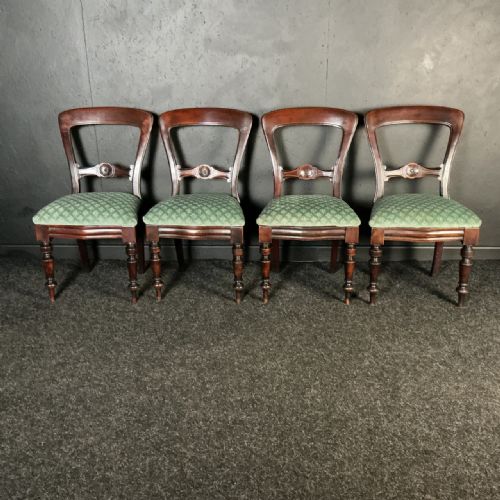
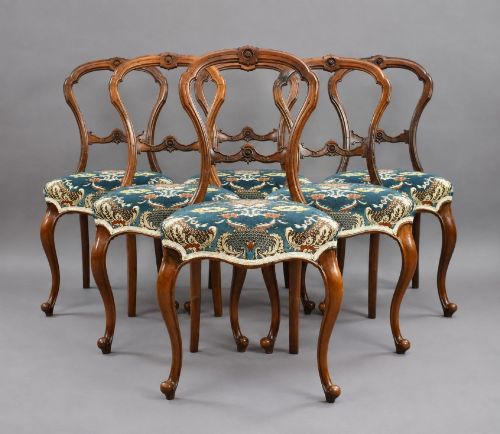
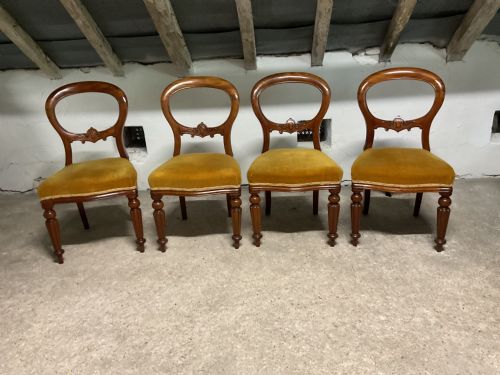
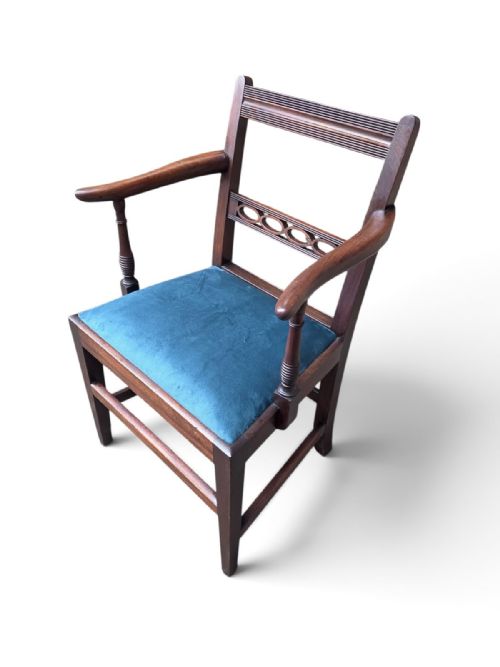
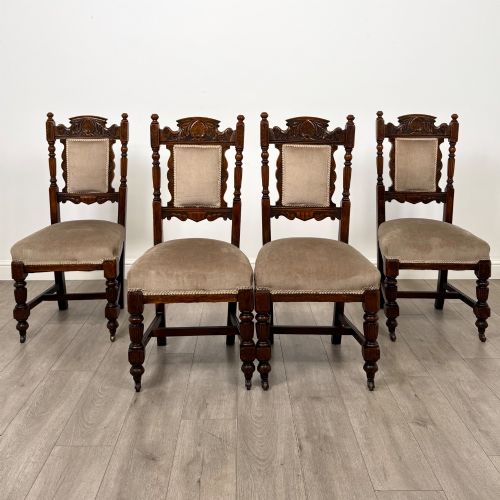
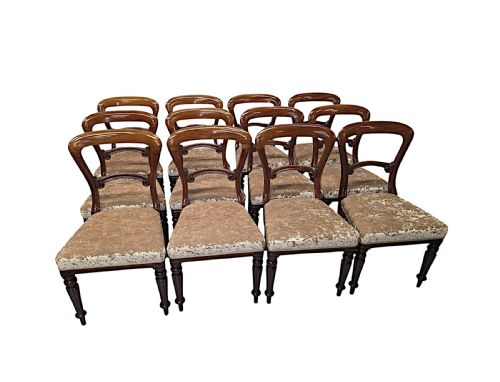
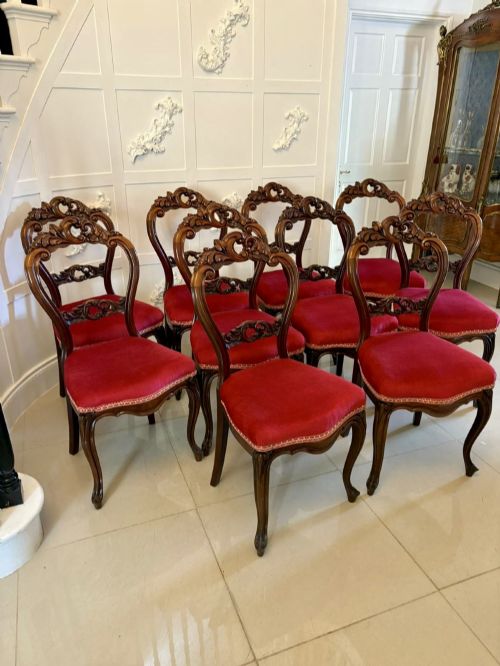
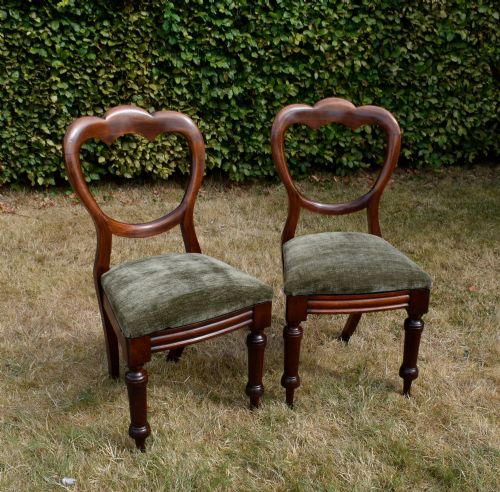
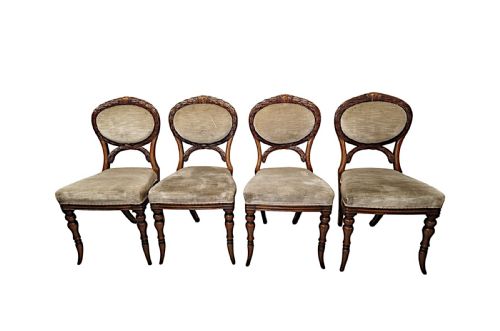
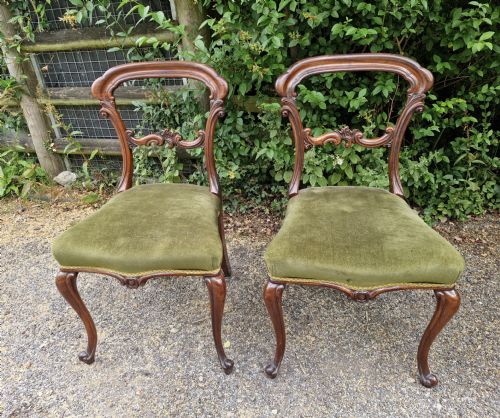
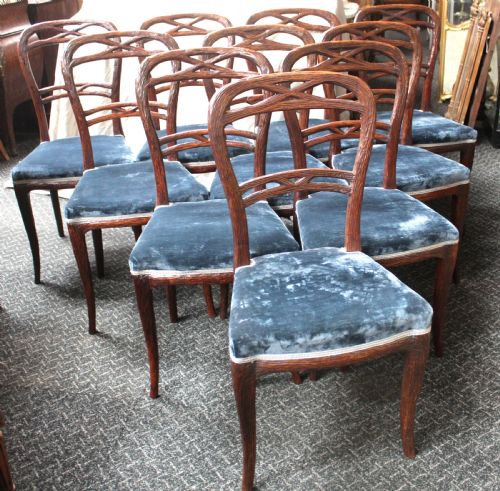
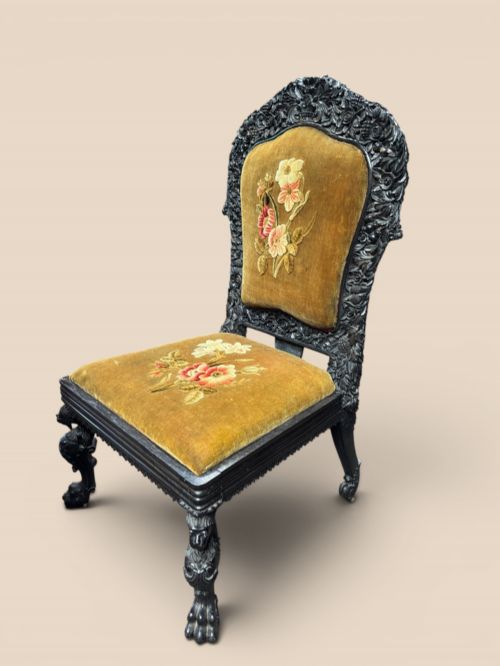
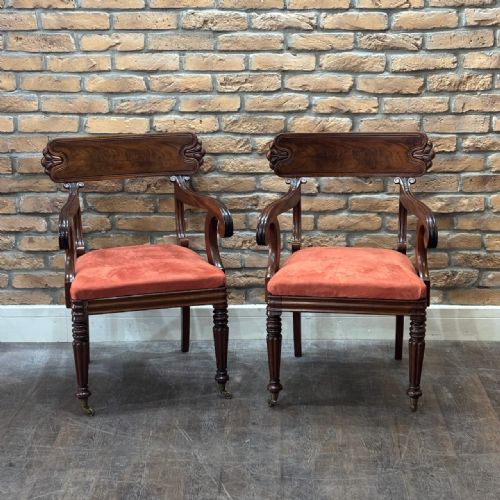
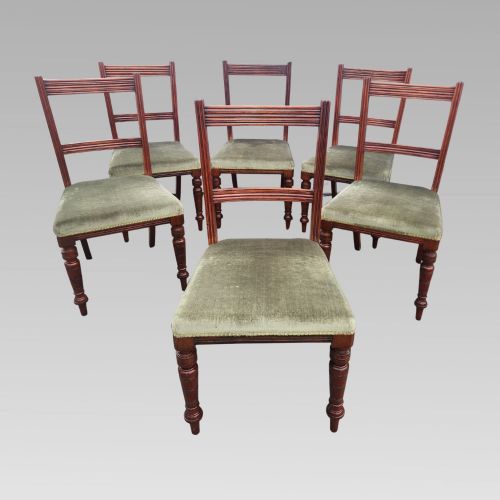
Victorian velvet dining chairs comprise seat furniture produced across the nineteenth century, meeting buyers primarily as matching sets of four, six, or eight pieces alongside individual armchairs and side chairs. The surviving examples emerge predominantly in mahogany, rosewood, and walnut, frequently taking the characteristic balloon back form alongside high-backed, crown-backed, and tulip-legged variants.
The aesthetic vocabulary spans standard Victorian production alongside stylistic revivals such as Gothic Revival and William IV periods, occasionally drawing on disparate regional touches like Anglo-Indian carving. Most pieces function primarily around the dining table, though smaller bedroom chairs and open armchairs appear regularly within the broader nineteenth-century seating repertoire.
Makers and retailers such as Gillows, Strahan of Dublin, and Blyth and Sons contributed to this output, alongside unassigned workshops that adopted prevailing balloon-back and turned-leg conventions. Buyers encounter these forms upholstered in various textiles including velvet, silk, and specialised patterns like William Morris designs.
Materials and Techniques
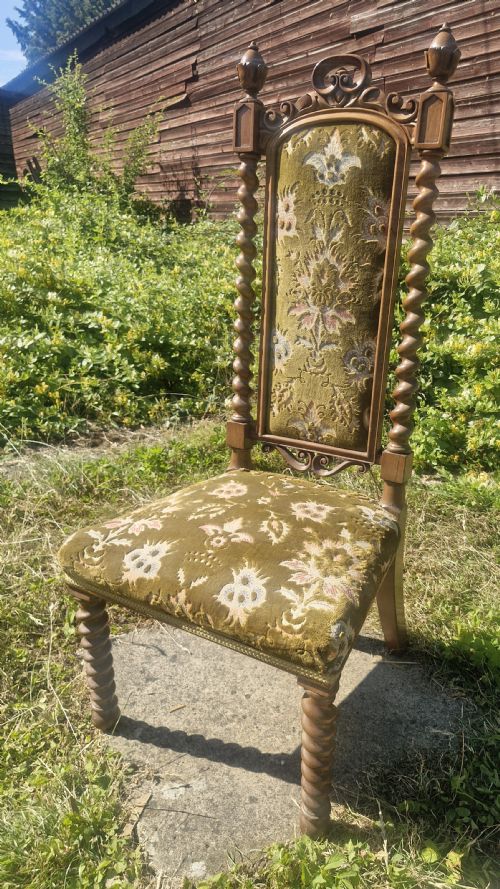
Cabinetmakers constructed the frames of Victorian velvet dining chairs using dense hardwoods like mahogany, rosewood, walnut, and oak, often shaping the timber through steam bending for curved balloon backs or employing intricate lathe work for barley twist and turned legs. Joinery relied on traditional mortise and tenon methods to ensure structural rigidity under daily use.
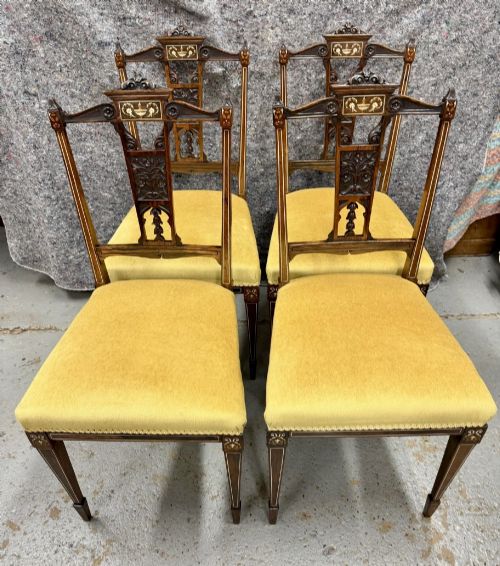
Surface ornamentation involved skilled hand carving, marquetry inlay, and ebonising, paired with polished finishes that emphasised the grain of the chosen wood. Upholstery techniques secured textile coverings over stuffed pads using brass tacks and webbing, combining structural durability with tactile softness.
Listings feature mahogany, rosewood, walnut, and oak frames paired with velvet and textile upholstery across the Victorian and William IV periods.
Standards of Craft
The upper tier of Victorian velvet dining chairs is distinguished by the crispness of hand-carved foliage, the density and selection of figured timbers like rosewood or mahogany, and the presence of documented maker stamps. Superior examples maintain uncompromised frame integrity where joinery remains tight without excessive modern intervention.
Subtleties in proportion and the ambition of the design separate standard production from exceptional suites, such as those featuring extensive marquetry inlay or specialised turned components. The preservation of original secondary woods and period-appropriate upholstery methods further elevate the standing of an individual chair or set.
Gillows·Strahan·Blyth and Sons
The Victorian Velvet Dining Chairs Glossary
- Balloon back
- A rounded, oval-shaped chair back resembling the profile of a hot air balloon, popular in mid-nineteenth-century seating. This form dominated dining chair design during the Victorian era.
- Barley twist
- A spiral carving resembling a twisted rope, applied to chair legs and structural uprights. This decorative turning technique became widespread during the nineteenth century.
- Marquetry
- The art of applying pieces of veneer to a structure to form decorative patterns and pictures. Craftsmen utilised contrasting timbers to create elaborate floral or geometric tableaus on chair backs.
- Gothic Revival
- An architectural and decorative style drawing inspiration from medieval forms, featuring pointed arches and heavy carved details. This aesthetic influenced numerous Victorian dining chairs.
- William IV
- The transitional design period spanning the early nineteenth century between Regency and Victorian eras. Furniture from this phase often exhibits robust rosewood construction and classical proportions.
Victorian Velvet Dining Chairs: Frequently Asked Questions
How do I care for antique velvet?
Protect the pile fabric from direct sunlight to prevent fading and preserve the rich colouration of the textile over time.
Gentle brushing with a soft bristle helps maintain the nap, avoiding harsh chemical cleaners that damage nineteenth-century fibres.
Were these chairs used daily?
Nineteenth-century households relied on these robust mahogany and walnut frames for everyday dining and formal gatherings alike.
Solid hardwood construction ensured durability, allowing the furniture to withstand generations of regular domestic service.
How are chair periods told apart?
Early examples often display William IV rosewood characteristics and heavier proportions, while later Victorian pieces lean toward walnut and lighter turned legs.
Stylistic shifts from plain mahogany to elaborate carving and Art Nouveau influences help bracket production dates across the century.
Can mismatched chairs form a set?
Gathering single side chairs and armchairs together reflects historic furnishing habits where dining seats were acquired incrementally over time.
Matching wood types and similar balloon-back profiles help create a cohesive appearance around a dining table.