



Tufted Side Chairs
These tufted side chairs bring character and comfortable seating to any room.
Tufted Side Chairs
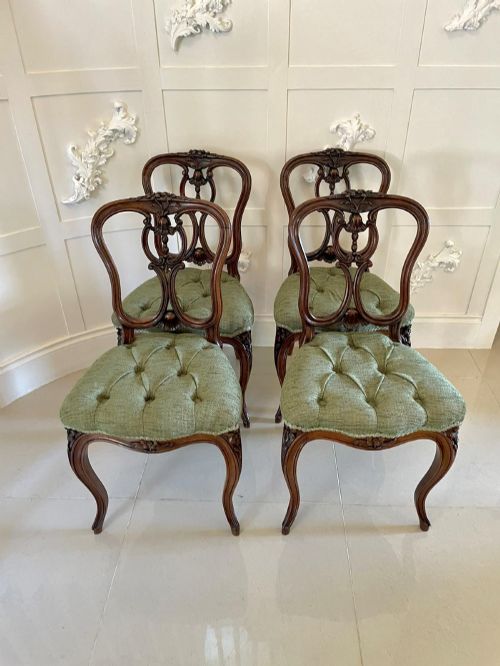
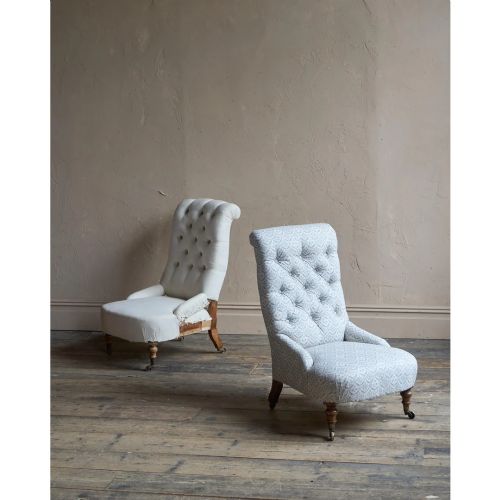
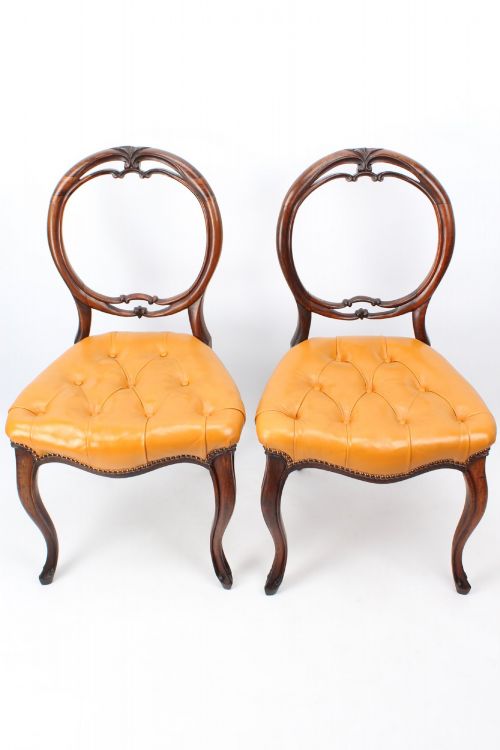
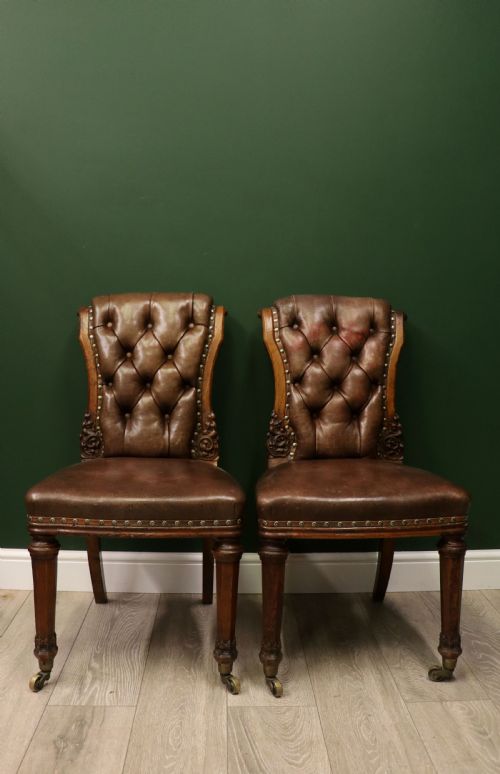
Tufted side chairs encompass various seating forms designed for dining, drawing rooms, and studies from the nineteenth and early twentieth centuries. These pieces typically feature buttoned or padded upholstery secured into a diamond pattern across the backrest.
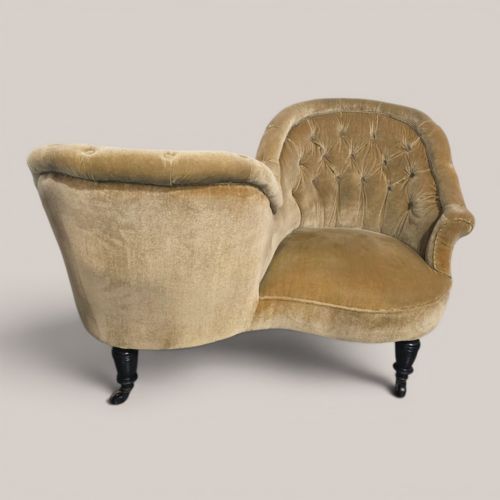
Victorian examples dominate the selection, often appearing in sets alongside individual conversation or bedroom chairs. Walnut, mahogany, and rosewood frame constructions predominate, alongside occasional oak and simulated bamboo variations.
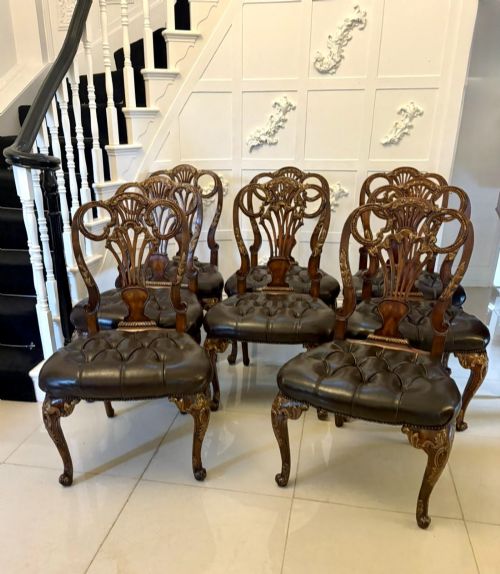
Originating in formal nineteenth-century interiors, these side chairs provide upright support while adding tactile depth through their distinct buttoning. Buyers frequently encounter pieces retaining their original leather, velvet, or fabric coverings.
How they were made
Cabinetmakers shaped dense hardwoods including walnut, mahogany, and rosewood into carved frames, balloon backs, and scroll supports. Turnery and applied gilding frequently accent these structural wooden elements.
Upholsterers applied deep buttoning through leather, velvet, tapestry, or standard fabric, pulling ties firmly through stuffing to create secure tufted patterns. Brass castors and carved claw and ball feet often complete the lower framework.
A child-sized chair waits patiently for a miniature Victorian aristocrat.
What varies in quality
The sophistication of the timber carving and the crispness of the turned frame details dictate the baseline standard of each piece. Heavier woods and substantial sets demonstrate greater workshop investment.
The execution of the button tufting and the choice of primary covering material, such as supple brown leather or heavy velvet, elevate the piece. Maker attribution, whether through branded stamps or distinctive workshop design, alters historical interest.
Howard and Sons·Blyth and Sons·Gillows·C Hindley and Sons
The Tufted Side Chairs Glossary
- Button back
- An upholstered backrest pulled into regular indentations using buttons, creating a cushioned diamond pattern. This technique secures internal stuffing while adding formal decoration.
- Bergere
- An enclosed upholstered armchair with wooden framing exposed around the sides and back. Cane work frequently panels the sides of these comfortable seats.
- Balloon back
- A rounded, oval-shaped chair back resembling a floating balloon, popular during the Victorian period. Carved wooden rails define this flowing profile.
- Scroll side chair
- A chair featuring sweeping, curved arm or back terminals shaped like scrolls. These designs often rest upon turned legs fitted with brass castors.
- Pugin design
- A decorative style inspired by the Gothic Revival interpretations of A. W. N. Pugin. Pieces following these designs feature pointed arches and architectural framing.
Tufted Side Chairs: Frequently Asked Questions
What periods do these chairs come from?
The available pieces originate primarily from the Victorian era, spanning the mid-nineteenth century through to the Edwardian period.
Earlier Regency examples and later twentieth-century interpretations also appear within the selection.
How were these chairs used historically?
These chairs served multiple domestic functions, from formal dining settings to quiet reading corners in libraries and bedrooms.
Smaller side and salon chairs provided flexible seating that could move easily around drawing rooms.
Are the leather coverings original?
Some pieces retain their historic leather upholstery, showing natural patination accumulated over generations of daily use.
Other examples feature newly replaced leather or contemporary fabric tailored to match traditional methods.
How do I identify a maker?
Cabinetmakers and retailers sometimes marked their work with stamps, paper labels, or branded signatures on the underside of the wooden frame.
Stylistic quirks, such as lion carvings or specific scrollwork, also point toward particular workshops.