



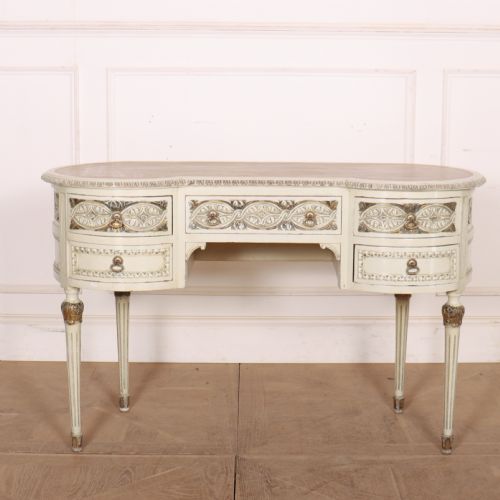
Edwardian Kidney Shaped Table
An edwardian kidney shaped table brings a sweeping, concave curve to a room, offering a functional writing surface or display top built with refined proportions.
Edwardian Kidney Shaped Table
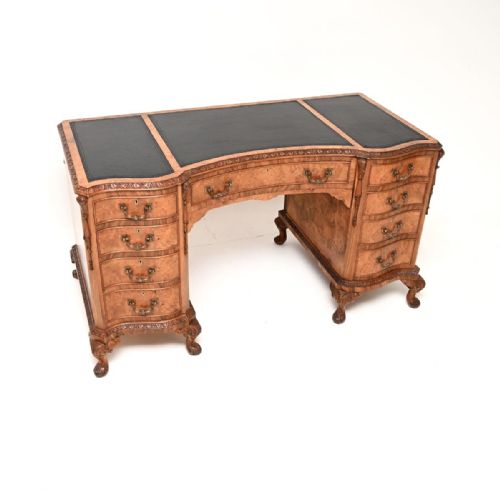
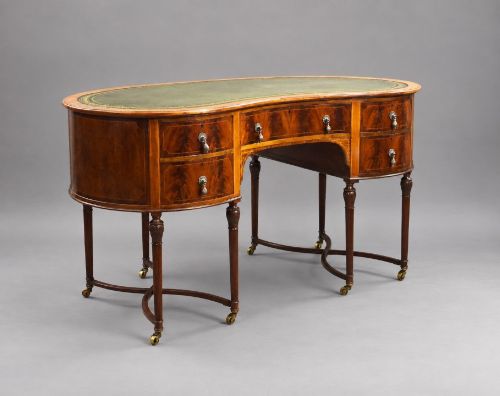
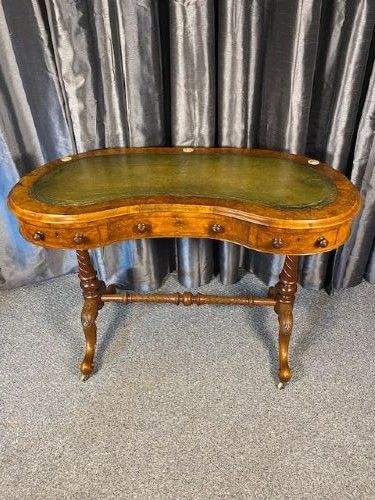
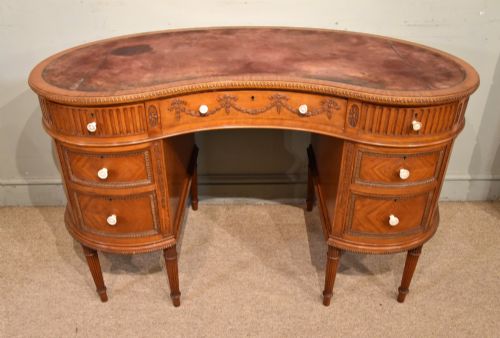
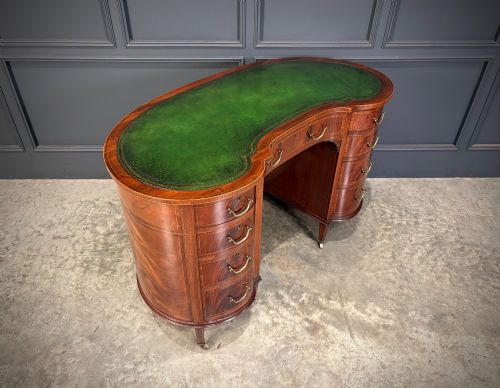
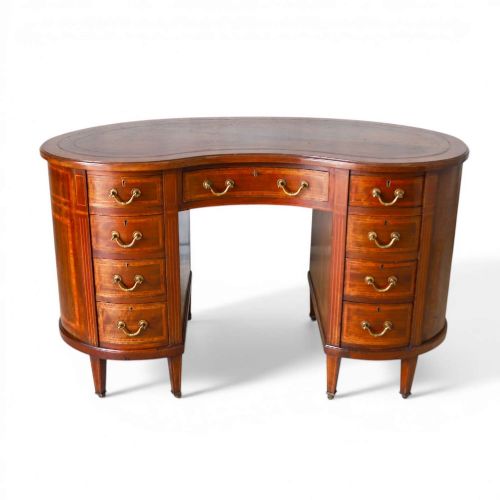
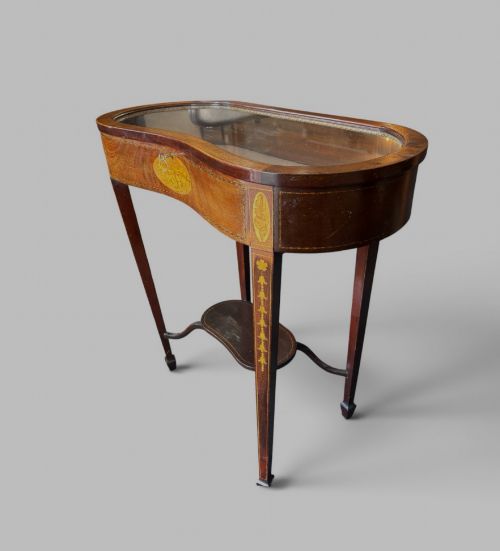
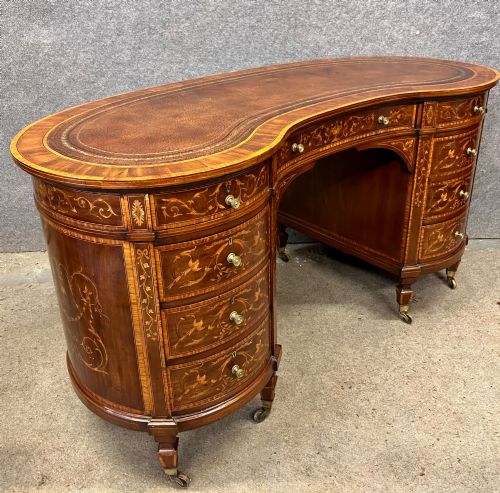
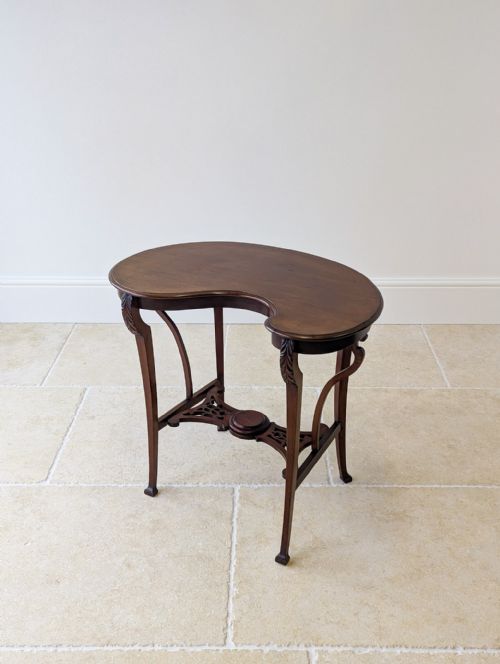
An edwardian kidney shaped table follows a distinct curved outline designed to fit comfortably against the body of someone sitting at a desk or dressing table. The search phrase covers writing desks, occasional tables, side tables, and glazed bijouterie display cabinets originating mostly from the Edwardian period and the late Victorian era.
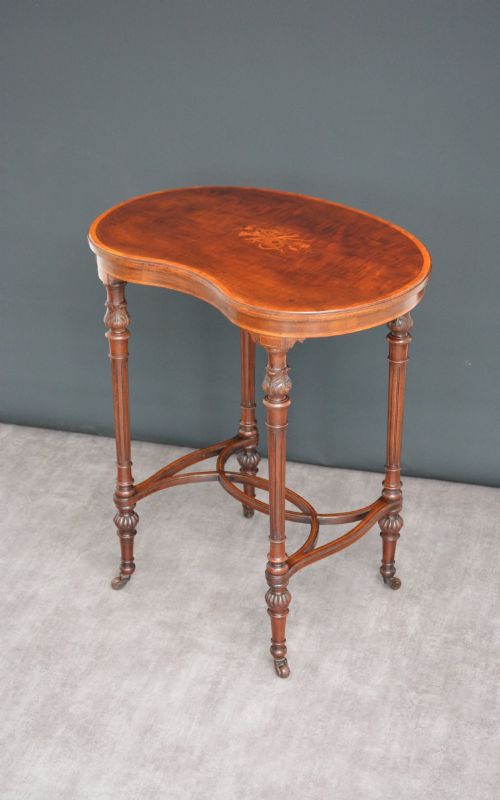
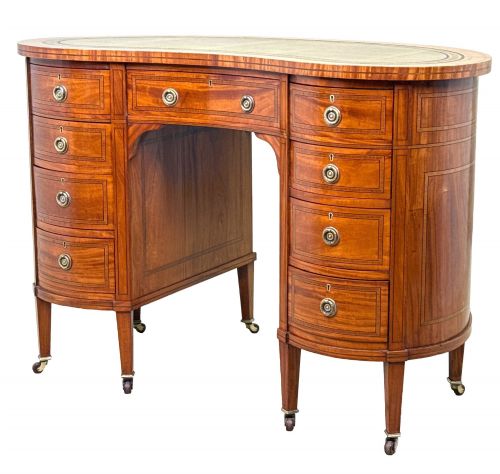
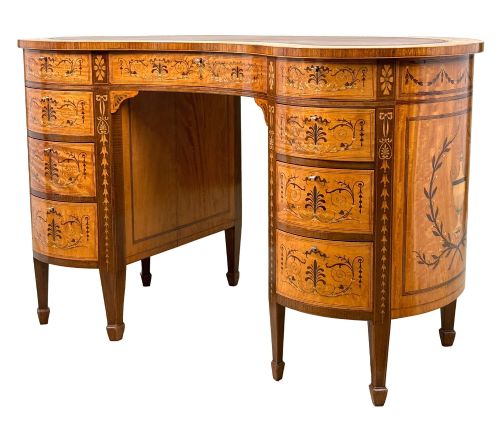
Most examples found here combine mahogany or satinwood with delicate marquetry and inlay work reflecting Sheraton Revival tastes. Alongside desks, smaller side tables and occasional tables appear frequently, often featuring slender tapered legs and brass hardware.
Materials and Technique
Cabinetmakers constructed the curved carcase using solid and veneered timbers such as mahogany, satinwood, burr walnut, and rosewood, applying crossbanding and contrasting stringing along the sweeping edges. Marquetry panels of floral or neoclassical motifs were frequently inlaid into the top surface.
Writing surfaces typically integrate inset leather panels tooled with gilt borders, while display variants incorporate glass panels and brass framing for bijouterie compartments.
Nestled among the desks are nested sets and tiny display cabinets specifically sized to exhibit pocket watches and trinkets.
Markers of Distinction
Quality rests upon the crispness of the marquetry inlay, the selection of figured timber veneers like flame mahogany or satinwood, and the structural integrity of the curved frame. Tables bearing signatures or stamps from recognised makers command particular attention.
Subtle details such as finely turned leg mounts, original brass castors, and well-fitted drawer linings distinguish standard commercial output from workshop pieces built for exhibition.
Maple & Co·Edwards & Roberts·Wolfe & Hollander·Shapland & Petter·Gillows
The Edwardian Kidney Shaped Table Glossary
- Kidney-shaped
- A curved furniture form featuring a concave front edge and a convex rear edge, designed primarily for writing desks and side tables. This profile allows the user to sit closer to the centre.
- Marquetry
- Decorative patterns formed by fitting together thin veneers of different coloured woods, shells, or ivory into a wooden ground. It appears frequently on tabletops and drawer fronts.
- Crossbanding
- A strip of veneer applied across the grain along the border of a tabletop or drawer front, providing a neat frame to the primary wood. It is often seen in contrasting timbers like satinwood on mahogany.
- Bijouterie table
- A glass-topped display table designed for showing small valuable items, medals, or jewellery inside a lined compartment. Many examples utilise hinged glazed lids.
- Sheraton Revival
- A late nineteenth and early twentieth century design style inspired by the neoclassical furniture of George Sheraton, characterised by light proportions, satinwood, and delicate inlay.
Edwardian Kidney Shaped Table: Frequently Asked Questions
What were these tables used for?
These tables served primarily as writing desks, dressing tables, or occasional display surfaces in polite reception rooms and bedrooms.
The concave curve allowed the user to sit close to the centre while keeping writing implements or personal items within easy reach on the surface.
How do I date an edwardian piece?
Dating relies upon timber choices, construction methods, and stylistic markers such as Sheraton Revival inlay patterns and satinwood veneers.
Pieces carrying stamps or paper labels from workshops like Maple & Co or Edwards & Roberts provide a reliable production period around nineteen hundred.
Where should I place one?
An occasional or side table suits corners, hallways, or the back of a sofa where the curved silhouette softens straight architectural lines.
Writing desks function effectively away from walls as freestanding pieces because the back is often finished with matching veneer and inlay.
Are original leather tops common?
Many writing desks retain their original or early leather inserts, which usually feature blind-stamped and gilt-tooled decorative borders.
Some examples carry later replacement leather depending on the intensity of past use and the preservation of the writing surface.