



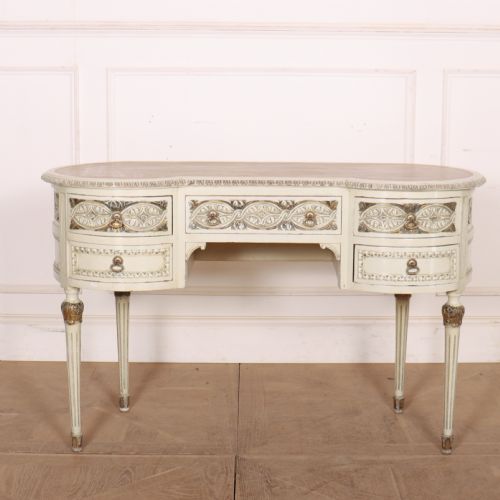
Edwardian Kidney Shaped Desk
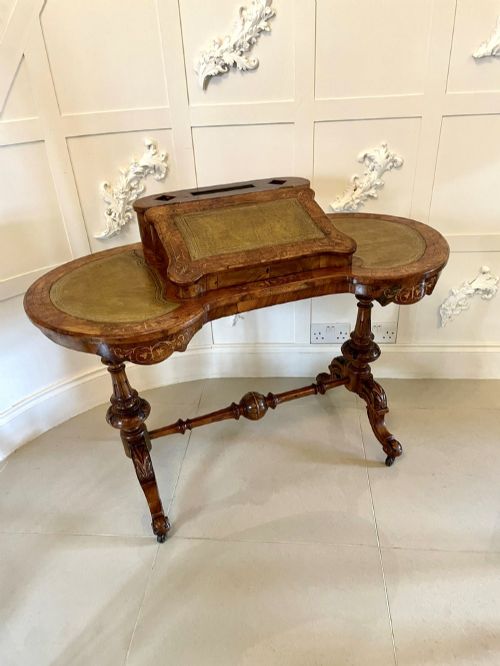
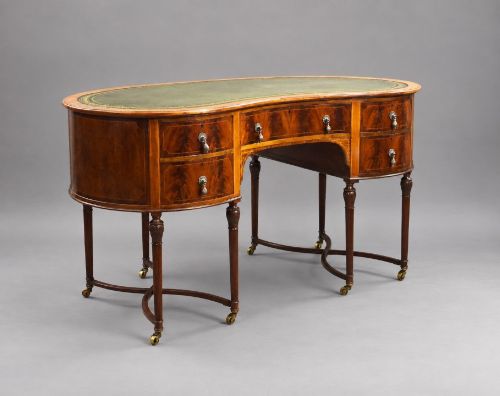
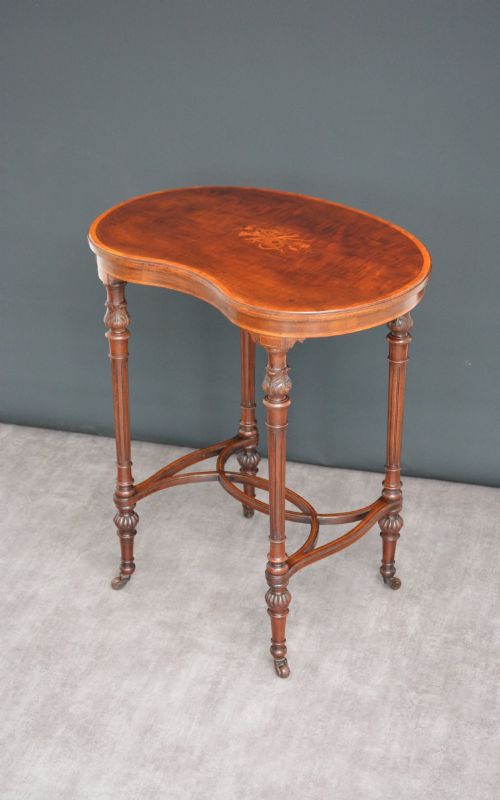
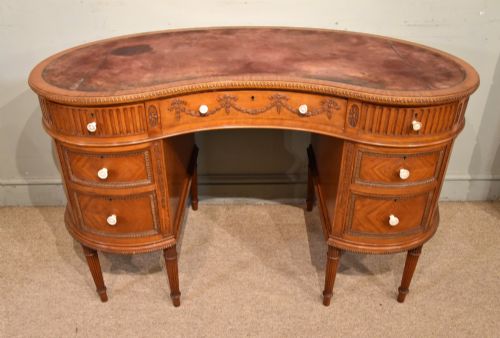
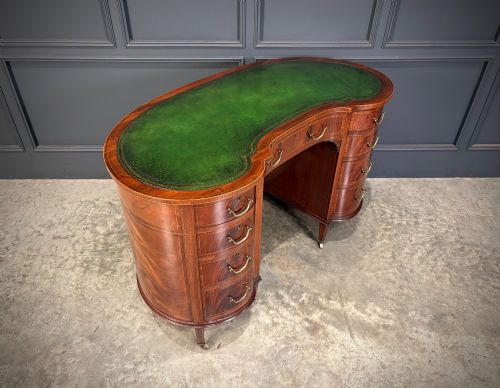
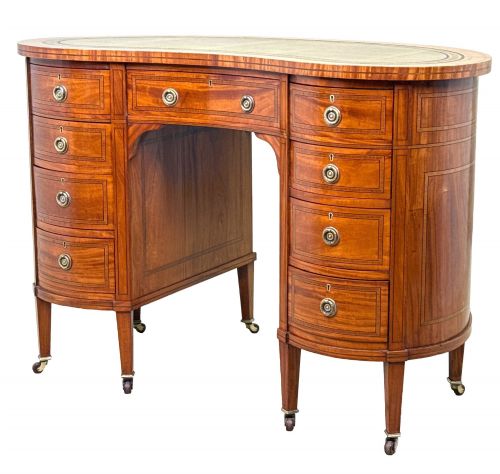
An Edwardian kidney shaped desk offers a sweeping, ergonomic curve paired with polished mahogany and delicate marquetry.
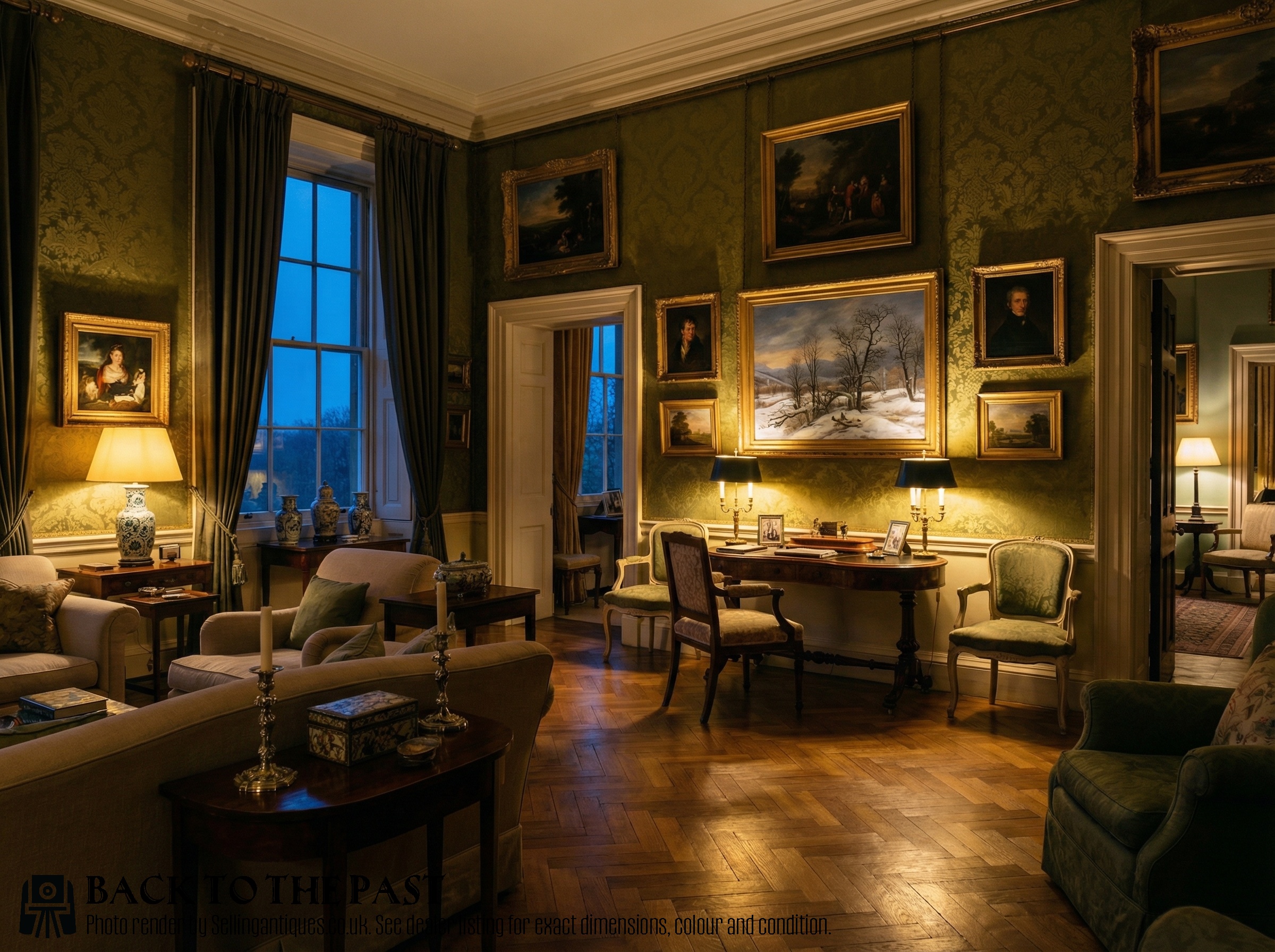
Edwardian Kidney Shaped Desk
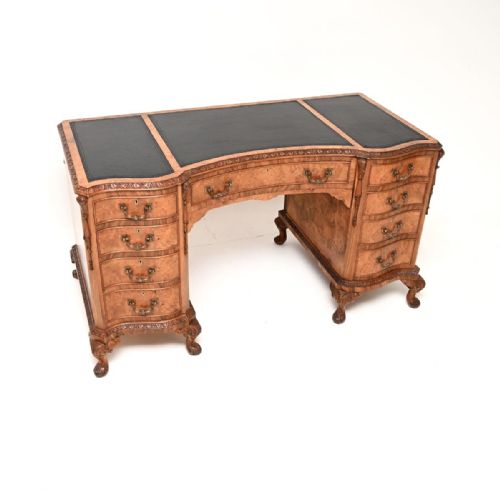
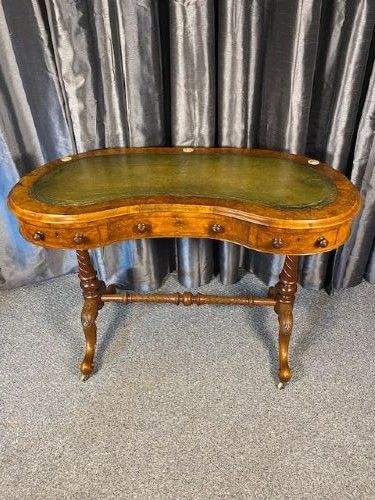
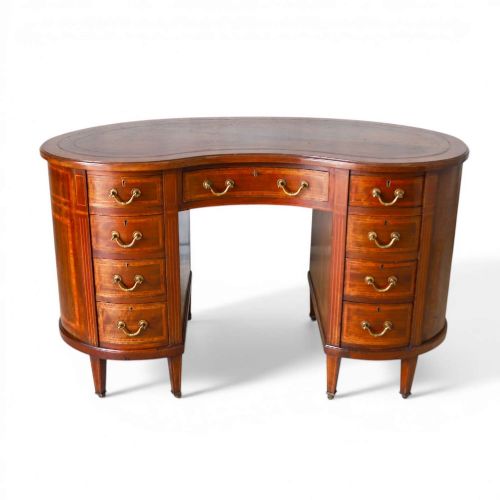
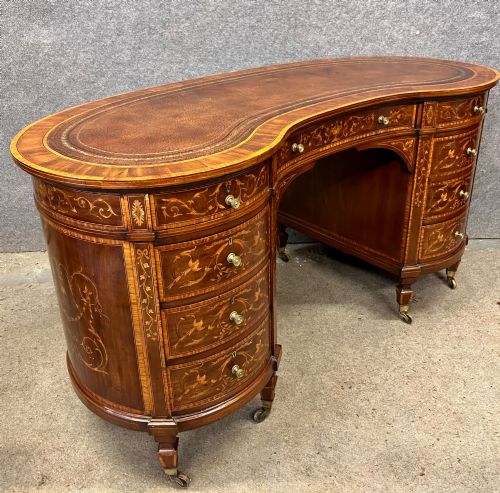
An Edwardian kidney shaped desk follows a distinct curved silhouette that allows the user to sit comfortably within the concave front. These pieces emerge predominantly from the Edwardian period and the broader nineteenth century, drawing heavily upon Sheraton Revival design principles.
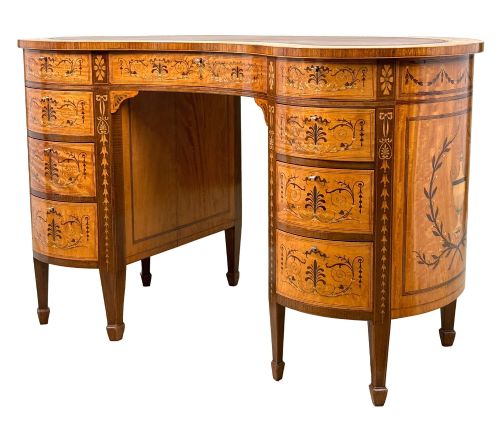
The version most commonly encountered on this page is constructed from mahogany, frequently enriched with satinwood inlay and fitted with an inset leather writing surface. They serve primarily as writing tables or freestanding kneehole desks.
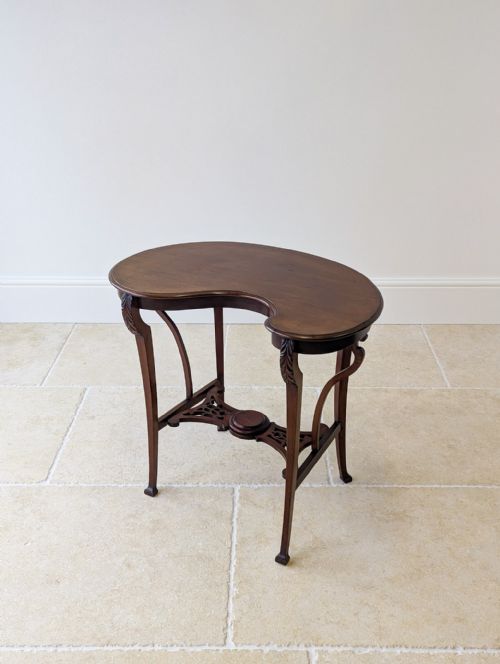
Makers working during this era adapted the kidney form for both grand pedestal configurations and lighter ladies writing tables. Occasional variations in the archive also reveal satinwood, rosewood, and burr walnut examples.
What varies in quality
Freestanding capability dictates value, as fully finished backs allow the desk to sit in the centre of a room. The precision of the joinery along the tight curve of the kneehole further separates standard workshops from premier cabinet makers.
Listings feature mahogany, satinwood, and burr walnut surfaces paired with brass hardware.
Maple & Co·Edwards & Roberts·Wolfe & Hollander·Shapland & Petter·Gillows
The Edwardian Kidney Shaped Desk Glossary
- Kidney shaped
- A curved furniture form featuring a concave front and convex back, designed to wrap around the seated user. This ergonomic shape became especially popular during the Sheraton Revival and Edwardian periods.
- Marquetry
- Decorative woodwork where pieces of veneer are fitted into a ground material to form intricate patterns or pictures. Craftsmen utilised contrasting timbers such as satinwood, ebony, and mahogany.
- Sheraton Revival
- A late nineteenth and early twentieth century design movement inspired by the neoclassical furniture of George Sheraton. It is characterised by slender proportions, satinwood veneers, and delicate floral inlay.
- Kneehole desk
- A desk featuring a central recess for the user's legs, flanked by pedestals containing drawers. This configuration provides substantial storage while maintaining a formal architectural presence.
- Frieze
- The horizontal band situated directly beneath the top surface of the desk, often housing one or more drawers. On these pieces, the frieze frequently displays extensive inlay.
Edwardian Kidney Shaped Desk: Frequently Asked Questions
Were these desks meant for women?
Many smaller versions produced during the Edwardian period were designated as ladies writing desks, designed for lighter correspondence rather than heavy administrative duties.
Larger pedestal variants, however, were built for general study and business use within a library or private office.
Can these desks stand in a room?
Freestanding examples feature finished mahogany panels on the reverse side, allowing them to sit away from the wall in the centre of a study.
Standard versions were intended to be placed flat against a wall, leaving the back unpolished or constructed from secondary timbers.
What is Sheraton Revival?
Sheraton Revival is a decorative style popular in the late nineteenth and early twentieth centuries that reinterprets eighteenth-century neoclassical furniture designs.
Pieces from this movement rely on light-coloured woods, painted details, and precise geometrical inlay.
How do I identify an Edwardian piece?
Edwardian furniture often utilises lighter mahogany cuts, delicate stringing, and boxwood or satinwood inlay that reflects a revival of earlier neoclassical tastes.
The construction methods and secondary woods inside the drawer linings also help distinguish these pieces from genuine eighteenth-century antiques.