
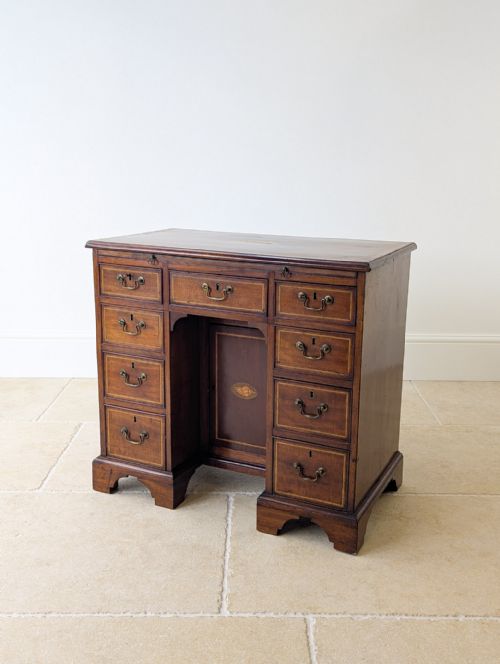


Sheraton Executive Desk
A sheraton executive desk offers refined writing spaces and striking cabinetry, bringing classical proportion and sophisticated stationery storage into the modern study.
Sheraton Executive Desk
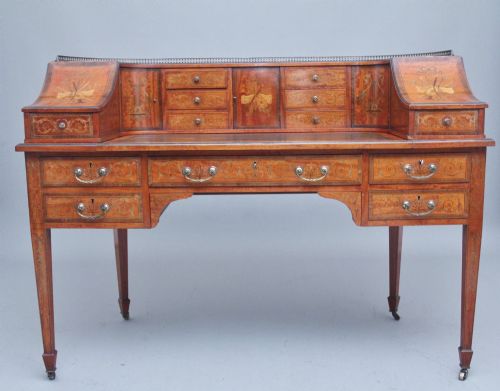
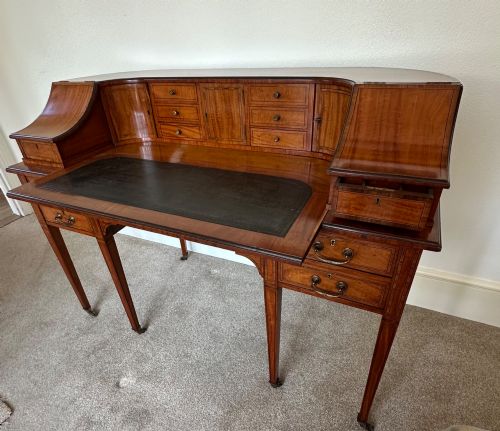
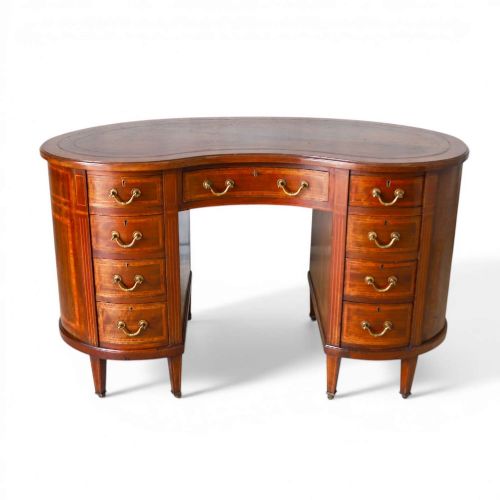
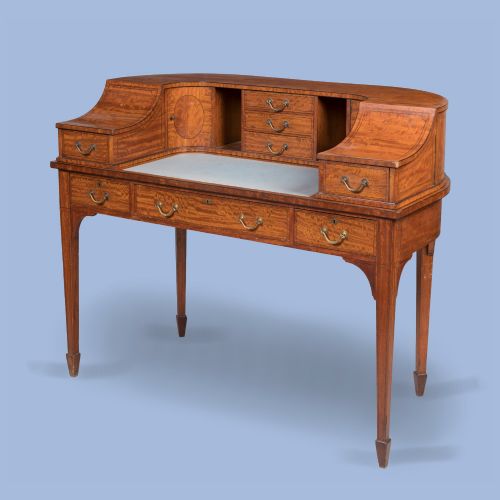
A sheraton executive desk encompasses various writing furniture forms, including pedestal desks, kneehole desks, kidney shapes, and elaborate Carlton House layouts. These pieces emerge predominantly from the Georgian, Victorian, and Edwardian eras, alongside later revivals.
The version most commonly encountered on this page is the Edwardian Sheraton Revival piece, frequently fashioned from mahogany or satinwood with intricate marquetry. These later interpretations capture the lighter, neoclassical elegance of the late eighteenth century while serving functional administrative roles.
Makers such as James Shoolbred, Maple and Co., and Gillows of Lancaster appear among these listings, demonstrating the high standards upheld by notable cabinetmakers across the nineteenth and twentieth centuries.
Materials and Construction
Cabinetmakers utilised rich timbers such as mahogany, rosewood, and satinwood, often pairing a primary carcase with contrasting veneers for decorative effect. Satinwood inlay and marquetry inlay delineate borders, panels, and motifs across the writing surfaces and drawers.
Working surfaces typically incorporate inset leather top sections, providing a durable and tactile writing plane. Brass hardware, including handles and key escutcheons, completes the structural assembly of these multi-drawer desks.
Pedestal desks and Carlton House forms dominate the available writing furniture on this page.
Evaluating Craftsmanship
Quality rests upon the precision of the inlay work and the selection of the timber grain, where balanced figure and neat marquetry distinguish superior examples. The execution of complex forms, such as the curved galleries of a Carlton House desk or the sweeping lines of a kidney shape, requires advanced joinery skills.
Signatures or stamps from established workshops add considerable weight, while untouched original leather inserts and matching brass fittings indicate careful preservation over generations.
James Shoolbred of London·Maple and Co·Gillows of Lancaster·Maple of London
The Sheraton Executive Desk Glossary
- Carlton House desk
- A form of writing desk featuring a tiered superstructure of small drawers and compartments curving around the back and sides of the writing surface. This layout originated in the late eighteenth century and was frequently revived during the Edwardian period.
- Marquetry inlay
- Decorative patterns formed by fitting contrasting pieces of veneer into a prepared background wood. Cabinetmakers employed this technique to create floral or geometric motifs.
- Kneehole desk
- A compact pedestal desk featuring a central recess for the user's legs, flanked by banks of smaller drawers. This configuration maximises storage while maintaining a manageable footprint.
- Pedestal desk
- A freestanding desk comprising a top surface supported by two independent pedestals containing drawers. These pieces provide substantial weight and workspace.
- Satinwood inlay
- The application of pale, lustrous satinwood strips into dark mahogany or rosewood carcases. This contrasting detail defines classical revival pieces.
Sheraton Executive Desk: Frequently Asked Questions
How do I identify a revival desk?
Revival pieces display the lighter proportions and satinwood inlays associated with the eighteenth century, but timber seasoning, secondary woods, and construction methods point to Victorian or Edwardian workshops.
Examining the drawer linings and internal fixings often reveals the later manufacturing date while retaining the classic aesthetic.
What is a Carlton House desk used for?
The tiered arrangement of small drawers and pigeonholes was designed for organising correspondence, stationery, and writing implements.
Its enclosed upper section keeps documents ordered while providing a central flat writing plane.
Are these desks suitable for daily work?
Many examples provide ample surface area and drawer storage for modern administrative tasks, though interior dimensions reflect historical stationery sizes.
Care should be taken with antique leather writing surfaces when used intensively.
How do I care for leather top desks?
Leather writing planes benefit from gentle cleaning and occasional conditioning to prevent drying and cracking over time.
Avoiding direct sunlight and excessive moisture preserves both the leather and the surrounding timber polish.