

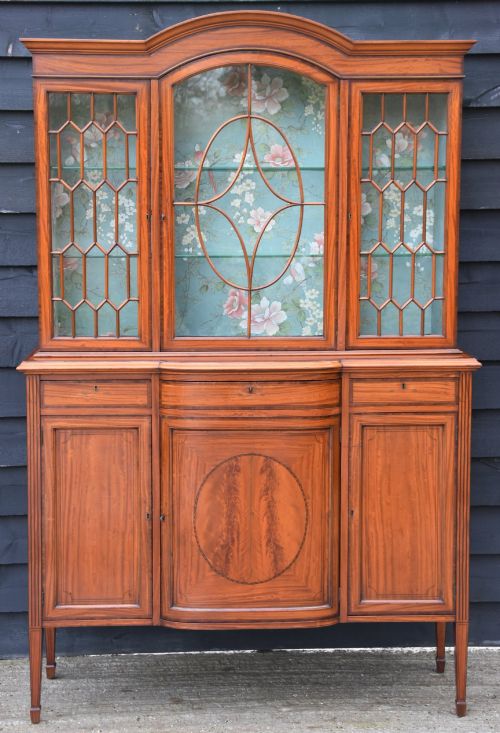
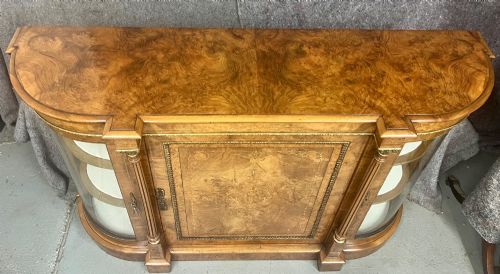
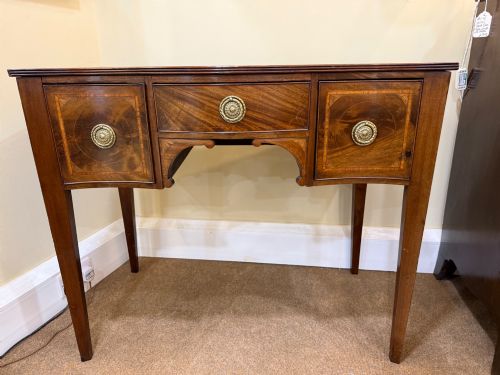
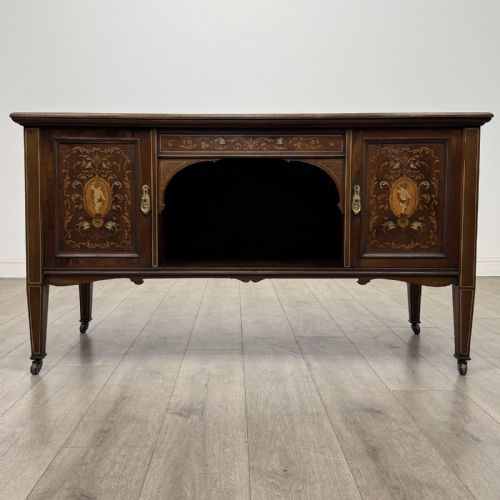
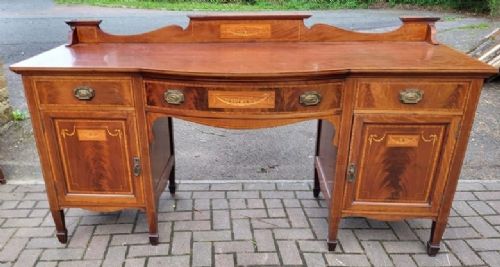
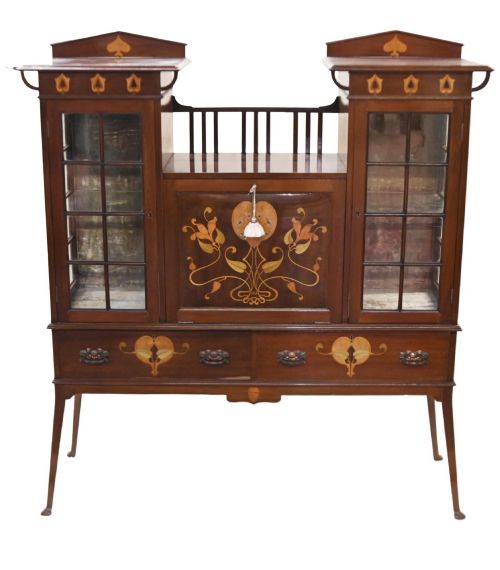
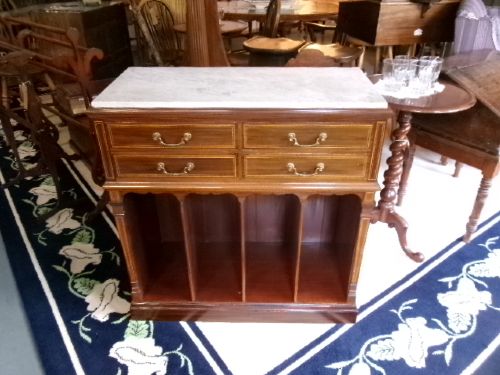
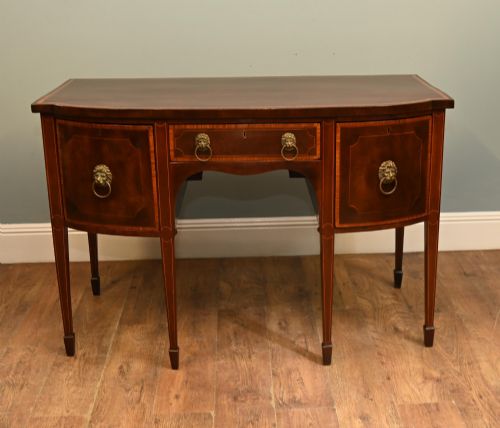
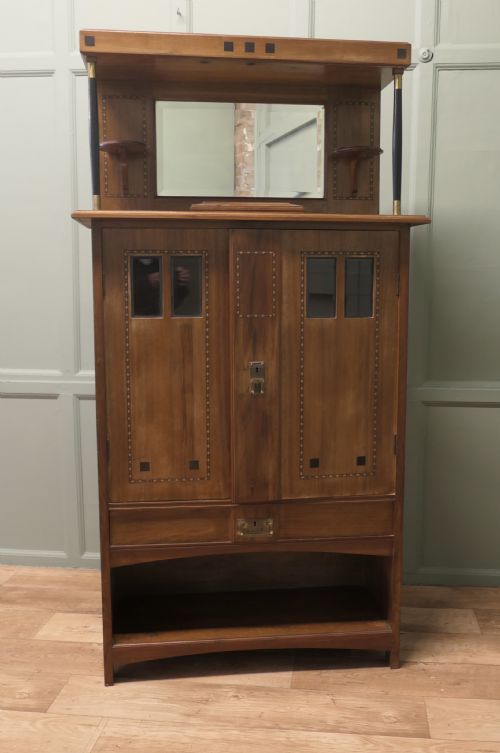
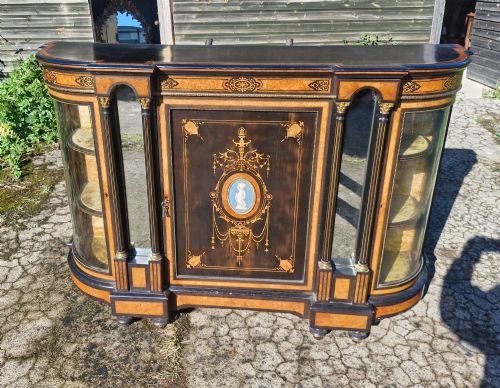
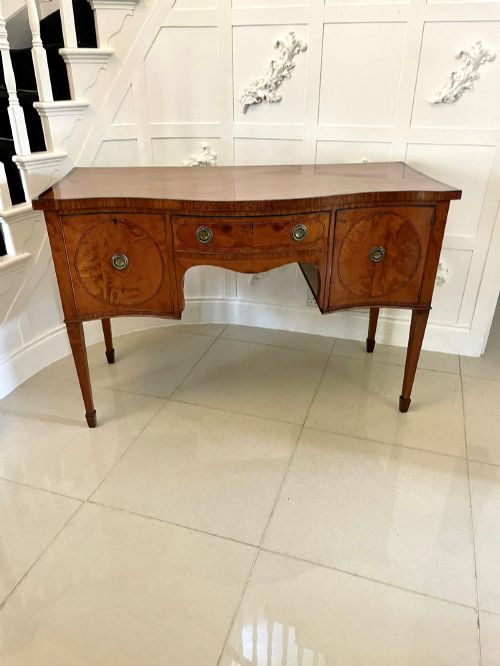
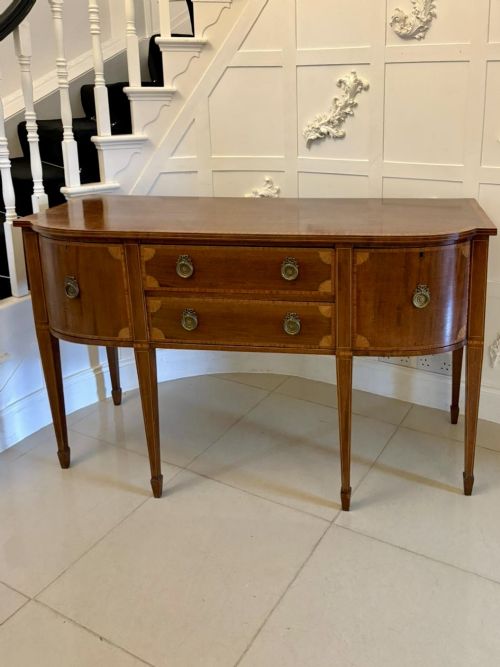
Edwardian Inlaid Sideboard Cabinet
An edwardian inlaid sideboard cabinet brings refined formal elegance to a dining room through delicate contrasting wood stringing and rich mahogany or satinwood surfaces.
Edwardian Inlaid Sideboard Cabinet
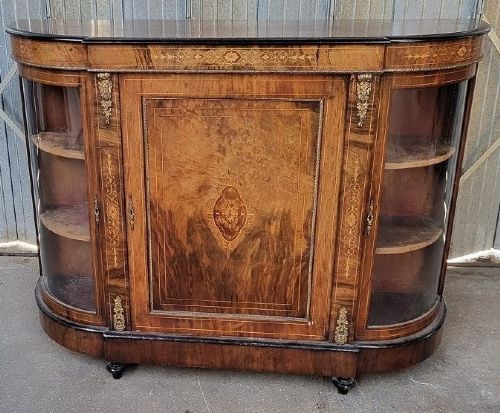
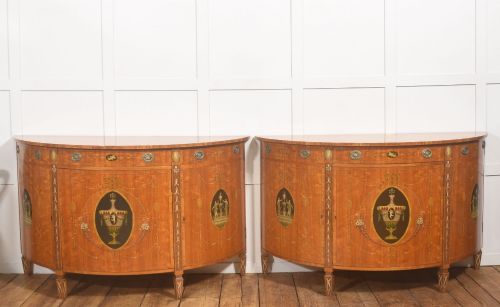
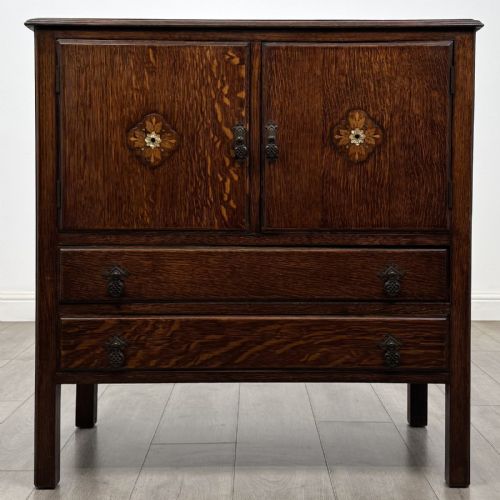
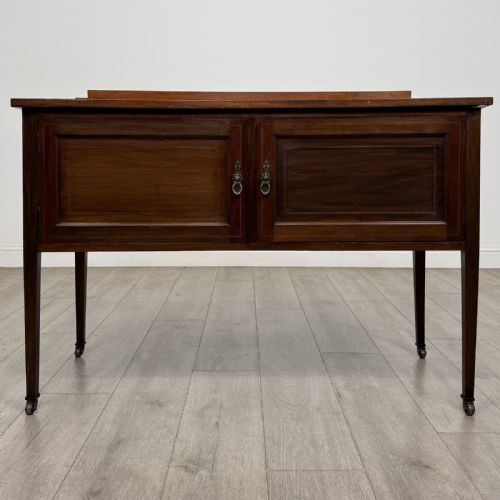
An edwardian inlaid sideboard cabinet combines practical storage with the decorative veneering typical of the period and the preceding Victorian era. Pieces range from bow-front sideboards and server buffets to display cabinets and cocktail chests.
The most common examples on this page are Edwardian and Sheraton Revival mahogany sideboards, often enhanced with satinwood crossbanding and boxwood stringing. Side cabinets and credenzas in burr walnut, rosewood, and ebonised finishes also appear regularly.
Forms span from the late nineteenth century through to nineteen twenty, incorporating styles such as Neo-classical, Art Nouveau, and Secessionist alongside revival designs.
Judging Quality and Craftsmanship
The standard of a piece rests on the precision of its marquetry, the choice of figured veneers such as flame mahogany or burr walnut, and the crispness of its boxwood stringing. Superior examples demonstrate meticulous hand-cut joinery and balanced proportions.
Finer cabinets incorporate secondary timbers of high grade, heavier brass hardware, and sophisticated serpentine or breakfront outlines rather than simple flat facades.
Edwardian Inlaid Sideboard Cabinet Retail Price Guide 2026
Typical asking prices for edwardian inlaid sideboard cabinet among the pieces listed under this phrase on Sellingantiques today, from the lower quarter to the upper quarter. They describe what is for sale here now, not the wider market.
Listings span periods from Victorian and Edwardian up to nineteen twenty, featuring mahogany, satinwood, rosewood, and burr walnut.
Hewetsons London·James Hicks·Maple and Co·Shapland and Petter
The Edwardian Inlaid Sideboard Cabinet Glossary
- Inlay
- The technique of inserting contrasting pieces of wood or other materials into a recessed solid wood surface to form a decorative pattern. This defines much of the ornamentation on Edwardian furniture.
- Satinwood
- A durable, lustrous hardwood with a yellowish sheen used widely for veneers and crossbanding. It provides a bright contrast against darker timbers like mahogany.
- Crossbanding
- A strip of veneer applied across the grain of the main surface around the border of a top, drawer, or door. It creates a framed visual effect on cabinet fronts.
- Serpentine
- A curved shape that is convex in the middle and concave at the sides, giving a gentle undulating profile to the front of a sideboard or cabinet.
- Ormolu
- Gilt bronze mounted onto furniture as decorative feet, handles, or mounts. It adds metallic contrast to ebonised or polished wood surfaces.
- Stringing
- Thin lines of contrasting light wood inlaid into darker timber to outline drawers, panels, and legs. It forms a delicate linear border.
Edwardian Inlaid Sideboard Cabinet: Frequently Asked Questions
What is an Edwardian inlaid sideboard cabinet used for?
These pieces served primarily in dining rooms to store tableware, linen, and bottles, or to display decorative ceramics and glassware on their surfaces.
Today, they function well in modern dining spaces or living rooms as storage credenzas and display furniture.
How do I tell an Edwardian piece from a Victorian one?
Edwardian cabinets tend to feature lighter satinwood finishes, delicate stringing, and brighter Sheraton Revival influences. Victorian examples often utilise heavier timbers like rosewood, burr walnut, and ebonised finishes with bolder proportions.
Examining the secondary woods inside drawers and the style of the marquetry helps confirm the period of manufacture.
How should I care for mahogany and satinwood surfaces?
Keep polished wooden furniture away from direct sunlight and heat sources to prevent the veneers from drying out or splitting. Dust regularly with a soft, dry cloth and apply a natural wax polish sparingly.
Avoid using silicone-based sprays, which can damage the aged French polish finish over time.
What styles are common in these cabinets?
Sheraton Revival and Neo-classical designs dominate, characterised by symmetrical lines, tapered legs, and classical urn or floral marquetry. Art Nouveau and Secessionist influences also appear, featuring more fluid, stylised decorative motifs.
Victorian pieces lean towards heavier historic revival styles with mirror backs and ornate ormolu mounts.