


Edwardian Inlaid Plant Stand
An edwardian inlaid plant stand brings domestic greenery and slender height into a room, combining utility with delicate surface ornament.
Edwardian Inlaid Plant Stand
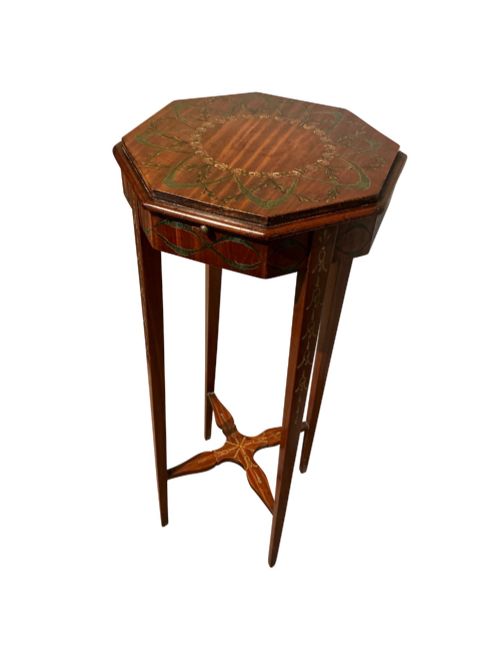
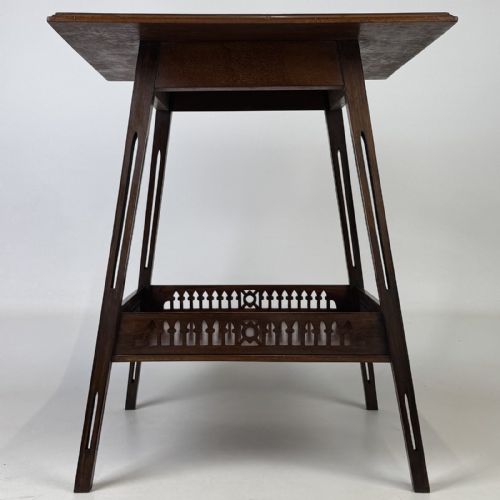
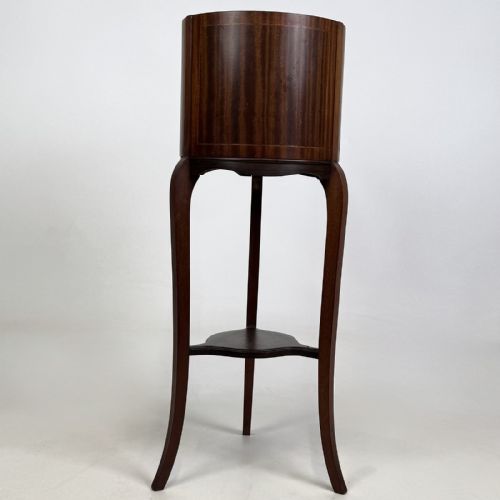
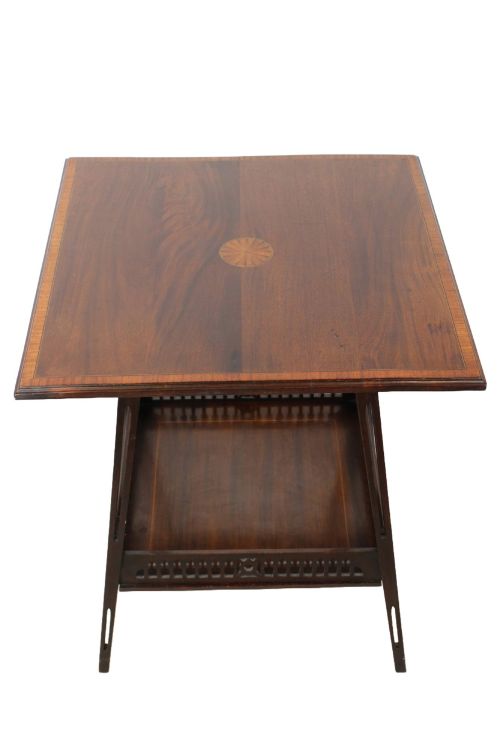
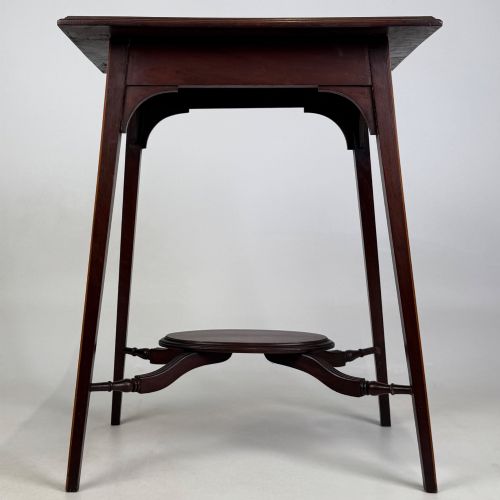
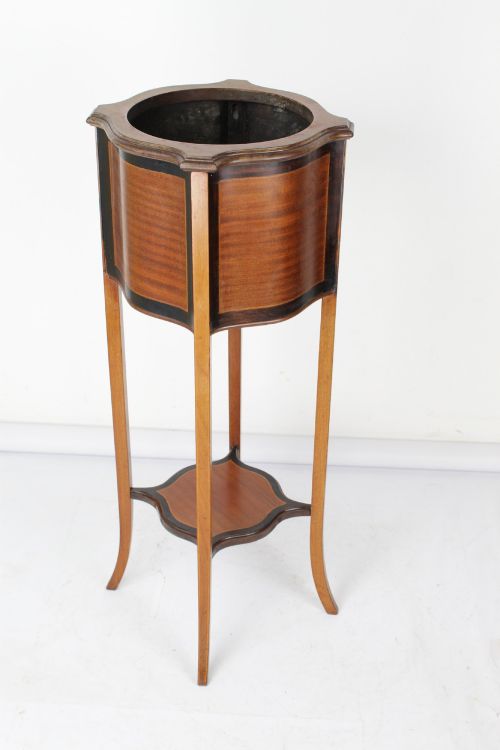
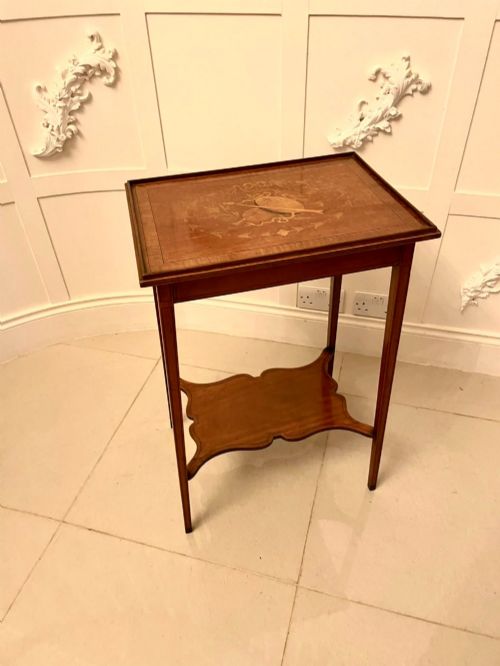
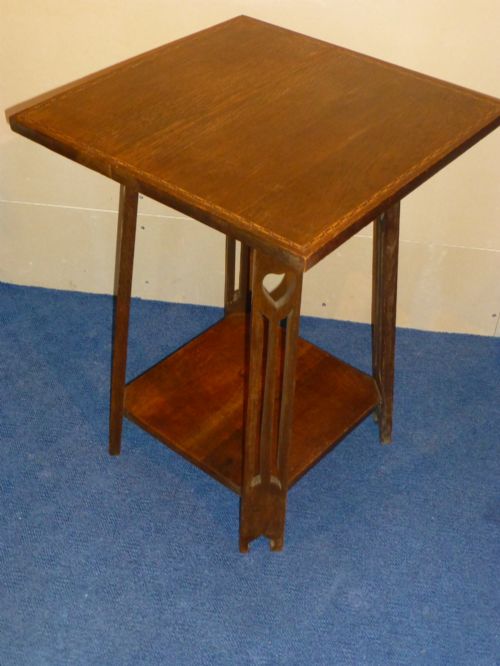
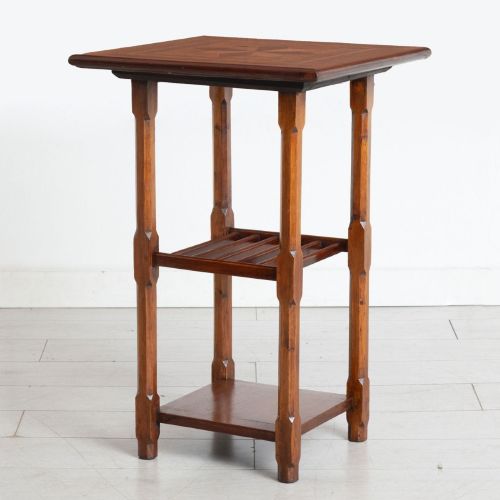
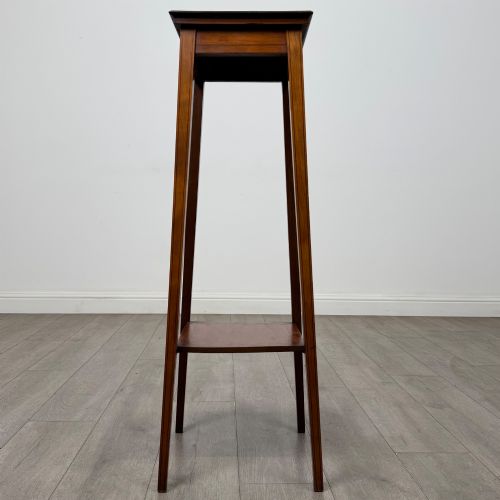
The edwardian inlaid plant stand typically manifests as a tall, slender pillar designed to elevate a pot or jardiniere, frequently appearing alongside related occasional tables and torchères. Examples span from the late nineteenth century into the early decades of the twentieth century, aligning with Edwardian and Sheraton Revival aesthetics.
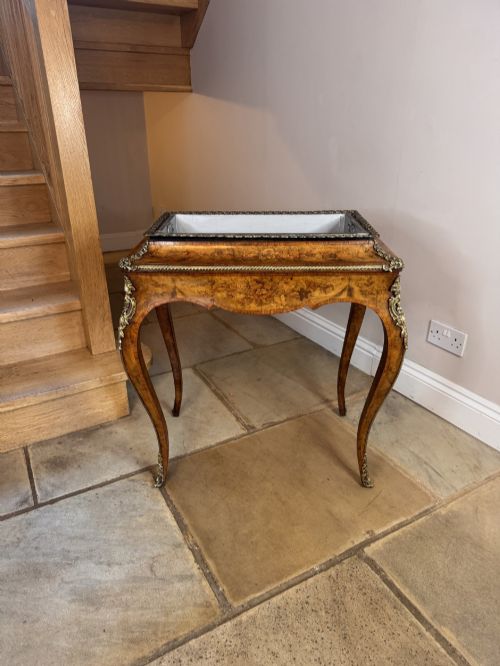
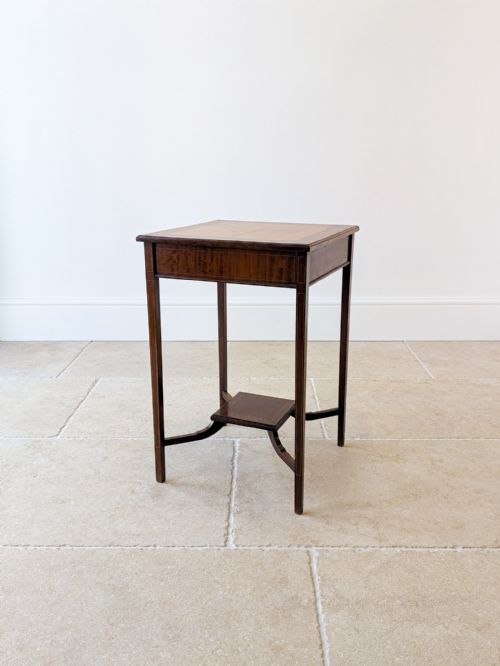
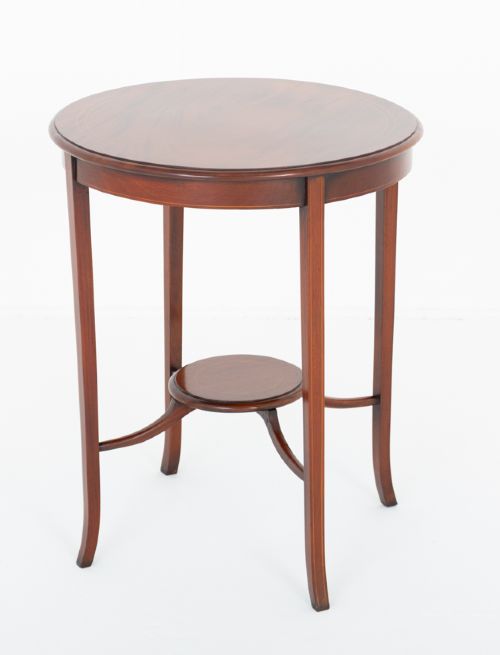
Makers utilised various formats, ranging from square and tapering columns to two-tier configurations and circular tops intended for heavy ceramic or brass-lined planters. While the Edwardian period dominates the record, related pieces stretch back into Victorian and Georgian idioms as well as Arts and Crafts interpretations.
Materials and Construction
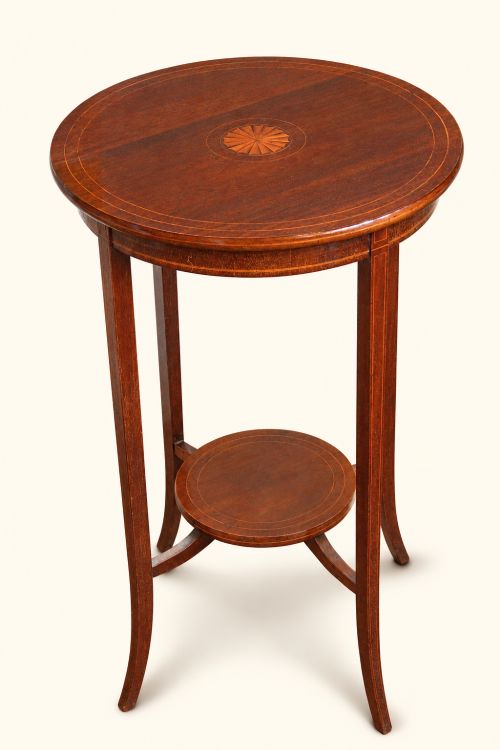
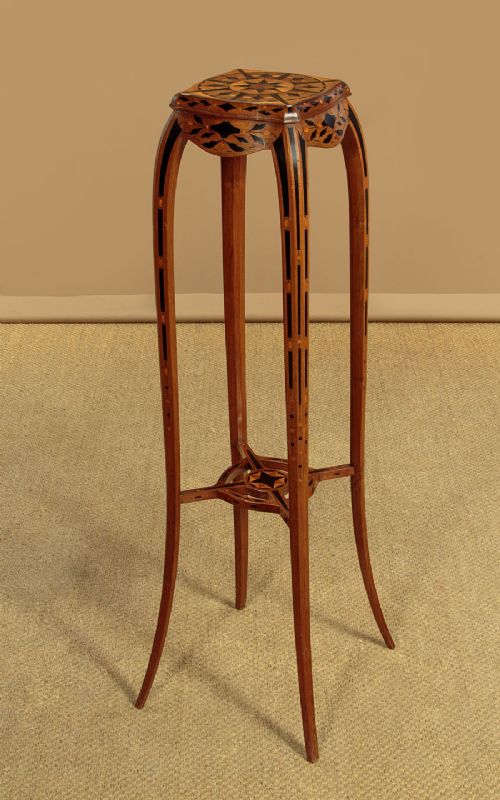
Makers constructed these stands primarily in mahogany, satinwood, and walnut, often employing flamed or figured veneers to catch the light. Workshops then enriched these primary timbers with contrasting stringing and vegetal motifs executed in boxwood and other light-toned woods.
Structural details include brass liners for holding damp soil within jardinières, occasional ormolu mounts, and precise jointing to maintain stability despite a narrow footprint. Surfaces received hand-applied polishes that highlighted the grain of the base timber against the crisp geometry of the inlay.
Edwardian Inlaid Plant Stand Retail Price Guide 2026
Typical asking prices for edwardian inlaid plant stand among the pieces listed under this phrase on Sellingantiques today, from the lower quarter to the upper quarter. They describe what is for sale here now, not the wider market.
Some Edwardian plant stands included hidden lower tiers specifically sized for dropping a stray pocket watch or pair of spectacles.
Judging Quality
Superior examples display crispness in the wood inlay, where individual pieces of boxwood fit tightly without excessive dark filler or blurring at the joints. The selection of timber also dictates distinction, with highly figured mahogany or satinwood marking the upper tier of production.
Proportion and stability separate standard utility pieces from finer commissions. A well-balanced base and thoughtful secondary turnings ensure the tall stand remains secure when supporting a heavy plant or urn.
Trevor Page and Co·Liberty and Co·William Birch
The Edwardian Inlaid Plant Stand Glossary
- Jardiniere
- An ornamental pot or stand designed to hold a plant or floral arrangement. These often incorporate metal liners to protect the surrounding woodwork from moisture.
- Torchere
- A tall, slender stand meant to support a lamp or decorative object. In this context, the term overlaps closely with the form of a plant stand.
- Stringing
- Thin lines of contrasting wood inlaid into the surface of a piece. Makers used this technique to define panels and edge borders.
- Sheraton Revival
- A late nineteenth and early twentieth century design movement that reinterpreted the light, neoclassical furniture forms of the eighteenth century. Pieces in this style frequently feature balanced proportions and delicate inlay.
Edwardian Inlaid Plant Stand: Frequently Asked Questions
What is the difference between a plant stand and a jardiniere?
A plant stand generally refers to the tall, supporting column itself, while a jardiniere denotes the vessel designed to hold the plant.
In practice, many listings use the terms interchangeably because surviving pieces often combined the stand with an integrated or removable planter bowl.
Were these stands made to hold heavy plants?
Most stands were engineered to support moderate decorative flora rather than massive garden shrubs. Their narrow footprints required balanced placement within a room to maintain stability.
Makers often paired them with metal liners to contain water, which kept the wooden structure safe from dampness during daily indoor use.
How do I identify a Sheraton Revival piece?
Sheraton Revival examples typically display classical symmetry, tapered legs, and delicate contrasting wood inlays inspired by eighteenth-century design. They favour light timbers like satinwood and mahogany rather than heavy dark oaks.
This aesthetic experienced a major surge in popularity around the turn of the twentieth century, matching the Edwardian preference for refined interior ornamentation.
Can I place these pieces on uncarpeted floors?
Tall stands with narrow bases can wobble on uneven floorboards if not positioned with care. Adding small protective pads to the feet helps keep them level.
Their lightweight construction makes them easy to reposition when cleaning or rearranging furniture.