



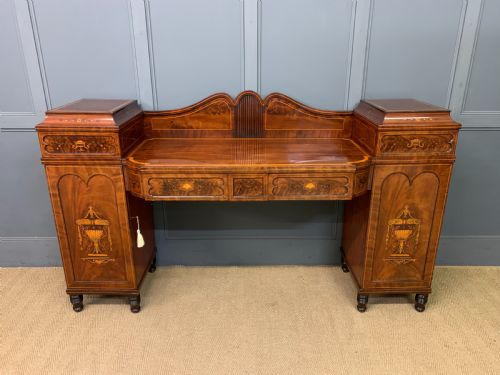
Edwardian Inlaid Mahogany Server
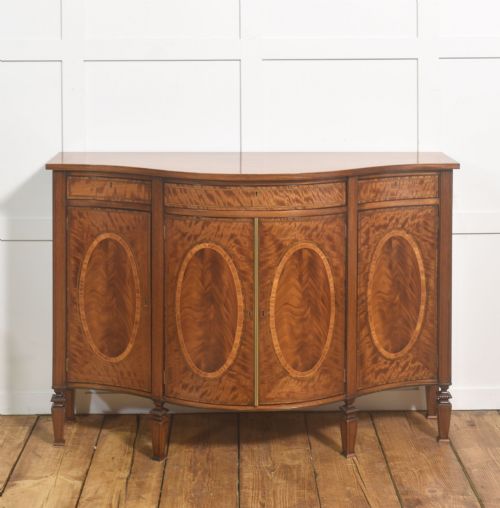
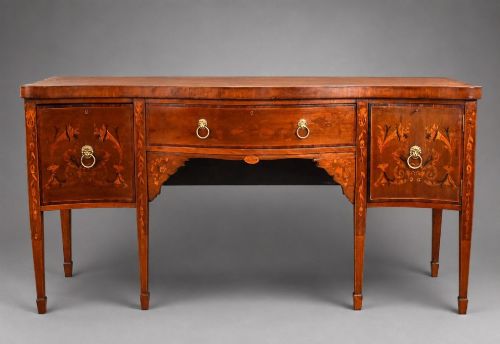
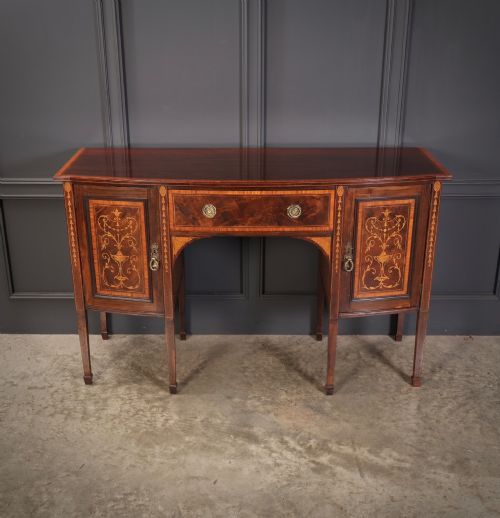
These pieces known as an edwardian inlaid mahogany server bring refined timber and delicate stringing into the dining room.
Edwardian Inlaid Mahogany Server
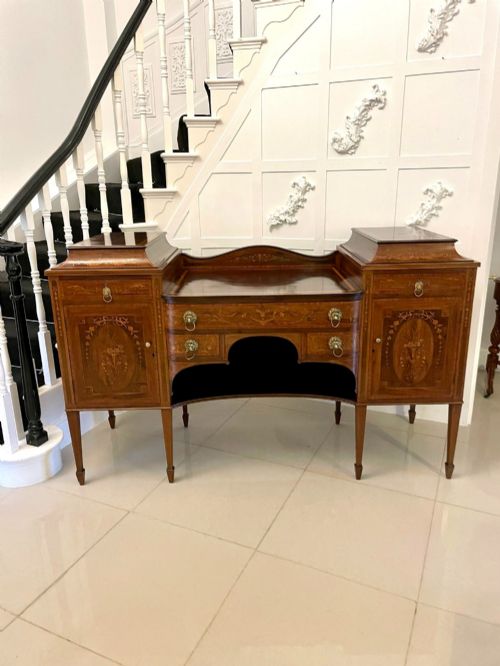
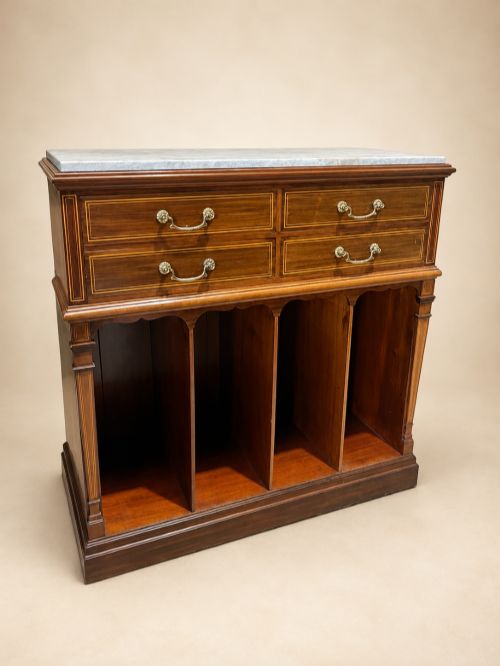
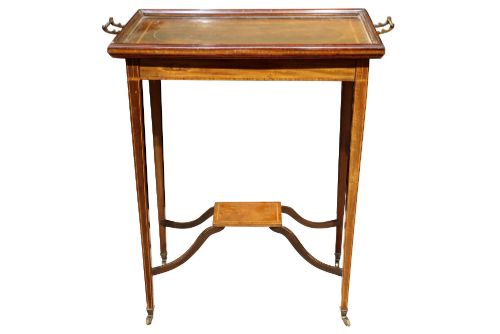
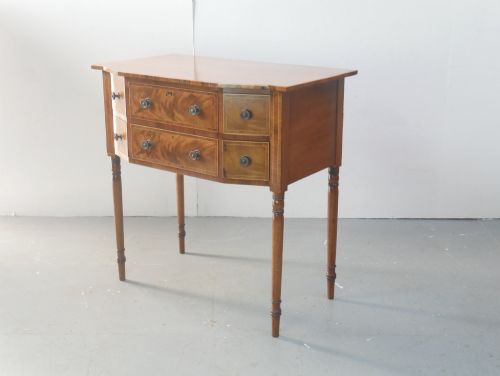
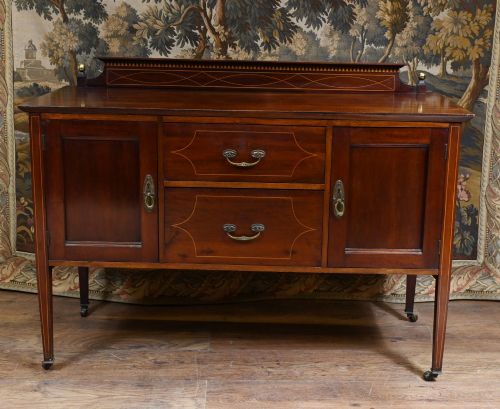
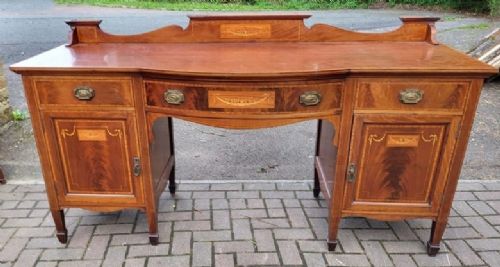
An edwardian inlaid mahogany server stands as a principal dining room furnishing designed for holding silver, linen, and dishes during meals. When you search for this phrase, you encounter large sideboards, bow-front servers, and serving tables dating predominantly from the Edwardian period and the broader Sheraton Revival movement.
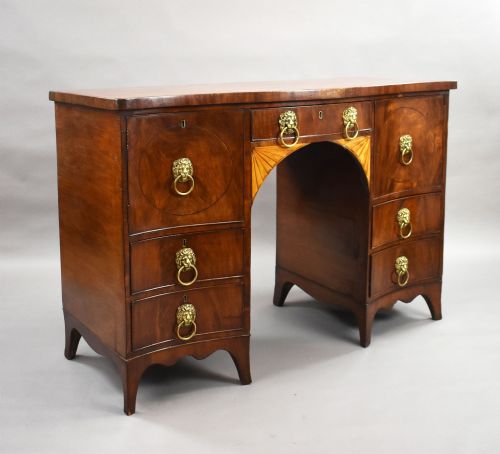
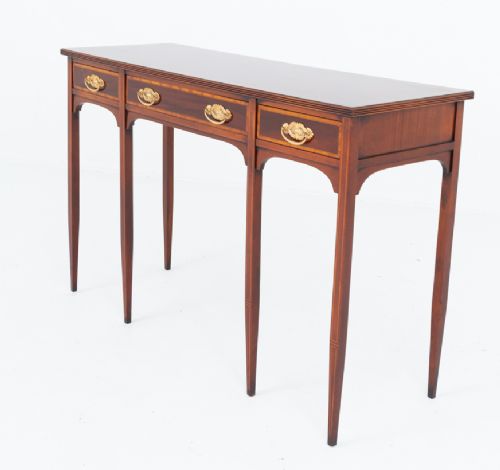
The form draws heavily on eighteenth-century proportions, featuring straight, bow, or serpentine fronts raised on tapered legs. Most examples combine utilitarian storage with decorative cabinet work suited to formal domestic interiors.
Makers of the era adopted lighter woods and intricate borders to update heavier Victorian prototypes. You find these items principally in forms that balance functional surface area with graceful stringing and crossbanding.
How they were made
Carpenters built the primary carcase using solid mahogany and flame mahogany veneers over secondary timbers. They applied contrasting stringing and crossbanding in satinwood and boxwood to define the borders of drawers and doors.
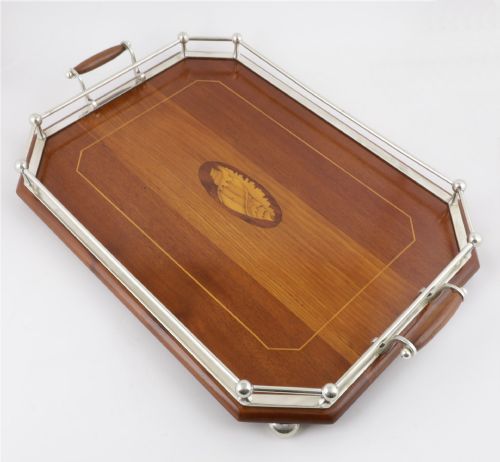
Marquetry panels and shell motifs appear frequently on the better pieces, executed by hand-cutting delicate veneers into geometric or floral designs. Brass handles, gallery rails, and escutcheons complete the structural assembly.
Some servers feature hidden cellarette drawers designed to keep wine bottles cool during long Victorian and Edwardian dinners.
What varies in quality
The distinction between ordinary and superior pieces rests on the precision of the timber selection and the complexity of the inlay. Fine examples utilise highly figured flame mahogany matched symmetrically across drawer fronts, accompanied by intricate satinwood and boxwood banding.
Construction methods also separate the ranges, visible in the hand-cut dovetailing of internal drawers and the crispness of applied mouldings. Simpler factory-produced models rely on printed or minimal decoration, whereas top-tier items display detailed marquetry and substantial brass hardware.
Hewetsons London·Shapland & Petter
The Edwardian Inlaid Mahogany Server Glossary
- Inlay
- A technique where contrasting materials are inserted into recessed cavities of a timber base to form a decorative pattern. This method defines the surface decoration of the Edwardian server.
- Satinwood
- A pale, lustrous timber native to India and Ceylon, utilised for contrasting stringing and crossbanding on mahogany furniture. Its bright yellow tone provides sharp visual contrast against dark wood.
- Bow-front
- A convex curved furniture front that swells outward in the centre. This shape softens the profile of a serving sideboard.
- Serpentine
- A furniture front characterised by a concave central section flanked by two convex ends, or the reverse. It requires advanced woodworking skill to shape accurately.
- Crossbanding
- A strip of veneer applied across the grain of the primary surface to form a decorative border. It frames the drawers and top boards of Edwardian servers.
Edwardian Inlaid Mahogany Server: Frequently Asked Questions
What is an Edwardian inlaid mahogany server?
An Edwardian inlaid mahogany server is a dining room storage piece designed for serving food and storing tableware. These items typically feature contrasting wood inlays and slender proportions inspired by earlier Sheraton designs.
They emerged during the Edwardian era and the Sheraton Revival period, offering a lighter alternative to dark Victorian sideboards. Their surfaces often display satinwood banding, boxwood stringing, and marquetry details.
How do you tell an Edwardian server from a Victorian one?
Edwardian servers generally exhibit lighter construction, brighter mahogany veneers, and delicate contrasting inlays like satinwood and boxwood. Victorian pieces tend to be heavier, darker, and more imposing in scale.
Revival pieces from the Edwardian epoch frequently copy eighteenth-century Georgian forms with greater emphasis on refinement and decorative banding rather than sheer mass.
Where were these servers used in the home?
These servers were primarily placed in the dining room to assist with the service of meals and the display of silver and glassware. They provided surface space for dishes and storage drawers for linens and cutlery.
In modern interiors, they function equally well in hallways, living rooms, or dining spaces as side cabinets and serving surfaces.
How do you care for mahogany furniture with inlay?
Care for these pieces requires keeping them away from direct sunlight and heat sources to prevent the veneers and delicate stringing from drying out. Regular dusting with a dry, soft cloth preserves the polished finish.
Avoid using silicone-based polishes or excessive moisture, which can damage the antique surface and loosen the historical wood inlays over time.